






 Portuguese
  Spanish
  2 min of reading


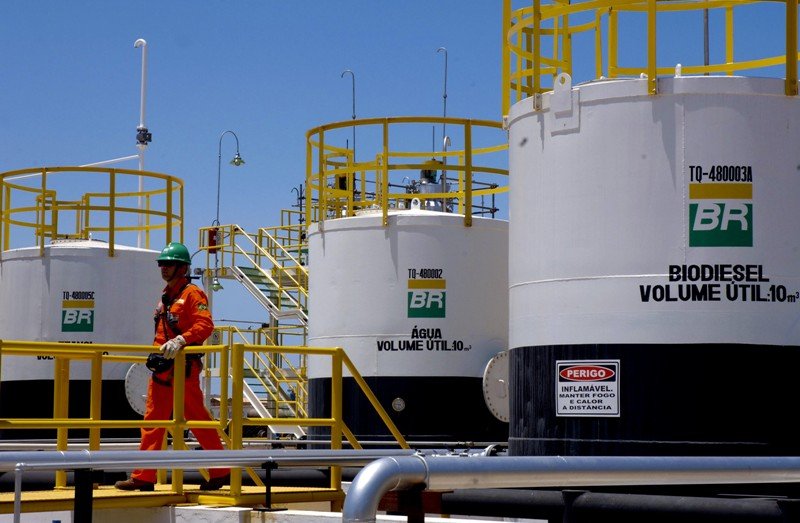
Petrobras Reports That National Oil Production Is Not Enough to Maintain Diesel and Some Derivatives Supply
Government proposals to reduce the price of diesel oil for consumers may lead to fuel shortages and price collusion, according to warnings from Petrobras and Cade (Administrative Council for Economic Defense). The oil company says that the proposed subsidy calculation to be paid starting in September makes imports unfeasible and that, without the product brought from abroad, there will be a diesel shortage. The Ministry of Finance’s agency highlights the risk of price uniformity if the requirement for companies, including Petrobras, to disclose the components of their prices, such as profit margins, remains.
The new methodology for calculating the diesel subsidy and also the transparency in price formation were proposed by the National Agency of Petroleum, Natural Gas and Biofuels (ANP), based on government guidance, and are now undergoing scrutiny from the market in public consultations.
-
The legendary oak that, according to the story, hid Robin Hood from the Sheriff of Nottingham, died at the impressive age of 1,200 years in England, and the first chilling sign of its end was that no leaves sprouted on the tree this spring.

-
While the world looks at forests, the UN warns that the Earth is also threatened by the silent degradation of natural grasslands and savannas, ecosystems that cover half of the planet, support billions of people, and can exacerbate water, food, and climate crises.
-
The future of computers may change sooner than expected: Amazon bets on commercial quantum computing within seven years, while qubits, the Ocelot chip, AI, and scientific simulations take center stage in the new race among big techs.
-
Cheaper than new HB20, Onix, and Argo, this German sedan offers a 510-liter trunk, a 2.0 naturally aspirated engine, a 6-speed Tiptronic automatic transmission, and well-known mechanics; the 2016 Volkswagen Jetta Comfortline still draws attention in the used car market.

In proposing changes to the subsidy calculation, the regulatory agency sought to incorporate freight costs for diesel imports to address the demands of trading companies participating in this market alongside Petrobras. However, in a document sent to the ANP, the state-owned company claimed that the proposal lacks economic rationale and that instead of attracting importers, it tends to drive them away, which would lead to shortages.
“The proposed formula is likely to make it unfeasible to supply imported products and the participation of non-producing third parties in the (subsidy) program, restricting competition in the market. Additionally, considering that agents (both producers and importers) will only offer products on economic bases and that the national balance is deficient in diesel, there is a potential risk of market shortages,” stated Petrobras in its contribution to the public consultation.
On Friday, the 17th, during the hearing at the agency’s headquarters, Petrobras’ Marketing and Commercialization Manager, Guilherme França, expressed doubt that “the board (of the state company) will authorize diesel imports at the risk of incurring losses.” A representative of importers, Abicom, argued similarly. “No investor feels secure putting money in these conditions. This proposal could condemn Brazil to stop growing,” says Sérgio Araújo, president of Abicom.
Furthermore, the disclosure of the price components practiced by all companies participating in the market, also proposed by the ANP, may generate “upward price pressure considering the greater risk of collusion (cartel formation),” stated Cade in a technical note sent to the regulatory agency. Source: Estadão
Petrobras and Ensco Enter Into Agreement Regarding Drilling Rig DS-5





Be the first to react!