





 English
  Francês
  Alemão
  Italiano
  Japonês
  Norueguês
  Portuguese
  Spanish
  4 min of reading
  0 comments


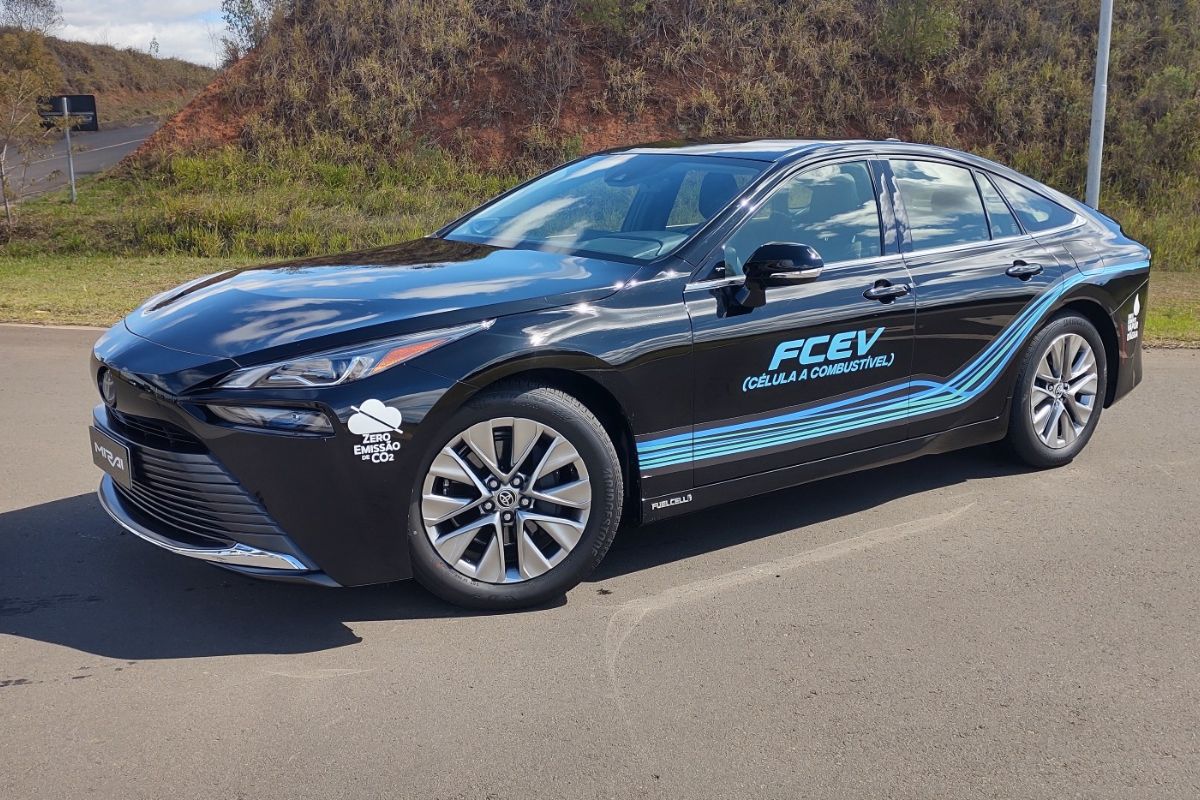
With Promise Of 600 Km Of Range And Refueling In 5 Minutes, The Toyota Mirai Is Being Tested In The Country, But Its Future Should Not Be In Consumers’ Garages.
The news about the arrival of the Toyota Mirai in Brazil, a car that uses hydrogen as fuel and emits only water, generated great expectation. The promise of a technology that combines the convenience of a combustion car with zero local emissions seems like the perfect solution. However, the role of the Mirai in the country is much more strategic than just a commercial launch.
The vehicle is the star of a pioneering project to produce renewable hydrogen from ethanol, a bet from Toyota and its partners to transform the national energy matrix. However, the analysis of its high cost reveals that the future of the Mirai is not on the streets, but rather as a catalyst for a new industry focused on heavy transport.
What Is The Toyota Mirai And How Does A Hydrogen Fuel Cell Car Work
The Toyota Mirai is an FCEV (Fuel Cell Electric Vehicle). It does not have a combustion engine and is not recharged at a socket like a regular electric vehicle. Its operation transforms hydrogen into electricity in a process that seems like science fiction:
-
A trick with a fan and a PET bottle goes viral in the extreme heat of 2026 and promises to cool the environment while using almost no electricity.

-
A 176,000-hectare farm in the Northeast is up for sale for R$ 1.2 billion, featuring a runway, fuel station, river, schools, and warehouses, and has become a phenomenon on social media due to its size, which surpasses that of Brazilian capitals.

-
Finding a 3.9 mm larva of the lionfish in the Amazon raises maximum alert and indicates that the invader may already be reproducing in the region.
-
On a tiny island of 6.3 hectares, Mitsubishi created a city for over 5,000 residents, sustained by underwater coal mining, until the project’s collapse left ruins that still impress Japan.

- The hydrogen, stored in high-pressure tanks, is sent to a fuel cell.
- The only byproduct of this process is pure water, which exits through the exhaust.
<li.In this cell, hydrogen reacts with oxygen from the air.
<li.This reaction generates electricity, which powers the car's 184 hp electric motor.
The great advantage is that the Mirai offers the benefits of an electric vehicle (quietness and instant torque) with the convenience of a gasoline car: its refueling takes only 5 minutes and its range reaches 600 km.
The Brazilian Project: The Strategic Partnership To Produce Hydrogen From Ethanol
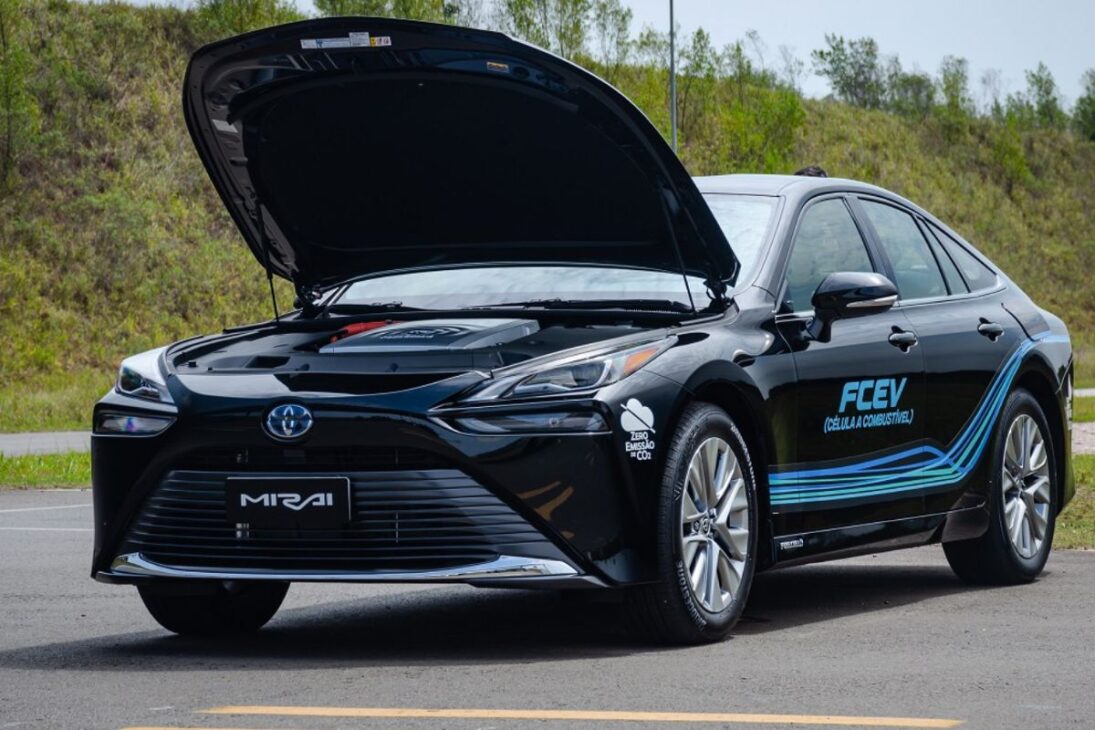
To make the hydrogen car viable, Brazil did not copy the model from other countries. Instead, it created a unique solution in the world. A partnership between Toyota, Shell, Raízen, Hytron, and the University of São Paulo (USP) developed a pilot station that produces renewable hydrogen from ethanol.
The idea is to use the existing ethanol distribution infrastructure in Brazil, which would be much cheaper and more efficient than transporting pure hydrogen. The process, known as steam reforming, heats the ethanol and transforms it into hydrogen at the very refueling location. The pilot plant, inaugurated at USP at the end of 2024, is already in testing phase in 2025.
The Reality Of Ownership: The Challenges Of Refueling And The High Cost Of The Mirai Abroad
But the promise of technology runs into a harsh reality, and the experience of having a Mirai in California, the most developed market for this type of car, serves as a significant warning for Brazil. Reports from owners reveal real-world problems:
Unreliable Infrastructure: hydrogen stations frequently go out of service, with long lines and pressure issues preventing complete refueling.
Catastrophic Depreciation: the car loses value drastically. A 2018 Mirai has already been auctioned in the US for just US$ 6,300, a fraction of its original price.
Fuel Cost: hydrogen at the pump is very expensive. Filling the tank can cost up to US$ 180 for a range of 500 km, a cost per kilometer significantly higher than gasoline or electricity.
The Toyota Mirai In Brazil In 2025: A Test Car, Not A Road Car
The Toyota Mirai In Brazil is not for sale to the public. The units running in the country are part of USP’s pilot project. The hydrogen generated from ethanol at the experimental station fuels a Mirai, a Hyundai Nexo, and three buses, which operate on test routes.
The objective of Toyota and its partners is not to evaluate the Mirai as a consumer product, but rather to validate the technology for producing hydrogen from ethanol. The car acts as a “showcase” and a mobile laboratory for a much larger industrial strategy.
The Future Of Technology: The Focus On Heavy Transport, Such As Buses And Trucks
Given the high cost, catastrophic depreciation, and lack of infrastructure, it is clear that the technology tested with the Toyota Mirai In Brazil has a much more likely future in another segment.
The most viable focus is on heavy transport and commercial fleets. Buses and trucks, which operate on defined routes and can be refueled at centralized garages, are the ideal candidates for this technology. In these segments, the cost calculation is different and may justify the investment. Therefore, the Mirai currently acts as a technological catalyst for a solution that may, in the future, drive the logistics and public transport of the country.








-

3 pessoas reagiram a isso.