Portuguese
  Spanish


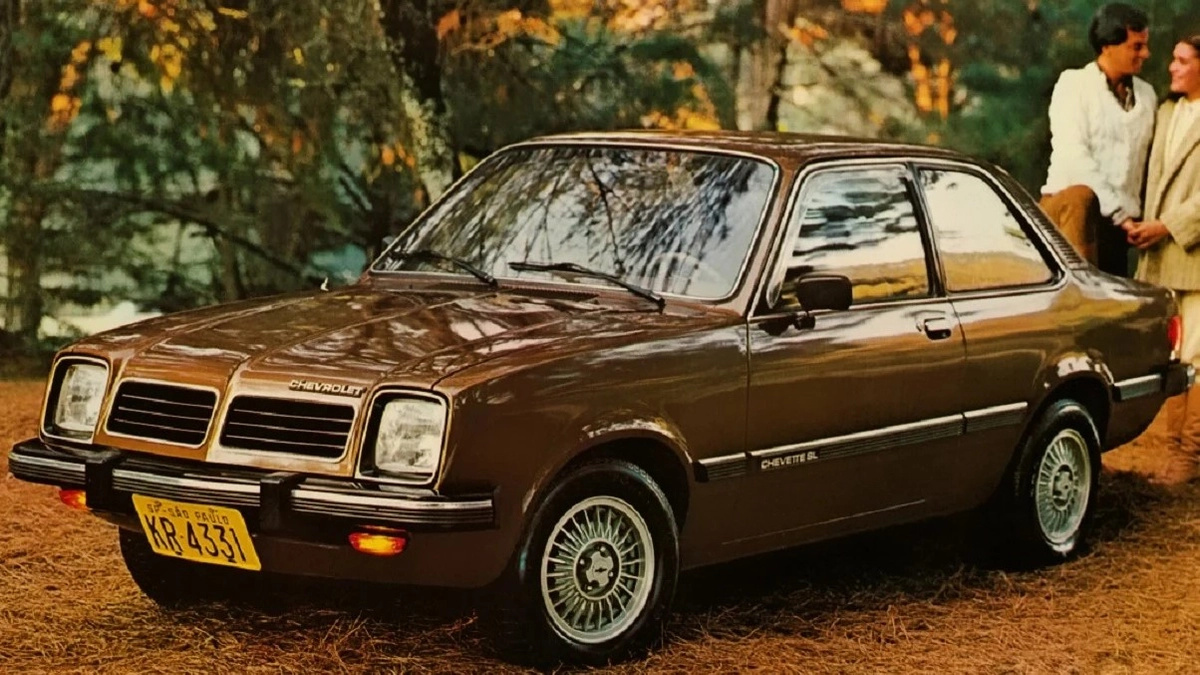


Was the Chevrolet Chevette Really Cheap? See How Much It Would Cost Today with Inflation-Adjusted Values and What This Reveals About Popular Cars in Brazil.
For decades, the Chevrolet Chevette was synonymous with affordable cars in Brazil. Simple, robust, and present in practically every city, it built a reputation as a popular vehicle, easy to maintain and within reach of the average worker. But the question many people ask today is straightforward: Was the Chevette really cheap or just appeared affordable within the economic reality of the time? To answer this, we need to adjust its original price for inflation and compare it with the current scenario.
How Much Did a Chevrolet Chevette Cost When It Was Brand New
In the late 1970s and early 1980s, a brand new Chevette cost around 70 to 80 minimum wages, depending on the version and year. In nominal values at the time, this seemed low, but the minimum wage had a much greater purchasing power in relation to durable goods.
In other words, the Chevette wasn’t exactly “cheap,” but more achievable within the economic logic of that period.
-
1983 Chevrolet Runs Over 100,000 km Without Gasoline, Powered by Wood Chips, Reaches 125 km/h in Airport Test

-
Workshop Converts Giant Tractor Tire Tricycle into a Three-Wheel Drive Hybrid with 36,000-Watt Electric Motor Capable of Climbing Hills

-
Sales of Brazil’s Cheapest Electric Car Halted Before First Deliveries: E-Motors Suspends Emova Easy Due to Import Tax Increase and Rising Freight Costs

-
Nissan Discontinues Qashqai SUV Amid Cost-Cutting, Chinese Competition, and Product Line Review



How Price Adjustment for Inflation Works
To update the value of an old car to today’s standards, the most commonly used criterion is adjustment by the IPCA, the official inflation index in Brazil. This method preserves the purchasing power of money over time.
When applying this adjustment to the original prices of the Chevette, the reality check appears quickly.
How Much Would a Chevette Cost Today in Inflation-Adjusted Values
After the monetary adjustment, a brand new Chevrolet Chevette would cost today between R$ 80,000 and R$ 100,000, depending on the base year considered and the original version.
This amount places the Chevette in the range of modern compact cars, such as Onix, HB20, and entry-level Polo, dismantling the idea that it was a “cheap” car in the absolute sense.


The significant difference was not in the adjusted price, but in the simplicity of the design. The Chevette lacked electronics, power steering, air conditioning, or comfort items that are now considered essential.
This reduced production and maintenance costs, but did not make the car cheap in relation to the population’s income. It was popular because it provided basic mobility, not because it cost little.
How Many Minimum Wages Would Be Needed Today
If we apply the same logic of minimum wages used at the time, a Chevette today would require around R$ 90,000 to R$ 100,000, considering the historical proportion.
This means that the modern worker faces a similar or even greater challenge to purchase a brand new car compared to the 1980s.
Comparison with Current Popular Cars
A modern popular car today costs between R$ 70,000 and R$ 90,000, but it delivers airbags, ABS, air conditioning, electric steering, and more efficient engines.
The Chevette, if sold today with the same standard of simplicity, would not meet the minimum safety and emissions requirements, which shows that the cost of modern cars is not only due to greed but also to mandatory technical evolution.
The Myth of the Cheap Car in the Past
Nostalgia makes it seem like old cars were extremely accessible, but the numbers show a different reality. What has changed is the purchasing power of wages, not just the price of vehicles.
The Chevette wasn’t cheap; it was simpler and compatible with a different economy, with fewer legal and technological requirements.
This comparison helps to understand why cars have become increasingly difficult to attain. It’s not just about inflation, but about high taxation, industrial costs, legal requirements, and the loss of purchasing power of the population.
The inflation-adjusted Chevette shows that the problem is not only the modern car but the economic structure surrounding it.
The Chevette Was Never Cheap; It Just Seemed That Way
The Chevrolet Chevette was not a cheap car in the absolute sense. It was expensive for its time, but delivered the bare minimum, within a different economic context.
When we adjust the values, it becomes clear that the “people’s car” would today cost the equivalent of a modern popular car. The difference is that, back then, the worker could afford it more easily, not always.