





 Portuguese
  English
  Spanish
  5 min of reading
  0 comments


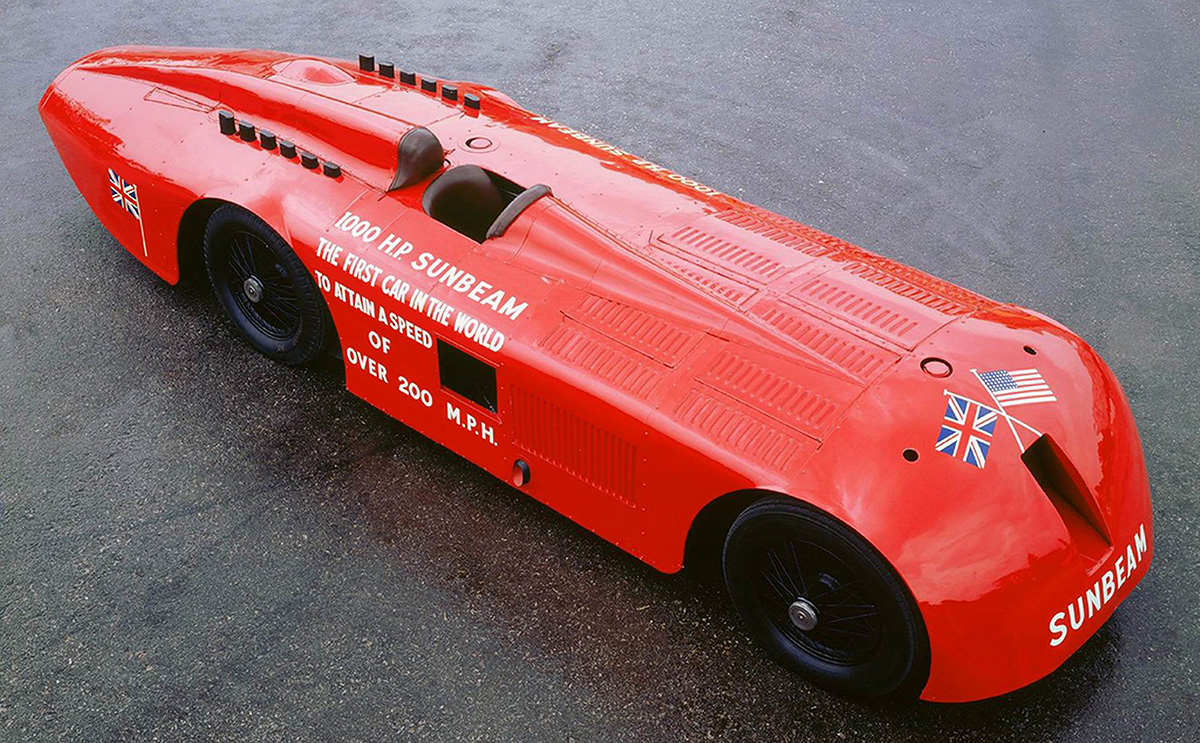
In 1927, the Sunbeam 1000 HP made history by using two airplane engines and reaching 322 km/h, becoming the first car in the world to exceed 200 mph and changing the history of speed.
In 1927, when the world was still recovering from World War I and cars barely surpassed 100 km/h, a British engineer named Louis Coatalen decided to challenge the impossible. His goal was simple yet insane at the same time: to create the fastest car on Earth. The result of this daring dream was the Sunbeam 1000 HP, a metal monster weighing 4.5 tons, equipped with two airplane engines and capable of reaching an impressive mark of 322 km/h, an unimaginable feat for that time.
The project was born in a context of fierce rivalry between British and American manufacturers. The automotive world was living through a race parallel to aviation, a quest for supremacy in speed. While pilots were trying to cross oceans and reach new altitudes, engineers from brands like Sunbeam, Napier, and Rolls-Royce wanted to prove that they could also “fly” over asphalt.
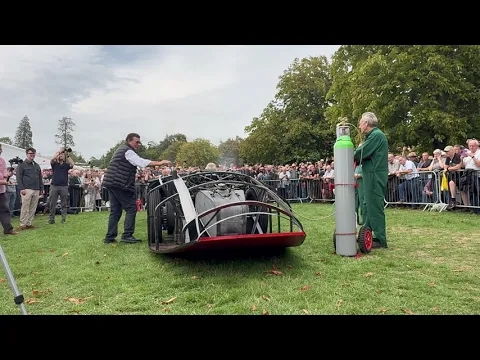

The Sunbeam 1000 HP was the British engineering response to this challenge. Designed specifically to break records, it was not a common car; it was a laboratory on wheels, conceived to withstand extreme forces and overcome the friction of the wind.
-
The Toyota Hilux is R$ 75.5 thousand cheaper and bets on the 2.8 turbodiesel engine with up to 204 hp and 50.9 kgfm to catch up with the VW Saveiro, which leads with 4,472 sales.
-
The new Renault Koleos has a screen exclusively for the passenger that is invisible to the driver, heated rear seats, and 29 assistance systems, but its Chinese competitors cost R$ 40,000 less and deliver more power.

-
The car stored for 38 years: when opening the barn door, what appears is breathtaking and looks like a scene from a movie!

-
Fiat works miracles in the Brazilian market, lowers the price of its 0 km hatch to R$ 69,990, reestablishes the model as the cheapest car in the country, and reignites the battle against Kwid and C3.

And the most impressive part: all of this at a time when there were no modern wind tunnels, simulation computers, or lightweight alloys like today’s. Everything was done based on manual calculations, intuition, and courage.
Two Airplane Engines and a Colossal Structure
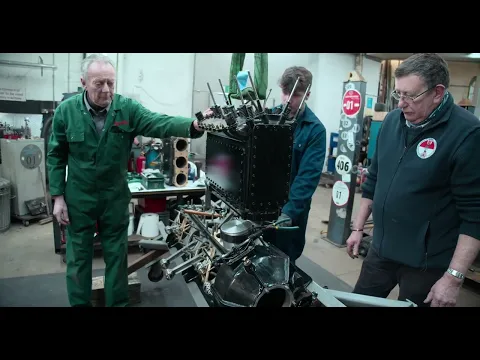
Coatalen’s solution was bold: to use two Sunbeam Matabele V12 airplane engines, each with 22.4 liters and 435 horsepower.
In total, the car delivered around 900 hp, something that, in 1927, was simply surreal—power similar to that of a modern Bugatti Chiron, but with totally mechanical technology, lacking electronic fuel injection, automated transmission, or traction control.
The two engines were mounted in tandem, one in front and the other behind the driver, with a transmission system that unified the forces into a single axle.
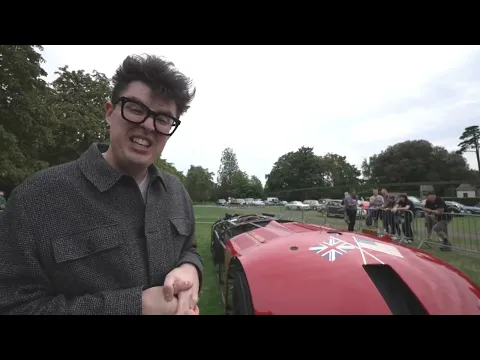
The noise, according to reports from the time, was deafening—a roar similar to that of two fighter planes taking off simultaneously. The heat, vibration, and smell of fuel turned the cabin into a true hell on wheels.
The car earned the nickname “The Slug” ironically, due to its elongated and somewhat un-aerodynamic shape, but the nickname soon proved unjust: the Sunbeam would be anything but slow.
It was assembled at the Wolverhampton factory in England and completed in 1926 after months of testing, adjustments, and meticulous calculations to ensure it wouldn’t fall apart at high speed.
The Day the Impossible Happened
The historic feat occurred on March 29, 1927, on the beach of Daytona Beach, Florida (USA). The chosen driver was the legendary Henry Segrave, a British army captain and World War veteran.
Dressed in a leather racing suit and a pilot’s helmet, he accelerated the Sunbeam 1000 HP in two timed runs to comply with the FIA regulations.
The first run already showed that something extraordinary was about to happen. The car roared like an uncontrolled monster, kicking up clouds of sand and leaving a trail of white smoke on the horizon.
On the second attempt, the miracle was confirmed: 203.79 miles per hour, or 322.02 km/h, becoming the first car in history to exceed 200 mph.
The record was ratified by the International Automobile Association, and Henry Segrave entered the hall of fame as the fastest man on the planet.
The achievement was so impressive that newspapers around the world reported the event as if it were a national accomplishment—a victory of British engineering over human and technological limits.
A Milestone That Changed the Course of Speed
The success of the Sunbeam 1000 HP ushered in a new era. It proved that the 300 km/h barrier could be broken and inspired a generation of engineers and drivers to try to go further. Shortly after, other legendary machines like Blue Bird by Malcolm Campbell and Thunderbolt emerged to compete for the speed throne.
But the Sunbeam maintained its status as a pioneer. Its use of two aircraft engines, reinforced steel structure, and dual transmission laid the groundwork for traction and stability studies that would later be applied to military vehicles, racing engines, and even in the development of jet airplanes.
Today, almost a hundred years later, the car still exists. It is preserved at the National Motor Museum in Beaulieu, UK, and continues to attract visitors fascinated by the audacity of a time when technology was driven more by courage than by electronics.
Restored and carefully maintained, the Sunbeam 1000 HP is considered one of the most important vehicles ever built, not only for its record but for symbolizing the spirit of a generation that believed anything was possible.
The Legacy Of A Dream In Metal And Fire
The feat of 1927 was more than a technical record—it was a turning point in automotive history. It represented the transition between the romance of mechanics and the beginning of the precision engineering era.
The Sunbeam showed that the impossible could be overcome with ingenuity and determination, paving the way for subsequent generations to challenge even higher barriers: 400, 500, and even 1,000 km/h.
For many automotive historians, the name Sunbeam 1000 HP encapsulates the essence of innovation: dare before technology is ready.
That’s how a group of Britons, without computers or digital aerodynamics, created a machine that still commands respect today, not for its design, but for what it symbolizes: the power of human ingenuity in the face of limits.
And in times when electric supercars easily surpass 300 km/h, it’s worth remembering that it all began there, in 1927, on the hot sand of Daytona, with two airplane engines and a driver willing to risk his life for speed.







-

-

-

-

-

7 pessoas reagiram a isso.