





 Portuguese
  English
  Spanish
  5 min of reading
  0 comments


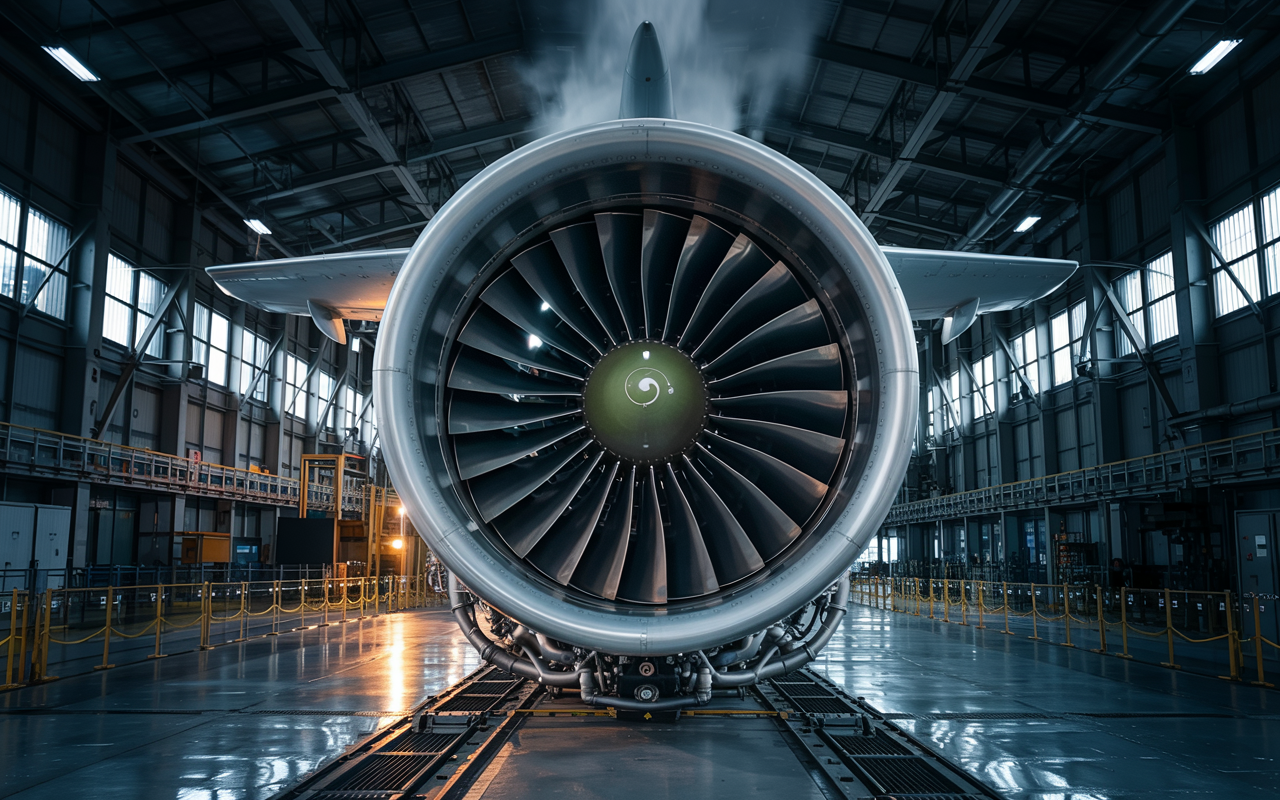
Understand How the GE90 Jet Engine Impresses With Its Extreme Rotation and Capacity to Consume Thousands of Kilos of Air Per Second. Understand How the Jet Engine Works and Why It Is One of the Greatest Creations of Modern Aeronautical Engineering
Modern jet engines are true engineering giants. Capable of operating under extreme conditions, these engines spin at impressive speeds and consume unimaginable volumes of air. An emblematic example is the GE90 engine, developed by General Electric, which in its high-pressure section can reach about 11,000 revolutions per minute (RPM), processing more than 1,200 kilos of air per second — the equivalent in volume to an Olympic-sized swimming pool every minute.
The Force Behind Modern Flight
When observing a commercial jet soaring through the sky, few imagine what happens inside the turbines. The jet engine is the main source of propulsion for these aircraft, and high-efficiency models like the GE90 from Boeing and the Trent XWB from Rolls-Royce are among the largest and most powerful in the world.
These engines operate based on the Brayton cycle, where air is compressed, mixed with fuel, burned, and then expelled at high speed, generating the thrust necessary to sustain an aircraft at tens of thousands of feet of altitude.
-
Goodbye common refrigerator: essential appliance starts to gain competition with technology that preserves food for longer and reduces waste.

-
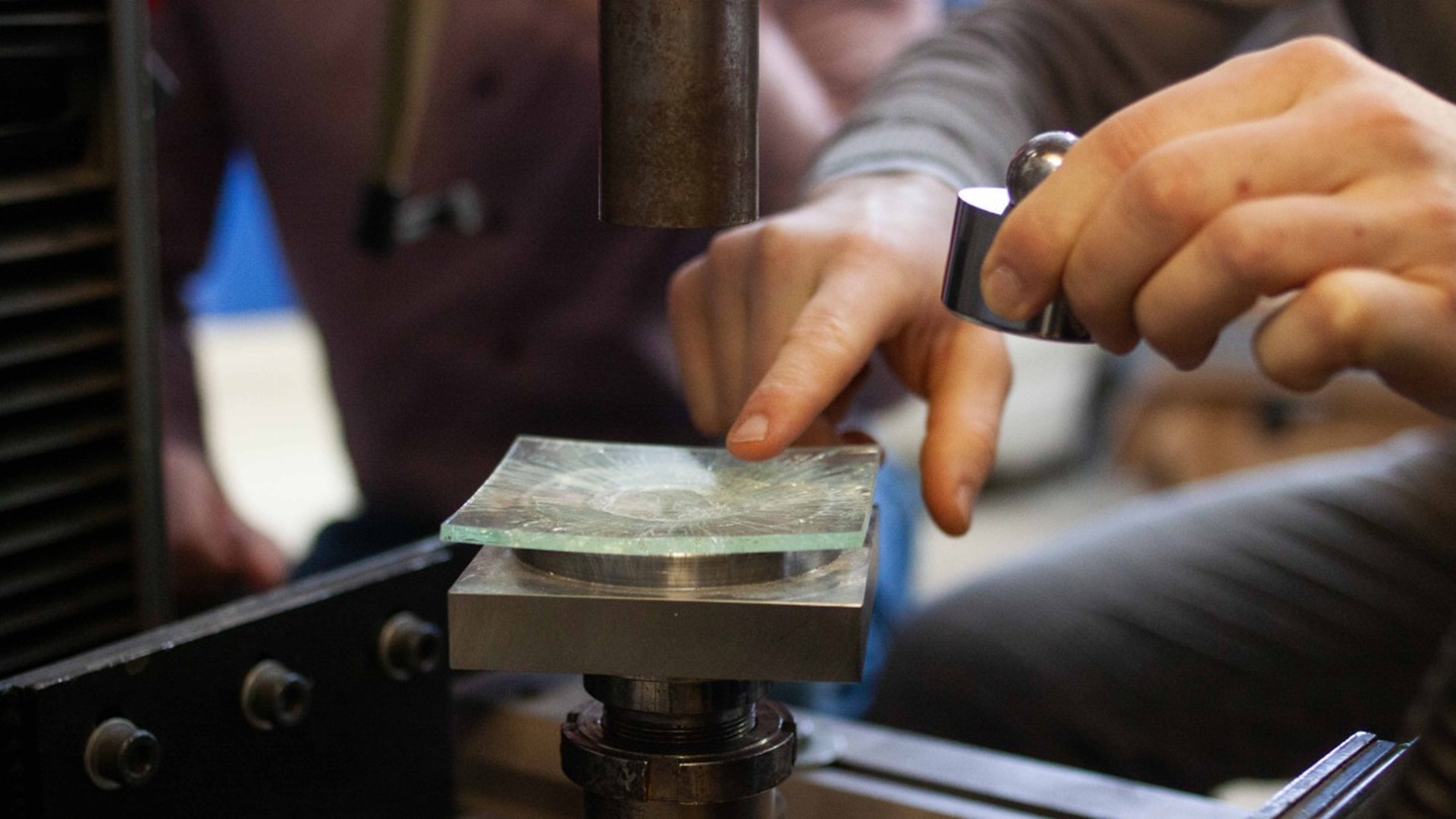
Germany discovers how to reuse old window glass without melting anything and can transform 220,000 tons per year into new high-performance panels, using material from nearly 150 million old windows that would be discarded.
-
China creates hypersonic engine that can make planes and missiles fly more than 6 times the speed of sound with less weight, more range, and without system change.

-
Mysterious object on Mars divides NASA and Harvard after Curiosity image reignites suspicions about what was really found on the planet.


And How Can the Weight of Air Be Quantified?
The weight of air can be calculated from its mass and the acceleration due to gravity, using the classic physics formula:
Weight Formula:
P=m⋅gP = m cdot gP=m⋅g
Where:
- PPP = weight (in Newtons)
- mmm = mass of air (in kg)
- ggg = acceleration due to gravity (approximately 9.8 m/s²)
How to Calculate the Mass of Air?
If you want to know the weight of air in a certain volume, you can use the density of air: m=ρ⋅Vm = rho cdot Vm=ρ⋅V
Where:
- ρrhoρ = density of air (in kg/m³), which at sea level and 25 °C is ≈ 1.18 kg/m³
- VVV = volume of air (in m³)
Practical Example:
Calculate the weight of the air contained in a room of 30 m³ (a standard volume for a small room).
Mass of Air:
m=1.18⋅30=35.4 kg
Weight of Air:
P=35.4⋅9.8=347.9 N
Notice:
Air has weight, and it is precisely for this reason that there is atmospheric pressure. The air above us exerts a constant force on everything on Earth — about 101,325 Pa at sea level, equivalent to the weight of a column of 1 m² of air that can weigh more than 10 tons!
How the Jet Engine Works: Stages of the Propulsion Cycle
To understand how the jet engine achieves such performance, it is essential to comprehend its four main stages:
- Intake: Air enters the front of the engine at high speed.
- Compression: Air is compressed by stages of low and high-pressure compressors.
- Combustion: The compressed air is mixed with fuel and burned.
- Exhaust: The expanded gases exit the back of the engine, generating thrust.
The difference lies in the rotations that each part of the engine reaches. While the low-pressure compressors spin at about 2,500 RPM, the high-pressure compressors — where the air is compressed to the maximum — can reach between 10,000 and 12,000 RPM, as is the case with the GE90 jet engine.
How Many RPM Does a Jet Engine Turn? The Answer Is in the High-Pressure Section


Contrary to popular belief, not all parts of the engine spin at the same speed. In the GE90, for example, the fan — that enormous front propeller visible on the engine — spins at approximately 2,500 RPM.
In contrast, the high-pressure shaft, responsible for the innermost compressors, reaches over 11,000 RPM, operating at temperatures that can exceed 1,500 °C.
This performance is crucial for maximizing combustion efficiency and thrust. The ability to spin at these extreme speeds depends on advanced materials such as nickel and titanium alloys, designed to withstand high thermal and mechanical loads.
How Much Air Does a Jet Engine Consume? An Olympic-Sized Pool Per Minute
The power of these engines does not just lie in their rotations but also in the amount of air they can process.
Engines like the GE90 are capable of compressing more than 1,200 kg of air per second. In terms of volume, this translates to approximately 60,000 cubic meters of air per minute, which is equivalent to a filled Olympic swimming pool.
To put this in perspective, an Olympic swimming pool holds about 2,500 m³. This means that every 2.5 seconds, the engine swallows a whole swimming pool of air. This capacity is essential to maintain the constant thrust needed for long-duration flights at high altitudes.
The GE90 Jet Engine: Engineering at the Limit
Developed for the Boeing 777, the GE90 is considered one of the most powerful engines in the world. With a thrust that can exceed 115,000 pounds, it features a fan with a diameter of 3.4 meters — larger than the fuselage of many airplanes.

In addition to its impressive rotational capacity in the high-pressure section, the GE90 is remarkable for its efficiency and reliability. It is widely used on intercontinental routes and is considered a milestone in the history of aeronautical propulsion.
Why So Much Speed? The Relationship Between RPM and Performance
The jet engine spins at these speeds to maximize air compression and fuel combustion efficiency. An aviation engine spins at whatever RPM is necessary to achieve the ideal balance between fuel consumption and thrust production.
The higher the rotational speed in the high-pressure stages, the more effective the thermodynamic cycle, resulting in superior performance.
However, this increase in efficiency requires ingenious solutions to address thermal, acoustic, and structural challenges. Each component must withstand massive centrifugal forces and extremely high temperatures, making these engines true miracles of modern engineering.
Engines Like the Trent XWB Follow the Same Logic
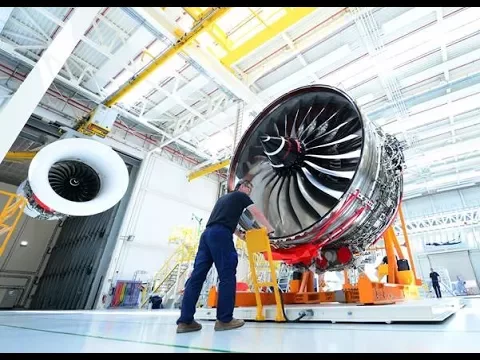
In addition to the GE90, another example of a jet engine operating under similar conditions is the Trent XWB from Rolls-Royce, used in the Airbus A350. It also has inner stages that reach rotations in the range of 11,000 RPM, with air consumption proportional to its size and purpose.
Like the GE90, the Trent XWB is optimized for long distances, focusing on reliability, low emissions, and efficient fuel consumption, making it one of the most advanced engines today.
The Real Dimension of Modern Jet Engines
When talking about jet engines, we rarely grasp what this represents in terms of engineering, power, and efficiency. Knowing that a jet engine spins at over 11,000 RPM and processes the volume of an Olympic swimming pool of air per minute helps to appreciate the grandeur of these systems.
Models like the GE90 jet engine are benchmarks in technology and performance, demonstrating how advanced engineering can be applied to connect continents safely, efficiently, and reliably.
Understanding how the jet engine works makes it clear why they are considered one of the greatest technological achievements of the modern era.








-

Uma pessoa reagiu a isso.