





 Portuguese
  English
  Spanish
  4 min of reading


In An Interview With BNamericas, Executive Discusses New Rules and Opportunities for LNG in Brazil and the Challenges to Be Overcome
Initiatives to open the Brazilian natural gas market coincided with plans for a series of new LNG infrastructure projects in Brazil. However, there are many challenges in the quest to transform a segment still heavily monopolized by Petrobras into a thriving center for international investments, according to Ieda Gomes, a senior visiting researcher at the Oxford Institute for Energy Studies.
See Also Other News
- Porto do Açu Signs Contract to Expand Project Portfolio for Agribusiness Operations
- Bidding Notice Published for Thermoelectric Plant and LNG Unit in Pará
- Golar Power Partners With Argentine Company Galileo for Innovative LNG Project in Brazil
Ieda, who is an independent non-executive director at Prumo Logística do Brasil, will be a speaker at the virtual Colombia Oil & Gas Congress organized by Vostock Capital, which will take place from July 22 to 24.
-
Correios lose more than 3,000 employees in mass layoffs and still aim to reach 10,000 dismissals in an attempt to save a state-owned company that has accumulated losses of R$ 6 billion and a negative net worth of R$ 10 billion.

-
Latin America is stagnant, and Brazil is part of the problem, says the World Bank in a report that highlights Argentina as the main positive exception in the region thanks to fiscal adjustment and Milei’s reforms.

-
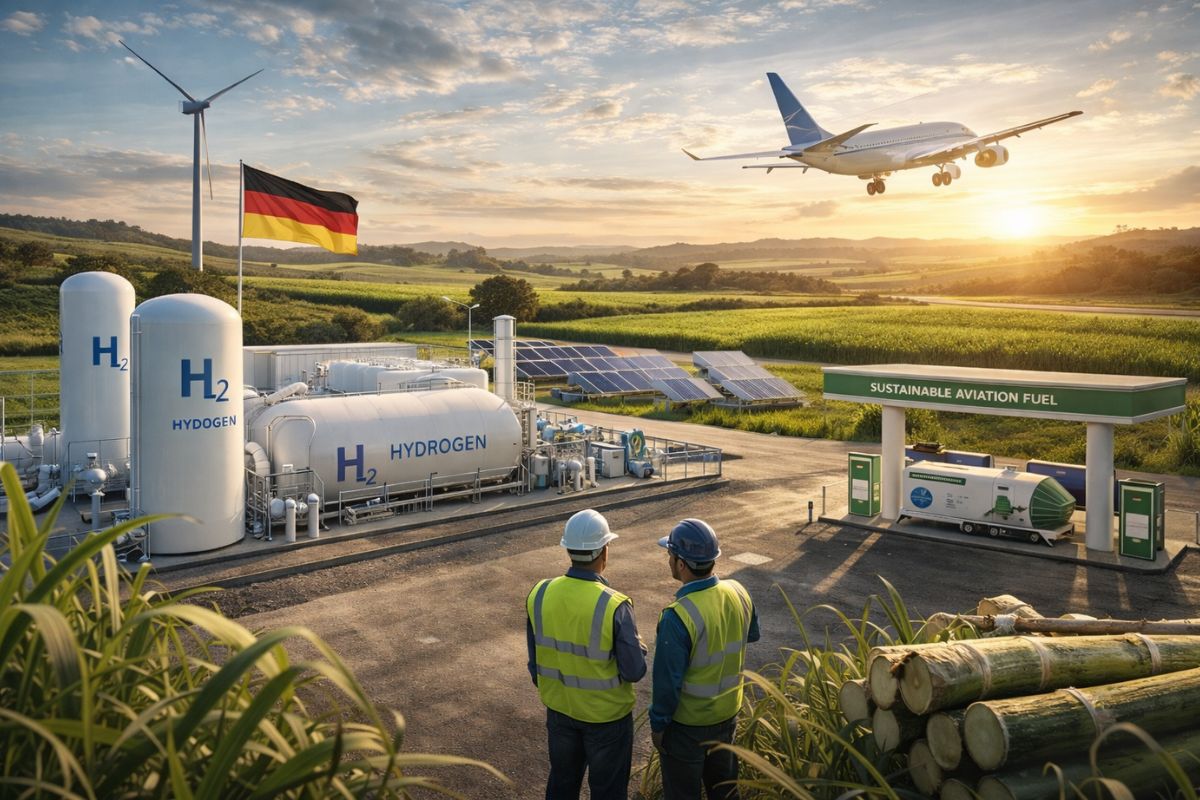
Germany is investing in the interior of São Paulo to test the production of green hydrogen and aviation fuel made from sugarcane in a partnership with Cocal and Siemens that could change the Brazilian energy sector.
-
France takes 129 tons of gold from New York, profits $15.1 billion, and raises alarms in Europe fearing to leave reserves under U.S. control.

The executive, in an interview with BNamericas, shared her views on the LNG market in Brazil and investments. Check out the full details of this report.
The Brazilian government is advancing the New Natural Gas Market Program, which aims to open the natural gas sector to private operators. What additional regulatory changes need to be made to encourage more investments in gas infrastructure projects in Brazil?
There are important regulatory changes that need to be implemented to create a more attractive business environment for investors. First, a shift is needed in the current concession regime for pipeline transportation, similar to what happened before the gas law was enacted in 2009. Since the law was enacted, there have been no new investments in transportation pipelines because the process is very bureaucratic and complicated.
Brazil needs to establish changes in the interstate gas circulation tax law among states. Currently, there is an agreement signed by state finance secretaries, but this can be reversed if a state decides to backtrack.
Other positive actions would include implementing third-party access to LNG plants, offshore pipelines, and gas treatment plants; supporting states to develop compatible and homogeneous regulatory frameworks; and allowing for greater competition in the gas supply, which is currently dominated by Petrobras, enabling independent producers and exporters to access the market.
Brazil has very limited gas infrastructure. How does this favor new business models for LNG?
It is important to increase the natural gas market because no investor will build infrastructure without consumers on one side and suppliers on the other. Furthermore, in order to change the regulatory framework from concession pipelines to authorization—which is common practice in many countries— it is necessary to increase competition in gas supply, provide financing and clear growth targets for gas distribution companies, enable gas trade between states, and reduce the sales tax imposed on gas.
The current energy auction process, which has a maximum inflexibility of 50%, is a barrier to firming or paying agreements with domestic suppliers currently producing associated gas, as this may impair their ability to manage their oil production.
What are some of the key developments that could point to a more dynamic LNG market in Brazil in the near future?
Until recently, there were only three LNG terminals in Brazil, all owned and operated by Petrobras. These terminals were mainly built to supply power plants, as previous governments were very concerned about the possibility of repeating the blackouts of 2001. Petrobras had a significant advantage in managing a large portfolio of domestic and imported gas, from Bolivia and LNG.
After a slowdown in the Brazilian economy, combined with a more favorable hydroelectric regime, the demand for LNG decreased starting in 2016. Thus, Petrobras idled its terminal in Rio de Janeiro and continued operations with the terminals in Bahia and Ceará.
More recently, energy auctions promoted by the federal government resulted in new LNG projects for power, all developed by private investors. In addition to the Golar Power-led terminal in the northeastern state of Sergipe, and the GNA1 terminal under construction in Porto do Açu, Rio de Janeiro, there are three other projects underway, one in Pará, another in São Paulo, and a third in Santa Catarina.
Petrobras has also requested expressions of interest to lease its terminal in Bahia and pre-qualified 10 bidders.
What can we expect from the Brazilian LNG market after the privatization of Petrobras assets and the regulatory update currently being implemented by the federal government?
Petrobras’s intention to divest midstream and downstream assets to focus on upstream exploration and development of the pre-salt is certainly a positive factor that allows private investors to fill that space. As the gas market in most states is still very limited, the growth of LNG businesses in Brazil depends on the ability of terminals to access pipelines and markets in other states, as well as increased use of natural gas in power generation.
*Source: BNamericas








Seja o primeiro a reagir!