





 Portuguese
  English
  Spanish
  5 min of reading
  0 comments



Starting From October 8, 2025, India Will Allow Eye Payments via UPI. The Technology Uses Facial Recognition to Authenticate Transactions and Marks a Historic Leap in Global Financial Digitization.
As of October 8, 2025, India officially enters a new era of digital payments. The Reserve Bank of India (RBI) and the National Payments Corporation of India (NPCI) confirmed the initiation of facial and fingerprint biometric authentication for instant transactions conducted via UPI (Unified Payments Interface), the country’s most widely used payment system. With this measure, Indians will be able to make transfers, purchases, and payments just by looking, without needing passwords, PINs, or physical cards.
The announcement was made during the Global Fintech Festival in Mumbai, representing the greatest advance ever recorded in the history of the Indian digital financial system. This innovation utilizes the database of the Aadhaar, the national biometric identification system that already encompasses over 1.3 billion registered citizens, and promises to transform how people interact with money — and inspire central banks around the world.
A Historic Technological Leap
India has been consolidating itself as the largest laboratory of payment innovation on the planet. UPI, created in 2016, revolutionized the way Indians move money.
-
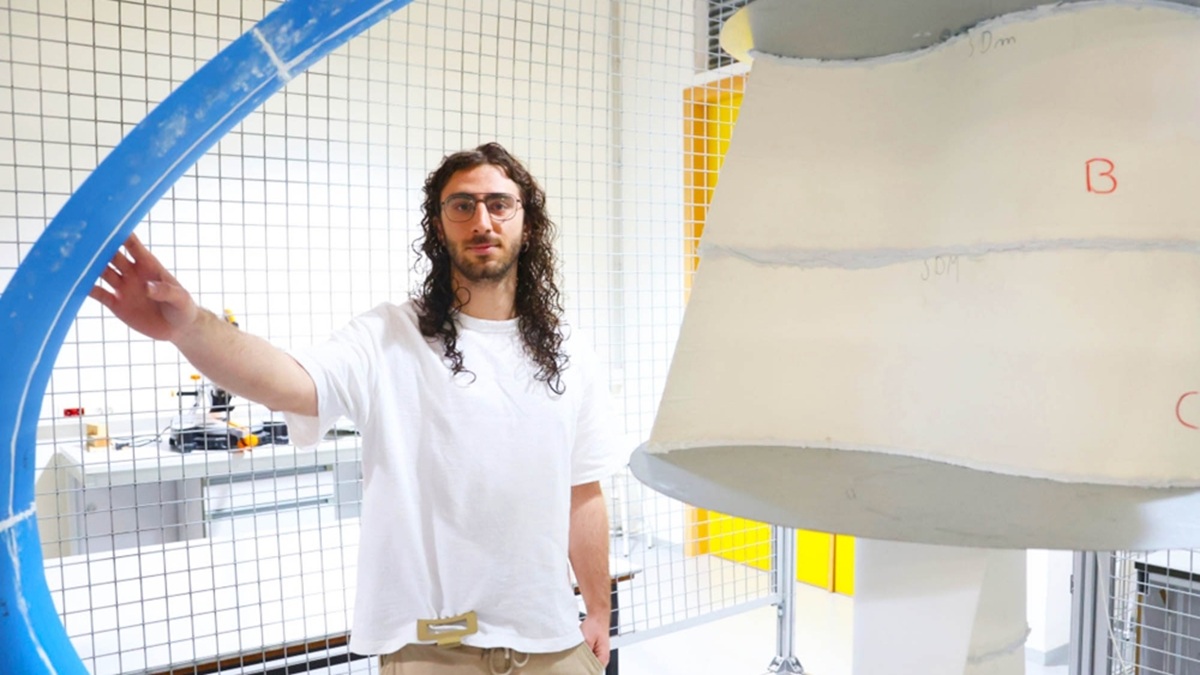
After 10 months of work and six months of almost total dedication, a student creates a wind turbine that exceeds 500 revolutions per minute and could help lower electricity prices in urban areas.
-
Brazil exposes critical fragility in air defense, says site. With few Gepard, Igla-S, and RBS 70 systems, the country does not cover medium altitude and remains vulnerable to drones, missiles, and attacks that cause billions in recent wars.

-
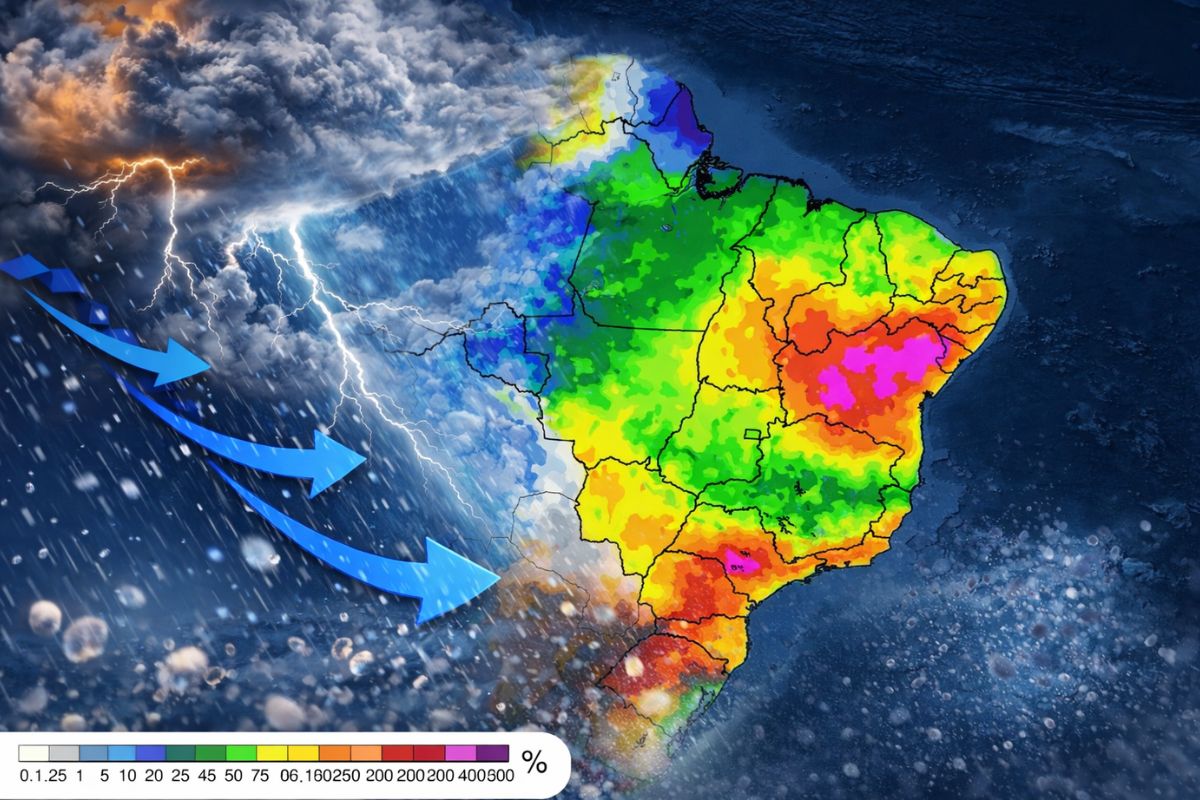
The truce after the last cyclone is over: a new cold front is hitting five states between Saturday and Sunday with up to 100 millimeters of rain, risk of hail, and wind gusts that could cause damage from Rio Grande do Sul to São Paulo.
-
Robots already operate oil rigs without humans, connect pipelines on their own, and inspect platforms in the dark, and the world’s largest drilling company plans to cut 75% of the crew at each well.

The system integrates banks, fintechs, and mobile applications, enabling instant and free transfers 24 hours a day. By 2025, UPI is already processing over 12 billion transactions per month, surpassing the combined volume of Pix, PayPal, and Apple Pay.
Now, with facial recognition, the country takes an even bolder step. According to the Reserve Bank of India, the new technology will eliminate the need for passwords and manual authentication, making the process safer and more inclusive.
Authentication will be carried out through high-precision cameras connected to banking applications or physical payment points, which cross-reference facial or fingerprint data with the Aadhaar information bank.
In an interview with Reuters, a spokesperson for NPCI emphasized that the goal is to “reduce transaction friction and make payment as simple as looking at the device”. In addition to facial biometrics, users will also have the option for fingerprint authentication, especially in rural areas with low internet connectivity.
The Strength of Aadhaar and the Social Impact
The foundation of the Indian model’s success lies in Aadhaar, created in 2009 as a universal digital identity program. It gathers biometric, digital, facial, and iris data — from practically the entire population, integrating government, banks, and digital services.
This system enables India to align technology, inclusion, and security, something that advanced economies such as the United States and the European Union still struggle to implement centrally.
According to the RBI, about 85% of India’s digital transactions today are already conducted via UPI, making it the most comprehensive payment system on the planet. With biometric integration, it is expected that over 300 million new users, especially those without bank accounts or easy access to the internet — will be able to join the system by 2026.
The expectation is that facial authentication will reduce fraud and improve identity control in remote regions where access to technology is limited. In doing so, India strengthens its goal of becoming a “cashless nation” by the end of the decade.
The Indian Pioneering and Global Impact
With the decision to implement eye payments, India becomes the first country in the world to officially allow large-scale facial biometric authentication for instant transactions. The initiative positions the country ahead of giants such as the United States, China, and the European Union, which are still testing similar projects in controlled environments.
Financial technology analysts point out that the Indian model could serve as a foundation for the future infrastructure of international payments, especially in partnerships with countries already studying integration with UPI, such as Singapore, United Arab Emirates, France, and Brazil.
The movement also pressures other powers to accelerate their own innovations. China, for example, already utilizes facial recognition on private platforms such as WeChat Pay and Alipay, but lacks a public and unified database like India’s. Meanwhile, the European Central Bank is maintaining a working group dedicated to the “Digital Euro,” but initiatives are still in the pilot phase.
Security, Privacy, and Challenges
While the innovation is seen as a landmark development, it also sparks debates about privacy and data surveillance.
Digital rights organizations warn that the mass use of biometric information requires strict cyber security protocols and transparency regarding the storage and usage of facial data.
The RBI responded to the criticisms by stating that the system was designed to operate within a “double-check and decentralized layer”, ensuring that biometric information remains encrypted and is not shared with third parties without user consent.
Experts also highlight that the Indian model is unique for balancing inclusion and innovation: while simultaneously bringing cutting-edge technology to rural areas, it does so based on a robust national system that unites government, banks, and the private sector.
India and the Future of Payments
In just over a decade, India has transitioned from a country with low banking access to a global reference in digital payments and financial identity. Now, with “pay with your eyes,” it takes a step forward towards the future that the rest of the world is still trying to reach.
The new phase of UPI officially begins on Wednesday, October 8, 2025, and is expected to gradually expand to all banks and payment applications by the first quarter of 2026. The Indian government projects that, with this update, the system will reach 20 billion monthly transactions in less than a year.
More than an innovation, this is a paradigm shift: a country of 1.4 billion inhabitants showing that the line between the human body and financial technology is about to disappear.








-

Uma pessoa reagiu a isso.