





 Portuguese
  English
  Spanish
  4 min of reading
  2 comments


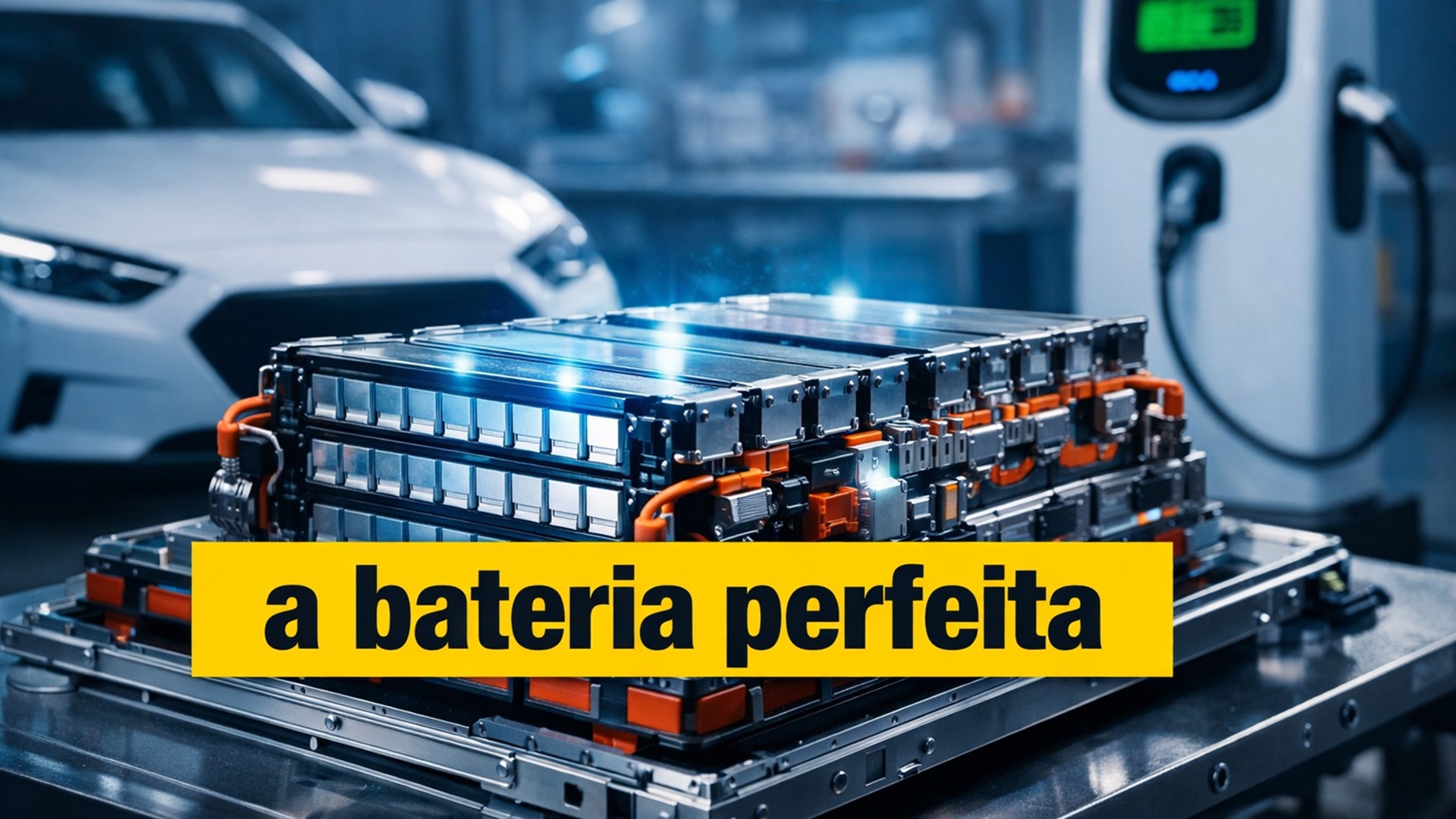


New Magnetic Field-Controlled Magnetoconversion Strategy Quadruples the Storage Capacity of Electric Vehicle Batteries, Maintaining Efficiency Above 99% for Hundreds of Cycles and Reducing Fire and Structural Failure Risks
The development of a magnetically controlled battery system has achieved four times the capacity of graphite anodes, maintaining efficiency above 99% for over 300 cycles, with direct potential to reduce range anxiety in electric vehicles.
Researchers have presented a technology described as the dream battery, capable of significantly increasing energy storage while simultaneously decreasing risks of thermal runaway and explosions associated with high-density batteries.
The system combines greater energy capacity with precise control of lithium ion transport, offering an integrated technical solution to two central challenges of current electric vehicles: limited range and operational safety concerns.
-
They seemed like common bones, but scientists were surprised to find a relic over 12,000 years old that dates back to before the Bronze Age.

-
With an almost perfect ring of 70 km visible from space, known as the “Eye of Quebec” and over 100 km in length, the Manicouagan Crater in Canada reveals the colossal mark left by a giant asteroid and has become one of the most impressive formations ever identified on the Earth’s surface.

-
Scientists have found in China dinosaur embryos dating back 190 million years in various stages of development, and the discovery still preserves traces of extremely rare proteins in the bones, something that could change what is known about life before hatching.

-
The CEO of Honor in Spain says that smartphones will change with AI, foldables, and even robot phones; the component crisis is making cheap models more expensive in 2026 and shifting the focus to premium.

Magnetic Strategy Applied to Energy Storage
The advancement introduces a strategy called magnetoconversion, which utilizes external magnetic fields to regulate the electrochemical behavior of the anodes during the battery’s charge and discharge cycles.
The POSTECH team, led by Professor Won Bae Kim, applied this magnetic field to control lithium ion transport uniformly and stably.
According to the researchers, this approach allows for substantial increases in energy density without raising the risks traditionally associated with high-capacity metallic lithium batteries, which are often limited by structural instability.
The result is a system that maintains high performance over hundreds of cycles, preserving the internal integrity of the electrode and extending the battery life in automotive and stationary applications.
Overcoming Dendrite Formation in Lithium Batteries
The central technical focus of the study is on mitigating dendrite growth, needle-like pointed structures that arise during repeated charging cycles in metallic lithium batteries.
In conventional systems, these dendrites can pierce the internal separator, causing short circuits that lead to thermal runaway and, in extreme cases, dangerous fires or explosions.
For this reason, the industry has widely adopted graphite anodes, which are less susceptible to these risks, although this solution has already reached the physical limits of energy capacity.
The new technology overcomes this barrier by inducing the formation of a smooth, dense, and uniform metallic lithium layer that remains stable even after hundreds of cycles of continuous use.
Functioning of Magnetoconversion in Anodes
The stable layer results from the application of a specific magnetic field in conversion anodes made of ferromagnetic manganese ferrite, the central material in the architecture of the developed system.
When lithium is inserted into this anode, the formation of ferromagnetic metallic nanoparticles occurs, which respond directly to the influence of the external magnetic field applied to the electrode.
These particles align like tiny magnets within the anode, creating an internal organization that regulates the movement of lithium ions during electrochemical processes.
The combined action of the magnetic field and the Lorentz force prevents localized ion concentration, avoiding clusters that normally trigger irregular growth and dendrite formation.
Expanded Capacity and Long-Term Stability
The resulting hybrid system stores energy through a dual mechanism, keeping lithium both incorporated in an oxide matrix and deposited as metallic lithium on the surface of the anode.
This arrangement allows for achieving a storage capacity approximately four times greater than that of commercial graphite anodes, without compromising stability throughout the charge and discharge cycles.
Tests have confirmed that the uniform lithium layer remains dense even after prolonged use, preventing the structural degradation that typically reduces the lifespan of high-density batteries.
A coulombic efficiency of over 99% has been maintained for more than 300 cycles, indicating a consistent balance between input and output charge throughout the system’s operation.
Perspectives for Electric Vehicles and Large-Scale Storage
According to Professor Won Bae Kim, the approach simultaneously addresses the two main challenges of metallic lithium anodes: structural instability and dendrite formation during repeated cycles.
The team believes that this technical foundation could enable batteries with faster charging speeds, extended lifetimes, and more predictable performance in next-generation automotive applications. Beyond the vehicle sector, the technology is seen as applicable to large-scale energy storage systems, where safety and energy density are critical viability factors.
The researchers state that the method represents a new path for safer, more reliable lithium-metal batteries capable of supporting future advancements in capacity, durability, and energy efficiency.
With information from eurekalert.






Nossa, pelo que li , só tem eficiência em 300 ciclos , isso não daria nem pra um ano , as normais são 5000 ciclos para perder 30% , tem que melhorar a durabilidade..
A utilização de grafeno ja faz mais de 30 anos e ainda não foi possível a utilização pelo custo, vai ser um avanço para as baterias assim que isso acontecer. Não acredito que será agora , talvez essa junção entre o lítio e o grafeno.