





 Portuguese
  English
  Spanish
  6 min of reading
  0 comments


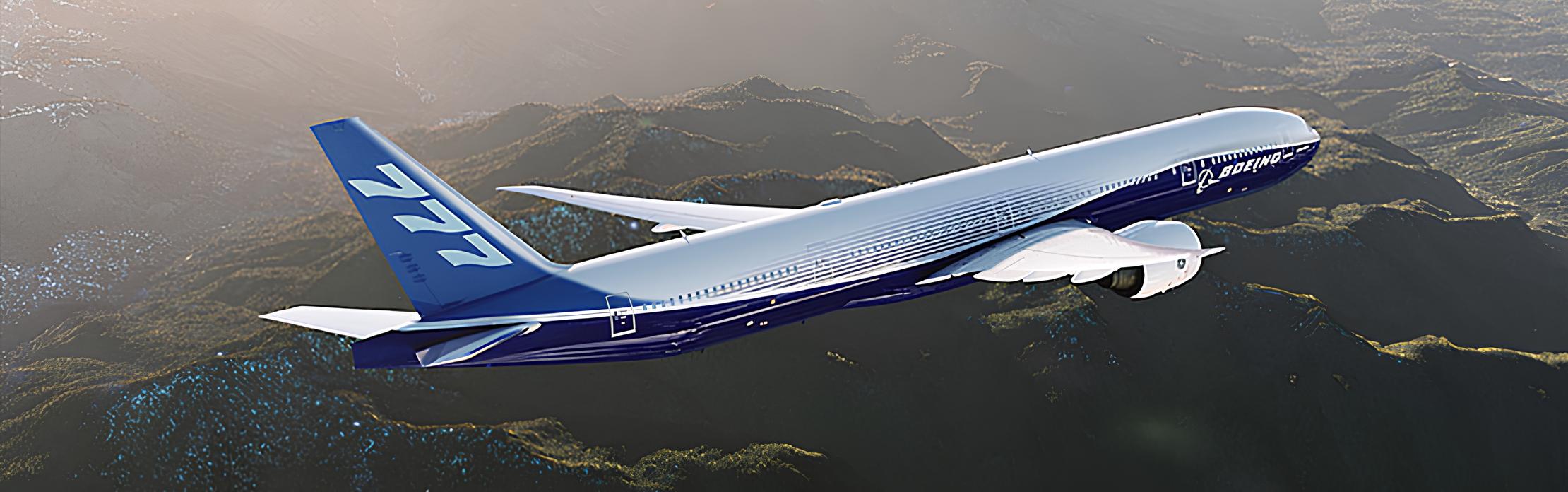
Know The Boeing 777-300ER, The Airplane That Consumes 7.8 Tons Of Fuel Per Hour And Is A Reference Among The Most Thirsty Models. Understand The Fuel Consumption Of The Boeing 777-300ER On Long Flights Of Up To 14,000 Km And Its Importance In The Global Air Market
The Boeing 777-300ER is one of the largest and most powerful commercial airplanes in the world, recognized for its ability to fly long distances with high operational efficiency. However, its fuel consumption is significant: on average, the airplane consumes 7.8 tons of fuel per hour during flights that can reach up to 14,000 km non-stop. This characteristic reinforces the airplane’s reputation as one of the “thirstiest airplanes” in commercial aviation.
Understanding the fuel consumption of this aircraft is essential to comprehend the functioning, demands, and challenges that involve long-distance air transport. In this article, we will explain the technical reasons for this consumption, the importance of the model in the global market, the technologies that help reduce environmental impact, and how the 777-300ER positions itself among the most powerful airplanes currently in operation.
Boeing 777-300ER: Airplane That Consumes 7.8 Tons Per Hour And Flies Up To 14,000 Km
The Boeing 777-300ER is a twin-engine aircraft manufactured by Boeing, designed for long international routes, with capacity for up to 396 passengers in typical configuration.
-
Chaos On Airplane Could Be Expensive: Proposal Aims To Prevent Disruptive Passengers From Flying For Up To 1 Year In Brazil And Face Fines Of Up To R$17,500

-
Man Arrested After Halting Takeoff of Fire Department Helicopter During Child Rescue in Guaratuba

-
With 37 Tons of Cargo, Over 8,000 km Range, and Ability to Land on Unpaved Runways, the Airbus A400M Demonstrates How Europe Created a Military Giant That Transports Armored Vehicles, Aerially Refuels Fighters, and Operates in Conflict Zones and Humanitarian Missions Worldwide
-
Emergency Landing in Campos Amarais After Bird Strike on Small Plane

Its great highlight lies in the combination of high transport capacity and a range that can reach 14,000 km, allowing non-stop flights between distant continents.


To support this performance, the 777-300ER utilizes two General Electric GE90-115B turbofan engines, which are the most powerful engines ever installed on a commercial airplane, each generating up to 115,300 pounds of thrust. The result is a powerful machine that, per hour of flight, consumes about 7.8 tons of fuel — equivalent to approximately 9,700 liters.
This consumption, although high in absolute values, is expected for an aircraft of this size, considering its maximum takeoff weight, which exceeds 350 tons.
Thus, despite being an airplane that consumes a lot of fuel, the model offers relative efficiency that keeps it competitive against larger or less modern aircraft.
The Fuel Consumption Of The Boeing 777-300ER And Its Technical Causes
The airplane’s high consumption is directly related to several technical factors intrinsic to its construction and operation:
- Aircraft Weight: With a capacity of over 350 tons of maximum takeoff weight, the 777-300ER requires a lot of energy to take off and maintain stability in flight.
- Engine Power: The GE90-115B engines, although highly efficient for their category, demand a large amount of fuel to generate the necessary thrust to transport hundreds of passengers and cargo on transcontinental routes.
- Aerodynamic Configuration: Although the aircraft’s design is optimized to reduce drag and maximize efficiency, the wingspan, long fuselage, and weight influence the final consumption.
- Passenger and Cargo Capacity: Transporting nearly 400 people and their luggage requires more fuel than smaller airplanes with less range.

In addition, the Boeing 777-300ER is equipped with cutting-edge technologies that optimize consumption, such as advanced flight management systems and winglets at the tips of the wings, which improve lift and reduce aerodynamic drag, decreasing fuel consumption by up to 7% compared to previous models.
Comparison Of The Boeing 777-300ER With Other Thirsty Airplanes In The Market
When we talk about the “thirstiest airplane,” the aircraft in question is among the models that have the highest fuel consumption per hour, but this should be analyzed in context.
- Airbus A380: The largest passenger airplane in the world can consume up to 11 tons per hour. With four engines and capacity for over 800 passengers, the A380 is naturally more “thirsty” in absolute terms.
- Boeing 747-8: This classic freighter and passenger airplane consumes about 9 tons of fuel per hour, with four engines and capacity to transport large volumes.
- Boeing 787 Dreamliner: More modern and focused on efficiency, the 787 consumes about 5 tons per hour but has a smaller capacity and different range.
Therefore, the Boeing 777-300ER, despite being an airplane that consumes 7.8 tons per hour, shows reasonable consumption when compared to larger or older generation aircraft, especially considering its range and capacity.
The Relevance Of The Boeing 777-300ER In Global Air Transport
The thirstiest airplane is used by several leading airlines around the world, especially for intercontinental routes that require large capacities of passengers and cargo, uniting operational efficiency and comfort.
Its main functions include:
- Long-distance flights between North America, Europe, Asia, and South America
- High demand routes in emerging and developed markets
- Transport of passengers and special cargo
In addition to efficiency in range and capacity, the aircraft is valued for its reliability and relatively low operating costs for long-haul flights. This makes it a strategic model for airlines that need to connect continents non-stop, optimizing time and resources.
Technological Advances To Improve The Consumption Of The Thirstiest Airplane In The World
Despite its high consumption in absolute terms, the Boeing 777-300ER incorporates several innovations to minimize environmental impact and optimize fuel consumption:
- GE90-115B Engines: Utilize advanced technologies to maximize fuel burning efficiency, including digital control systems and heat-resistant materials that increase output.
- Structure In Composite Materials: Reduction of fuselage weight through the application of carbon fibers and lighter metal alloys, contributing to lower consumption.
- Winglets And Aerodynamics: The tips of the wings have winglets that improve lift and reduce drag, saving fuel by up to 7%.
- Route Management: Sophisticated flight planning systems help choose more economical routes, avoiding turbulence and optimizing fuel use.
Even with these innovations, the search for aircraft with lower environmental impact continues, and the Boeing 777-300ER is among the models that pave the way for even greener technologies.
Understanding The High Consumption: What It Means For The Future Of Aviation?
The fact that the Boeing 777-300ER is an airplane that consumes 7.8 tons of fuel per hour raises important questions for the aviation sector, mainly regarding sustainability.
The aviation sector is responsible for about 2-3% of global CO₂ emissions, and powerful models like the 777-300ER are a significant part of that impact. For this reason, airlines and manufacturers are working together to:
- Invest In Sustainable Biofuels That Can Reduce Emissions
- Develop More Efficient And Less Polluting Engines
- Create Hybrid And Electric Aircraft For Short And Medium Routes
- Optimize Operations To Minimize Unnecessary Consumption
The Boeing 777-300ER, despite being a consumption giant, is an example of how the industry is advancing, combining power with technologies that improve energy efficiency.
What The Consumption Of The Boeing 777-300ER Reveals About Modern Aviation
Analyzing the fuel consumption of the Boeing 777-300ER allows us to understand how global air transport balances capacity, range, and sustainability.
Although it is a “thirsty” airplane in absolute numbers, its performance and onboard technology show that the industry seeks a balance between:
- Meeting The Growing Demand For Passengers And Cargo On International Flights
- Ensuring Safety, Comfort, And Reliability In Operations
- Reducing Environmental Impact Through Continuous Improvements
Furthermore, the 777-300ER helps understand the evolution of aeronautical engineering, which increasingly prioritizes lightweight materials, efficient engines, and intelligent systems, paving the way for a more sustainable future.










-

-

-

-

-

-

34 pessoas reagiram a isso.