





 Portuguese
  English
  Spanish
  5 min of reading
  0 comments


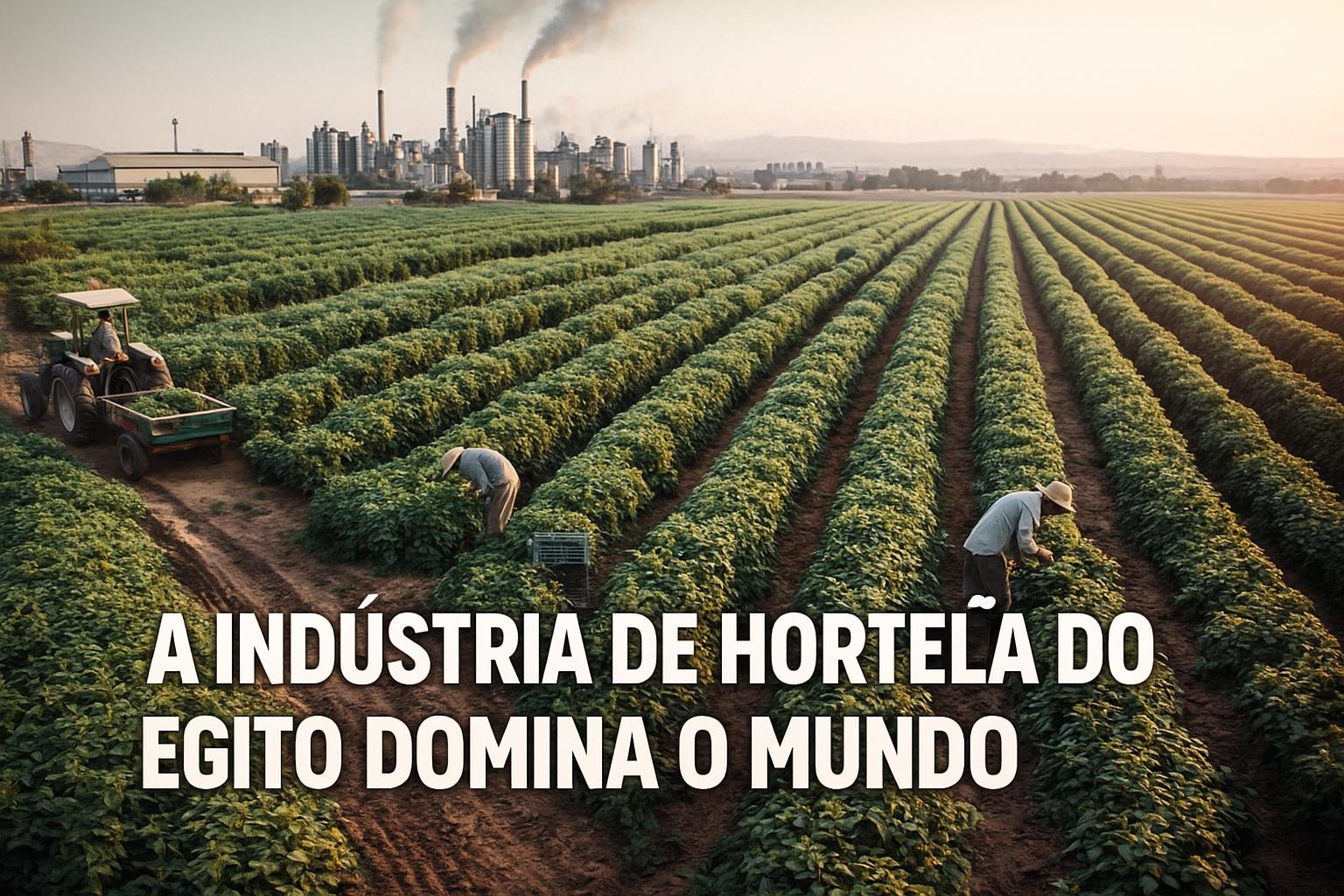
The Egyptian Mint Industry Processes Over 40 Thousand Tons Annually and Dominates the Global Essential Oils Market with Technology and Intensive Cultivation.
The story of the largest mint hub in North Africa gained momentum in 2024, when new international agricultural reports highlighted the impressive expansion of Egyptian plantations dedicated to the production of aromatic herbs for export. Although little discussed outside the industrial sector, the productive structure located along the Nile River involves thousands of farmers, operates heavy machinery, and supplies global chains of cosmetics, pharmaceuticals, food, and flavorings.
The latest data released by the International Trade Centre and FAO confirm that Egypt is among the top producers and exporters of mint in the world, with volumes ranging between 35 thousand and 45 thousand tons per year, depending on the harvest. But the number that really stands out is what happens after the harvest: tons of fresh leaves go through industrial lines for drying, mechanical sorting, and steam distillation that feed one of the most valuable aromatic markets in the world.
The strength of this sector lies not only in the quantity produced but in the technical rigor applied to the processing chain, which has transformed mint into an essential input for high-value-added products — from toothpaste to herbal medicines, from perfumes to processed foods. Egypt has quietly become a global aromatic powerhouse.
-
The sea water temperature rose from 28 to 34 degrees in Santa Catarina and killed up to 90% of the oysters: producers who planted over 1 million seeds lost practically everything and say that if it happens again, production is doomed to end.

-
An Indian tree that grows in the Brazilian Northeast produces an oil capable of acting against more than 200 species of pests and interrupting the insect cycle, gaining ground as a natural alternative in soybean, cotton, and vegetable crops.
-
The rise in oil prices in the Middle East is already affecting Brazilian sugar: mills in the Central-South are seeing their margins shrink just as ethanol gains strength.
-
Rain gains strength in April, potentially exceeding 150 mm, placing the North, Northeast, and the coasts of the South and Southeast at the center of the heaviest forecast of the week.


Mint on an Industrial Scale: The Irrigated Cultivation Advancing Through the Nile Valley
The foundation of this mega-operation begins in the fields. In the Nile Valley, entire areas are dedicated to the intensive cultivation of mint, a sensitive crop that requires proper management, constant irrigation, and precise harvesting to preserve the menthol content of the leaves. Regions like Fayoum, Minya, and Beni Suef have established themselves as productive hubs, benefiting from a warm climate, fertile soils, and direct access to river water.
The process begins in the early morning hours, when farmers harvest the leaves either manually or with the aid of mechanized equipment at the optimal point of maturity. The goal is to maintain freshness and aromatic content before the extreme desert heat compromises the volatile compounds.
This step is essential as it defines the final quality of essential oils, an input that generates billions in the global cosmetics and aromatherapy market.
The speed at which the leaves are transferred to the industrial units is critical. Within hours, trucks traverse rural roads carrying the harvest to large warehouses where the second phase of the chain begins.
From Farm to Factory: Tons of Mint Undergo a Rigorous Technical Process
In the industrial units specially set up for aromatic herbs, processing is completely different from the romantic image the public tends to have of medicinal plants. It is a robust production system inspired by the food and pharmaceutical sectors.
First, the freshly harvested leaves go through selection conveyors with sensors that remove impurities. They are then directed to controlled drying chambers, machines capable of removing moisture from hundreds of kilograms per cycle without altering the plant’s active ingredients.
Specialized companies state that this process can reach tons per hour, depending on the type of machinery.
The next step is the most valuable: steam distillation, where large industrial boilers apply hot steam to the leaves to extract the essential oil. These systems operate almost continuously during the harvest, producing a highly concentrated aromatic liquid used as raw material in products worldwide.
The essential oil of mint produced in Egypt is recognized for its high menthol content and strong aromatic profile. This explains the country’s constant presence among the top global exporters and its strategic importance to international manufacturers of toothpaste, breath fresheners, creams, ointments, and personal hygiene items.
From Aromatherapy to Premium Cosmetics: Egyptian Mint Dominates Global Niches
The economic impact of this sector is not limited to agriculture. The mint chain in Egypt connects directly to high-value-added industries in over 60 countries.
In the United States and Europe, Egyptian oil is widely used by traditional oral hygiene brands. Menthol, in turn, supplies manufacturers of pharmaceutical products, topical anesthetics, and respiratory ointments.
In the Middle East, the input is used in premium cosmetics and artisanal perfumes. In Asia, the expansion of natural aromatherapy has exponentially increased the demand for pure essential oils, further benefiting Egyptian producers.
This diversification means that mint is not just an agricultural product but a global industrial asset, with high commercial elasticity and significant margins for exporters.
Massive Export: How Mint Became One of the Country’s Major Agricultural Engines
Reports from the Egyptian Ministry of Agriculture show that the country exports millions of dollars in aromatic herbs every year, including mint, chamomile, anise, cumin, and marjoram. Among this group, mint ranks among the top three, supported by high international demand and the stringent sanitary standards of the factories operating in the sector.
Exports follow international standards, with certifications such as ISO, HACCP, and pharmaceutical norms required by the largest buyers. Compliance with these requirements has consolidated the country’s credibility and increased commercial flow, strengthening a production chain that employs thousands of rural families and stimulates cooperatives, transporters, and processing companies.
The Future of Egyptian Mint: Automation, Drones, and Digital Traceability
In recent years, technological innovation has begun to transform cultivation. Experimental farms use drones for monitoring irrigation and plant health, sensors to detect pests, and digital traceability models to meet European market demands.
Factories invest in more efficient extraction lines capable of increasing essential oil yield without altering its composition. The sector’s goal is to expand production and elevate Egypt’s presence in the premium aromatic market — a niche that pays more for the purity and chemical consistency of oils.










-

-

2 pessoas reagiram a isso.