





 Portuguese
  English
  Spanish
  4 min of reading
  0 comments



In The Omo Valley, Ethiopia, Communities Live Without Internet, Signal or Modern Infrastructure, Maintaining Traditional Lifestyles Outside the Global Network.
In the far southwestern part of Ethiopia, away from major urban centers, there’s a region where the logic of the connected world simply does not apply. The Omo Valley, recognized as a UNESCO World Heritage Site, is often cited as one of the last places on the planet where the internet is nonexistent or extremely limited, and where entire communities continue to live practically outside the global network that connects billions of people.
There, time runs at a different pace. There are no notifications, feeds, streaming, or remote work. In vast areas of the valley, cell signal is nonexistent, electricity is scarce, and modern infrastructure simply has not arrived—or has arrived only sporadically and fragilely.
Where The Omo Valley Is Located And Why It Is So Isolated
The Omo Valley is located in the southwest of Ethiopia, near the borders with Kenya and South Sudan. It is a geographically difficult region, marked by arid plains, seasonal rivers, precarious roads, and long distances between villages.
-
Sleeping at different times each day can be a bomb for your heart and even double your risk of having a heart attack.

-
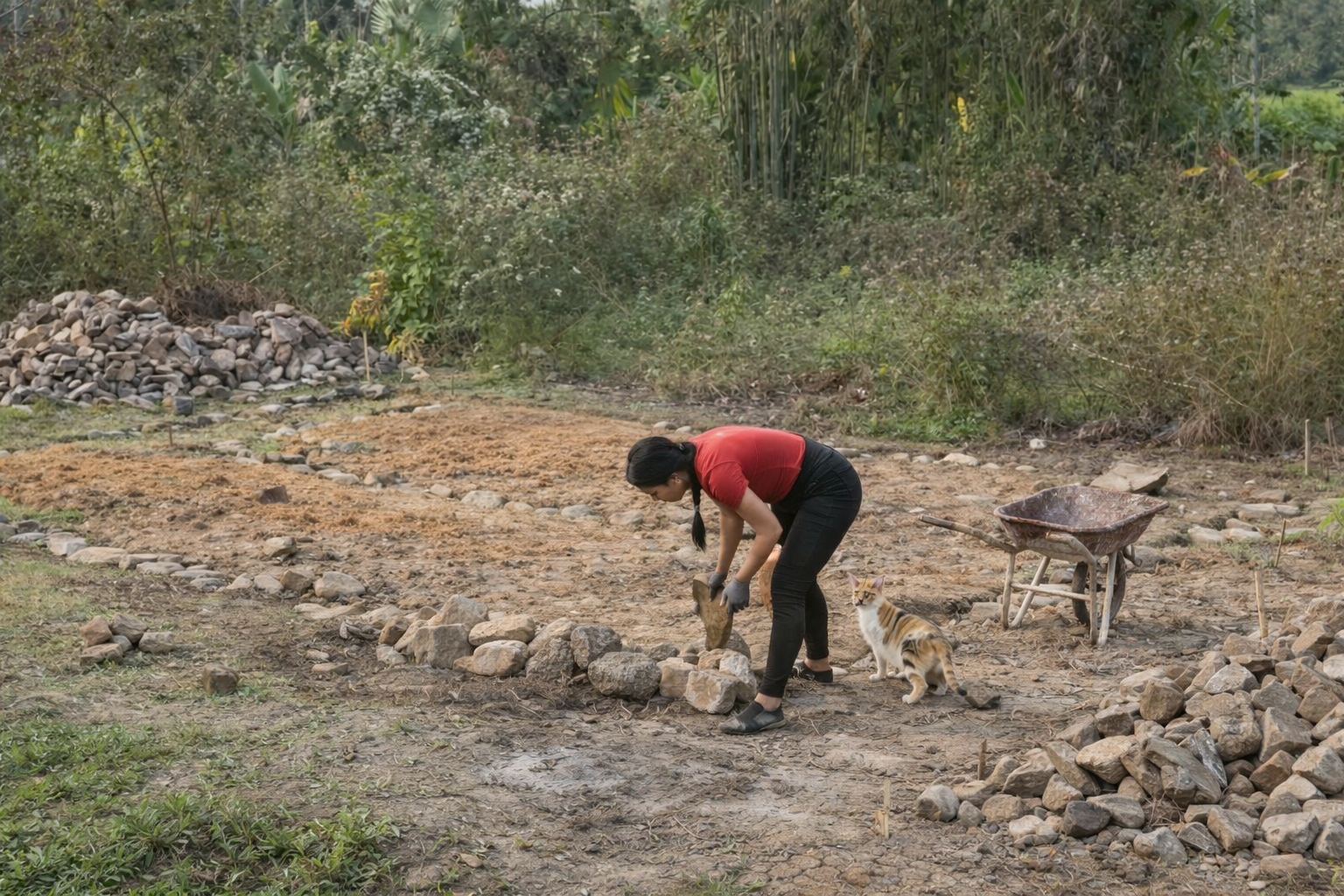
Without help and without heavy machinery, a woman builds a house from scratch with stone, wood, and cement, erects a chimney, creates a complete leisure area, and transforms an empty lot into her dream home.
-
Couple transforms abandoned house after years of being closed; residence was overgrown with weeds, had a green pool, and a deteriorated structure in the interior of Rio de Janeiro.

-
Hidden marks on the walls of the site associated with the Last Supper of Jesus for centuries have been deciphered in Jerusalem, revealing medieval inscriptions left by pilgrims, European nobles, and travelers from the Middle East.




This physical isolation has always acted as a natural barrier against the rapid expansion of infrastructure. Unlike other African regions that have received cell towers and mobile networks in recent years, much of the Omo Valley has remained outside of national connectivity plans, especially in areas inhabited by traditional peoples.
Communities That Live Outside The Global Network
The Omo Valley is home to dozens of ethnic groups, such as the Hamar, Mursi, Karo, Dassanech, and Nyangatom, many of whom have lifestyles based on pastoralism, subsistence farming, and ancestral traditions.
For these communities, the internet is not just rare—it simply is not part of their routine. There are no smartphones in everyday use, social networks, digital banks, or online services. Communication remains oral, communal, and local, as it has been for centuries.
Even when visitors or researchers arrive with modern cell phones, what they often find is a total absence of signal.
In a few larger localities or specific tourist spots, there may be weak and intermittent Wi-Fi, usually powered by generators or solar panels, but this is far from representing real connectivity for the local population.
No Signal, No Apps, No Digital Dependency
In a world where even rural areas already have 4G or satellite, the Omo Valley stands out for something rare: the near-complete absence of digital dependency.

There are no transportation apps, digital banking networks, or remote learning platforms. The local economy operates without online systems, and access to external information occurs mainly through radio, visitors, or government officials.
This makes the valley an extreme contrast to the rest of the planet. While billions of people live hyper-connected, there life happens completely offline, without the constant mediation of screens.
The Internet “Has Not Arrived,” But Not By Accident
It’s important to understand that the absence of connectivity in the Omo Valley is not just due to technological lag. There is a combination of factors:
- hostile geography and physical isolation;
- low economic interest for major operators;
- limited state infrastructure;
- and also cultural and political issues, as digital integration can accelerate profound changes in traditional lifestyles.
In Ethiopia as a whole, internet penetration is still low compared to global standards, especially outside the cities. The Omo Valley represents the extreme of this scenario, where connectivity simply has not consolidated.
An Almost Intact World And The Dilemmas Of The Future
For some, the Omo Valley is a symbol of cultural resistance and a way of life that has escaped digital homogenization. For others, isolation means difficult access to basic services, such as health, education, and information.
The debate is delicate. Bringing the internet to the region may open doors to development, but it can also disrupt millennia-old cultures in a matter of years. Therefore, any technological advancement there involves complex political, social, and ethical decisions.
One Of The Last Truly Offline Places On The Planet
Even with the advance of global connectivity, the Omo Valley remains one of the rare places where the internet is not part of everyday life, and where entire communities continue to live on the fringes of the network that defines the 21st century.
This is not just about a lack of signal. It is about a way of life that never needed the internet to exist and that, until now, continues to resist the hyper-connected world.










Seja o primeiro a reagir!