





 Portuguese
  English
  Spanish
  4 min of reading
  0 comments


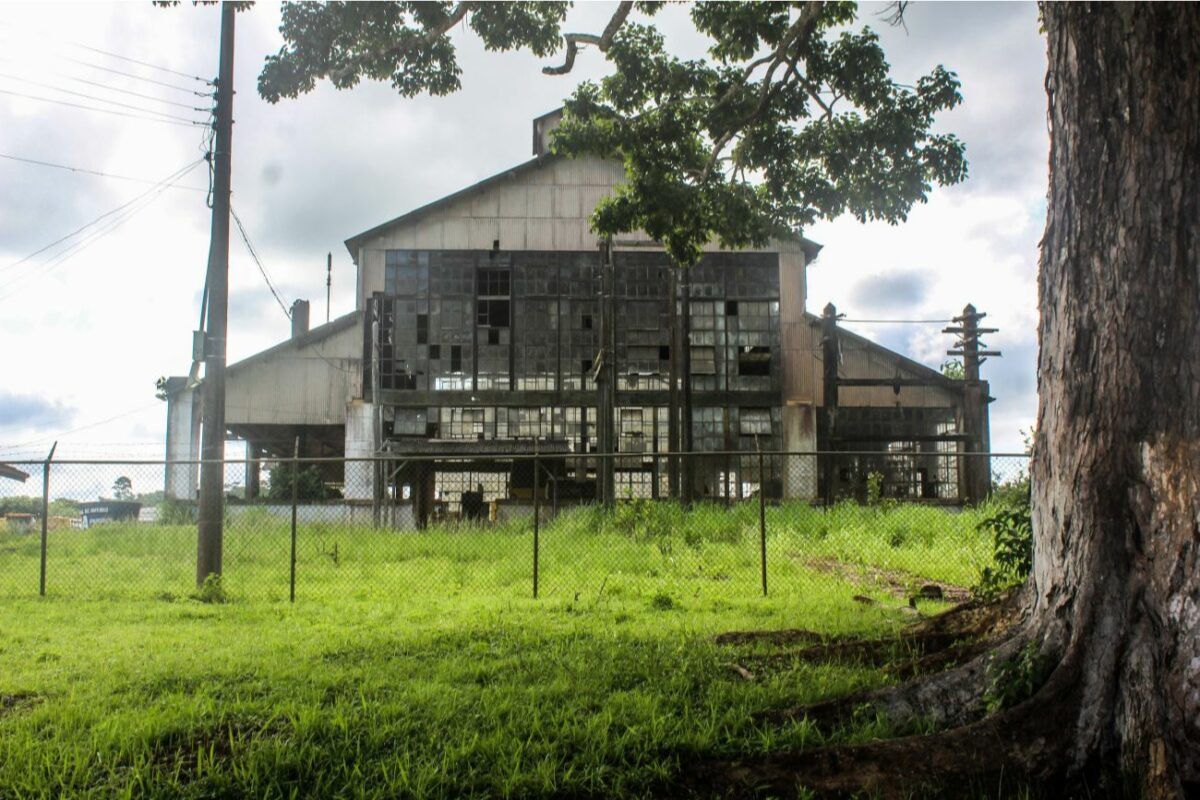
They Tried to Turn the Forest into a Replica of the USA, but Created Only the Biggest American Failure on Brazilian Soil. Understand Why Nature Won This Battle
In the vastness of the Amazon rainforest, along the banks of the Tapajós River, lies what remains of one of the most ambitious and unusual industrial projects of the 20th century: Fordlândia, a city envisioned by Henry Ford, the magnate of the American automobile industry, which sought to transform a piece of the jungle into a replica of the American dream.
The plan was grand: to cultivate rubber to supply the tire production of Ford Motor Company, reducing dependence on plantations controlled by the British and Dutch in Southeast Asia.
The result, however, was a logistical, environmental, and cultural disaster, a warning that still resonates today about the limits of imposed industrialism.
-
Why was the Great Wall of China built? The truth that many are unaware of!
-
At 73.8 meters tall, the world’s tallest teapot-shaped building has 15 floors, ensures stability, and impresses with an internal space of 28,000 cubic meters.
-
Ambev has planted over 3 million trees and restored an area equivalent to the coastline from São Paulo to Natal, and the result after 15 years of silent investment has finally appeared for all of Brazil to see.
-
A new AI collar technology for cattle eliminates physical fences, creates virtual barriers, monitors animals 24/7, and detects changes in behavior and health.

Why Did Ford End Up in the Amazon?
In 1927, faced with the scarcity and rising price of Asian rubber, essential for tires, hoses, and automotive parts, Henry Ford sought a solution that would make him self-sufficient.
The alternative found was Brazil, a country where native rubber trees (Hevea brasiliensis) grew naturally and which, decades earlier, had been the world’s largest exporter of latex during the so-called Rubber Boom.
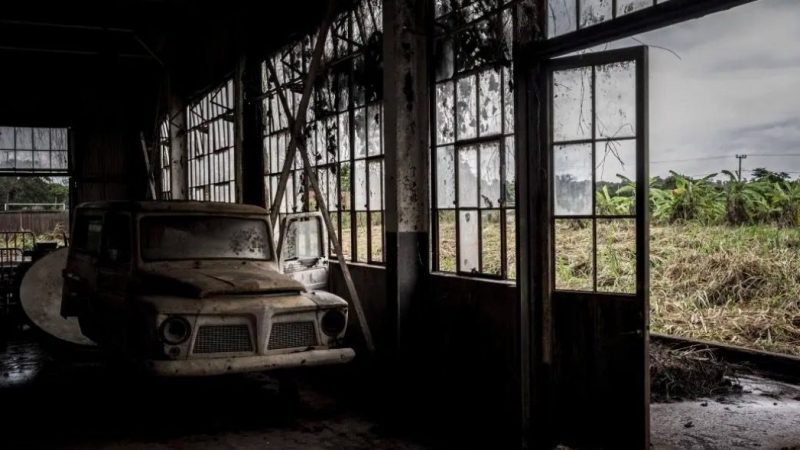
Through an agreement with the Brazilian government, Ford acquired about 10,000 km² of land in the state of Pará, in the Belterra region, for a symbolic amount. There began the construction of a city that, according to plans, would have schools, hospitals, homes with gardens, cinemas, cafeterias, and a strict organization in the North American style. The location would be called Fordlândia, an industrial utopia deep in the forest.
An American City Where The Forest Was Sovereign
The project was constructed with mechanical precision: Brazilian workers built standardized houses, paved streets, set up sewage systems, and cleared areas in the forest for rubber tree plantations. Ford’s idea was to reproduce not only productivity but also the American way of life, with strict morals, prohibition of alcoholic beverages, a diet of hamburgers, and rules of conduct.
But this model completely ignored the environment, climate, dietary habits, and culture of the local workers. Soon after, frictions arose. Many employees rebelled against the strict cafeteria rules and working conditions imposed.
The episode became known as the “cafeteria revolt”, when staff destroyed part of the facilities and forced intervention by the Brazilian Army.
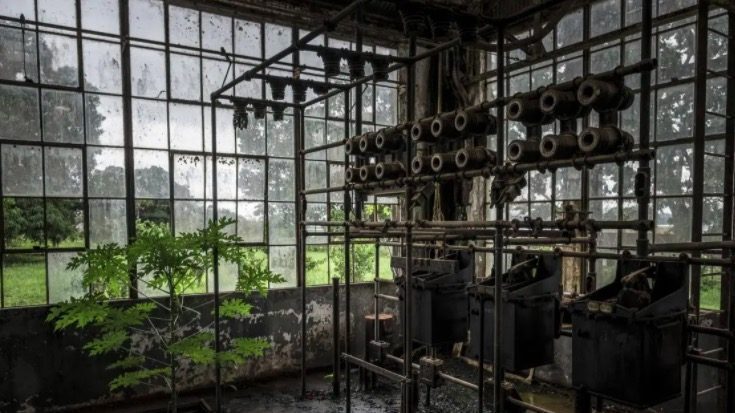
The Technical Failure: Nature Does Not Obey The Production Line
If social problems were already foreshadowing disaster, the final blow came from biology itself. In the eagerness for efficiency, Ford’s agronomists planted the rubber trees in homogeneous rows, like corn in an American field.
However, in the Amazon, this created the ideal environment for pests and fungi. What was once a resilient plant in the native forest became vulnerable in monoculture.
According to researchers from the Federal University of Western Pará (UFOPA), the plantation quickly succumbed to attacks from fungi such as Microcyclus ulei, making any scalable rubber production impossible. The city, built for productivity, never delivered what it promised.
The End of a Dream (And the Beginning of a Ghost)


Despite the accumulated losses, Henry Ford still tried to maintain Fordlândia for over a decade. In the 1940s, with the rise of synthetic rubber and high logistical costs, Ford Motor Company decided to abandon the project. In 1945, the complex was handed over to the Brazilian government without ever having produced a significant drop of latex for Detroit.
Today, Fordlândia remains a partially inhabited city, with crumbling buildings and traces of a utopia that did not materialize.
Some of the old facilities are still used by local residents, while others are being studied by historians, environmentalists, and filmmakers interested in the symbolism of the failed attempt to tame the jungle with machines and imported rules.
A Legacy of Lessons for the 21st Century
The story of Fordlândia has gained new momentum in recent decades through books, documentaries, and academic research.
Works such as Fordlândia – The Rise and Fall of Henry Ford’s Forgotten Jungle City, by Pulitzer Prize-winning historian Greg Grandin, detail how industrial arrogance collided with an ecological and cultural reality that was impossible to replicate.
The city has also become a subject of study at Brazilian universities like UFOPA and USP, and has recently been the focus of reports from BBC Brasil and the newspaper Folha de S.Paulo. There are even historical and ecological tourism projects being evaluated by local authorities, as shown in this report by Estadão.
More than an industrial failure, Fordlândia is a mirror of our relationship with the forest: an bitter lesson on how the Amazon does not yield to the logic of easy profit, cultural standardization, or progress without listening.





Seja o primeiro a reagir!