





 Portuguese
  English
  Spanish
  3 min of reading
  0 comments



Chinese Are Working on What Appears to Be the First Invisibility Suit Capable of Reproducing Animal Abilities. Meet the ‘Invisibility Cloak’ That Looks Like It Came Out of Science Fiction Movies.
Combining characteristics of chameleons, glass frogs, and bearded dragons, Chinese researchers created the Chimera metasurface, nicknamed the invisibility suit. This ‘invisibility cloak’ is undetectable to visible light, microwaves, and infrared rays. Applications range from nature observation to combat.
Learn How the Chinese Invisibility Suit Works
In a study published by the Proceedings of the National Academy of Sciences (PNAS), a scientific team from Jilin and Tsinghua universities in China proposed the development of a hybrid material as the basis for a future invisibility cloak.

The military invisibility suit called Chimera draws its main inspiration from the abilities of three cold-blooded animals: the chameleon, the glass frog, and the bearded dragon, overcoming the limitations of existing camouflage by adapting to different spectral conditions and terrains.
-
100 kW megalasers are already pointing to a new industrial phase, with enough power to cut thick steel, drill through rocks, accelerate mining, and increase productivity in operations previously considered too difficult.

-
Thousands of people in poor countries are paid cents to film household tasks, label images, and operate systems remotely all day long, and this invisible work fuels a $17 billion market that trains the artificial intelligences of Google, Tesla, and Meta.

-
Technology created in the United States uses deep drilling to store high-level nuclear waste.

-
Dozens of Chinese research ships are discreetly mapping the ocean floor in three oceans – and naval analysts see a military pattern.


In the experimental design presented in PNAS in January, circuits embedded between layers of polyethylene terephthalate (PET) and quartz glass manipulate electromagnetic waves, making the surface practically undetectable to visible light, microwaves, and infrared rays.

By combining color-changing abilities (chameleon), transparency (frog), and temperature regulation (lizard), the invisibility suit has the potential to be used in a wide range of applications, from military uses to non-invasive wildlife observation.
One of the challenges faced by the Chinese was to hide the heat generated by electricity. Here, knowledge about the bearded dragon’s ability to control its body temperature came into play. In this way, the invisibility cloak reduces thermal differences to just 3.1 °C, making it invisible to thermal imaging technologies.
Scientists Weigh In on the New Military Invisibility Suit Technology
According to the study’s authors, their work on the ‘invisibility cloak’ takes camouflage technologies from a limited scenario to constantly changing terrains and constitutes a significant advance toward next-generation reconfigurable electromagnetics.
The lead author, Xu Zhaohua from Jilin University, emphasizes that it is fascinating that configurations of the invisibility suit suitable for all five terrains (desert, frozen ground, aquatic surface, meadow, and sandbanks) can be found across the entire frequency range of interest.
Invisibility is gradually moving from being an absurdity of myth and science fiction to capturing the attention of different researchers in recent times. In October of last year, physicist Chu Junhao of the Chinese Academy of Sciences presented at an event in Shanghai a lenticular grid that creates the illusion of invisibility.
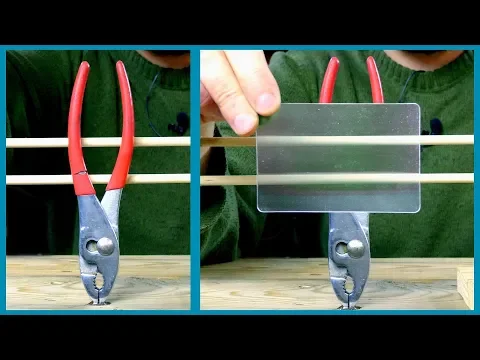
The invisibility cloak consists of rows of mini convex lenses that refract light. Depending on the angle, images parallel to them are subdivided and narrowed, revealing the objects behind them. Chu predicts various uses for this technology, from invisible rooms for increased privacy to ultradiscreet hearing devices.
Is the Military Invisibility Suit Already Available on the Market?
Beyond this Chinese initiative, the company Invisibility Shield Co has developed an invisibility cloak and is selling it on Kickstarter, a crowdfunding site. Based in London, the company launched the second generation of its device, which can cost over R$ 1,600.
The new version of the invisibility suit promises to be lightweight and portable, fitting in a carry bag. Its success was so great that in the crowdfunding, where the initial goal was to raise 10,000 euros (approximately R$ 55,000), contributions exceeded 86,000 euros (around R$ 470,000) from over 350 participants.








Seja o primeiro a reagir!