





 Portuguese
  English
  Spanish
  4 min of reading
  13 comments


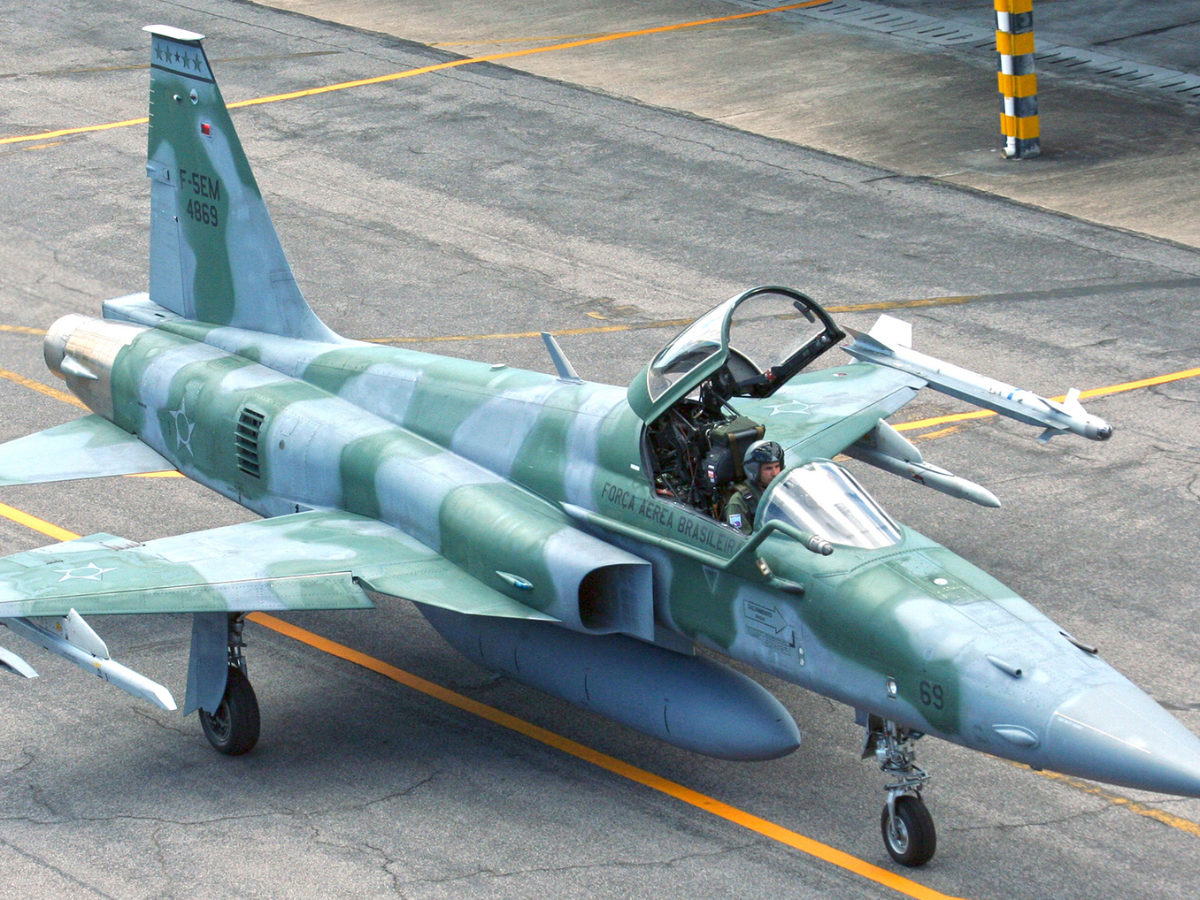


The F-5M Project, A Partnership Between Embraer and AEL Sistemas, Raised the F-5 Fighters to a New Level with 4th Generation Technology, Ensuring Brazil’s Air Defense
The Northrop F-5 Tiger II fighter is an icon in the history of the Brazilian Air Force (FAB). However, by the end of the 20th century, its technology became obsolete. To address this vulnerability, Brazil launched the F-5M Project, a deep modernization that revitalized the legendary FAB Tigers.
This program, a strategic investment of approximately US$ 430 million, not only extended the fleet’s lifespan but transformed it. The F-5Ms were equipped with cutting-edge technology, becoming a credible and effective combat force for the defense of the Brazilian airspace.
The History of the F-5 Tiger II in the Brazilian Air Force
The FAB incorporated the supersonic F-5E/F Tiger II fighters starting in 1973, with a second batch arriving in 1988. Agile and reliable, the F-5s played a vital role in the country’s air defense for decades, earning them the nickname “Tigers.”
-
Chaos On Airplane Could Be Expensive: Proposal Aims To Prevent Disruptive Passengers From Flying For Up To 1 Year In Brazil And Face Fines Of Up To R$17,500

-
Man Arrested After Halting Takeoff of Fire Department Helicopter During Child Rescue in Guaratuba

-
With 37 Tons of Cargo, Over 8,000 km Range, and Ability to Land on Unpaved Runways, the Airbus A400M Demonstrates How Europe Created a Military Giant That Transports Armored Vehicles, Aerially Refuels Fighters, and Operates in Conflict Zones and Humanitarian Missions Worldwide
-
Emergency Landing in Campos Amarais After Bird Strike on Small Plane

Originally, they were equipped with limited-range radars and short-range missiles, such as the AIM-9 Sidewinder. By the early 21st century, with the proliferation of 4th generation fighters in South America, the original F-5s were at a disadvantage, lacking Beyond Visual Range (BVR) combat capability. Modernization became imperative.
The F-5M Project, The Concept of Modernization That Transformed the FAB Tigers
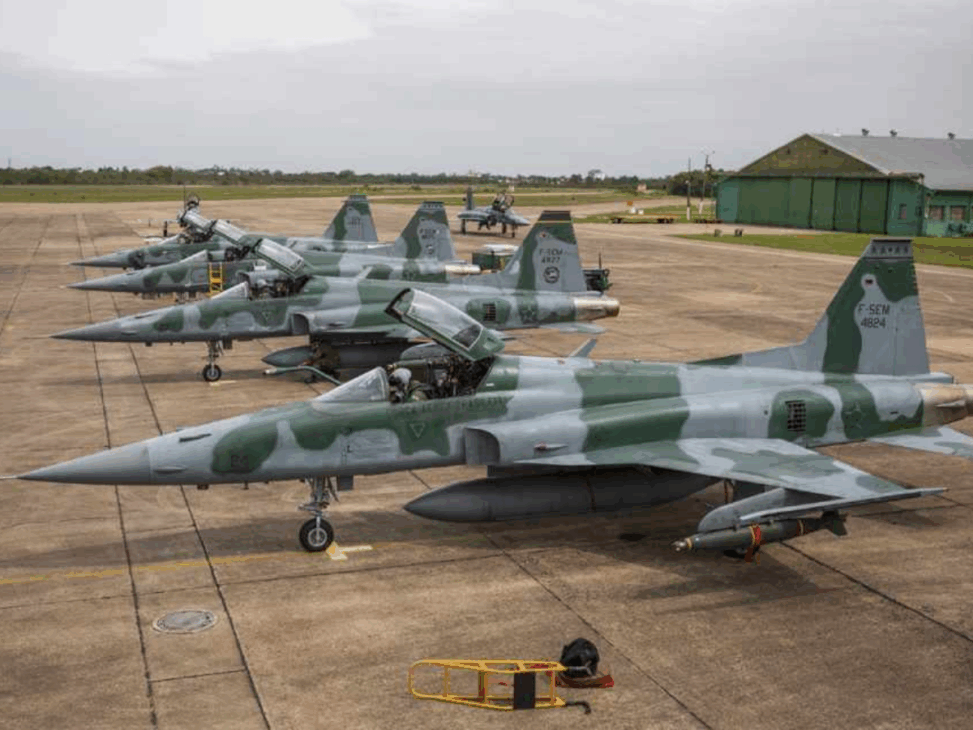
The F-5M Project was launched in 2001 with the aim of overcoming the limitations of the F-5s, extending their lifespan for at least another decade, and equipping them with 4th generation capabilities. Embraer was the prime contractor, responsible for engineering and integration, and AEL Sistemas, a subsidiary of Israel’s Elbit Systems, was the main supplier of avionics.
The initial contract to modernize 45 aircraft was worth US$ 285 million. However, the total program cost over nearly two decades, including the modernization of 49 aircraft, acquisition of armaments, and logistical support, is estimated at US$ 430 million.
The New Systems That Revitalized the FAB Tigers
The modernization transformed the FAB Tigers into formidable fighters for their time. The main upgrades included:
Multimode Radar: The Italian FIAR Grifo-F radar was integrated, giving the F-5M the ability to detect targets more than 90 km away and enabling BVR engagement.
Modernized Cockpit: The analog cockpit was replaced with a “glass cockpit” featuring three color multifunction displays (MFDs), a modern Head-Up Display (HUD), and the HOTAS (Hands On Throttle And Stick) concept.
Helmet-Mounted Display (HMD): The HMD DASH system was incorporated, allowing the pilot to aim at targets simply by looking at them, a crucial advantage in close combat.
Modern Armaments: The F-5M was equipped with the Israeli BVR missile Rafael Derby and the 5th generation visual range missile Rafael Python V, in addition to national armaments like the MAA-1 Piranha.
Network Warfare: The aircraft received new digital radios with datalink (Link-BR2), allowing for tactical data exchange with other aircraft, such as the F-39 Gripen fighters and E-99M radar aircraft. An electronic warfare suite with a radar warning receiver (RWR) and chaff/flare dispensers increased its survivability.
The Impact of the F-5M on Brazil’s Air Defense
The modernization elevated the F-5M to a new operational level. The BVR capability allowed the FAB to train and employ long-range combat tactics, a game changer for air defense. In exercises like CRUZEX 2006, an F-5M, operating in network with an E-99 radar aircraft, achieved simulated success against Mirage 2000 fighters, which were theoretically superior.
The F-5M served as the main fighter vector for the FAB during the transition to the F-39 Gripen, preventing a capacity gap. The program also enabled the FAB to develop modern combat doctrines even before the arrival of the new fighter.
The Transition to the Gripen and the Lasting Legacy of the F-5M


With the progressive arrival of the new Saab F-39 Gripen E/F fighters, the plan to phase out the FAB Tigers is already underway. Seven units have been sent to the São Paulo Aeronautical Material Park (PAMA-SP) with no plans for return, and the number of squadrons operating the F-5 has been reduced from four to three.
The legacy of the F-5M program is immense. It ensured the sovereignty of Brazilian airspace for decades, represented a smart investment in defense, and, crucially, catalyzed the technological development of the national defense industry.
The expertise gained by Embraer and AEL Sistemas in integrating complex systems is a strategic asset for Brazil, directly benefiting the Gripen program and future projects. The F-5M fulfilled its mission, defending the skies of Brazil and paving the way for the future of fighter aviation in the country.









Particularmente, eu embarcaria no projeto Kaan (aeronaves de 5a geração), ainda mais, pelo fato de q, estão dando os “primeiros passos certeiros” na confecção desse novo aparelho e q, c/ a transferência de tecnologias, colocaria o Brasil no mesmo caminho do nível de China, Rússia e EUA, onde a nossa Embraer, tb deteria o título de “indústria avançada em tecnologia aérea de ponta”, tb a caminho de desenvolvimento de projetos de 6a geração !!
Projeto de caça de 1954 com sensor de ré, start stop, câmbio automático de 7 velocidades verdadeiras Sucatas voadoras com kit multimídia.
É uma pena aposentarem os demais caças .