





 Portuguese
  English
  Spanish
  5 min of reading
  0 comments


Archaeology Reveals How Human Societies Lived Through Objects, Structures, and Remains Left Over Time — Science Goes Far Beyond Excavations.
Archaeology is the science that studies human history through material remains. These remains can be ancient or recent, and vary from prehistoric tools to 20th-century constructions.
The main focus of archaeology is to understand human culture based on physical evidence.
Archaeologists analyze objects, structures, and even remains of plants and animals to reconstruct aspects of the lives of ancient societies.
-
The oceans are darkening all over the planet – what is happening?

-
An engineer designs a solar plane to fly on Mars at an altitude of 1,000 meters and a speed of 300 km/h, covering 16,000 kilometers in a Martian year, 900 times the distance traveled by the Ingenuity helicopter in three years on the planet before experiencing a rotor failure, and NASA is already funding the feasibility study.

-
A new phenomenon of contactless magnetic friction intrigues scientists and questions a theory that has been valid since the 17th century.

-
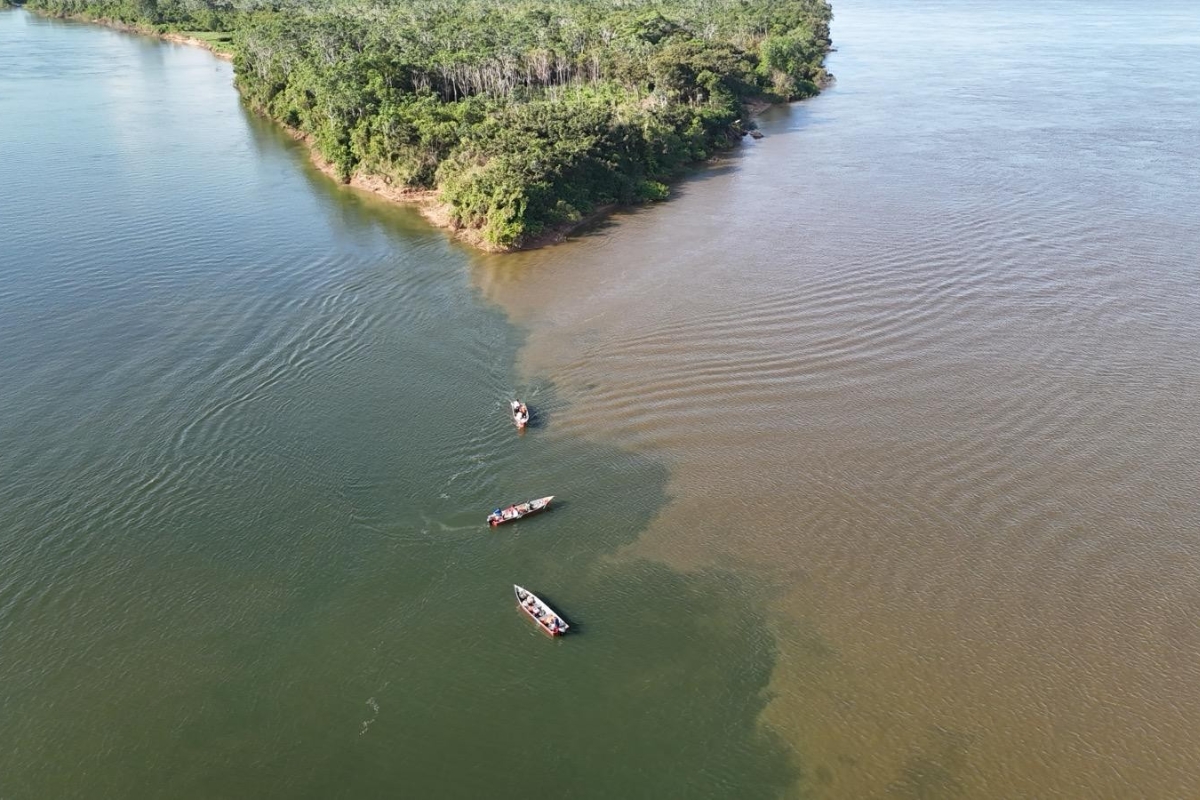
An impressive phenomenon in Northern Brazil causes rivers of different colors to flow side by side, revealing secrets about sediments, currents, and biodiversity.

Even a small object can reveal much about how a community lived. That is why archaeology is a field that requires attention to detail and careful documentation of each discovery.
Diversity of Specializations
Archaeology is a broad field with various areas of expertise. Many archaeologists choose to specialize in a specific region of the world or a specific theme.
This specialization allows them to acquire deep knowledge in topics such as bioarchaeology, zooarchaeology, lithics, and paleoethnobotany.
Some professionals use technologies to locate and map archaeological sites archaeologicalisites. Underwater archaeology studies objects and structures located underwater.
Another important branch is called Cultural Resource Management (CRM), which focuses on compliance with heritage protection laws.
Globally, the methods used by archaeologists are similar. However, there are differences in approach.
In the Americas, for example, archaeology is part of anthropology. In other regions of the world, it is considered an independent field or linked to history.
Archaeological Sites and What They Reveal
An archaeological site is any location where there are remains of past human activities. These sites can be very old or relatively recent.
Sites without written records are called prehistoric. They include camps, ancient cemeteries, villages, monuments, and rock art.
On the other hand, historical sites have written records that aid in interpretation. Examples include shipwrecks, battlefields, mills, and slave quarters.
A site can range from a small pile of stones to large ruins with complex structures.
Each site contains valuable information. Archaeologists classify finds into artifacts, features, and ecofacts. Artifacts are objects made or used by humans.
Features are fixed elements of the environment, such as holes in the ground that indicate structures or fences.
Ecofacts are natural remains, such as seeds or bones, that help understand dietary habits and modes of subsistence.
The Importance of Context
Context is fundamental in archaeology. It refers to the exact position of the objects found in a site and their relationship with the surrounding environment. Each artifact has a precise location, and documenting that location is essential before any removal.
A famous example of the value of context occurred in the 1920s when archaeologists found a spear point lodged between the ribs of an extinct bison at the end of the Ice Age.
This find proved that humans lived in North America during the Pleistocene. Without the record of the exact position of the spear, this conclusion would not have been possible.
When an artifact is removed without proper documentation, it loses its scientific value. Context allows experts to understand how people lived and organized socially.
It is through this information that archaeology is able to reconstruct the past.
Archaeology Is Not Paleontology
Many people confuse archaeologists with paleontologists, but they are different professions. Paleontology studies ancient life on Earth, based on fossils. This includes dinosaurs, ancient plants, and bacteria. Archaeology, on the other hand, focuses on humans and their cultures.
Archaeologists do not study dinosaurs. These animals became extinct about 65 million years ago, while the first hominids appeared only around 5 million years ago. In other words, humans and dinosaurs never coexisted.
In some situations, paleontologists and archaeologists work together. This occurs, for example, in places where hominid fossils and ancient human objects are found in the same context, such as in the Olduvai Gorge in Tanzania.
Who Are Archaeologists
Archaeologists are part of a broader field called anthropology, which studies humans from the earliest hominids to modern primates. Despite the popular image of the character Indiana Jones, the reality of the profession involves modern techniques and technologies to examine the past with precision.
Today, the term “archaeologist” encompasses various specializations. Some study textiles, plant or animal remains. Others focus on translations of ancient texts. There are also those who work with human remains, preferring the title of physical or biological anthropologists.
Each professional develops specific competencies. This includes skills in languages, laboratory analysis, excavation, and the use of imaging equipment. Collaboration among different specialists is common, especially in large-scale projects.
Education and Career in Archaeology
The majority of professional archaeologists have a master’s or doctoral degree. But it hasn’t always been this way. Howard Carter, who discovered Tutankhamun’s tomb in 1922, learned through practice and had little formal training.
Today, many universities offer undergraduate programs in archaeology. Some do not have a dedicated department but offer courses in fields such as history, geography, arts, or classical studies. It is also common for students to combine disciplines from different areas.
An example is the University of Toronto in Canada. There, archaeology students take courses across various departments, which broadens their skills and knowledge. This interdisciplinary education prepares future archaeologists to work in different contexts and projects.
Archaeology in Constant Evolution
Archaeology continues to evolve. New technologies and excavation methods make research more accurate. The use of drones, ground-penetrating radar, and 3D modeling helps map sites without damaging them.
Science is also becoming increasingly collaborative. Archaeologists work with chemists, geologists, and biologists to better understand ancient environments. The integration of different areas of knowledge allows for a more complete view of past human societies.
Archaeology is the science that seeks to understand how people in the past lived, based on the remains they left behind. These remains tell stories that are not found in books. That is why preserving context and studying details rigorously is so important.
More than just excavating ruins, the archaeologist reconstructs human lives. Each fragment, each object, each structure reveals something about who we were. Archaeology is therefore a bridge between the present and what has passed — and that past continues to teach us much.









Seja o primeiro a reagir!