





 Portuguese
  English
  Spanish
  5 min of reading
  0 comments


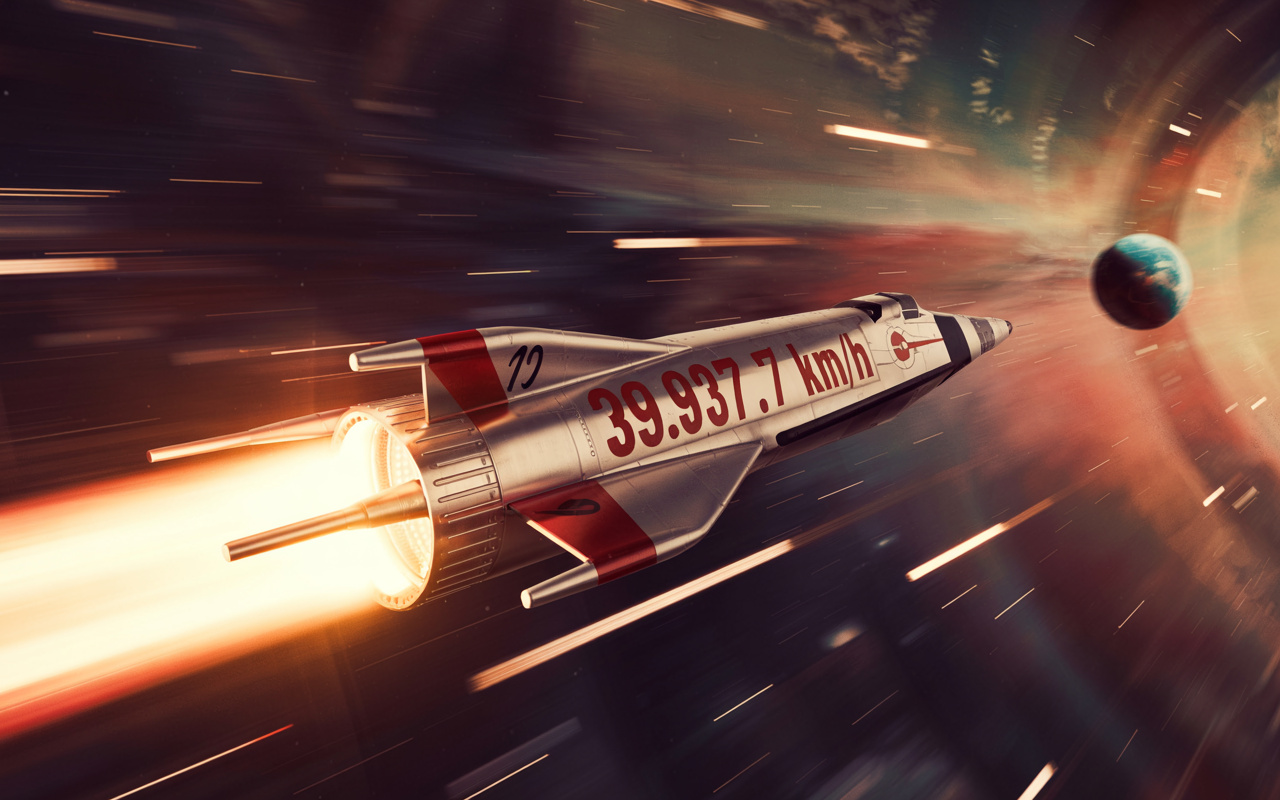
In 1969, the Apollo 10 astronauts reached almost 40,000 km/h and became the fastest humans in history. Now, more than half a century later, NASA is about to break that record with the Artemis mission.
Usain Bolt, who reached 44 km/h using only his body. But there is an even more impressive — and little-known — feat recorded in 1969. Three men shattered all imaginable barriers and achieved a speed that, to this day, no other human has even come close to: 39,937.7 km/h. That figure was not reached on a track, but in space, during the return of the Apollo 10 mission to Earth. And now, more than 50 years later, NASA is about to write a new chapter in that story, with modern space technologies capable of breaking the speed record already achieved by a human.
The Day Three Astronauts Flew Faster Than Anyone in History
On May 26, 1969, astronauts Thomas Stafford, John Young and Eugene Cernan were returning from an orbital flight around the Moon. They did not land, but performed all the necessary tests for the Apollo 11 mission to make history weeks later.
The spacecraft they were in, the Charlie Brown command module, performed a shorter-than-usual atmospheric reentry. Instead of 56 hours, the return took about 42 hours. This shortening allowed Earth’s gravity to accelerate the capsule to the speed of 39,937.7 km/h.
-
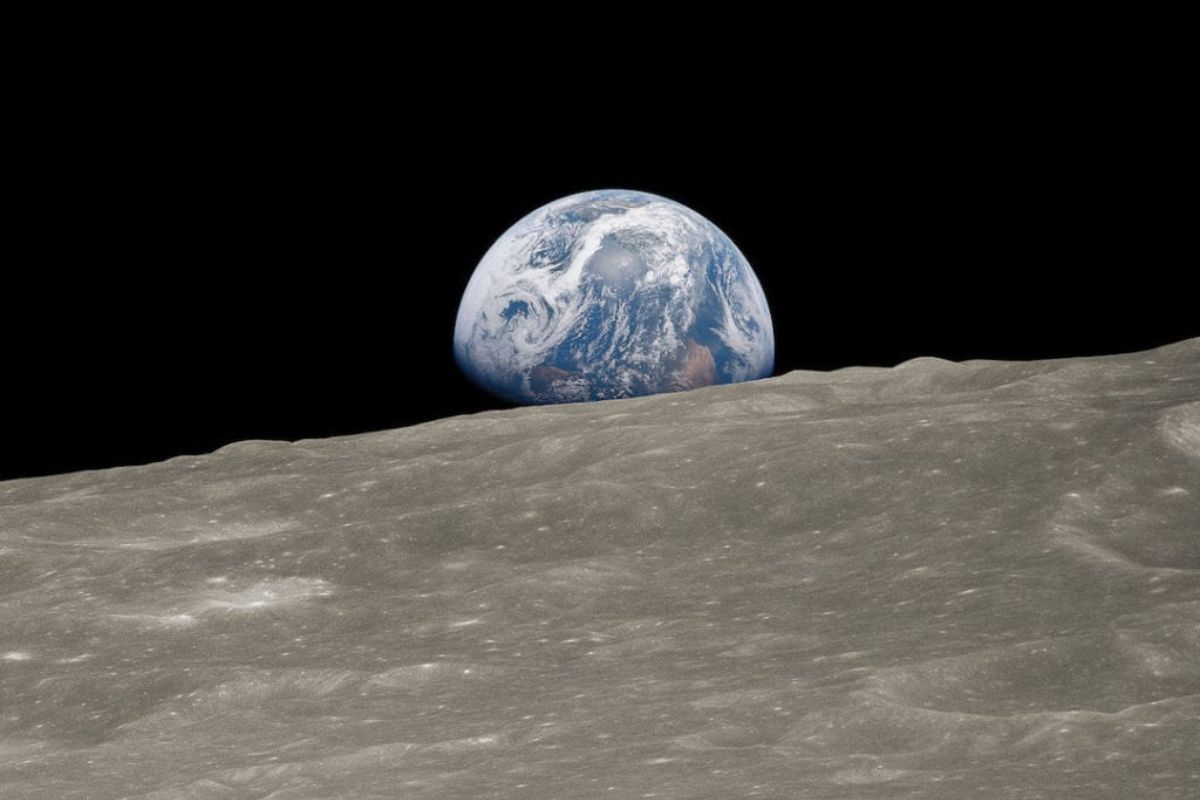
Four humans are flying towards the Moon inside the Orion capsule launched by the SLS rocket, and on April 6, Artemis II will disappear behind the far side of the Moon without communication with Earth for nearly an hour.
-
Worlds covered by water, atmospheres filled with hydrogen, and the possibility of life beyond Earth: ocean planets are rewriting the map of cosmic search and forcing scientists to rethink where to look.

-
Argentina achieves the unimaginable after more than 110 years and reintroduces the largest native herbivore of South America to the Chaco to restore a lost link in nature.

-
Returning to the Moon now costs a billion-dollar bill and reignites the competition between the USA and China for science, technology, and rare minerals on lunar soil.
Eugene Cernan described the reentry moment as “entering a white and violet fireball.” The friction with the atmosphere was so intense that it generated temperatures exceeding 2,700 °C. But the capsule’s heat shield held up — and the three astronauts emerged alive with the human speed record still unbeaten to this day.
Why Has No One Ever Broken This Record?
Since then, no other crewed mission has reached or even attempted to achieve such speed. This did not happen due to a lack of technology, but rather a lack of necessity.
For decades, space exploration has been centered on low Earth orbit. Missions involving the space shuttle, the International Space Station (ISS), and even Russian Soyuz missions operate at much more modest reentry speeds, around 28,000 km/h. This is sufficient to keep satellites and astronauts in orbit, but not to match Apollo 10’s feat.
In other words, the record remained intact because no one else has returned from the Moon.
Artemis II: The Return of Humanity to the Moon — and to High Speed
That is about to change with the Artemis program, NASA’s new initiative that aims to take humans back to the lunar surface and, eventually, to Mars.


The Artemis II mission, scheduled for early 2026, will be the first crewed mission of the program and will replicate Apollo 10’s flight: an orbit around the Moon before returning to Earth.
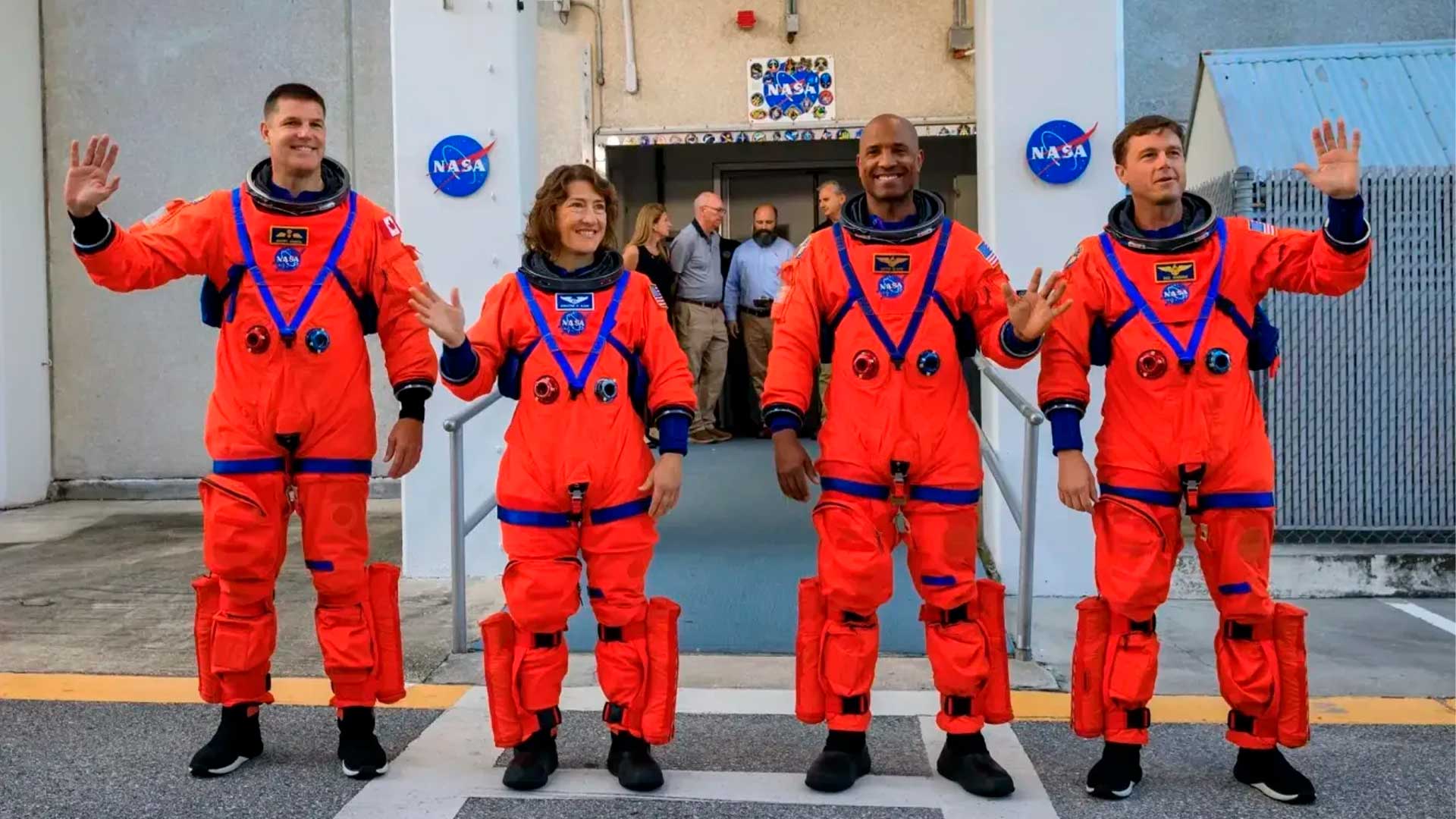
Aboard the Orion spacecraft will be astronauts Jeremy Hansen (Canada), Victor Glover, Reid Wiseman and Christina Koch (USA). They will make history in several ways — including the real possibility of breaking the record for the highest speed ever reached by a human.
It is expected that the Orion’s reentry will achieve 40,234 km/h, surpassing the 1969 mark by about 300 km/h. It may seem small, but it represents a historic achievement.
To Fly So Fast, You Must Endure the Impossible
Breaking the record is not just a matter of power. In fact, speed is the result of a combination of orbital factors, trajectory, and gravitational physics. But the real challenge lies in surviving the return.
In the uncrewed Artemis I mission, the Orion’s heat shield — even with all its technology — showed failures. Parts of the shield came loose during reentry. The NASA needed to urgently review the system before sending humans aboard.
For Artemis II, the reentry profile will be adjusted: it will be less aggressive in terms of “bouncing” (that controlled deceleration which creates a brief jump in the atmosphere), but the record speed will be maintained. The shield has been reinforced, and the new spacecraft promises to withstand extreme thermal and mechanical impacts.
Why is Breaking This Record So Symbolic?
More than just a numerical mark, this record represents the boldness of human exploration. In a world where technologies evolve exponentially, it is almost poetic that one of humanity’s most extreme feats was recorded in 1969 — and that only now are we about to surpass it.
Breaking the speed record in space marks the rebirth of space ambition. It means we are again aiming high, leaving Earth’s orbit, facing the risks of the unknown — just as the Apollo-era astronauts did, with computers weaker than a modern calculator.
And in the Future? Even Faster Missions?
Yes. The Artemis II mission will be just the beginning. Future missions to Mars could achieve even greater speeds depending on the trajectory and propulsion used. Technologies such as nuclear thermal engines, plasma propulsion, and gravitational slingshots (acceleration using the gravity of planets) promise to take humans to new limits.
Nasa studies and companies like SpaceX indicate that speeds above 50,000 km/h could be achieved in interplanetary missions. But for now, all eyes are on the Artemis II astronauts — and the chance to redefine what it means to be the fastest human in history.
The speed record achieved by Apollo 10 is one of those silent feats of history: few people know about it, but it represents the pinnacle of human courage and capability. For more than half a century, it has remained an unattainable milestone.
Now, with the Orion spacecraft about to cross the skies in flames again, the world may witness a new record — and, with it, the beginning of a new era of space audacity, technological innovation, and dreams that transcend the atmosphere.








-

-

-

-

-

28 pessoas reagiram a isso.