





 Portuguese
  English
  Spanish
  4 min of reading
  1 comment


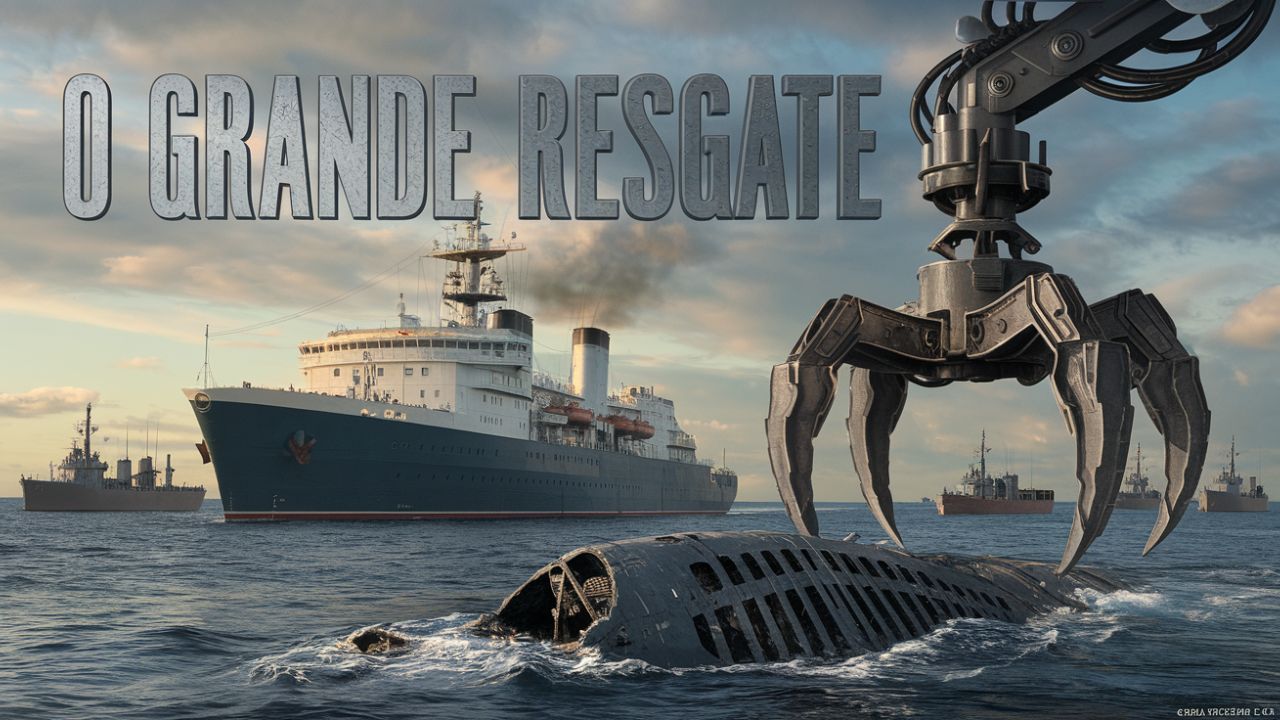


A Lost Soviet Submarine, A Top Secret Mission by The U.S., and A Cost That Exceeded US$ 4.9 Billion: Discover The Bold Rescue That Changed The Course of The Cold War.
An audacious mission that mixed espionage, cutting-edge technology, and the astronomical cost of a space journey. This is exactly what happened with the recovery of the Soviet submarine K-129, an operation so secretive it seemed straight out of a spy movie. Amidst the Cold War, the United States mobilized colossal resources to try to recover a submarine sunk in the Pacific, spending more than an Apollo mission to the Moon.
But why spend so much? And what exactly did the U.S. expect to find 4,900 meters underwater? This is the story of Project Azorian, one of the boldest — and most expensive — operations in history.
The Mysterious Disappearance of The K-129 Submarine

In February 1968, the K-129 submarine of the Soviet Navy set out on a routine mission in the Pacific. Armed with nuclear torpedoes and ballistic missiles, its mission was crucial in the context of the Cold War. However, something went terribly wrong. Just a few days after its last check-in, the submarine vanished without a trace.
-
Fireballs shoot across the skies of the USA and meteor explosions draw attention: what is causing this mysterious wave of sightings?

-
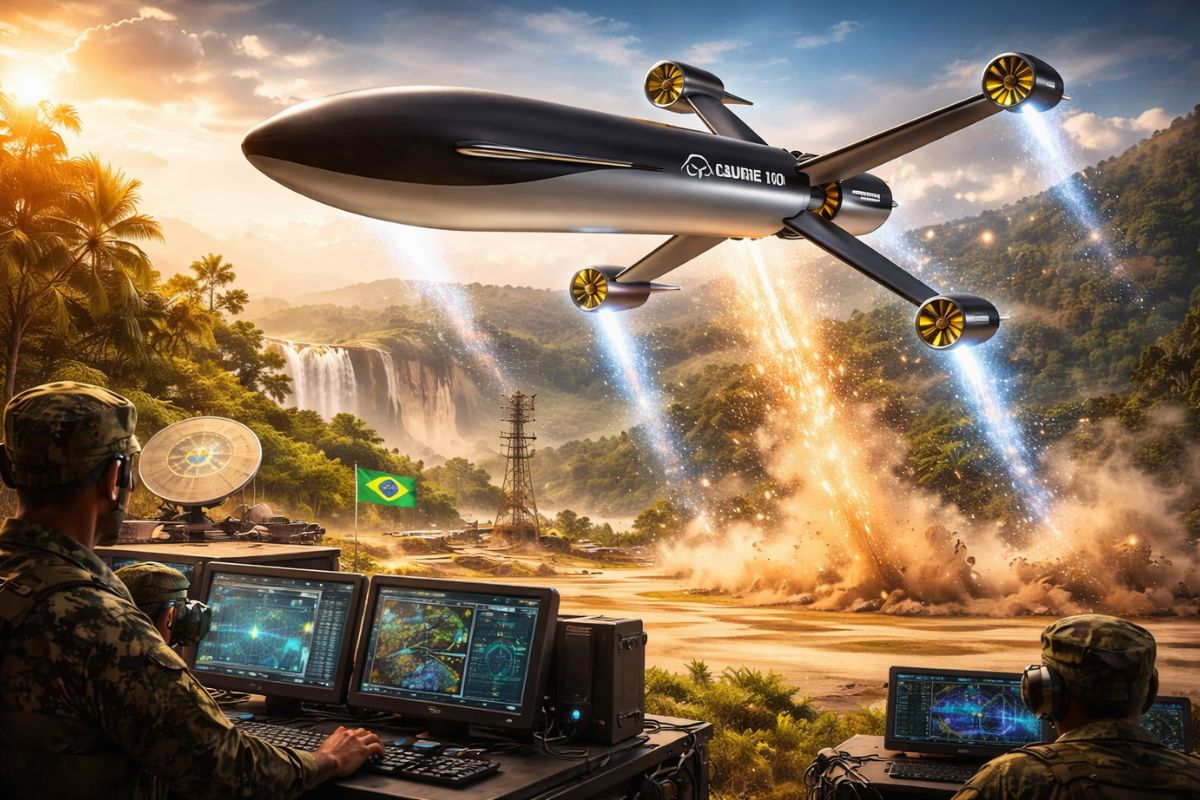
Brazil has quietly developed an electric tactical drone that takes off and lands vertically without needing a runway, flies at 140 km/h in a fully autonomous manner, and can operate in forests, conflict zones, and remote areas.
-
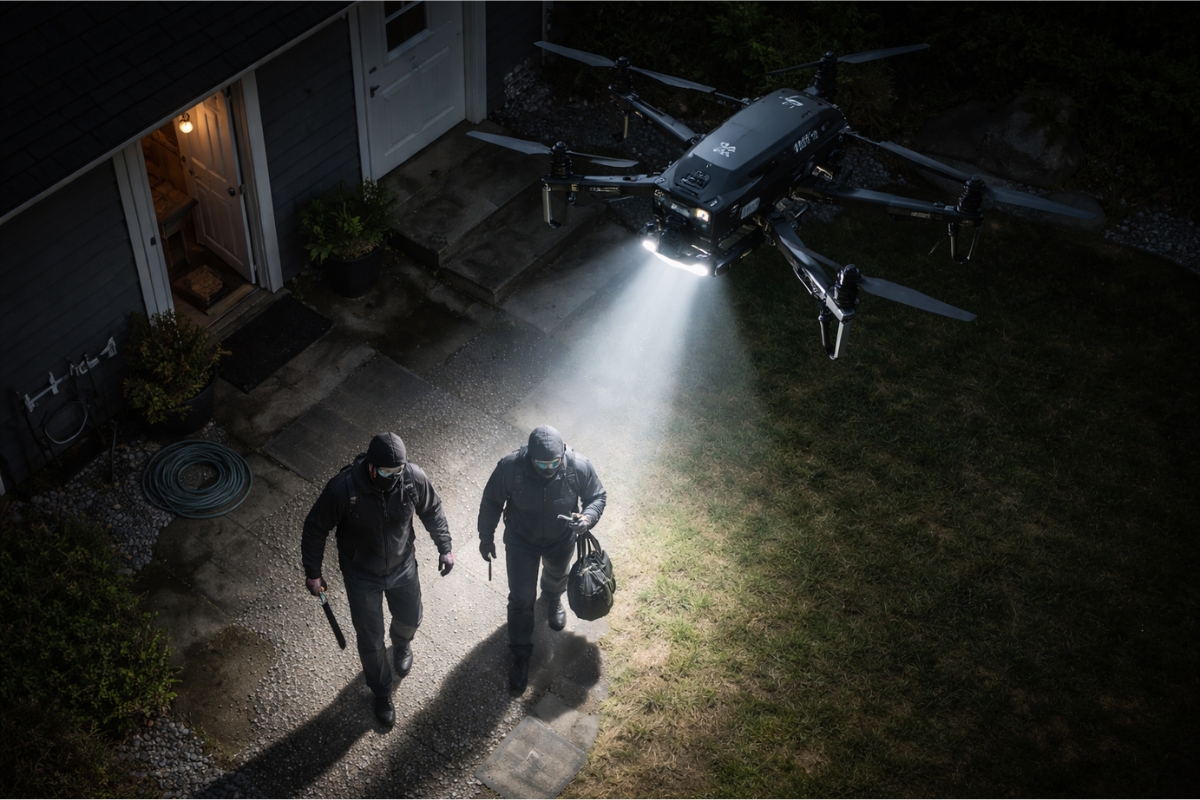
Novo drone Guardian debuts in the United States with an 8-mile range, robotic battery swapping, and Starlink connectivity for continuous response.
-
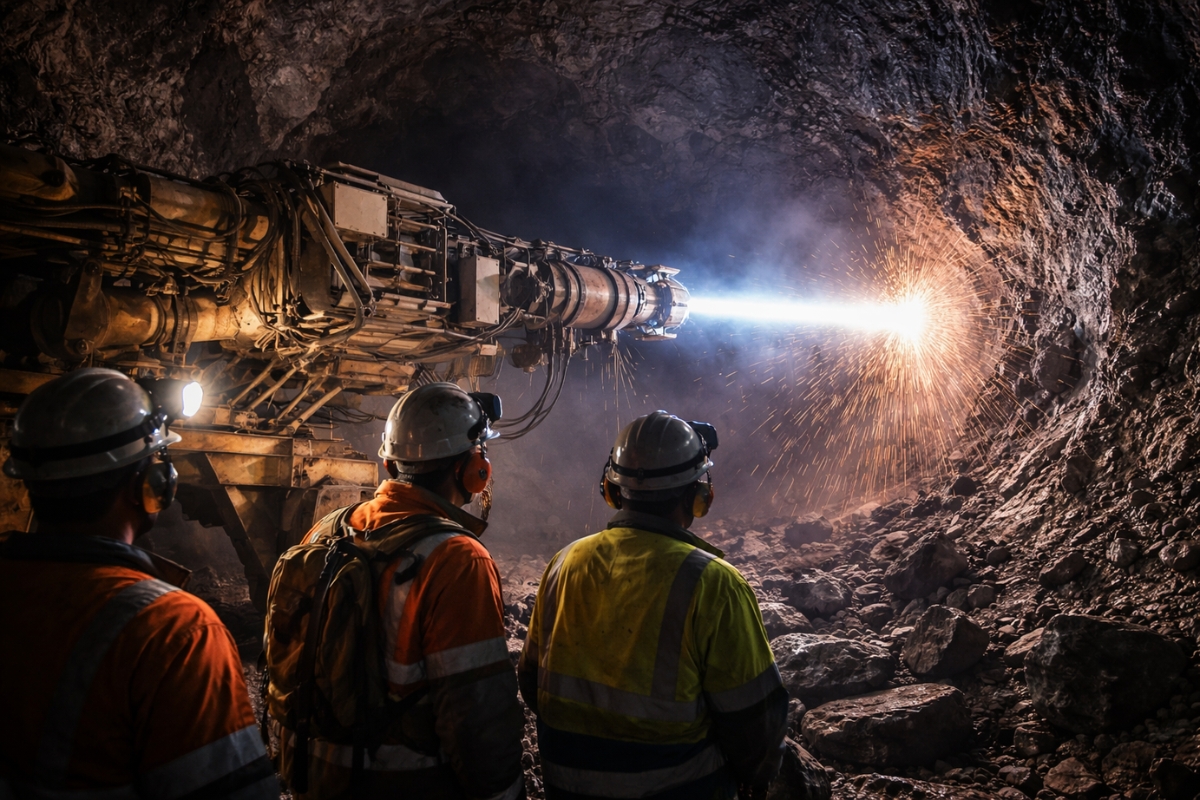
100 kW megalasers are already pointing to a new industrial phase, with enough power to cut thick steel, drill through rocks, accelerate mining, and increase productivity in operations previously considered too difficult.

The Soviets launched an intense but fruitless search to locate the submarine. To them, the K-129 was lost forever in the depths of the ocean. However, the United States had other plans.
How The United States Found The K-129
While the Soviets gave up, the Americans used their advanced technology to investigate. Thanks to the SOSUS network — a series of underwater listening stations — and the spy submarine Halibut, the U.S. located the wreck of the K-129 in August 1968. It was at an amazing depth of 4,900 meters, broken in two, but promising valuable secrets.
With the wreckage located, the U.S. initiated Project Azorian, a mission to recover the forward part of the submarine. The goal? To obtain nuclear missiles and Soviet codes that could change the course of the Cold War.
Project Azorian and The Creation of The Hughes Glomar Explorer
To carry out this impossible mission, the Americans needed a special ship. Thus was born the Hughes Glomar Explorer, disguised as an offshore mining platform. Howard Hughes, the eccentric billionaire, lent his name to the project to deflect suspicion.
The ship was a technological marvel: equipped with a moon pool, giant steel tubes, and a retrieval vehicle capable of lifting tons of metal from the ocean floor. The plan seemed perfect, but would it be enough to deceive the Soviets?
The Rescue Operation in The Middle of The Pacific
In July 1974, the Glomar Explorer arrived at the site of the submarine wreck. The operation was closely monitored by curious Soviet ships, but they apparently believed the cover story about mining.
The retrieval vehicle was slowly lowered to the bottom of the Pacific. After days of meticulous work, it managed to grab part of the K-129 and began to lift it. Everything seemed to be going well until the unexpected happened: part of the wreckage broke free and fell back into the ocean.
Success or Failure? The Legacy of Project Azorian
Despite the losses, Project Azorian managed to recover important parts of the K-129, including compartments that contained torpedoes and remains of crew members. However, the nuclear missiles and codebooks, the real prizes, remained on the ocean floor.
The cost of the operation? About US$ 800 million at the time, equivalent to US$ 4.9 billion today. Was it a failure? Perhaps. But the project demonstrated the technological and logistical capabilities of the United States during the Cold War.
The rescue of the K-129 submarine was not just a spy operation; it was a testament to the limits and ambitions of human technology. Although costly and partially unsuccessful, it paved the way for advances in underwater missions and reinforced the rivalry between the superpowers of the time.
In the end, Project Azorian remains one of the most intriguing stories of the Cold War — a reminder that sometimes the ocean floor holds secrets as valuable as the stars.






Os EUA sempre criaram o mito das superiores tecnologias soviética apenas para justificar o absurdo gasto com equipamentos militares.