





 English
  Francês
  Alemão
  Italiano
  Japonês
  Norueguês
  Portuguese
  Spanish
  5 min of reading
  2 comments




Northwestern University Research Describes A Modular Machine That Continues To Operate After Damage, Gathers Artificial Intelligence In The Design And Expands The Debate On Resilience, Autonomy And New Possibilities Of Robotics Outside Controlled Environments.
Researchers from Northwestern University in the United States presented a modular robotic system capable of continuing to operate even after suffering severe damage or being separated into parts.
Called legged metamachines, the structures are formed by autonomous modules that can act alone or fitted together in different combinations.
Each unit gathers battery, motor, sensors, processing, and control, which allows the system to continue moving even when it loses components that would compromise the entire operation in conventional robots.
-
At just 14 years old, a boy creates a system without energy, using steel pipes buried in the ground, that irrigates seedlings with moisture from the air, to combat the water scarcity threatening reforestation in northern China.

-
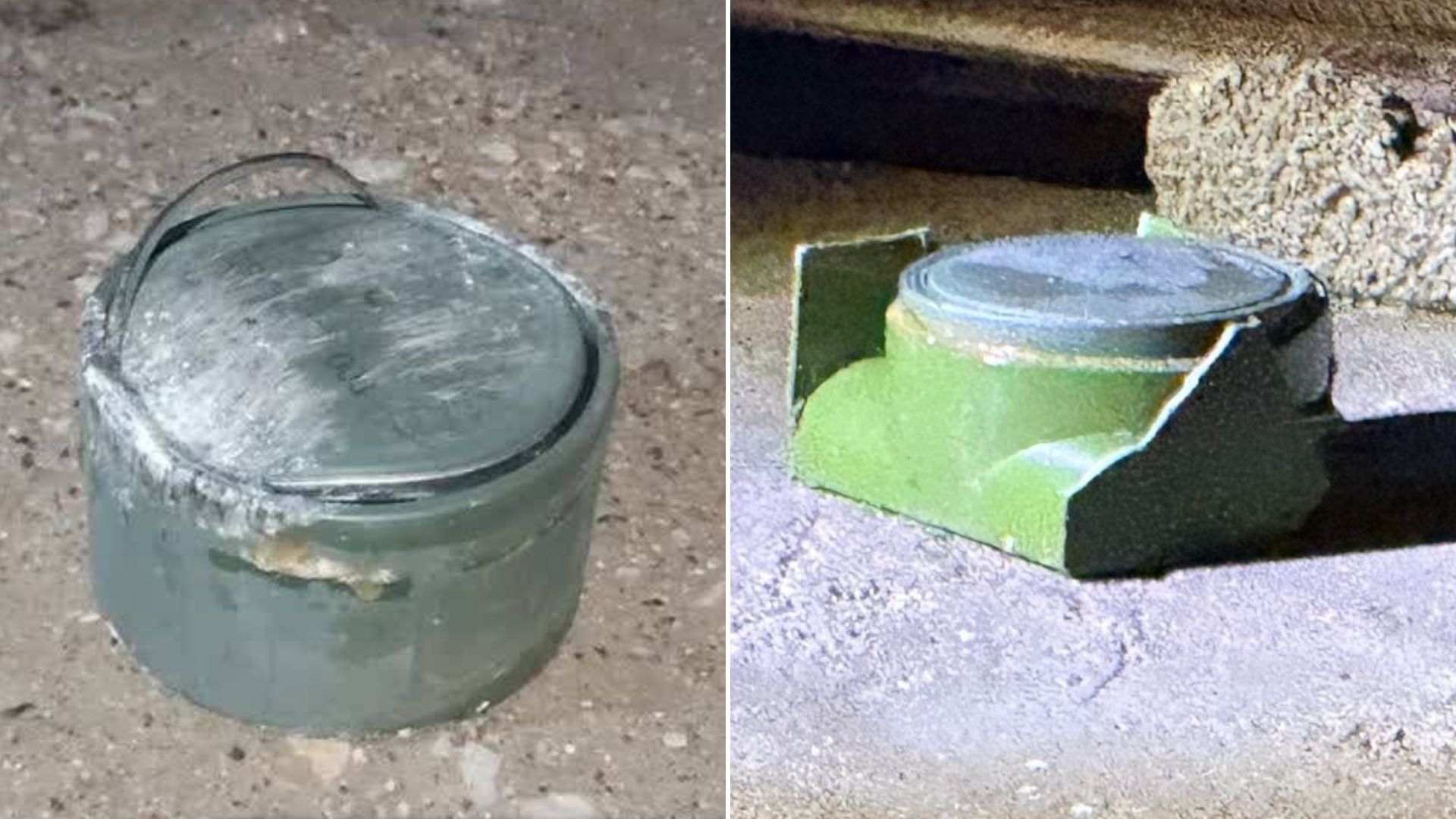
Anti-tank mines appear near a missile base in Iran, causing fatalities and raising suspicion of a new move to block underground launchers.
-
Contaminated water from uranium threatens mining areas, and Chinese scientists have created a solar-powered living filter that could change environmental decontamination.

-
Archaeologists find in Mexico a sacrifice altar over 1,000 years old, surrounded by skulls, human bones, and signs of rituals from the Toltec Empire.


The study was published on March 6, 2026 in the scientific journal Proceedings of the National Academy of Sciences (PNAS).
The description of a robot that “does not die” is a way to summarize, in non-technical language, the functioning observed by researchers.
What the study describes, more precisely, is a machine made of independent parts, in which each module remains functional even outside the main structure.
Instead of relying on a single, rigid body vulnerable to a critical failure, the architecture distributes energy and command among several pieces.
In practice, this means that the loss of a segment does not automatically interrupt the operation of the rest of the system.
How The Northwestern Modular Robot Works
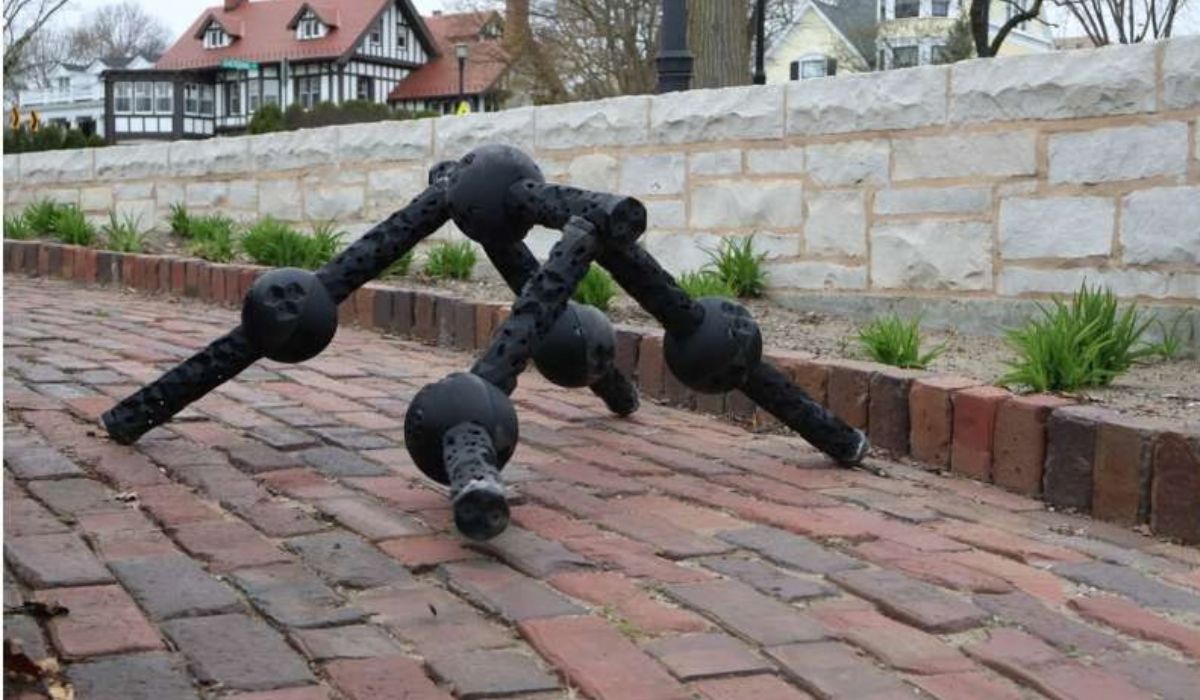
The system consists of robotic blocks with modular legs of about half a meter in length.
These modules have a simple shape, with two segments connected by a central sphere, and operate with only one degree of mechanical freedom.
Still, according to the team responsible for the study, they can perform actions such as rolling, turning, and jumping when they are alone.
When connected, they form larger machines in different body arrangements, with varied locomotion patterns.
This design alters a common logic of mobile robotics.
In many projects, legs, sensors, power source, and control system depend on centralized integration.
If a critical part fails, the entire robot loses function.
In the case of metamachines, each module already functions as a complete unit.
Therefore, when a structure breaks, the remaining fragments can still move.
The university’s promotional material states that when separated, the modules continue to act individually and can regroup to form a larger group.
According to the authors, this characteristic increases the system’s resilience to structural damage.
Instead of carrying a broken piece as dead weight, the machine preserves residual mobility and the ability to reorganize.
The team tested prototypes with three, four, and five modules in outdoor environments, on sand, mud, grass, gravel, roots, leaves, and uneven bricks.
Under these conditions, the robots managed to run, jump, rotate, and right themselves when turned upside down, without the need for complex reconfiguration before use.
Artificial Intelligence In The Design Of Metamachines
Another central point of the research is the use of artificial intelligence in the design of these machines.
Instead of having engineers manually define a final body inspired by humans, dogs, or insects, the team resorted to a computational process based on artificial evolution.
The algorithm received the modules as building blocks and was directed to seek efficient movement configurations.
From there, it simulated combinations, discarded the least effective ones, and retained the most promising ones in a logic comparable to evolutionary selection.
This method helps explain why the robots have an unusual appearance.


According to Northwestern, the AI generated “new species” of machines that a human designer would hardly conceive by intuition.
Depending on the combination, the modules can perform different roles within the assembled body, functioning as legs, tails, or support axes.
In demonstrations released by the university, some arrangements undulate, others jump, and others advance with movements different from the more traditional models of terrestrial robotics.
Sam Kriegman, a professor at Northwestern and leader of the work, stated that these are the first robots to operate in outdoor environments after being “evolved” inside a computer.
In another explanation presented by the university, he said that each central sphere gathers what he compared, in didactic language, to the “nervous system”, “metabolism”, and “muscle” of the module — that is, circuit board, battery, and motor.
The comparison was used by the team as an explanatory resource about the functioning of the project.
What The Study Published In PNAS Shows
The research does not describe a literally eternal robot or a machine capable of regenerating itself indefinitely.
What has been demonstrated, according to the data presented in the article and in the university’s material, is the ability to maintain operation after structural damage that would disable other models of legged robots.
The possibility of reassembly, repair, and rapid recombination was also recorded, because each unit has energy and computational autonomy.
According to the researchers, the result addresses a recurring problem in the field: the fragility of machines designed for controlled environments.
Land robots can perform well in the lab, but they often face limitations on irregular surfaces, after impacts, or when losing components.
By distributing operation among complete modules, the team proposes a more adaptable architecture, in which failure of one part does not necessarily represent total machine shutdown.








Segunda a história humana registrada , homem tem dominado homem para seu prejuízo! A história da civilização antiga, mostra que tiveram seu apogeu, e depois desapareceram! Pelas guerras! O homem não tem aprendido com os resultados da sociedade humana! Vivem em guerra ! No final da segunda 1945, foi largado duas bombas atômica! Entramos na era nuclear! O planeta terra 🌎 pode ser destruída milhares de vezes! Com uma guerra nuclear ! Colocando a extinção da sociedade humana !
O exterminador do futuro!