





 Portuguese
  English
  Spanish
  5 min of reading
  0 comments


Entry Price, Interior Space, and Safety Place the Citroën Basalt at the Center of the Compact SUV Battle in 2026, in a Scenario Where Equipment, Performance, and Independent Tests Gain Weight in the Buying Decision.
The Citroën Basalt continues in the market in 2026 as an entry option among compact SUVs, focusing on a lower starting price, spacious trunk, and an urban-use-oriented proposal.
The 2026 line is now sold in four versions, with official prices starting at R$ 93,990 for the Feel 1.0 manual configuration and reaching R$ 114,990 for the Dark Edition Turbo 200.
The brand’s strategy keeps the model in the compact sports utility vehicle segment with a commercial appeal based on entry cost, space, and ground clearance.
-
The car stored for 38 years: when opening the barn door, what appears is breathtaking and looks like a scene from a movie!

-
Fiat works miracles in the Brazilian market, lowers the price of its 0 km hatch to R$ 69,990, reestablishes the model as the cheapest car in the country, and reignites the battle against Kwid and C3.
-
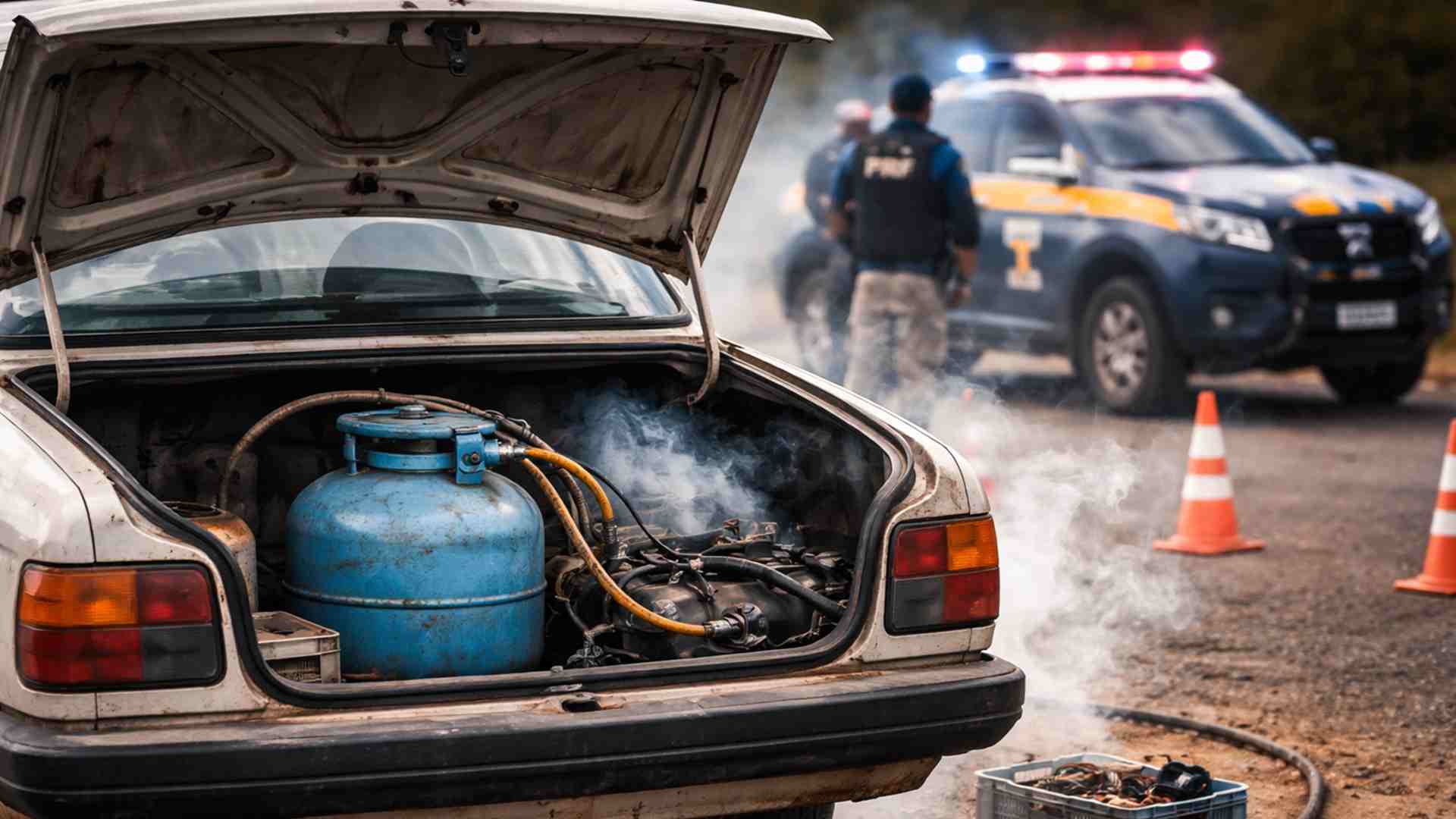
Chevette with cooking gas: How the gas cylinder ends up being used in cars clandestinely and why this makeshift solution can result in leaks, explosions, damaged engines, and seized vehicles.
-
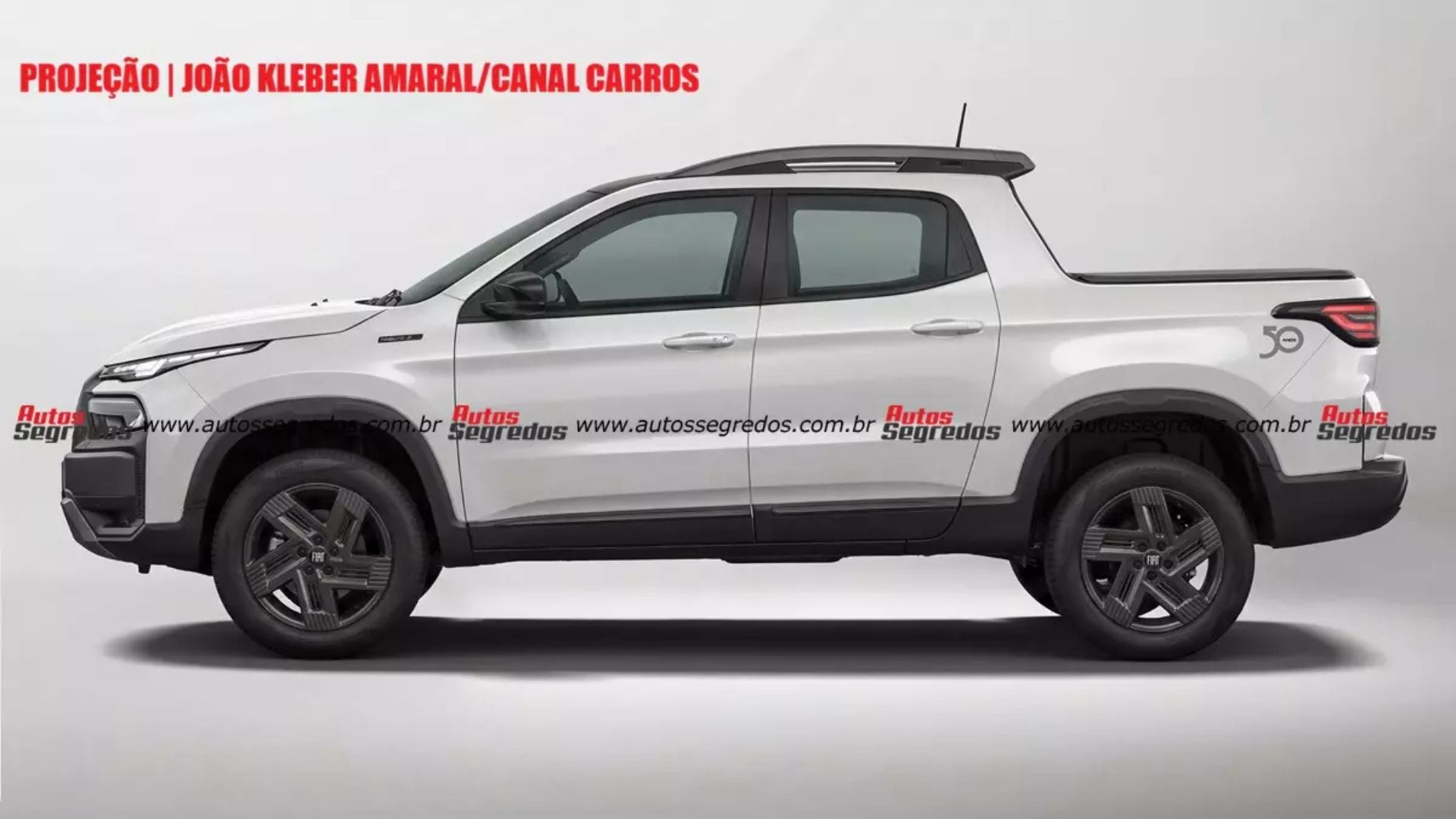
Fiat launches the new 2027 Toro hybrid with 48V, 176 hp, an electric motor of 15.5 hp, a 0.85 kWh battery, up to 7% fuel savings, 8% fewer emissions, and possible exemption from IPVA.

At the same time, safety evaluation has taken a central role in analyzing the car, after the Basalt received zero stars in Latin NCAP, in a result announced in October 2025 for the version tested with four airbags.
This context alters the cost-benefit debate.
Instead of a reading restricted to price, trunk, and equipment, the purchase now also involves the car’s performance in independent safety tests.
Citroën Basalt 2026 Bets on Interior Space and Trunk
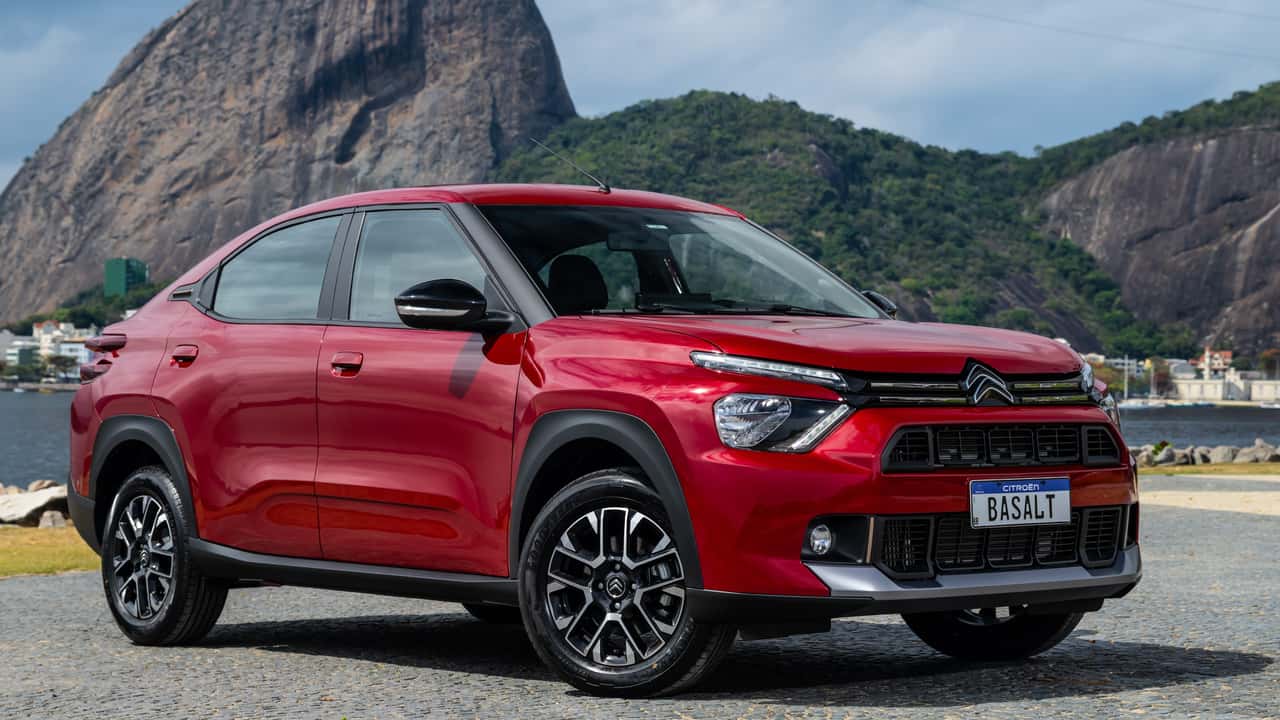
The Basalt was designed to meet those looking for a vehicle with hatchback, sedan, and compact SUV characteristics.
The model measures 4,343 mm in length, has 2,645 mm in wheelbase, and a trunk of 490 liters by VDA standard, a number that places it among the largest in the category.
In the cabin, the wheelbase favors legroom in the rear seat.
The trunk suits a usage profile that includes family routines, urban commuting, and short trips.
The car’s proposal, at this point, relies on dimensions that prioritize load capacity without advancing to the size of more expensive SUVs.
For this reason, the Basalt has been mentioned among entry-level models aimed at small families, rideshare drivers, and consumers seeking a higher driving position.
In the 2026 line, Citroën maintained a 10.25-inch multimedia center with wireless Android Auto and Apple CarPlay, 7-inch digital instrument cluster, rear camera, and parking sensor from the initial version, as well as USB-C for the second row.
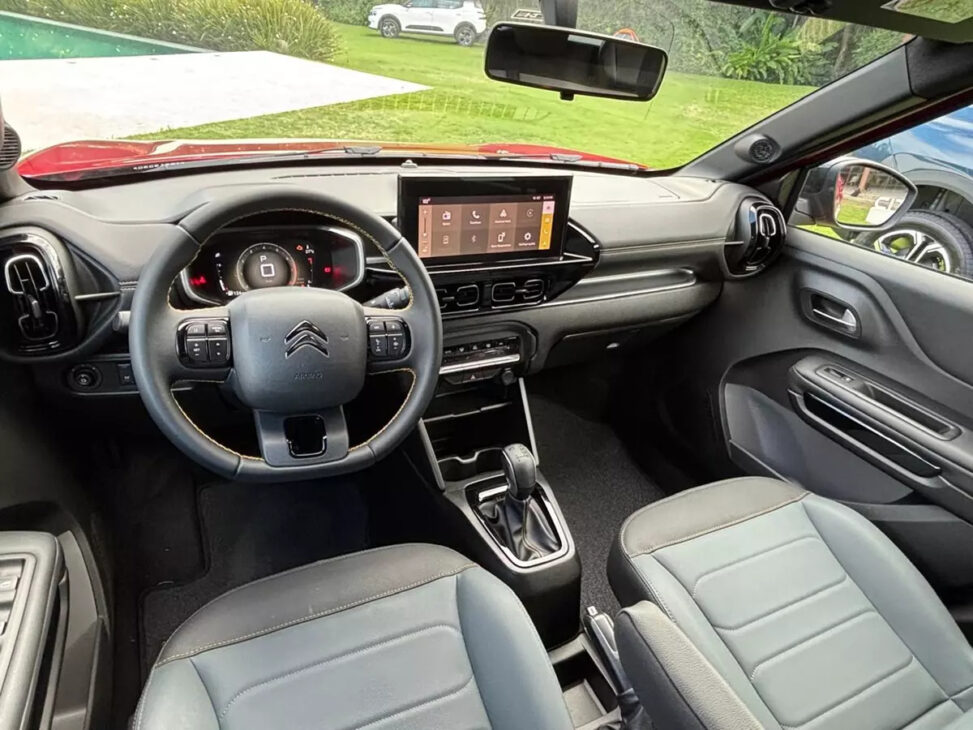
The latest range also received finishing and equipment adjustments.
The Feel now has new interior trim and a rear sensor.
In the Feel Turbo 200, the automatic digital air conditioning has been incorporated.
The Shine gained a darkened roof and revised finishing details, while the Dark Edition was included as the top version.
1.0 Engines and Performance Change the Usage Profile
The entry configuration uses the 1.0 Firefly naturally aspirated engine, with up to 75 hp and 10.7 kgfm with ethanol, always paired with a five-speed manual transmission.
According to the official technical sheet, this setup accelerates from 0 to 100 km/h in 15.2 seconds with ethanol and records consumption of 13.2 km/l in the city and 14.3 km/l on the highway with gasoline per PBEV.
The numbers indicate a tuning aimed at economy and daily use.
In urban routes, this setup caters to an entry-level mobility proposal.
On the highway, especially with more occupants and luggage, the performance reported by the manufacturer itself shows more limited behavior.
In the higher versions, the Basalt adopts the Turbo 200 engine, with up to 130 hp and 200 Nm at 1,750 rpm, combined with the CVT transmission with seven simulated gears.
In this configuration, the model accelerates from 0 to 100 km/h in 9.6 seconds with ethanol, according to data from the brand for the Dark Edition.
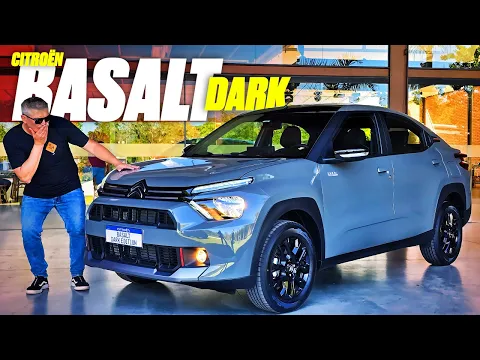

The difference between the two engines directly influences the type of use.
Those prioritizing a lower price and fuel consumption tend to look at the naturally aspirated version.
On the other hand, the turbo setup fits better for highway driving, climbs, and acceleration, according to official performance data released by Stellantis.
Basalt’s Safety Weighs Heavily in the Buying Decision
The main point of attention for the Basalt in 2026 is safety.
In Latin NCAP, the model evaluated with four airbags scored 39% for adult occupant, 58% for child occupant, 53% in protection for pedestrians and vulnerable road users, and 35% in safety assistance, a result that led to a zero-star rating.
In the program report, the entity pointed out marginal protection for the driver’s chest and insufficient protection for the passenger’s chest in the analyzed front impact.
As it is an independent assessment, this result has become part of the Basalt’s comparison with rivals in the segment.
The cost-benefit reading, therefore, has ceased to focus solely on price and interior space.
For consumers who prioritize safety, the Latin NCAP result has become an objective data point for comparison.
Although the model offers side airbags, hill start assist, tire pressure monitoring, and Isofix attachments, the test score changed public perception of the package.
What to Look for Before Buying the Citroën SUV
Another point that requires attention is the ground clearance.
The Citroën marketing material mentions 208 mm, while the official technical sheet for the Feel version records 180 mm of minimum ground clearance.
The discrepancy does not allow for a confident assertion of a single number without considering the criteria used in each document.
This type of difference can influence comparisons with direct competitors, especially for those looking for a car more suitable for potholes, speed bumps, and uneven streets.
Without an explicit standardization in the consulted material, the data needs to be read with caution.
In the 2026 market, the Basalt continues to gather objective attributes that help explain its presence among entry-level compact SUVs.
Large trunk, competitive wheelbase, updated multimedia center, and turbo engine option are part of this package.
On the other hand, safety data and the significant difference between the performances of the versions also factor into the decision.
The choice, therefore, depends on the weight given to each of these factors.
For those looking for a compact sports utility vehicle with a lower starting price and a focus on urban use, the Basalt remains among the available alternatives.
For buyers prioritizing highway performance or independent safety test results, comparison with other segment options becomes even more necessary.
With aggressive prices within the brand’s commercial proposal, the model maintains its market presence.
At the same time, the Latin NCAP assessment and the differences between versions require a more detailed analysis before making a purchasing decision.







-

-

-

-

-

13 pessoas reagiram a isso.