





 English
  Francês
  Alemão
  Italiano
  Japonês
  Norueguês
  Portuguese
  Spanish
  5 min of reading
  0 comments


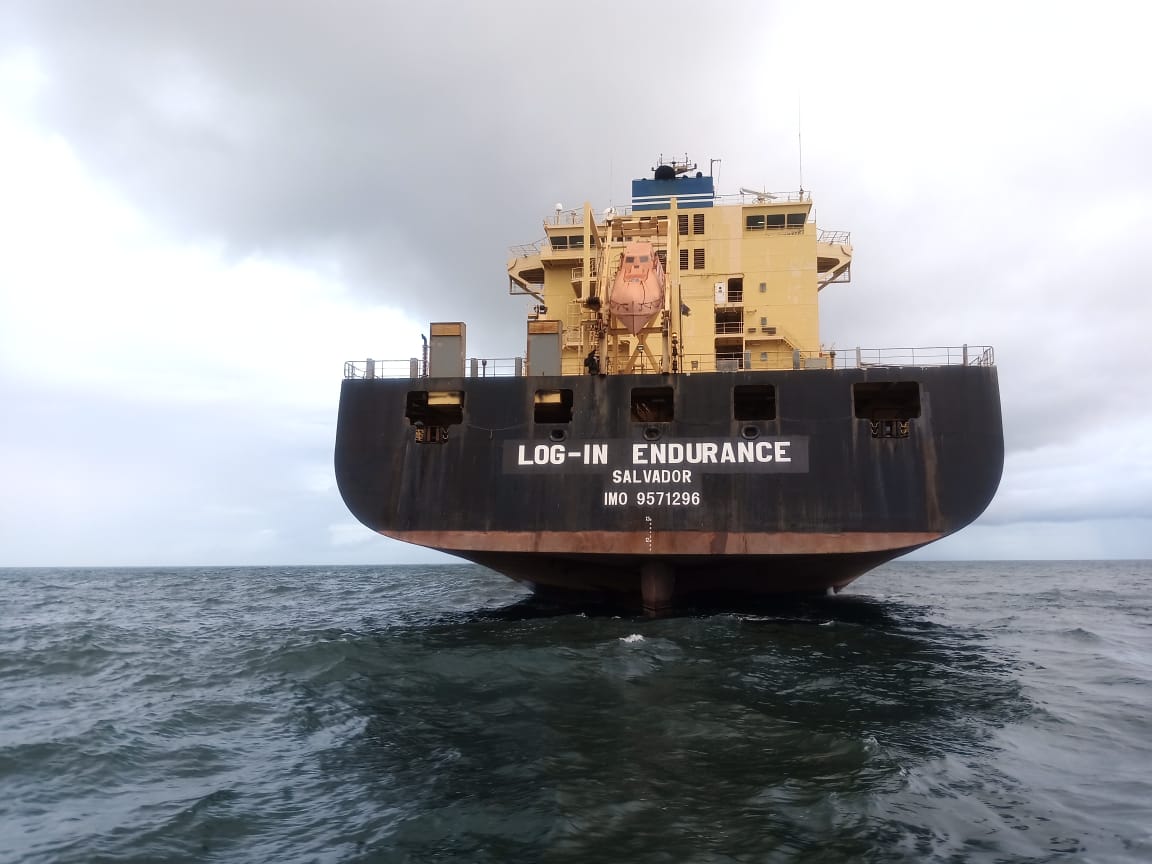
Logistics activities are fundamental for the supply chain to function. Discovering ways to mitigate risks and achieve excellent goals, such as ensuring that supplies and other essential products are delivered across all regions of Brazil, is quite a challenge. When it comes to transportation, the first mode that comes to our minds most of the time is road (land-based). However, cabotage is something that should be viewed with more care when the subject is logistical planning. Brazil has more than 8,500 kilometers of coastline that allow for operations in waterway navigation.
For professionals who already live the reality of logistics operations, this definition may not be so new. In simple terms, this type of transportation occurs by sea, along the coast of Brazil. However, if we ask these same people, most will not be able to answer exactly how cabotage services operate.
-
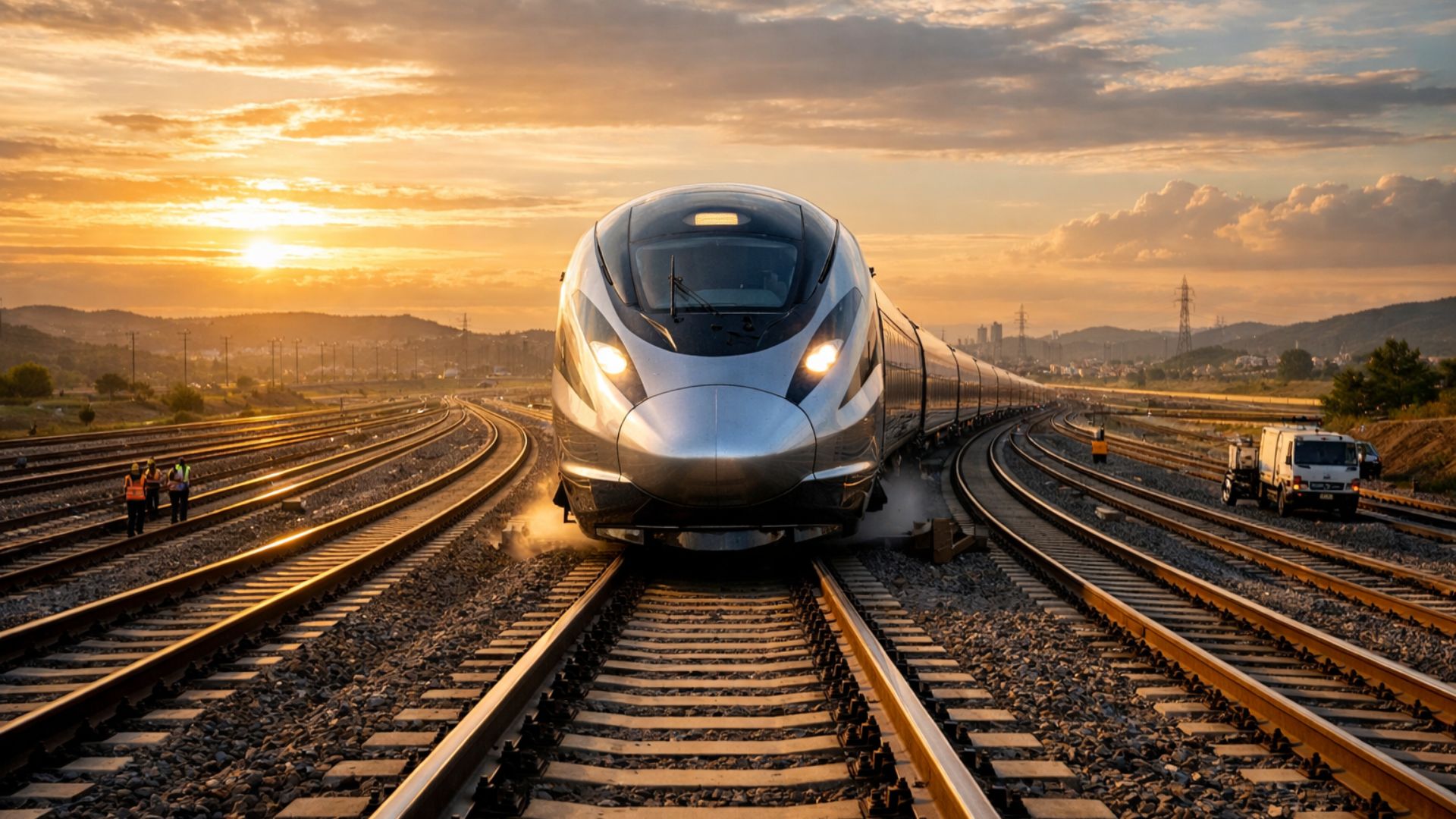
São Paulo surprises the world with a colossal railway network project that promises over 1,000 km of tracks, R$ 194 billion in investments, and 40 projects connecting the capital to the interior with fast and sustainable trains.
-
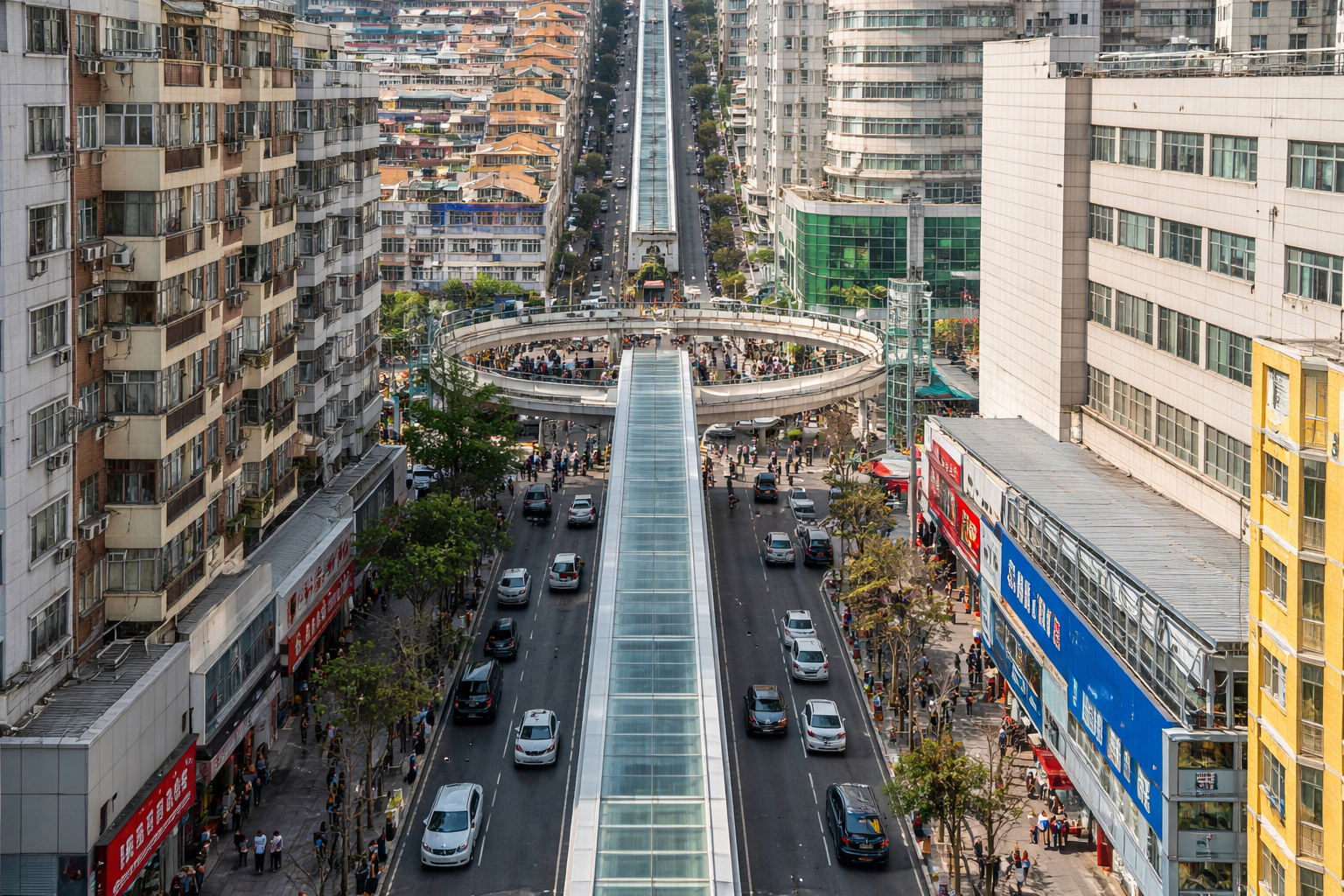
The world’s largest escalator, measuring 905 meters in China, reduces urban travel time from 1 hour to about 20 minutes and transforms mobility in mountainous regions with an engineering solution adapted to the terrain.
-
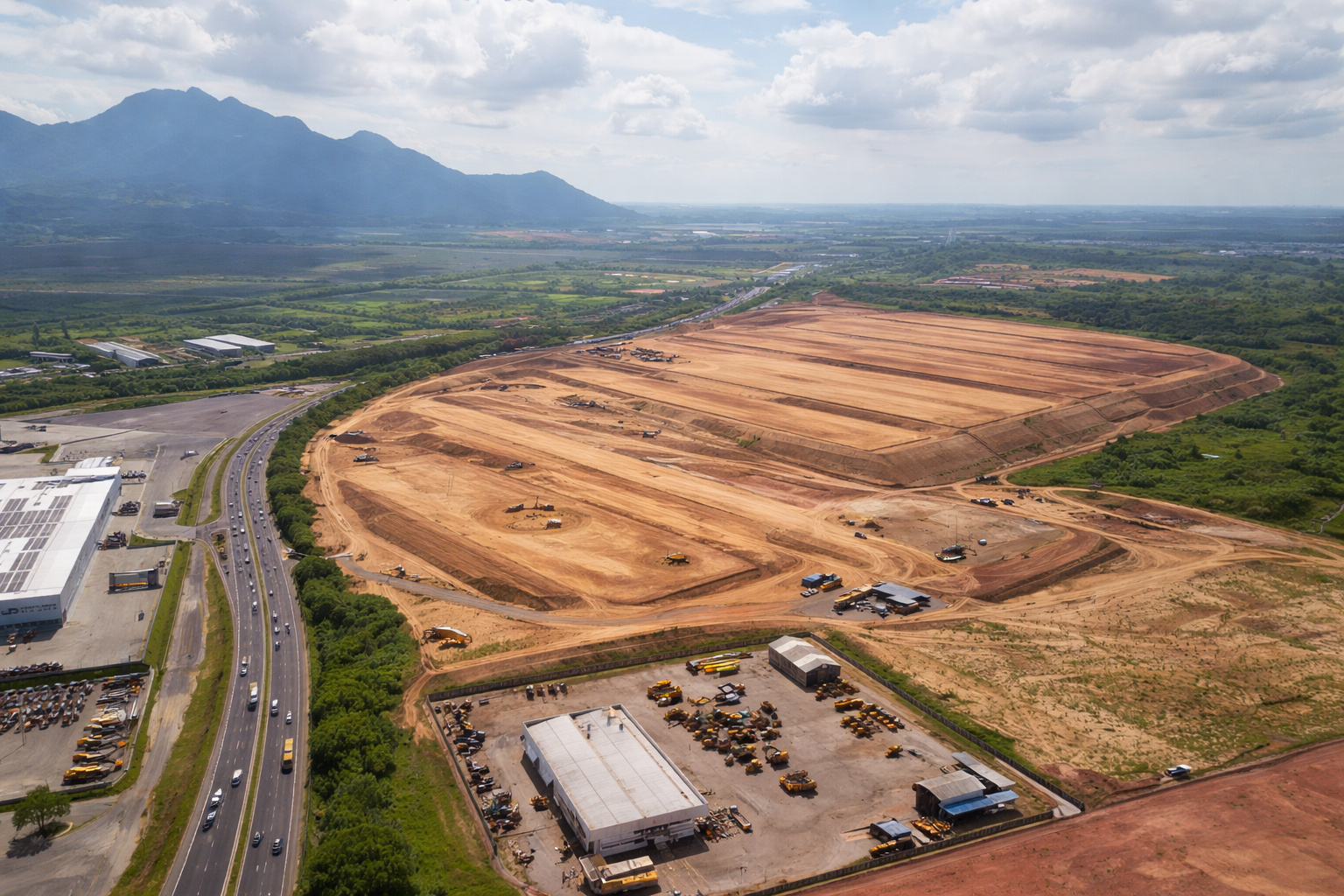
A R$ 300 million logistics giant is taking shape in Serra with over 100,000 m² and raises a question: how can this transform e-commerce and distribution in the state?
-
Could Uber Rides Lose Minimum Fare? Understand What’s Happening!


Most Common Types of Ships Used in Our Cabotage
- Bulk Carriers – dedicated to transporting bulk cargo and large dimensions, known as Break Bulks
- Tankers – those that exclusively transport liquid bulk, such as oil
- Container Ship – As the name suggests, it is intended to transport containers and is the most used worldwide
- Roll in – Roll Out Ship – Ship dedicated to the transport of motor vehicles
There are many other types of vessels, generally built to order for each type of cargo, as our cabotage is very diverse.
The intention of this article is to take a closer look at the operations of container ships, as these are widely used in most of the current waterway logistics chain. This category of services saw an average increase of 13% in the past decade, which basically tripled during this period, contributing to a real Brazilian GDP of 1.4% per year. Information from Antaq and Login-in.
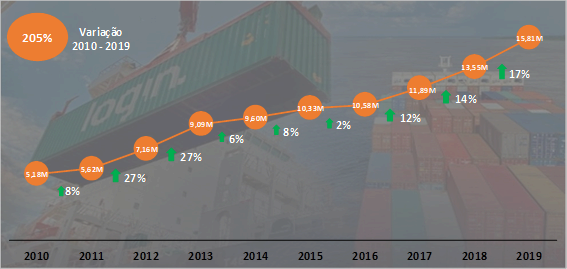
This data clearly shows how efficient and diverse this mode is for serving various segments of the industry. If we consider all the products we consume daily in our households, in terms of dimensions and the space they occupy, we reach the conclusion that about 90% is made within national territory and transported by container ships. This includes all types of products: food, electronics, machinery, etc.
To illustrate, cabotage operates much like a regular bus line, with specific days and times to dock at each port. The ship makes a closed circuit, always leaving and returning to the same point. Predictability is the key word.
To exemplify, nothing is better than facts, and I will use a route I know well as a model. The circuit begins its operation in Pecém, which is the port terminal on the northeastern coast of Brazil, near Fortaleza (CE); it heads to Salvador (BA); passes through Santos (SP); from there it goes to Itajaí (SC) and arrives in Buenos Aires (Argentina). Then it returns, stopping at Rio Grande (RS); Santa Catarina and Santos again, goes directly to Suape (PE) and back to Pecém. This circuit takes 28 days to complete and requires four ships. But why?
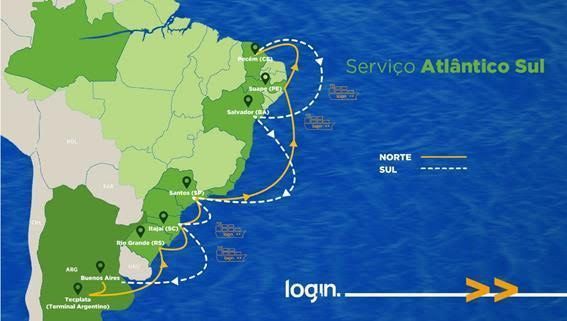
The answer is simple: since we want to “be” at each of these ports once a week, we need several vessels to make this rotation. It’s like drawing a circle and placing one ship equidistant from another, moving in the same direction, with a seven-day interval between them.
But what if I want to take a load from Buenos Aires to Manaus, and this service only goes up to Pecém? Then the analogy is like a connecting flight. We collect a container in Buenos Aires and drop it off at one of the terminals in Brazil that has a connection to one of the other three services we offer. In this case, when a ship from the Amazonas Service that connects southern Brazil to Manaus passes through the port terminal, we place the container originally from Argentina onto another vessel, and the goods continue their journey, with the same predictability and within the agreed timeframe.
It’s the same idea as with buses and planes: there are points where passengers (cargo) disembark and others where they only board, but some points have both movements happening. This is repeated at all ports. The connection is imperceptible to the customer; after all, what matters to them is that their cargo arrives intact. By the way, this is another advantage of cabotage.
Another question that always arises is: if the ship passes once a week and the industry needs to ship goods daily, how do we do it? This is when the know-how of the logistics operator makes a difference, and the customer service team enters the scene, supporting the customer in their logistical planning and scheduling pickups according to each one’s needs, without interruption and at a scheduled time. Subsequently, the truck that picked up the cargo already packaged in the container goes to the port terminal and deposits all the goods. Now, imagine this happening for various clients numerous times a day. That’s why you can observe those stacks of containers at the ports.
Another interesting characteristic of cabotage is the “free” periods at the destination terminals (at no cost), which can vary between seven and 15 days. This helps the customer to plan for receiving and avoid additional storage costs. This is quite advantageous, as most customers do not want or need to receive all containers on the same day according to their logistical planning. They remain at the port, deposited; the Customer Service Center again steps in and calls each of them to schedule delivery according to priorities and availability for receipt. Everything is very planned, functioning like a productive assembly line.
In short, predictability is undoubtedly a significant factor when it comes to cabotage, putting road transport at a considerable disadvantage. At the zero moment, when the load is planned, the receiver already knows exactly when they will have their goods. It seems complicated due to its simplicity, but it is certainly much more efficient than one might imagine.
Mauricio Alvarenga is the Commercial Director of Log-In Intermodal Logistics, a 100% Brazilian company that operates Cabotage Navigation, Port Movement, and Customized Logistics Solutions








Seja o primeiro a reagir!