





 Portuguese
  English
  Spanish
  4 min of reading
  0 comments


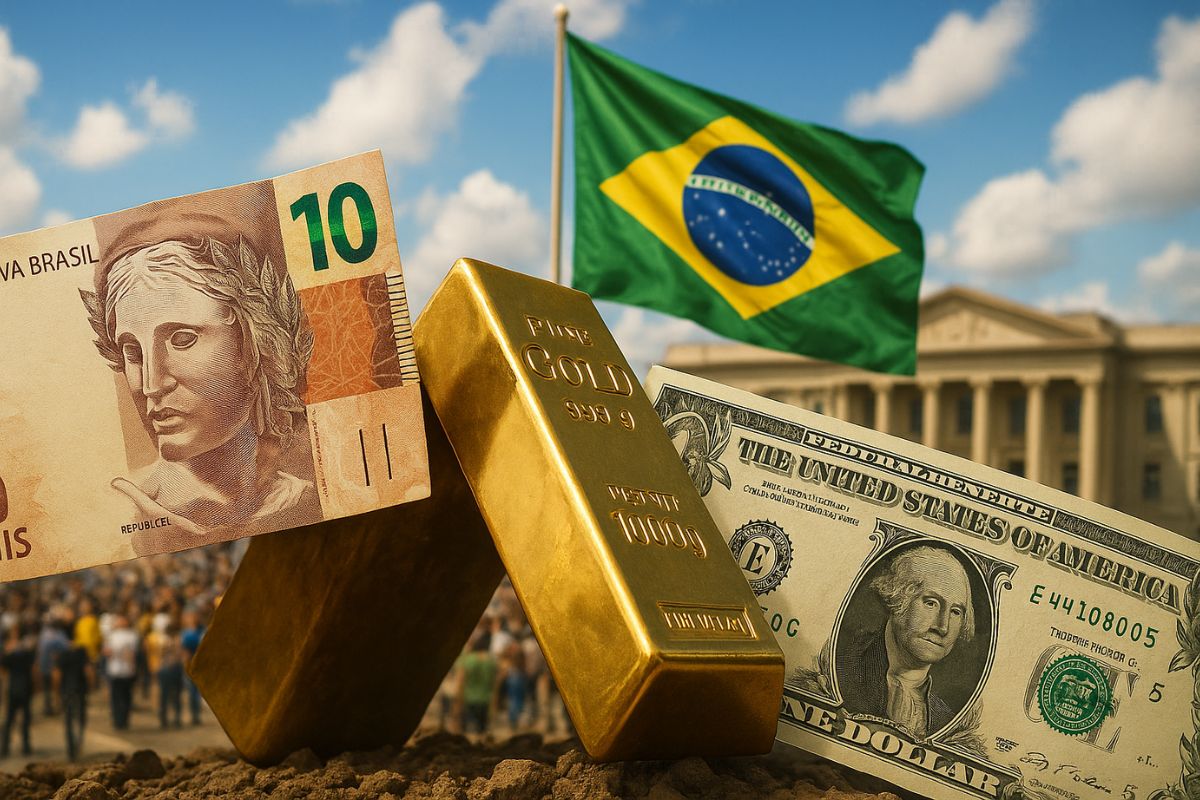
The Value of the Real Does Not Depend on Vaults Full of Gold, but on the Confidence that the State Fulfills Its Obligations, Controls Inflation, and Sustains Economic Activity, a Logic That Also Applies to the Dollar and Other Fiat Currencies.
The value of the real, just like that of the dollar, has not been backed by gold since the 1970s. Since the end of the gold standard, money has become “fiat”: it is valuable because society trusts that the government and the central bank will honor their debts and maintain price stability and the financial system.
This historical shift began with the “Nixon Shock” in 1971, which ended the convertibility of the dollar into gold and dismantled the Bretton Woods system. Since then, the prices of currencies fluctuate based on expectations and fundamentals, not on promises of conversion into precious metals. Understanding this change helps explain why the currency fluctuates, how the exchange rate is formed, and what actually sustains purchasing power in day-to-day life.
From the Gold Standard to Fiat Money
For decades, the main global monetary anchor was the conversion of the dollar into gold at a fixed rate.
-
BRICS is building its own payment system that could be operational by 2030, and experts say it could increase trade between the countries by up to 10% per year and add 3% to the GDP of each member of the bloc.

-
Government suspends over 3 million traffic fines in Brazil and drivers breathe a sigh of relief.

-
Iran has just approved toll charges for ships in the Strait of Hormuz and has completely prohibited the passage of vessels from the United States and Israel in the world’s most important maritime route for the global energy market.

-
Government cancels R$ 25 million “celebration” for Brasília’s anniversary and allocates funds to health.


This limited the issuance of money and provided exchange rate predictability, but it also tied economic policies during crises and required vast reserves.
The break in 1971 transformed the system: currencies began to be valued based on confidence in economic policy, the state’s ability to pay, and the design of institutions.
There is no longer a “physical backing”. What exists is credibility, built on fiscal and monetary rules, transparency, and political stability.
What Sustains Value Today
The value of the real is the result of fundamentals and expectations. Among the pillars, the highlights are:
Credible Monetary Policy: clear inflation targets and a central bank willing to meet them. Low inflation preserves purchasing power and reinforces confidence in the currency.
Responsible Fiscal Policy: sustainable public debt reduces the risk of default and inflationary issuance to finance spending.
Also weighing in are the strength of economic activity, external accounts (trade balance, capital flows), and the institutional environment.
When these vectors point in the right direction, the currency strengthens; when they deteriorate, it loses value.
How the Exchange Rate of the Real is Formed
Since 1999, Brazil has adopted floating exchange rates: the price of the dollar in reais is determined in the market, with occasional interventions by the Central Bank to smooth shocks.
Supply and demand are decisive: dollars flow in through exports, foreign investment, and borrowings; they flow out with imports, remittances, and debt payments.
Another key component is the interest rate differential. Higher domestic interest rates tend to attract short-term capital, supporting the currency; when they fall or uncertainty rises, the movement can be reversed. Expectations about growth, inflation, and policy complete the picture.
The Case of the Real: Confidence, Reserves, and Institutions
The real is fiat currency. Its value rests on the credibility of economic policy and the Brazilian state’s ability to honor commitments.
The international reserves made up of strong currencies, securities, and a portion of gold serve as a “buffer” against shocks, strengthening external confidence.
The lessons of the 1990s left institutional marks: inflation targets, fiscal responsibility, and floating exchange rates.
When these pillars weaken, the risk premium rises and the exchange rate reacts. When they strengthen, perception improves and the real tends to appreciate.
Gold Doesn’t Disappear from the Map, but It Has Ceased to Be an Anchor
The end of the gold standard has not eliminated gold’s role in the economy. The metal remains a store of value in private and official portfolios, especially in times of uncertainty.
The point is that it does not “guarantee” the real or the dollar: today, what guarantees it is the issuer’s ability to pay and the confidence in the rules of the game.
In practice, strong currencies combine solid institutions, fiscal discipline, credible central banks, and dynamic economies.
Without this, even vaults full of metal can’t save purchasing power.
Myths and Truths About “Backing” and Money Printing
It is a myth that the government can “print” wealth at no cost. Issuance without a confidence backing leads to inflation, loss of purchasing power, and ultimately currency crisis.
It is also a myth that only gold guarantees stability: what stabilizes is good economic policy, not the promise of conversion.
On the other hand, it is true that modern money depends on credibility. When confidence falls, the currency falls too.
And it is true that predictable institutions and transparency reduce uncertainty and sustain the value of the currency.
What to Observe Going Forward
To understand the future of the value of the real, look at three fronts:
Inflation and Interest Rates: anchored inflation and clear communication from the Central Bank sustain the currency; de-anchoring weakens the exchange rate.
Fiscal and Growth: debt trajectory, quality of spending, and pro-productivity reforms impact country risk and capital flows.
Global Scenario: appetite for risk, commodity prices, and interest rate cycles in major economies affect emerging currencies.
If the real is valuable because of confidence, what weighs more for you: fiscal discipline, low inflation, or growth? In your routine, do you feel the exchange rate more in the supermarket, in rent, or in airline tickets? Tell us in the comments how these fluctuations have affected your budget and investments we want to hear from those who experience this in real life.










-

-

-

-

-

-

17 pessoas reagiram a isso.