





 Portuguese
  English
  Spanish
  7 min of reading
  11 comments


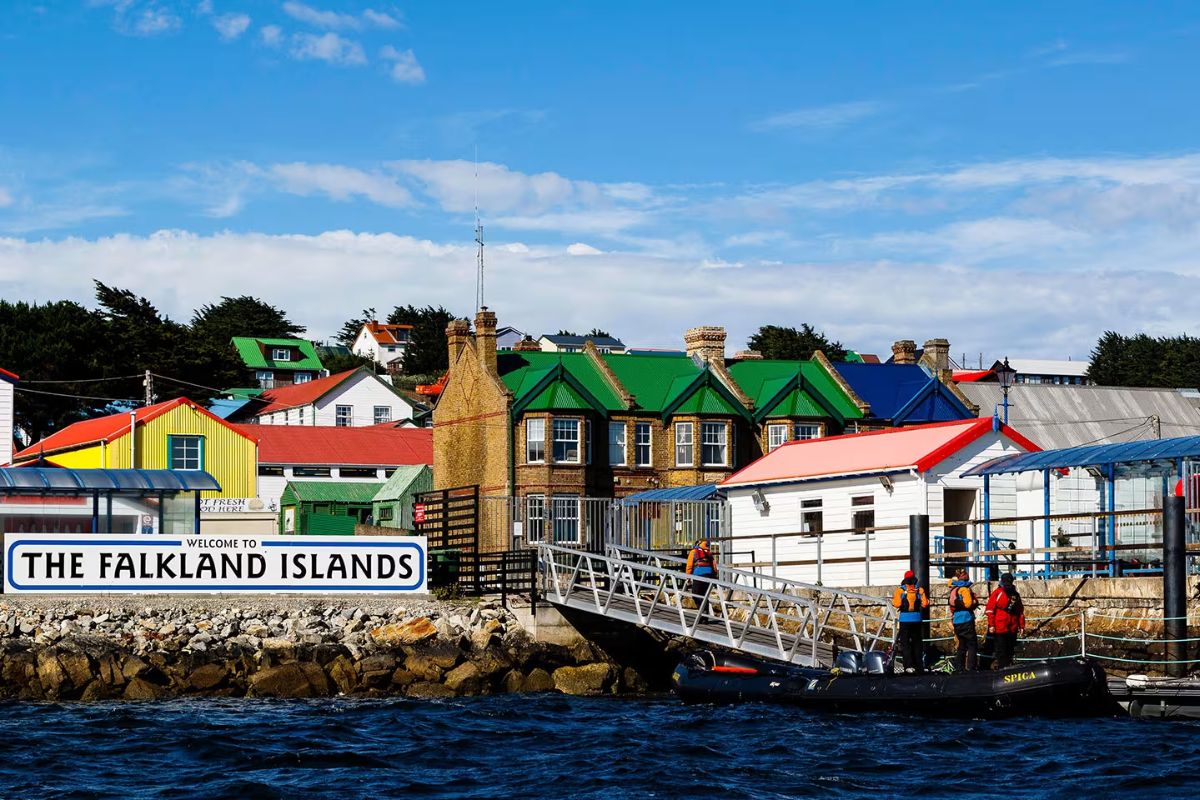


Called the Falklands by some and Malvinas by others, the rich neighbor remains remote, has high purchasing power, low crime, expensive logistics, and a political link with the United Kingdom, in a routine marked by harsh climate, its own currency, and scars of war.
The rich neighbor of Brazil that rarely makes it into everyday discussions in the South American region has a population of about 3,600 people, concentrated mainly in Stanley, and combines high purchasing power, low crime, and strong dependence on external routes. Located in the South Atlantic, the islands are about 2,000 kilometers south of Brazil and approximately 400 kilometers from Tierra del Fuego.
Despite the small population size, the territory does not function as an improvised village in the middle of the ocean. There is a local currency, a local government with broad powers, organized public services, and an economy mainly supported by fishing, tourism, and internal revenue. At the same time, the mark of the 1982 war remains present in memorials, in military structure, and in the way the territory is perceived by Argentines, Brits, and locals.
Between Two Names and a Dispute That Never Ended

The first trait that defines this rich neighbor is the symbolic dispute over its very name. In the United Kingdom and in the territory, the common usage is Falklands. In Argentina, it is Malvinas.
-
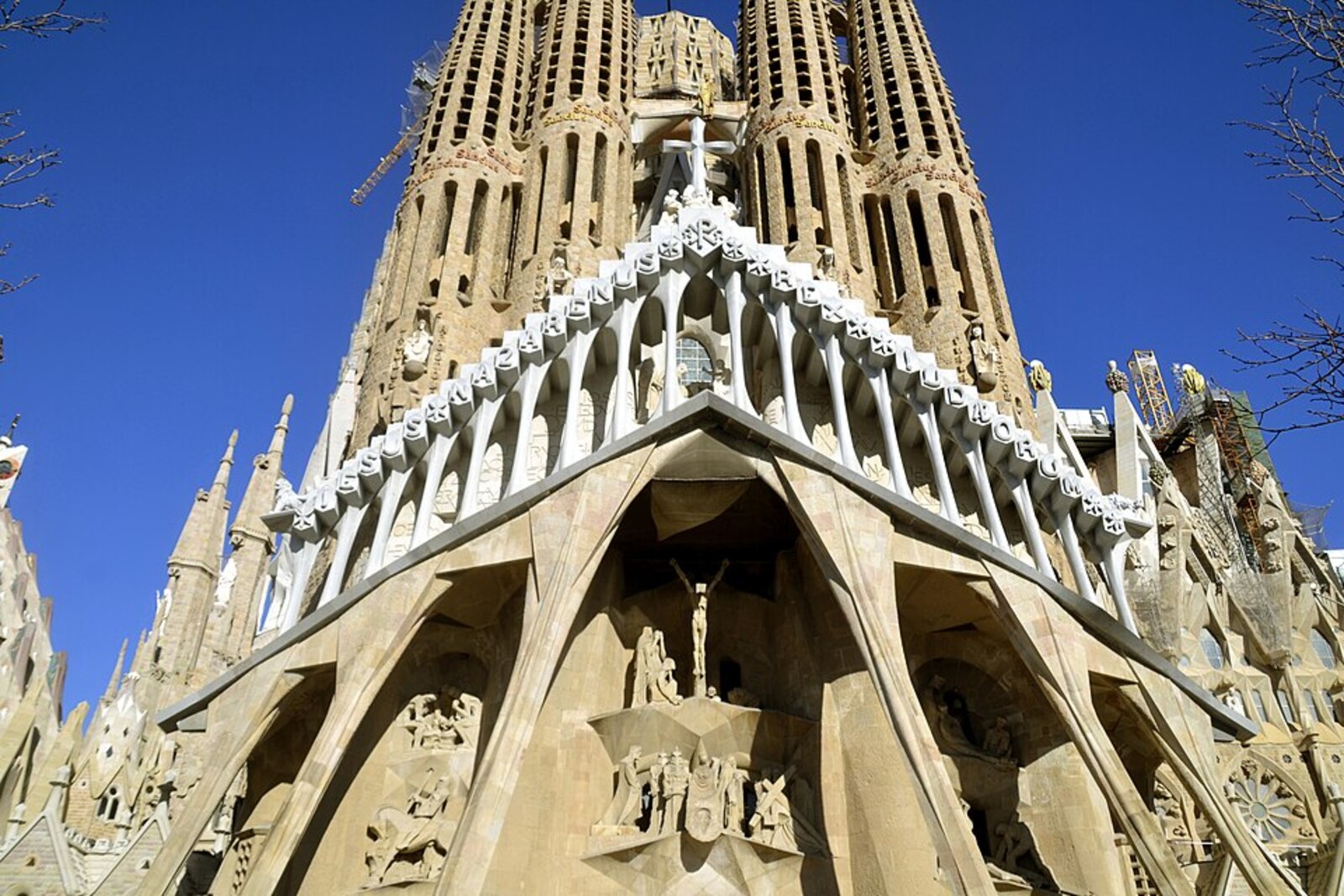
Masterpiece in Spain, under construction since 1882, receives 4.8 million visits in a year and impresses with its gigantism and architecture.
-
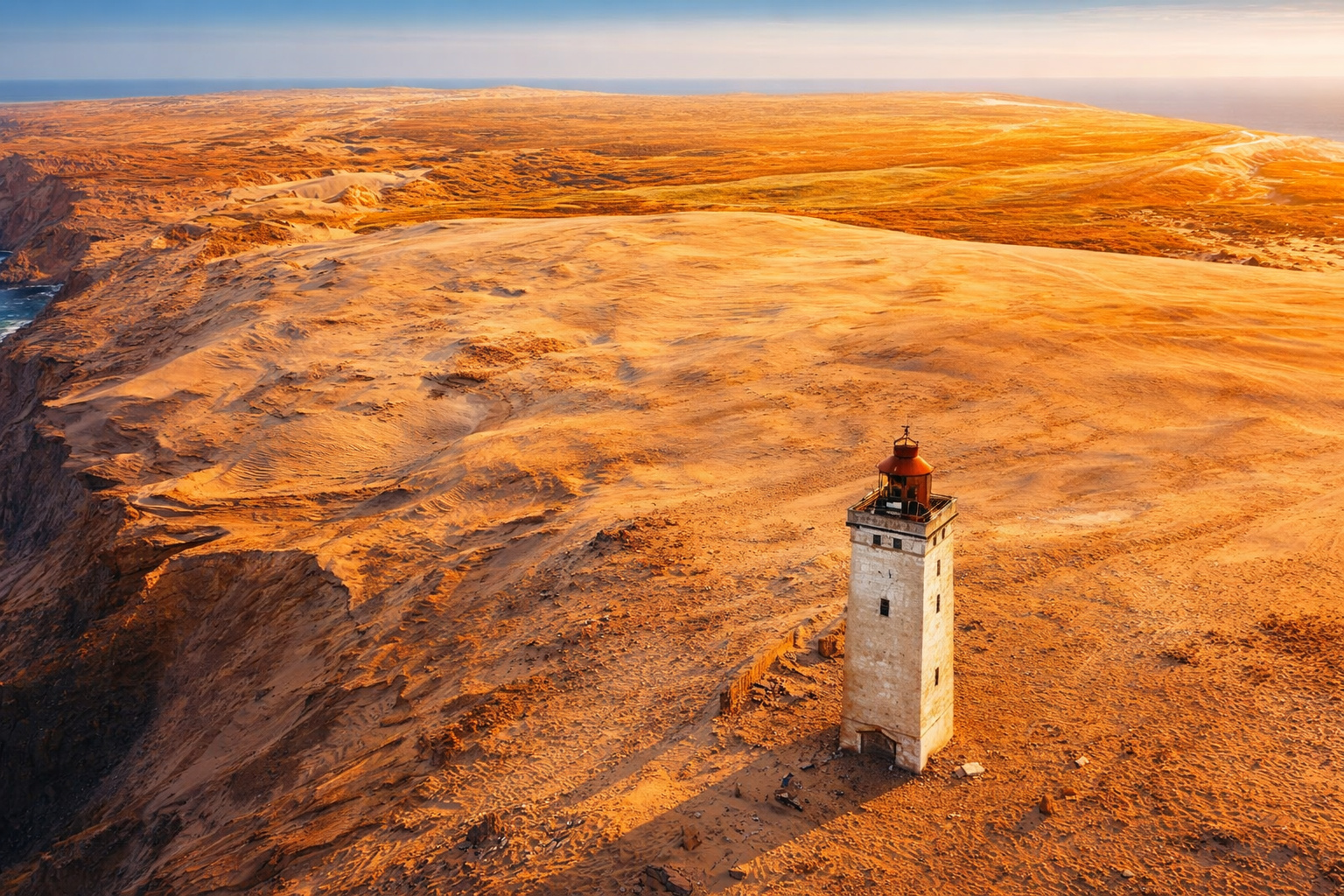
Attracting around 250,000 people a year, a lighthouse 200 meters from the sea, on a 60-meter high cliff, on the North Sea coast in Denmark, becomes one of the most impressive examples of how nature can threaten historical buildings.
-
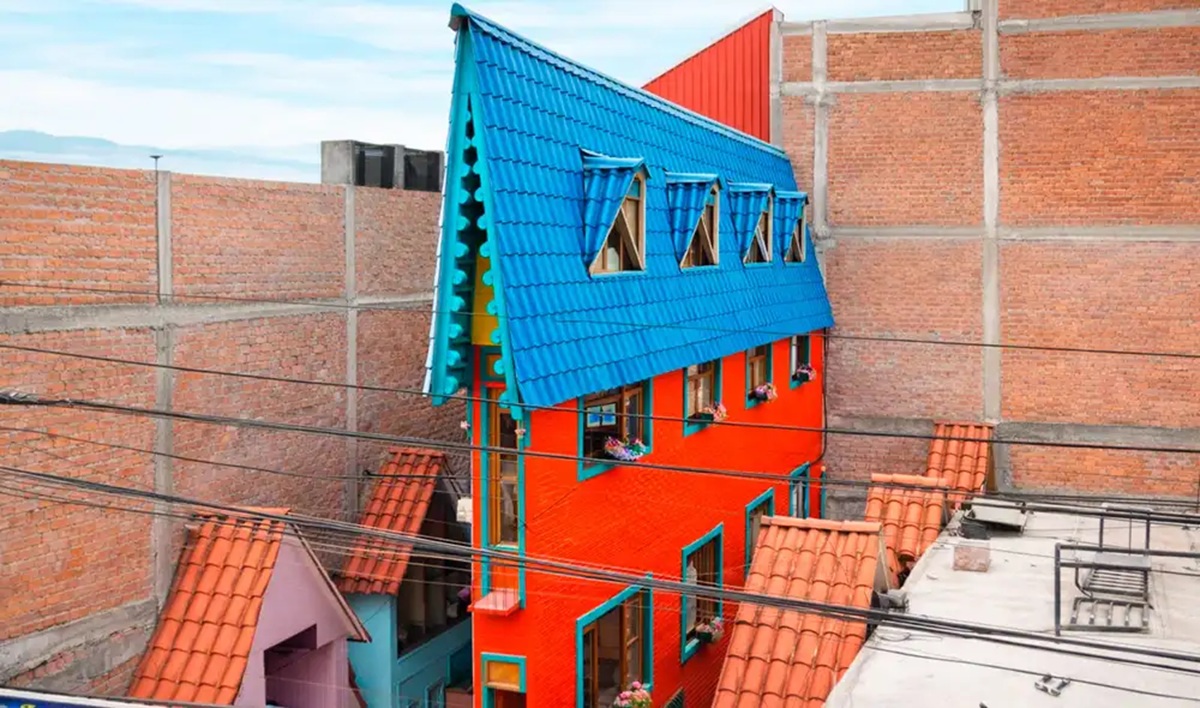
The narrowest house in the world is only 63 centimeters wide, but inside it can accommodate a bathroom, kitchen, bedroom, office, and even two staircases.
-
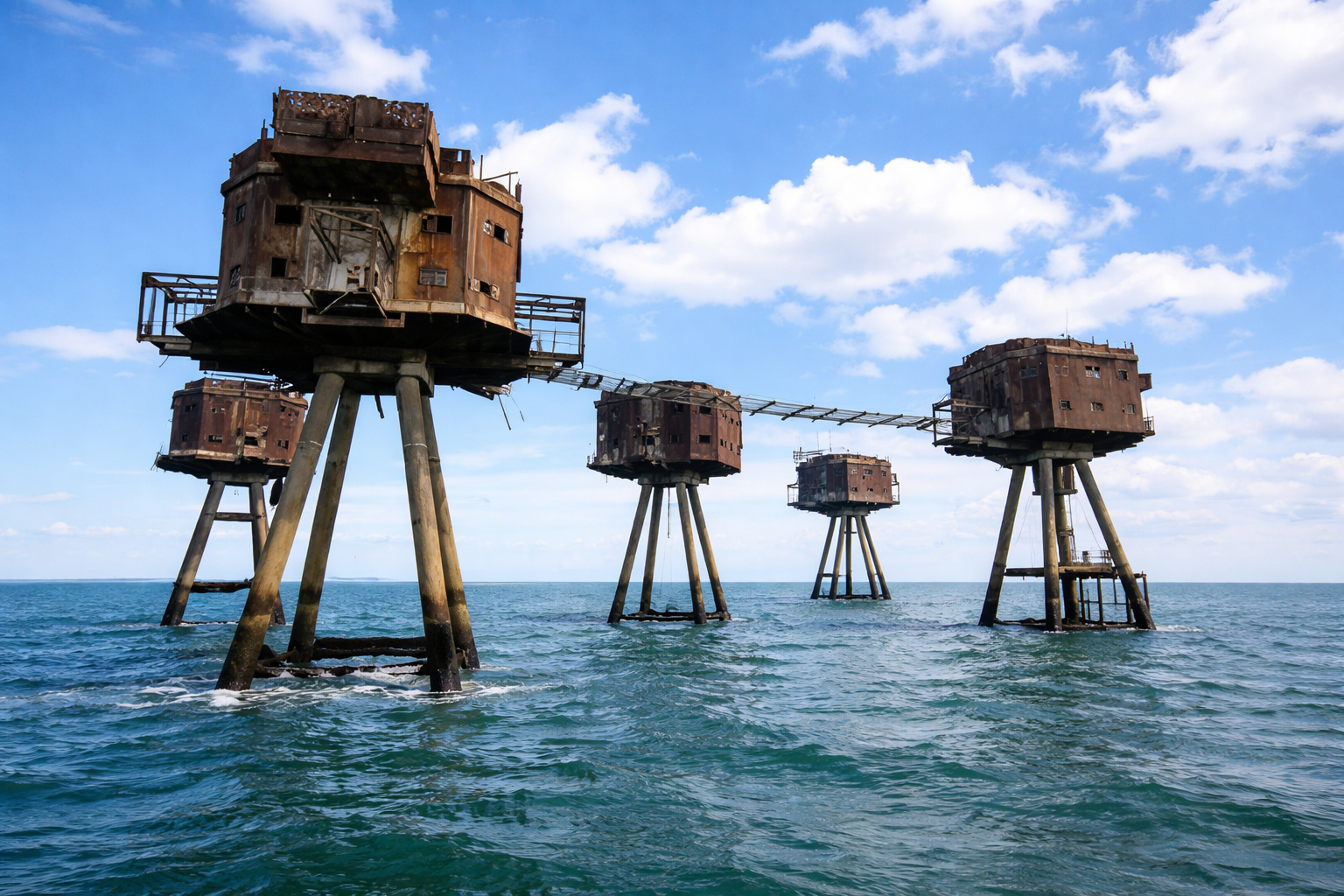
In the middle of the sea, these enormous concrete and steel structures, built by the British Navy to protect strategic maritime routes, look like they came straight out of a Star Wars movie.
The linguistic divergence is not a diplomatic detail, but a direct reflection of the sovereignty dispute that spans the 19th century and erupted militarily in 1982, when Argentina and the United Kingdom went to war for control of the islands.
Since then, the issue has ceased to be merely cartographic and has begun to structure the political daily life of the archipelago. The conflict lasted about ten weeks, ended with the British takeover, and left hundreds dead on both sides.
Decades later, sovereignty remains a source of diplomatic divergence, while the British military presence continues integrated into the local landscape. This is not a closed past, but a historical wound still managed in the present.
Geographically, the territory covers about 12,000 square kilometers and has two main islands, East Falkland and West Falkland.
Stanley, the capital, concentrates most of the residents and also the administrative functions. Politically, the model resembles other overseas territories: the local government controls immigration, fishing, police, and internal laws, while the United Kingdom handles foreign relations and defense.
This arrangement helps explain why the archipelago maintains a strong British identity without relinquishing autonomy in crucial areas of daily life. Residents use a British passport issued as an overseas territory, speak English, and operate within a unique institutional system.
The local administration exists concretely but operates under a British strategic umbrella, especially because the cost of maintaining independent defense would be too high for such a small population.
How the Rich Neighbor Lives with Only 3,600 Inhabitants

In practice, the rich neighbor is less surprising for its landscape and more for its social structure. There are few visible signs of poverty, crime is described as very low, and the local prison has limited space, which reflects the size of the penal system.
Safety is often pointed out by residents as one of the biggest advantages of living there, alongside high purchasing power.
This purchasing power manifests in various ways. The local currency, the pound of the islands, is on par with the pound of the United Kingdom, and one pound was reported to be equivalent to about R$ 7.
A simple house can be bought for about 200,000 pounds, while used cars in good condition sell for about 15,000 pounds, and more modest models for around 2,000 pounds.
For a remote territory, prices are not low, but local income makes part of this cost manageable.
Food highlights this contrast clearly. A coffee or snack for two people can cost around 20 pounds, and a lunch or dinner ranges between 20 and 30 pounds for the couple.
In the supermarket, some items are expensive, especially when logistics delay the arrival of goods, but the impact of this diminishes for those who consume local products and maintain small home greenhouses to supplement their table.
In a place where supply depends on the sea and the weather, income and domestic autonomy matter a lot.
The urban profile of Stanley also helps understand how the territory operates. The city grows, incorporates new housing, and gathers diverse functions in compact spaces, with commerce, services, and administration coexisting side by side.
At the same time, the small scale makes almost everything quickly visible: the governor’s house, the police station, the small prison, the hospital, the gas station, and public buildings form a set that reveals how the rich neighbor combines territorial simplicity with institutional organization.
Harsh Climate, Fragile Routes, and an Isolation That Costs Dearly


If income helps soften everyday life, isolation continues to impose severe limits. The weather is unstable even in summer, with constant winds, persistent cold, and sudden changes in short intervals.
The weather is not a meteorological detail but a force that reorganizes flights, increases accommodation costs, alters movements, and affects all logistics of the territory.
Reaching the islands already shows this problem. There is only one weekly international flight from Punta Arenas, Chile, operated by Latam, along with military connections from the United Kingdom where civilians occupy a limited number of seats.
If the flight is canceled, the passenger may be stranded for days, without automatic rebooking in a hotel or meals. A simple night for a couple was estimated at at least 100 pounds, a value close to R$ 1,000 at the exchange rate mentioned in the report.
This history also explains why the brief direct flight between São Paulo and the archipelago gained so much relevance. The route existed for a few months and was interrupted during the pandemic. Afterward, it did not return. The problem does not seem to have been just demand, but geopolitics.
In the case of this rich neighbor, air connection never depends solely on market or tourism; it also depends on the delicate regional relationship regarding the islands.
Logistical fragility reappears in the internet and in supplies. For years, the connection relied on traditional satellites, and the arrival of Starlink at the end of 2025 improved usage for residential and business purposes.
Still, mobile internet remains expensive and limited, with short and slow packages. In commerce, fruits, groceries, and other products vary according to shipping delays.
This is the type of economy where a late delivery alters prices, menus, and routines. Those who live there reside in an organized territory, but are permanently conditioned by distance.
Strong Economy, Autonomous Government, and British Military Dependence
The economic base of the rich neighbor is more solid than many people imagine. The main public revenue comes from selling fishing licenses to foreign vessels.
Tourism follows, driven by cruises, visitors attracted by local history, and travelers interested in the experience of a remote and politically unique territory.
There is still offshore oil potential, although commercial exploration depends on investment and market conditions.
For a population of less than 4,000 residents, this model generates a very high GDP per capita and an unusual capacity for internal administration for such a small territory.
Public services are functional, basic infrastructure is considered solid, and the local government controls a large part of its own revenues.
This is what sustains the image of the rich neighbor: few people, high revenue per inhabitant, and a lean state with relevant resources for its size.
However, not everything is self-sufficiency. Defense remains under the responsibility of the United Kingdom, and this directly weighs in on the debate about independence.
According to the report, many residents reject the idea of complete separation because they believe they already have “the best of both worlds”: internal autonomy, their own laws, control over immigration, and local resources, but without having to finance an army, military base, and territorial protection on their own.
The same reasoning appears in sensitive areas such as energy and health. Electricity comes from a hybrid system, partly generated by wind turbines and partly by diesel brought by ship.
The local hospital addresses maternity, ICU, and everyday cases, but serious situations require air evacuation to Chile or the United Kingdom.
The rich neighbor has money, organization, and stability, but remains vulnerable when problems require scale, secure routes, and responses outside the archipelago.
In the end, the territory relies on a rare equation. It is small, remote, expensive, and politically contested, yet offers security, high income, and institutional functioning above what its size might suggest.
The war of 1982 still shapes the landscape and strategic decisions, while the distance from the continent reinforces a unique identity, British in form and insular in practice.
This is the central point of the story. The rich neighbor stands out not only for having 3,600 residents, low crime, and high purchasing power.
It draws attention because it shows how a tiny territory can be economically strong while also remaining trapped in a geopolitical dispute that defines flights, defense, diplomacy, and its future.
In your view, will this archipelago tend to remain as it is, or can regional political pressure still change the islands’ fate?







A guerra das Malvinas foi considerada um erro Crasso do general Leopoldo Galtieri. Condenado a prisão perpétua, Galtieri faleceu no cárcere. Ainda hoje, existe uma praia minada e isolada nas ilhas, devido aos acidentes durante as tentativas de extrair e desarmar as minas terrestres.
Rico porque você às custas da rainha (agora rei) de um império que suga e sempre sugou o mundo inteiro para dar benesses a sua aristocracia e, de quebra, aos seus súditos. Alguém tem que pagar a conta e adivinha quem?
Vive*
Pelo menos a Inglaterra fez o favor de tirar os moradores do sofrimento do governo Milei
Gente burr4 comentando é difícil!
Cadê o moderador pra sumir com esses comentários de fezes?
**** é vc, pobre de direita. Lixo.