





 Portuguese
  English
  Spanish
  3 min of reading
  1 comment


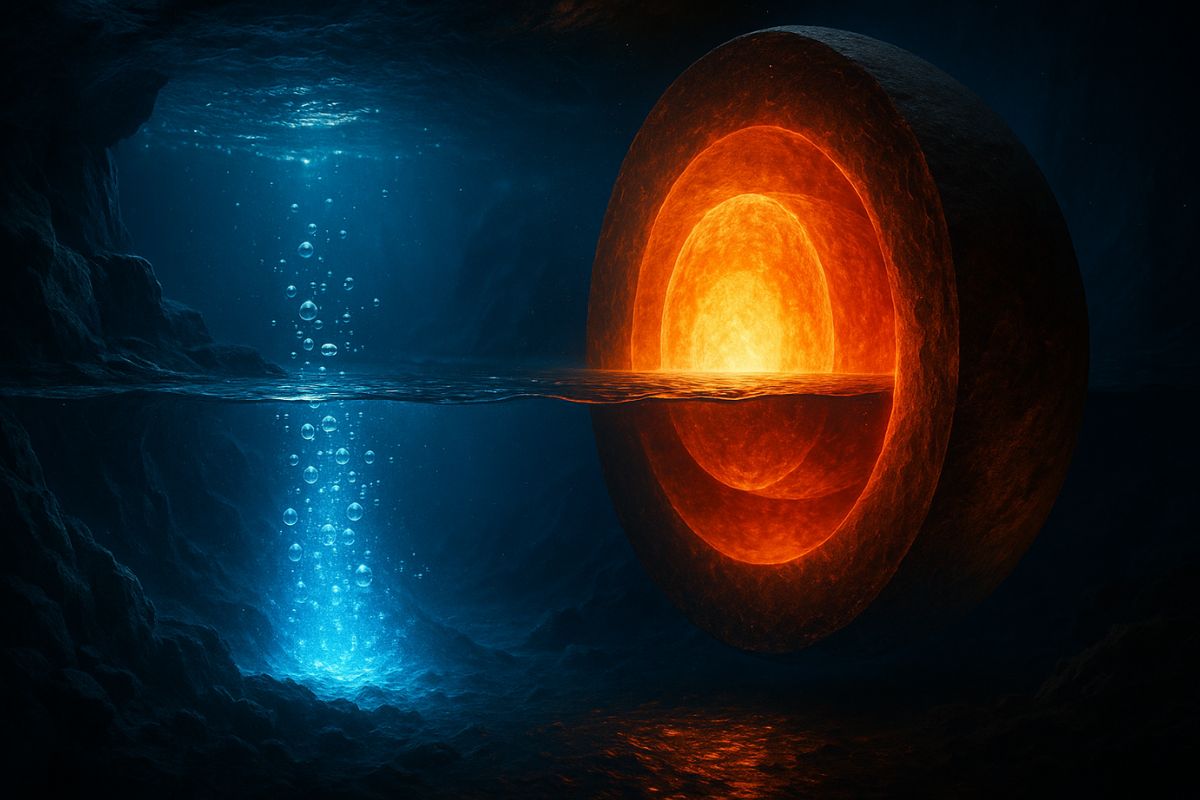


The Discovery of Billions of Liters of Water in the Earth’s Mantle Challenges Old Theories About the Origin of the Seas and Redefines the Future of Planetary Geology.
In September 2024, a study published in the journal Science and reported by outlets such as O Globo revealed one of the biggest surprises in recent science: the existence of a vast “subterranean ocean” located 700 kilometers deep. The seismic analysis showed that this discovery of billions of liters of water is not in a liquid state, but trapped in the structure of minerals in the Earth’s mantle called ringwoodites.
This revelation changes the way we understand Earth. Until now, the prevailing theory was that water mainly came from comets that collided with the planet during its formation.
Now, the hypothesis is growing that a significant part of the water that feeds our oceans emerged from the interior of the planet itself.
-
A bottle thrown into the sea by two Australian soldiers in 1916 on their way to the trenches of World War I was buried in the sand for over 100 years, and the letters inside it were still legible when they were found.

-
China invests over R$ 4.2 trillion, builds the largest water network in the world with 95,000 reservoirs and 1 trillion m³, expands piped water access to 96% of rural areas, attracts R$ 565 billion in foreign investments, and advances with the “longevity gene” in rice.
-
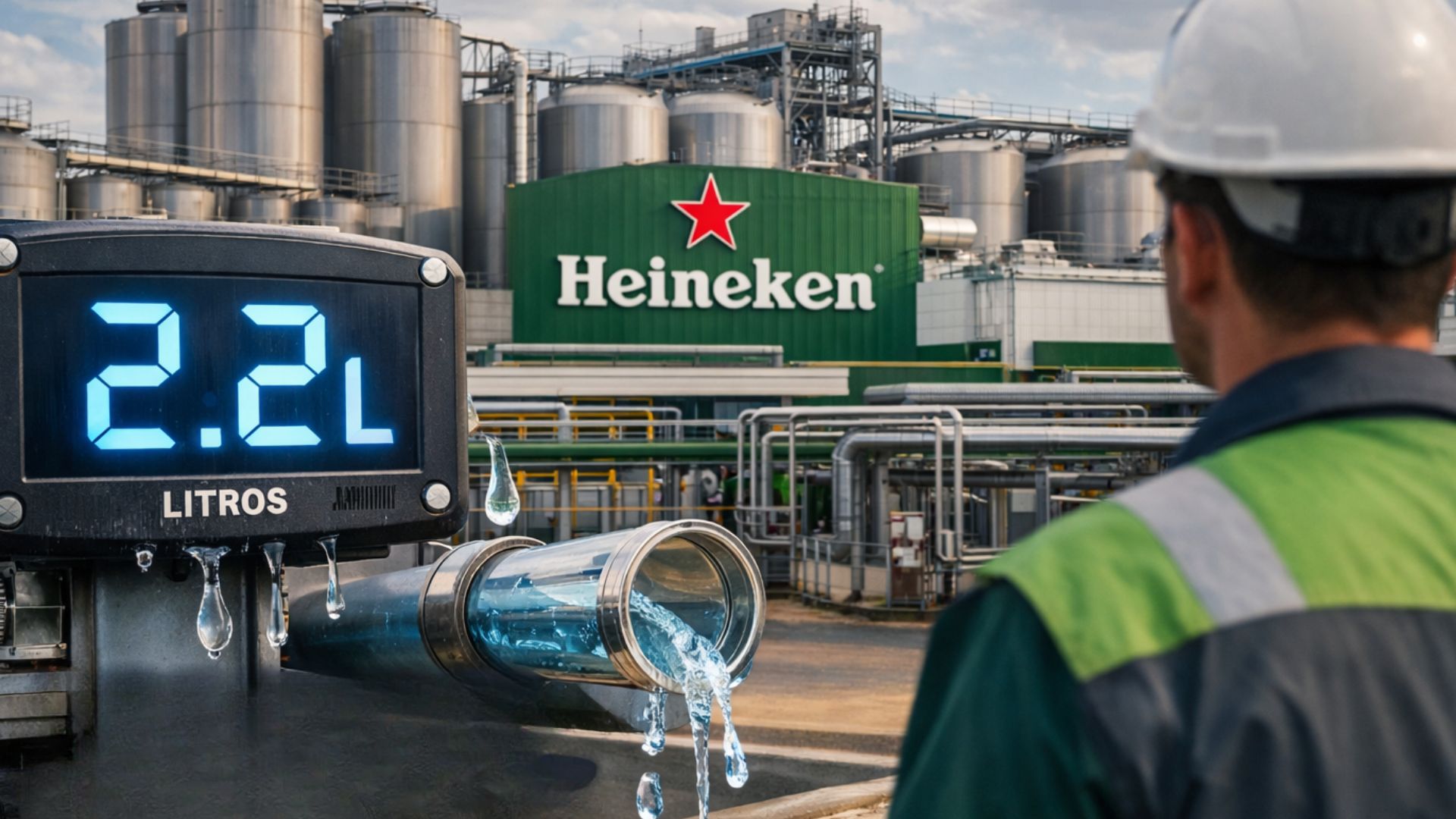
Heineken’s factory in Brazil surprises the world by reducing water consumption for beer production from nearly 10 liters to just 2.2 liters per liter produced, achieving a 23% decrease with real-time technology.
-
This climbing plant covers the walls of the house, blocks up to 80% of solar radiation, and reduces the internal temperature by up to 5 degrees in the summer without spending a dime on the electricity bill, and it also produces bunches of grapes in the backyard.


How the Discovery Was Made
The finding was only possible thanks to a network of 2,000 seismographs spread across the United States, which analyzed data from over 500 earthquakes.
Scientists noticed that seismic waves slowed down at certain depths, indicating the presence of water molecules mixed with rocks.
This was the first robust evidence that the Earth’s interior functions as a gigantic natural reservoir of water, altering the planet’s water balance and geological dynamics.
The Importance of Ringwoodite
The mineral ringwoodite plays a central role in this discovery. It has the ability to store enormous amounts of water in its crystalline structure, forming a true hidden ocean.
This reservoir could be up to three times larger than all the water in the surface oceans.
According to geologists, if this water were released, the ocean levels would rise to the point of submerging almost all of Earth’s terrain, leaving only the tops of the highest mountains visible.
Impact on Theories About the Origin of Water
Until 2024, the most accepted theory was that the seas formed from the impact of comets and asteroids rich in ice.
With this new discovery, the hypothesis that the planet’s water already existed abundantly in the Earth’s interior is gaining strength, being gradually released over billions of years.
This means that the current seas may be directly connected to this subterranean reservoir, in a deep cycle of storage and release that science is still mapping.
The Water Cycle in the Mantle
The research also showed how this movement occurs. During tectonic subduction processes, when an oceanic plate dives beneath another, water is carried into the planet’s interior.
Millions of years later, part of this water returns through volcanic eruptions or mantle melts, helping to balance ocean levels.
This slow and continuous cycle reinforces the idea that Earth has a natural water regulation system, essential for sustaining life and climate throughout geological ages.
Consequences for The Future
The discovery of billions of liters of water inside the planet opens new perspectives for science.
In addition to redefining the origin of the oceans, it helps explain how Earth maintained enough stability to sustain life for billions of years.
Researchers believe that more seismic studies may identify similar reservoirs in other regions, expanding understanding of the planet’s internal workings and its direct impact on the surface.
The revelation of a hidden ocean 700 km deep in 2024 not only overturns old theories but also reinforces the need to rethink how Earth regulates its most precious resources.
This hidden reservoir shows that the planet holds secrets capable of changing science and influencing our future.
And you? Do you believe that the discovery of billions of liters of water inside the Earth can redefine the planet’s climatic and geological future?
Leave your opinion in the comments; your insight can enrich this debate.








Nós só descobriremos o que Deus quiser que saibamos