





 Portuguese
  English
  Spanish
  6 min of reading
  0 comments


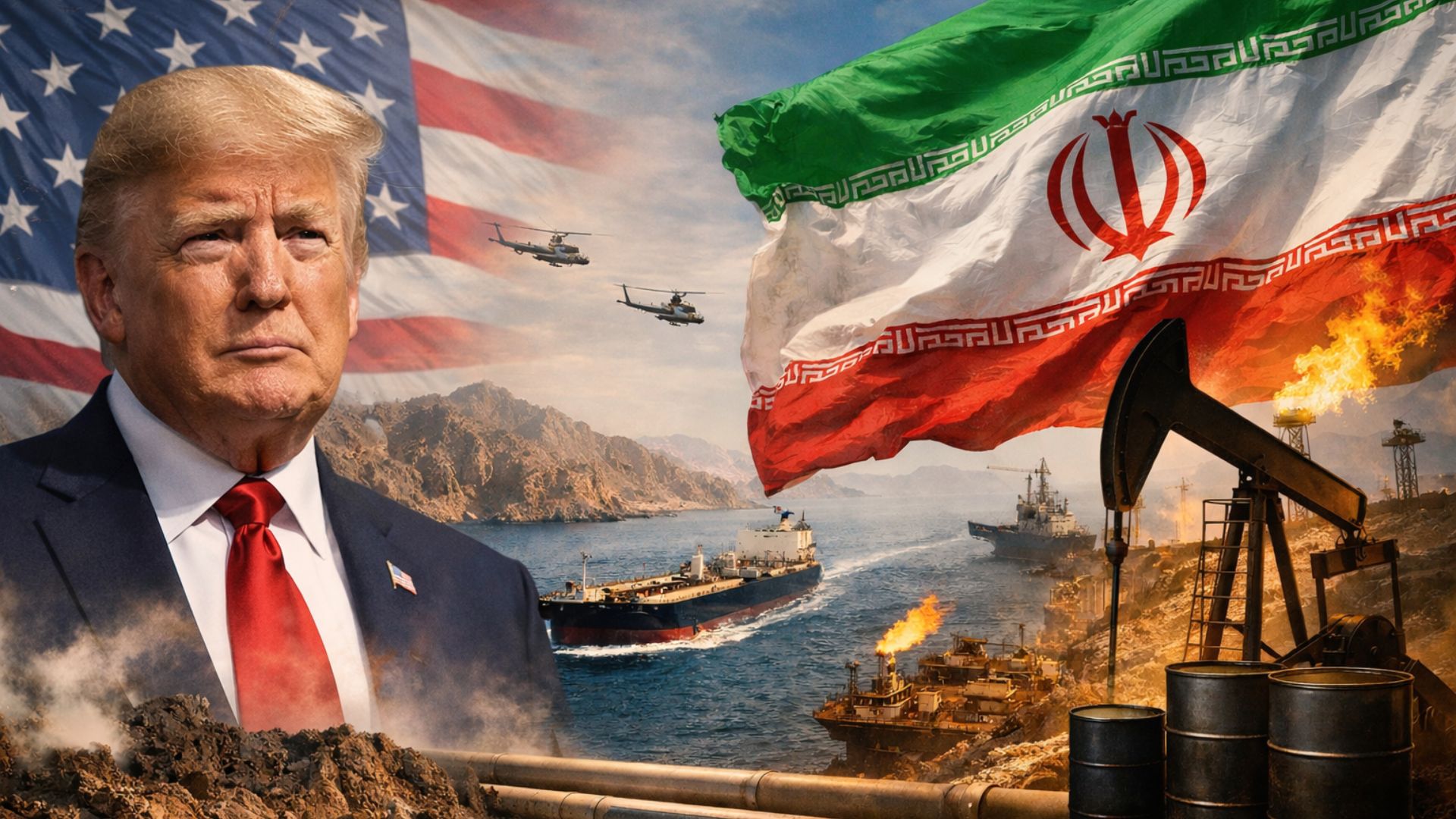
Understand why oil soared on Monday (13) after the US blockade on Iran, the role of the Strait of Hormuz, and how Trump decisions can affect fuels and global inflation.
The oil traded above $100 per barrel again on Monday (13), recording a significant increase of over 7% amid the announcement of a US blockade on Iran. According to G1, the movement surprised part of the market and reinforced the level of sensitivity of prices in the face of geopolitical tensions involving major producers.
Around 8:29 AM (Brasília time), Brent futures contracts rose 7.2%, reaching $102.01 per barrel. Meanwhile, WTI, the benchmark in the United States, increased by 7.8%, reaching $104.07. In the previous session, both had recorded declines — of 0.75% and 1.33%, respectively — making the reaction even more significant.
The announcement was driven by statements from President Donald Trump, who announced the start of maritime operations. The measure comes after the failure of negotiations between Washington and Tehran to end the war, increasing the risk of disruptions in global supply.
-
“Single Tax” becomes a hot topic in 2026 after new social fee: is there really a penalty for those who don’t get married in Japan?

-
The largest oil field in the United States had entire layers that no one knew existed, and the U.S. government has just confirmed 1.6 billion barrels hidden in rocks that have been invisible for decades.
-
Unlike Brazil, China has banned gambling and casinos to curb the rise of gambling addiction, blocks platforms, punishes operators, and maintains one of the strictest policies in the world to prevent billions from escaping the economy and to protect the population from the social impacts of gambling.

-
In the Saudi Arabian desert, the world’s largest green hydrogen plant is 80% complete and will use 4 gigawatts of solar and wind energy to produce 600 tons of clean fuel per day when it opens in 2027.
US blockade on Iran pressures supply and raises oil prices
The impact of the US blockade on Iran was immediate in the oil market. As the country is a major exporter, any logistical or commercial restriction tends to reduce the available supply, raising prices almost instantly.
The measure involves controlling maritime traffic linked to Iranian ports. According to the United States Central Command, the blockade will be applied to vessels entering or leaving these areas, covering ports in the Arabian Gulf and the Gulf of Oman.
This type of action generates a domino effect. Even without completely interrupting the global flow, the increased risk is already enough to alter decisions of traders, shipping companies, and investors.
Among the main observed effects:
- Reduction in supply predictability
- Increase in risk premium in oil prices
- Changes in trade and logistics routes
- Pressure on futures contracts and physical market
Strait of Hormuz gains prominence amid escalating tension
The Strait of Hormuz has returned to the center of the global scenario. This strategic route is responsible for the passage of about 20% of all oil traded in the world, which explains its relevance in times of crisis.
Although the US blockade does not completely prevent international navigation, it directly affects vessels linked to Iran. This is already enough to generate operational uncertainties and increase maritime transport costs.
Navigation data shows that oil tankers began to avoid the region even before the official implementation of the measure. Still, three fully loaded supertankers managed to cross the strait on Saturday, being the first to leave the Gulf after the ceasefire the previous week.
On the Iranian side, the response was also firm. The Revolutionary Guard stated that any military vessel near the strait could be considered a violation of the agreement, further raising the level of risk.

More expensive oil already pressures fuels and cost of living
The rise in oil above $102 has a direct impact on the daily lives of economies. The increase in commodity prices tends to be quickly passed on to fuels like gasoline and diesel, affecting consumers and businesses.
This movement influences different areas:
- Public and private transport
- Freight and logistics
- Industrial production
- Food prices
In Brazil, for example, the variation of oil in the international market usually impacts prices at refineries, which can reach the final consumer in a short time.
Moreover, the current scenario occurs at a time of global attention to inflation. Any additional pressure on energy costs can hinder the control of inflationary indices in various countries.
Trump admits political and economic impact of the decision
President Donald Trump acknowledged that the rise in oil and fuel prices may have internal political consequences. According to him, prices may remain high until the midterm elections in the United States, scheduled for November.
The statement draws attention as it highlights that the US blockade on Iran goes beyond a military strategy. It is also a decision with direct effects on the domestic economy and the political landscape.
Historically, increases in the price of oil influence the mood of the electorate, especially in countries with high dependence on fossil fuels.
Physical market signals even more expensive oil in the coming weeks
Another relevant point is the behavior of the physical oil market. Amid the tension, some types of the commodity are being traded with high premiums compared to futures contracts.
There are reports of cargoes close to $150 per barrel under certain conditions, reflecting the increased risk perceived by market agents.
Experts point out that if the US blockade on Iran is implemented more strictly, a convergence between physical and financial prices may occur, further increasing the value of the barrel.
This scenario reinforces the idea that the current movement may not be momentary, but rather the beginning of a period of greater volatility.

Oil, inflation, and the global economy enter a new phase of pressure
The relationship between oil and inflation is direct and widely recognized. When prices rise, the impact spreads rapidly throughout the economy.
The current context, driven by the US blockade on Iran, increases concern about:
- Rising production costs
- Reduction in purchasing power
- Pressure on monetary policies
- Possible economic slowdown
The Strait of Hormuz plays a central role in this process. Any instability in the region tends to amplify the effects on global markets.
Tensions in the Strait of Hormuz and the strategic role of Iran
The Iran occupies a strategic position on the global energy map. Its proximity to the Strait of Hormuz means that any conflict involving the country has immediate repercussions in the oil market.
The current impasse, exacerbated by the US blockade, occurs after the failure of negotiations to end the war. This also puts a two-week ceasefire at risk, increasing uncertainty.
Furthermore, the scenario highlights the fragility of diplomatic relations and the difficulty of finding lasting solutions to conflicts in the region.
What to expect from oil in light of the US blockade on Iran
The behavior of oil in the coming days will directly depend on the evolution of the crisis. The market will remain alert to any signs of escalation or de-escalation in tensions.
Among the main factors that should influence prices are:
- Intensity of the blockade’s enforcement
- Reaction of Iran and other countries
- Flow of ships in the Strait of Hormuz
- Political decisions in the United States
The trend in the short term is to maintain volatility. The current level above $100 already indicates a market on alert, with investors reacting quickly to any new information.
Real impacts for consumers, businesses, and global markets
The rise in oil recorded on Monday (13) shows how geopolitical decisions can generate immediate effects on the global economy. The announcement of the US blockade on Iran raised prices, increased uncertainty, and put the market on high alert.
More than numbers, the impact is felt in everyday life. More expensive fuels affect the cost of living, pressure businesses, and influence economic decisions at different levels.
With the Strait of Hormuz at the center of the crisis and statements from Donald Trump reinforcing the risks, the scenario remains dynamic. Now we want to know your opinion: do you believe that this rise in oil will quickly impact fuel prices in Brazil, or should the effect be gradual?






Seja o primeiro a reagir!