





 Portuguese
  English
  Spanish
  4 min of reading
  13 comments


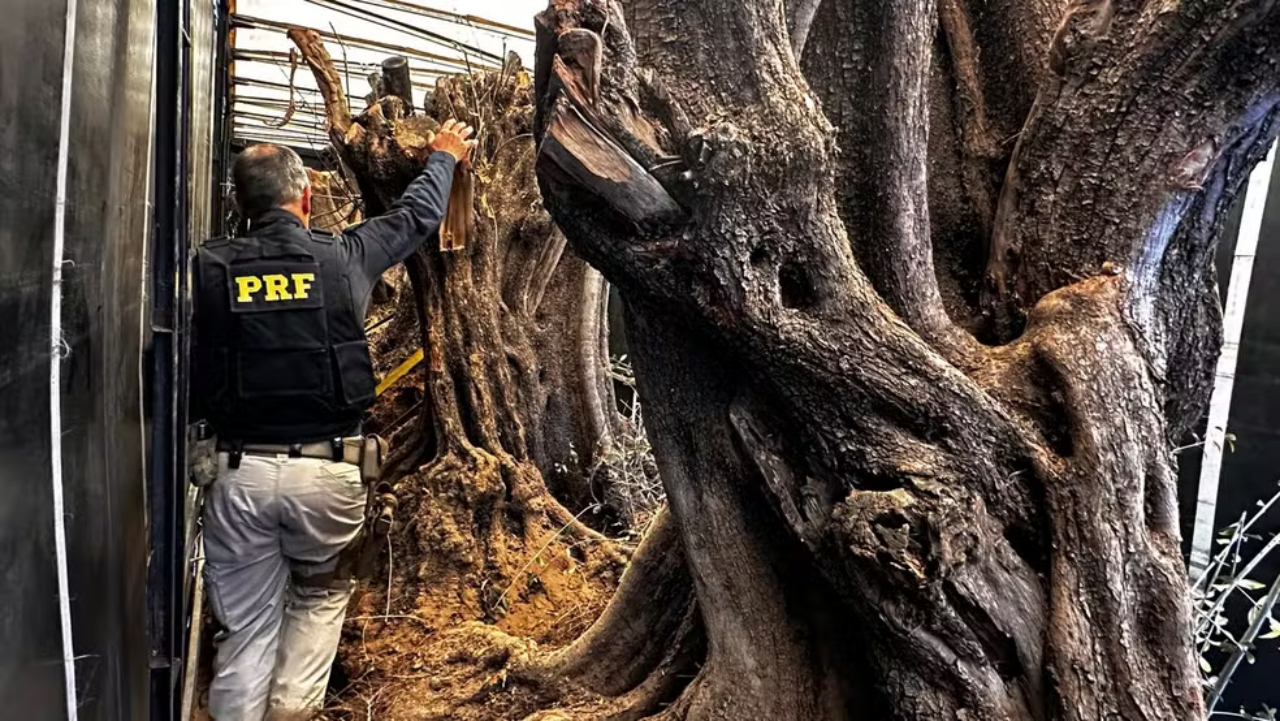


The Irregular Entry of Ornamental Olive Trees from Argentina for Display in Mansions, Luxury Condominiums, and Large Developments Raises Concerns and Environmental Alerts
Centuries-old olive trees smuggled from Argentina have become coveted items in high-end landscaping projects in Southern Brazil. They are found in mansions, luxury condominiums, and large developments, with a regular market price of around R$ 100 thousand per specimen.
The search for these trees encounters a prohibition: the importation is banned due to risks to environmental and phytosanitary safety. The fear involves the entry of pests and diseases that do not exist in Brazil, associated with bacteria, which has brought smuggling to the forefront of actions at the border.
Since May 2024, 51 olive trees have been seized just in the region of Dionísio Cerqueira, in the far west of Santa Catarina. The occurrences concentrated in Dionísio Cerqueira and also in Santo Antônio do Sudoeste in Paraná, with additional seizures recorded in Cascavel and Maringá.
-
India announces a plan of $3.06 billion to bring aviation to forgotten regions: 100 new airports, $1.07 billion in subsidies, and regional routes guaranteed for 10 years, from 2026 to 2036, away from the centers.

-
Brazil blocked a proposal from the United States at the WTO that would make the exemption from tariffs on digital products like streaming and ebooks permanent, favoring American tech giants at the expense of developing countries.

-
IPTU exemption for seniors in 2026: see how to secure the benefit.

-
The institute that trained the greatest aerospace engineers in Brazil has just opened its first campus outside São Paulo after 75 years: ITA Ceará will have R$ 445 million, new courses in energy and systems, and classes are expected to start in 2027.




Each Specimen Can Reach R$ 100 Thousand
Smuggling has gained visibility due to the high value of the trees and their use for ornamentation. In the regular market, each specimen can reach R$ 100 thousand, which fuels the search for clandestine routes to supply high-end projects.
The inspection agency has begun focusing on this type of cargo due to the sanitary risk. The entry of uncontrolled plants can introduce harmful agents that spread quickly, affecting not only private gardens but also productive areas.
Actions have intensified at the border with Argentina, especially in areas where the circulation of goods usually occurs outside formal channels. The combination of demand and legal restrictions creates a favorable environment for illegal trade.
Import of Olive Trees is Prohibited Due to Environmental and Phytosanitary Risks
The import of olive trees is prohibited due to environmental and phytosanitary risks. The central point is the possibility of introducing pests and diseases that do not exist in the country, associated with bacteria.
This type of threat is not restricted to the location where the tree is planted. A contaminated plant can serve as an entry point for problems that spread to nurseries, gardens, and agricultural areas.
With the prohibition, the legal route for acquisition depends on regular origin and documentation that proves production and commercialization within sanitary requirements. The absence of this traceability increases the risk for buyers and their surroundings.
Risk of Losses for Olive Oil Producers in Brazil
The primary concern highlighted is the introduction of diseases. Contamination can impact native flora and also agriculture, with a direct effect on production chains.
There is a risk of losses for olive oil producers in Brazil, a growing market. Illegal olive trees with pests can contaminate healthy trees, increasing losses and requiring control measures.
There is also the possibility that the disease could affect other crops, such as citrus fruits, including oranges and lemons. This broadens the scope of the problem beyond the olive oil sector.
Dry Border and Shallow Rivers Facilitate Irregular Entry
The region of Dionísio Cerqueira has geographical characteristics that favor smuggling. There is an extensive stretch of dry border and areas that are difficult to inspect.
The cited section includes approximately 30 kilometers of dry border between Santa Catarina and southwest Paraná. To the south, the Paraguaçu River is described as narrow and shallow, allowing goods to pass through.
Inspections occur at points of clandestine crossings and also on highways. The work is supported by the military police of Santa Catarina and Paraná, federal and state highway police, in addition to the Federal Police.
Where Do Seized Olive Trees Go
Part of the seized olive trees has a defined destination after authorization from the Ministry of Agriculture and Livestock (Mapa). The aim is to give controlled use to the plants, avoiding circulation without traceability.
The Federal Revenue Service allocated nine centuries-old olive trees to public universities. Four were sent to the State University of Santa Catarina (Udesc) and five to the State University of Mato Grosso do Sul (UEMS).
The intended use includes landscaping, scientific research, and environmental education actions. This measure also reduces the risk of the material re-entering the ornamentation market through illegal channels.
Points of Attention for Those Buying Large Trees
Many buyers may not know the origin of the purchased specimen, which increases the risk of irregular plants entering residential and commercial projects. In a high-value market, the care with provenance becomes decisive.
The recommendation is to require a receipt with the number of the National Register of Seeds and Seedlings (Renasem) of the nursery and to identify the technical responsible for the plant’s production. This check functions as a basic filter against irregularities.
The absence of these documents is a red flag. When the seller does not provide proof, the likelihood of dealing with an illegal plant, associated with sanitary and environmental risks, increases.
Do you think the use of centuries-old olive trees in landscaping justifies the risks, or should the preference be for native species? Leave your comment and join the debate.








O governo quer a parte dele. Mesmo não fazendo nada para ajudar. Por isso essa bslela de proibição.
As faculdades estão dentro de um domo, dentro de uma bolha que impede a proliferação de doenças? Pois se estão em território nacional a desculpa de risco à produção nacional cai por terra.
Pois é, tem que proibir sim, eu moro fora do Brasil e muitas vezes tenho vontade de levar uma muda de fruta ou sementes e nao posso, e proibido entao porque ricos podem?
Aí onde você está, não oferecem risco? Somente aqui os riscos acontecem, se as Oliveiras custassem em torno de 500 reais, estavam entrando no país sem nenhum risco, o risco ocorre quando o **** governo nao recebe nada numa transação!