





 Portuguese
  English
  Spanish
  5 min of reading
  0 comments


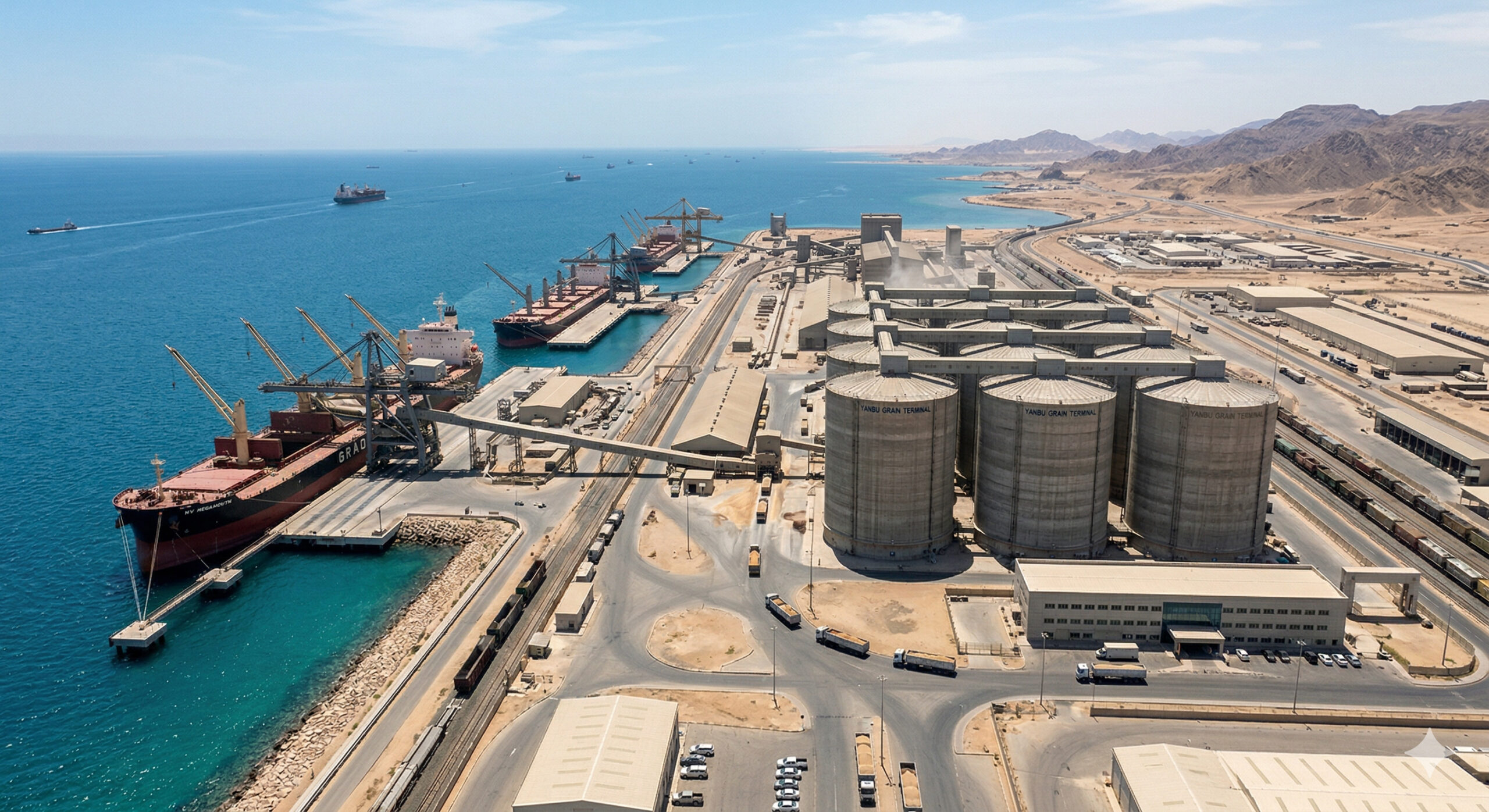
Grain terminal in Yanbu expands Saudi capacity with 156 thousand tons and over 3 million per year outside the Persian Gulf.
In December 2024, the official portal GOV.SA and Bahri confirmed the commencement of operations at the Yanbu Grain Handling Terminal, located in Yanbu, on the coast of the Red Sea, as part of the Saudi effort to enhance food security, increase supply chain resilience, and transform the port into a strategic logistics corridor linked to three continents. In a more secure formulation, the official basis clearly supports the goal of strengthening supply and diversifying the logistics of grain entry into the country. The terminal was designed with a total storage capacity of 156 thousand tons, including 12 main silos with a combined capacity of 96 thousand tons, as well as a 650-meter conveyor belt and a direct ship unloading system of 800 tons per hour.
According to official information, the structure was also designed to operate with an annual capacity exceeding 3 million tons, allowing for a continuous flow of import, handling, and distribution of grains to both public and private sectors.
In practice, the project consolidates Yanbu as one of the main grain logistics points in Saudi Arabia outside the Gulf facade, creating a strategic alternative in the Red Sea for receiving cargo from regions such as the Black Sea, South America, North America, and Australia. The choice of the port, according to the Saudi Ministry of Environment, Water and Agriculture, is precisely linked to Yanbu’s role as a maritime gateway for the kingdom’s strategic imports.
-
Little-known raw industrial process uses superheated steel, extreme force, and many strikes to transform 10 km wires into small metal pieces that hold the world together.

-
The production of the Porsche 911 reveals the process inside the German factory, with manual engine assembly, high-precision robots, and luxury finishing that goes far beyond the common automotive industry.

-
A country with only 9 million inhabitants transports 1.5 million passengers per year on night trains and dominates all of Europe: how Austria invested in what everyone else was abandoning and became the powerhouse of sleeper trains.

-
Amidst calm landscapes and a peaceful pace of life, a town in the interior of São Paulo holds a secret that impresses experts: it produces almost half of Brazil’s mineral water.
Location in the Red Sea reduces dependence on the Strait of Hormuz and increases logistical resilience
The choice of Yanbu as the base for the terminal was not random. The city is positioned directly on the Red Sea, connected to maritime routes linking the Middle East to Europe, Africa, and Asia via the Suez Canal.
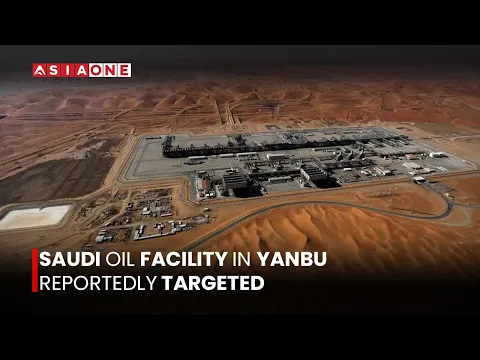

This location allows cargo ships to avoid crossing the Strait of Hormuz, considered one of the most sensitive points in global energy and commodities trade. In scenarios of tension or blockade, this alternative route can become essential.
By relocating part of the grain storage and entry infrastructure to the Red Sea, Saudi Arabia significantly reduces its exposure to critical logistical bottlenecks, increasing the security of national supply.
Furthermore, Yanbu’s strategic position facilitates internal redistribution through road and rail connections linking the coast to the interior of the country.
Structure with 12 silos and automated systems ensures efficiency in grain handling
The Yanbu Grain Handling Terminal was designed with a focus on operational efficiency. The 12 main silos are part of an integrated system that allows for the secure storage of large volumes of grains, including wheat, corn, and other essential cereals.
The operation includes:
- automated ship unloading systems
- internal transport via belts and elevators
- quality control and monitoring
- distribution to internal markets
This level of automation allows for reduced losses, increased operational speed, and ensures the integrity of stored products.

The combination of storage capacity and operational technology transforms the terminal into a key piece of the Saudi food chain, especially in a scenario of population growth and increased demand for food.
Annual capacity above 3 million tons reinforces the strategic role of the terminal
In addition to static storage, the terminal was designed to operate with high cargo turnover. The annual capacity exceeding 3 million tons allows the location to function as a dynamic entry and distribution point for grains.
This volume places the terminal among the main logistical hubs in the region for agricultural commodities, allowing Saudi Arabia to:
- maintain strategic stocks
- respond quickly to market fluctuations
- reduce dependence on emergency imports
The operational scale of the terminal not only meets domestic demand but also positions the country as a potential regional redistribution point, especially for neighboring countries.
Saudi Arabia depends on imports and invests in infrastructure to ensure supply
Like other countries in the region, Saudi Arabia has natural limitations for large-scale agricultural production. The desert climate and water scarcity make self-sufficiency in grains unfeasible.
As a result, the country relies heavily on imports to ensure food supply. This dependence has led the government to invest in logistical infrastructure as a way to reduce risks.
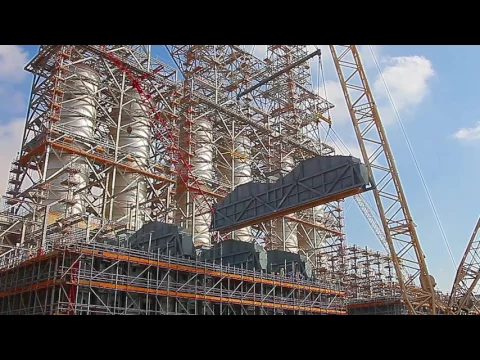
The Yanbu Grain Handling Terminal is part of a broader strategy that includes port expansion, silo construction, and supply chain modernization, aimed at increasing resilience in the face of external shocks.
Project integrates Vision 2030 strategy and economic diversification of the country
The development of the terminal is also aligned with the Vision 2030, Saudi Arabia’s strategic plan to diversify its economy and reduce dependence on oil.
Within this context, food security and logistical efficiency are treated as essential pillars. Investments in port and storage infrastructure are part of a larger effort to transform the country into a global logistics hub.
The Yanbu terminal represents not only a solution for internal supply but also a strategic asset within the country’s economic development plan, enhancing its relevance in international trade.
Terminal in the Red Sea creates logistical redundancy in a scenario of global instability
One of the main concepts behind the project is the creation of logistical redundancy. Instead of relying on a single entry point or maritime route, Saudi Arabia is building multiple alternatives.
This approach is especially important in a global scenario marked by:
- regional conflicts
- disruptions in supply chains
- volatility in food prices
Having infrastructure distributed across different regions allows the country to maintain supply even in the face of unforeseen events, reducing systemic risks.
Grain infrastructure in the Red Sea may influence the strategy of other countries
The model adopted by Saudi Arabia can serve as a reference for other countries facing similar challenges. The combination of strategic location, high storage capacity, and logistical integration offers a pathway to enhance food security.
Countries with high dependence on imports may adopt similar strategies by investing in:
- specialized terminals
- route diversification
- strategic stocks
The growing instability in global food chains makes this type of infrastructure increasingly relevant, especially in vulnerable regions.
Can megaterminals redefine global food security?
The Yanbu Grain Handling Terminal demonstrates how infrastructure can be used as a strategic tool in an increasingly unstable world. With a capacity of 156 thousand tons and an annual operation exceeding 3 million, the project represents a leap in how countries handle food supply.
In your view, will this type of investment be sufficient to shield countries against global crises, or could new risks still compromise these structures?









Seja o primeiro a reagir!