





 Portuguese
  English
  Spanish
  4 min of reading
  1 comment


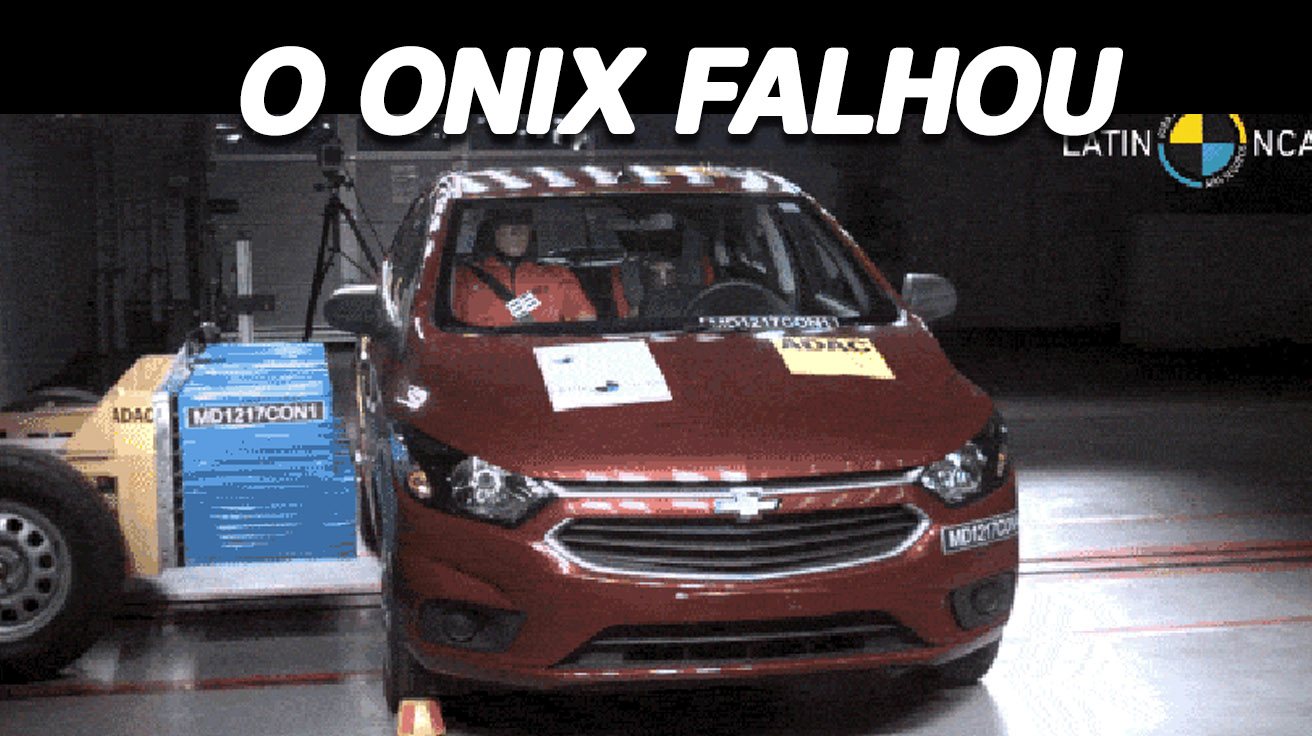


Federal Public Prosecutor’s Office Filed a Lawsuit Against General Motors Demanding a Recall and Compensation of R$ 2.5 Billion Due to Safety Failures in the Chevrolet Onix. The Model Received a Zero Rating in Side Impact Tests by Latin NCAP, Putting Brazilian Consumers’ Safety at Risk.
In recent years, automotive safety has become one of the main factors analyzed by consumers before purchasing a new vehicle.
Impact tests and certifications ensure that the models sold meet minimum requirements for the protection of drivers and passengers.
However, one of the most popular cars in Brazil, the Chevrolet Onix, had its safety questioned after a side impact test revealed concerning structural weaknesses.
-
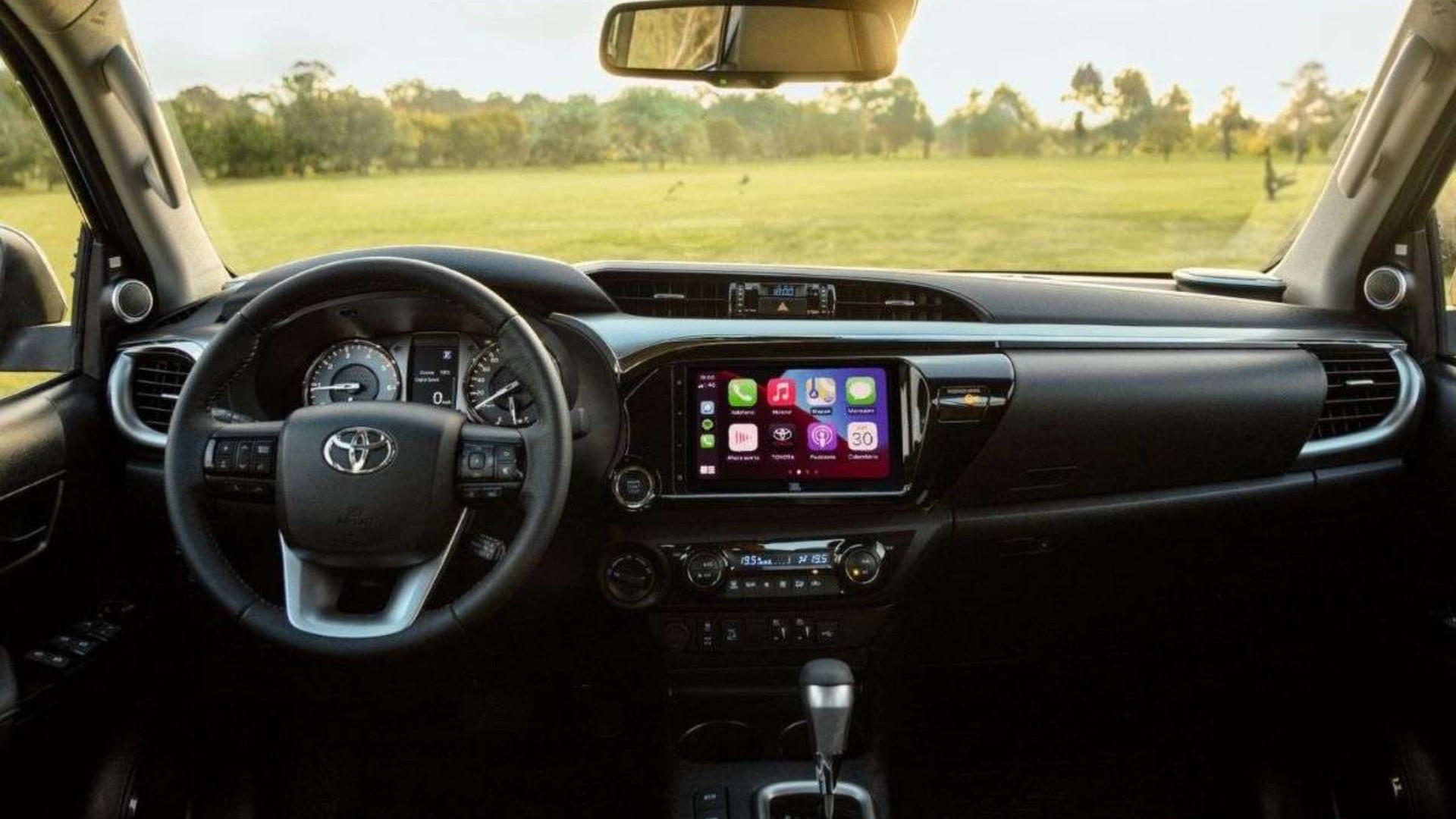
The Toyota Hilux is R$ 75.5 thousand cheaper and bets on the 2.8 turbodiesel engine with up to 204 hp and 50.9 kgfm to catch up with the VW Saveiro, which leads with 4,472 sales.
-
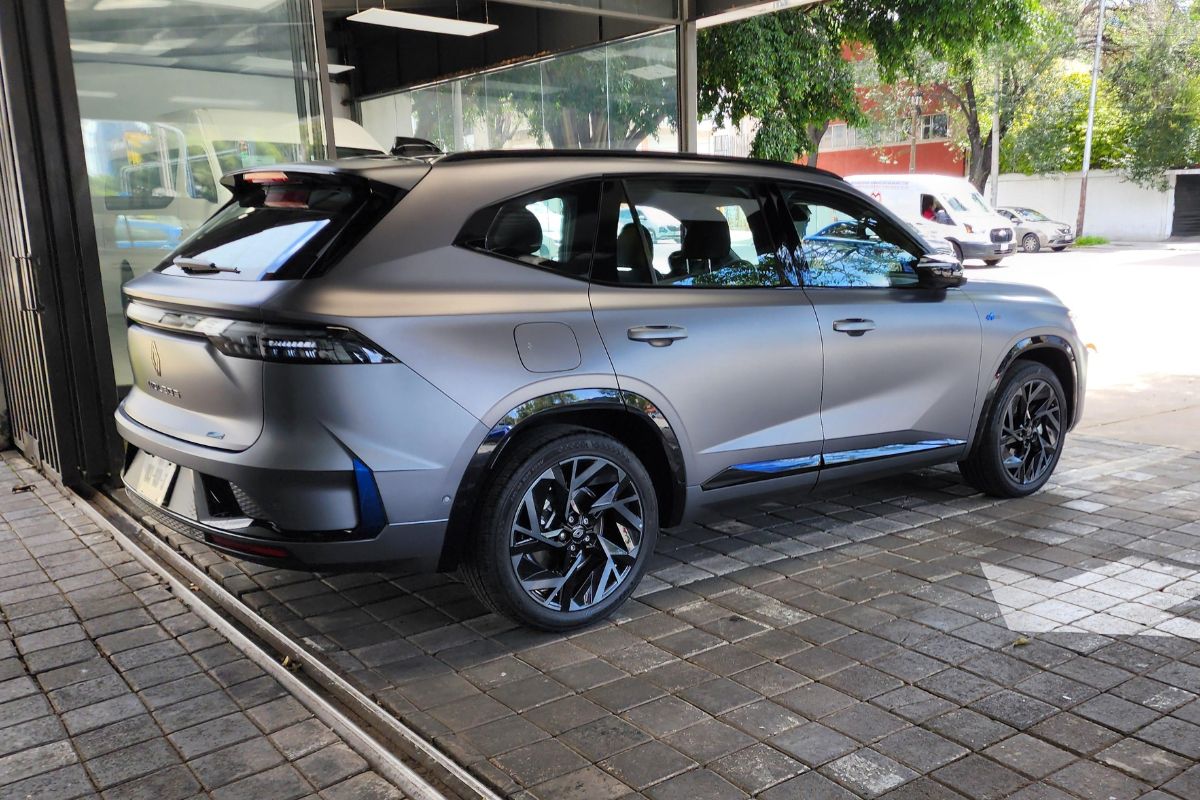
The new Renault Koleos has a screen exclusively for the passenger that is invisible to the driver, heated rear seats, and 29 assistance systems, but its Chinese competitors cost R$ 40,000 less and deliver more power.
-
The car stored for 38 years: when opening the barn door, what appears is breathtaking and looks like a scene from a movie!

-
Fiat works miracles in the Brazilian market, lowers the price of its 0 km hatch to R$ 69,990, reestablishes the model as the cheapest car in the country, and reignites the battle against Kwid and C3.

According to the Autoesporte portal, the case resulted in a lawsuit filed by the Federal Public Prosecutor’s Office (MPF), which seeks to hold General Motors (GM) accountable and to compensate affected consumers.
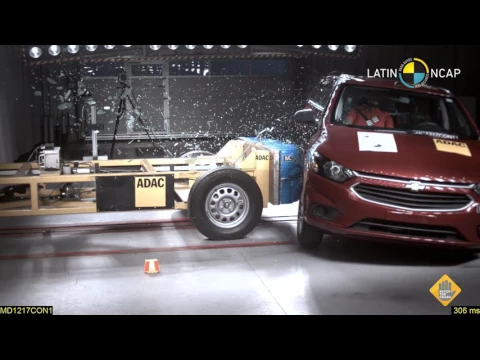
The main basis of the request is the side impact test conducted in 2017 by Latin NCAP, in which the Chevrolet Onix, then the best-selling car in the country, received a zero rating.
According to the agency, the model’s structure provided marginal protection to the abdomen and poor protection to the chest of the occupants.
The complaint involves about 1 million units sold between 2012 and 2018, and the compensation requested could exceed R$ 2.5 billion.
Latin NCAP and the Failures of the Chevrolet Onix
The Latin NCAP (New Car Assessment Program for Latin America and the Caribbean) is an independent entity that tests the safety of vehicles sold in the region.
Although it is not a regulatory body, its evaluations are used as a global reference. In the test conducted in 2017, the Onix received the worst possible result: zero rating in side protection.
At the time, the model lacked sufficient structural reinforcements to ensure the safety of the occupants in the event of side collisions.
The impact revealed significant deformation of the cabin, leaving passengers vulnerable to serious injuries.
Even though it was the best-selling car in Brazil at that time, the vehicle failed in an essential aspect for consumer protection.
However, the Chevrolet Onix was not the only one to perform poorly in the Latin NCAP.
Models such as Fiat Argo and Cronos, Ford Ka, Citroën C3, C3 Aircross, Hyundai HB20, in addition to Renault Sandero, Logan and Stepway, also had unsatisfactory performance in tests.
General Motors and Official Homologation
Despite the negative result in the Latin NCAP test, it is important to emphasize that the Chevrolet Onix met the safety standards in force in Brazil between 2012 and 2018.
The homologation of vehicles sold in the country is conducted by manufacturers in conjunction with regulatory bodies, such as Inmetro.
Therefore, legally, GM was in compliance with the requirements of the time.
General Motors did not deny that the side protection of the Onix was insufficient, but argued that the model was produced according to the applicable Brazilian regulations at the time.
The automaker also emphasized that, subsequently, it reinforced the car’s structure, including a hot-stamped steel B-pillar, more resistant to side impacts.
Even with the modifications, the MPF argues that the automaker knew of the vehicle’s deficiencies and only took action after the negative repercussions of the Latin NCAP test.
Furthermore, the agency points out that vehicles manufactured in Brazil, but exported to other markets, received extra structural reinforcements that were not present in the models sold domestically.
The MPF’s Request and the Amounts for Compensation
The action filed by the MPF against General Motors was initiated in 2020, by the Federal Prosecutor in Uberlândia, Cléber Neves, and by State Prosecutor Fernando Martins.
In the process, the authors argue that, despite complying with the legal requirements of the time, the Chevrolet Onix did not provide an adequate level of safety for Brazilian consumers.
Thus, the MPF requests a recall of units produced between 2012 and January 14, 2018.
The objective would be to carry out the necessary repairs on the sides of the vehicle, free of charge, ensuring that the models have the same level of safety currently required.
In addition to the recall, the agency requests the payment of a billion-dollar compensation. The calculation considers that, between 2012 and 2018, GM earned approximately R$ 49.8 billion from Onix sales.
The MPF suggests compensation based on 5% of gross revenue, resulting in an amount exceeding R$ 2.5 billion. The amount would be distributed as follows:
- R$ 100 thousand for the families of fatal accident victims in side impacts;
- R$ 50 thousand for each consumer who has demonstrably suffered physical harm in side collisions;
- The remaining amount would be allocated to collective moral damages, to be deposited in the Fund for Diffuse Rights if there was no individual proof of damages.

The Progress of the Case
The case, initially filed in Minas Gerais, was transferred to the Federal District due to its national relevance.
Currently, the case is under the responsibility of Federal Prosecutor Anselmo Cordeiro Lopes, who signed the recent filing sent to the court.
Now, the MPF requests that the court expedite the judgment of the case, that is, make a decision without the need for new evidence or hearings.
If the request is accepted, General Motors could be condemned without the need for new procedural steps.
If the court decides in favor of the MPF, GM could face one of the largest recalls in the history of the Brazilian automotive sector, in addition to having to bear a billion-dollar compensation.
The outcome of the case could impact not only the owners of the Chevrolet Onix but also the future of vehicle safety regulations in Brazil.






❤️Aqui você pode colocar seu rosto em qualquer vídeo ou foto) Por favor, avalie-o ➤ Ja.cat/gosea