





 Portuguese
  English
  Spanish
  2 min of reading
  0 comments


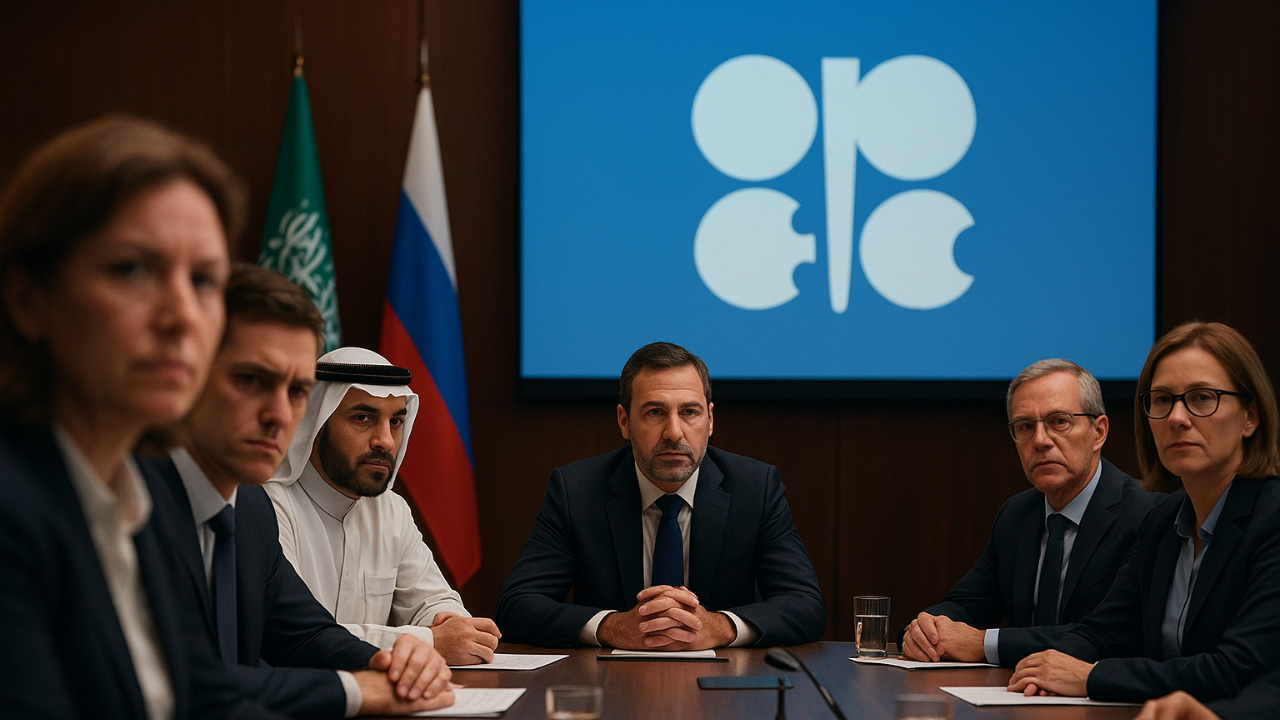
OPEC+ Announces Production Increase Pause After December, Seeking to Balance Supply Amid Sanctions Against Russia and Excess Concerns in Q1 2026.
Amid a global landscape of uncertainties and volatile prices, the OPEC+ announced that it will suspend production increases starting in January 2026. The decision, made on Sunday (2), reflects the group’s concern over a potential oversupply in the international market.
The coalition, which includes major producers such as Saudi Arabia, Russia, United Arab Emirates, Iraq, Kuwait, Oman, Kazakhstan, and Algeria, had implemented gradual increases since April, totaling about 2.9 million barrels per day, equivalent to 2.7% of global supply. However, new forecasts indicate a weakening demand scenario in the early months of the coming year, which led to the adoption of a more cautious strategy.
Market Reacts to Uncertainties as Oil Prices Attempt to Stabilize
Oil prices dropped to their lowest level in five months, reaching US$ 60 per barrel at the end of October, driven by fears of oversupply. Still, a slight recovery to around US$ 65 per barrel was recorded in recent weeks, influenced by new Western sanctions against Russia and optimism surrounding trade negotiations between the United States and its strategic partners.
-
Lula reveals a masterstroke by Petrobras to undo a deal made by Bolsonaro, which involves the return of an important refinery that currently produces less than half of what was expected and makes Brazil dependent on international diesel.
-
A study confirms that the natural gas sector will reduce greenhouse gas emissions in Brazil by 0.5% and accelerate the energy transition by 2026.

-
Petrobras implements a severe adjustment and confirms a 55% increase in the price of aviation kerosene with a proposal for installment payments for the companies.

-
The rise in oil prices could ensure an extra revenue of R$ 100 billion for the Federal Government, indicates a recent economic study.

According to analyst Jorge Leon from Rystad, “OPEC+ is blinking, but it’s a calculated blink.” He explained that the sanctions imposed on Rosneft and Lukoil have created a layer of uncertainty over Russian supply, and the group aims to avoid a future price crisis. “By pausing, OPEC+ is protecting prices, projecting unity, and buying time to see how sanctions play out on Russian barrels,” he added.
First Quarter of 2026 Expected to Be Weakest for Supply and Demand Balance
Traditionally, the period between January and March is considered the most challenging for balancing supply and demand for oil. According to expert Amrita Sen from Energy Aspects, the pause in increases shows that OPEC+ “is proactively managing the market rather than just reacting to prices.”
Moreover, the decision also reflects the group’s attempt to preserve its internal cohesion, especially after years of production cuts that peaked in March, with a total reduction of 5.85 million barrels per day.
By limiting production growth, OPEC+ seeks not only to balance the market but also to ensure price stability in a scenario where geopolitical, economic, and environmental factors exert direct influence on the energy sector.





Seja o primeiro a reagir!