





 Portuguese
  English
  Spanish
  4 min of reading
  0 comments


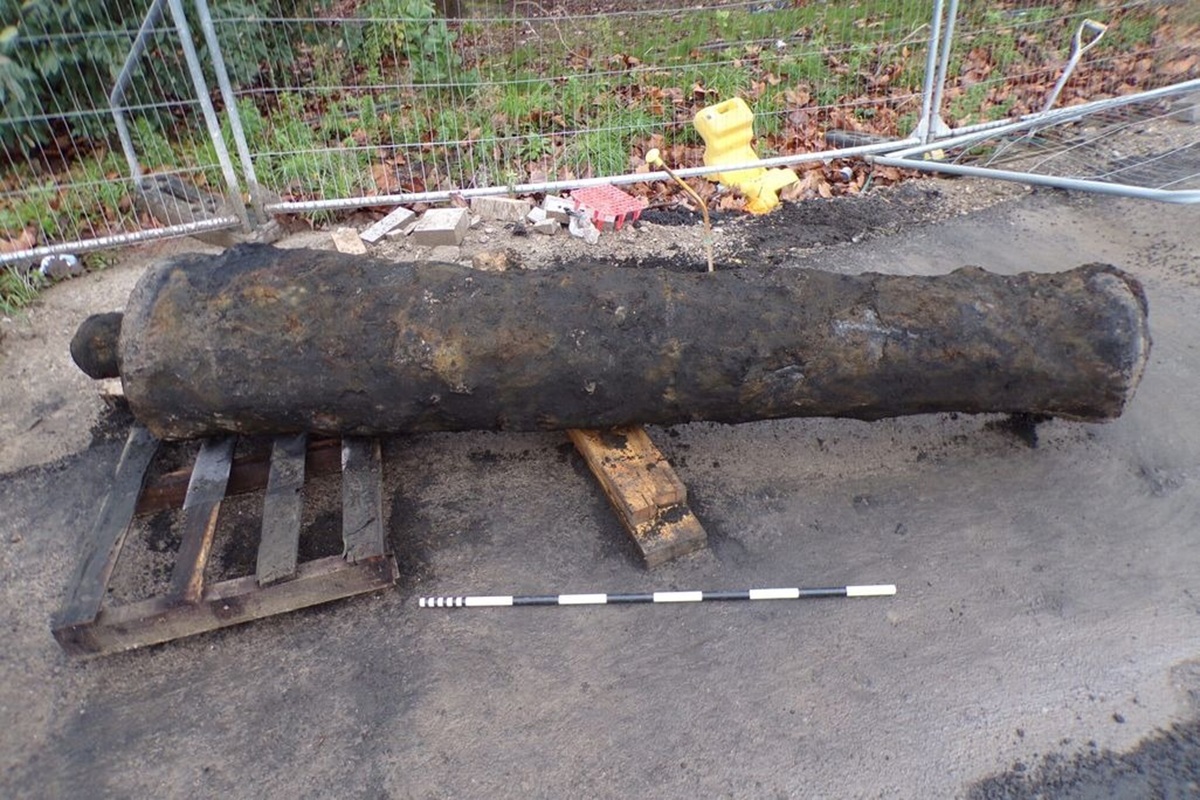
Construction workers who were excavating to install a water reservoir during the restoration of Queen’s Gardens, in Hull, found an iron cannon measuring 2.6 meters and weighing more than 1,000 kg, possibly produced between the 17th and 18th centuries
An iron cannon discovered by construction workers during excavations in Hull, in northern England, surprised teams working on a restoration project that began in June 2023. The piece measures 2.6 meters, weighs more than 1,000 kg, and may be over 300 years old.
The discovery occurred when workers were excavating for the installation of a water reservoir within the Queen’s Gardens redevelopment project, located in the center of the port city of Hull, about 320 kilometers north of London.
The object was located by worker Jon Jacobs, 51, an employee of the construction company CR Reynolds. During work with excavation equipment, he noticed that the machine had hit something solid buried in the ground.
-
Church from 1888 becomes a mansion of over 330 m² in Canada after a renovation of R$ 3.4 million and is eventually sold for nearly R$ 4.3 million.

-
How an innovative city combines high technology, well-being, and sustainability to become the largest reference in clean energy on the planet.

-
Couple buys 1846 church in ruins for R$ 660,000, invests R$ 3.2 million in renovations, transforms it into a millionaire mansion, and even preserved a historic cemetery with over 300 graves.

-
He started running at 66 years old, broke records at 82, and is now a subject of study for having a metabolic age comparable to that of a 20-year-old, in a case that is intriguing scientists and inspiring the world.


Initially, Jacobs believed he might have found a bomb from World War II. However, upon checking the excavated material, he realized it was a large iron cannon buried at the site.
According to specialists analyzing the piece, the cannon is about 2.6 meters long and weighs over a ton. Initial assessments suggest it may have been produced over three centuries ago.
Unexpected Discovery During Construction Excavations
The cannon was found while construction teams were carrying out excavation work to install a water reservoir within the redevelopment project for Queen’s Gardens. The site is undergoing an extensive urban redevelopment process.
Jacobs stated that he had never encountered anything like it during his professional activities. He reported that usually only small or discarded objects, such as bottles and other materials without historical significance, are found.
The discovery was made in an area that previously housed the largest dock in the UK. The space was transformed into a public park in the mid-20th century by architect and landscape designer Frederick Gibberd.
Multimillion-Pound Urban Redevelopment Project in Hull
The works at Queen’s Gardens are part of a multimillion-pound restoration project led by the city of Hull. The initiative aims to improve the park’s accessibility and enhance the environmental and usage conditions of the space.
Among the objectives of the intervention are to stimulate biodiversity, improve water management, and create a more flexible space for events and public activities. The work began in June 2023 and is expected to be completed in the spring of 2026.
During the construction work, the presence of historical vestiges was already considered possible due to the region’s port history. The found cannon reinforces the historical significance of the location where the park was established.
Archaeological Analysis Seeks to Identify the Cannon’s Origin
Archaeologists are studying the cannon found at the construction site at the request of the Hull City Council. The goal is to determine its origin and decide what will happen to the historical artifact.
Preliminary investigations indicate that the piece may have been cast between the late 17th century and the 18th century. Specialists also evaluate that the object was likely buried for about 90 to 100 years.
The cannon’s muzzle is capped, suggesting that it was decommissioned before being buried. Nevertheless, researchers believe it may have previously been used in defensive roles related to protecting ports.
According to Peter Connelly, manager of archaeology at Humber Field Archaeology, it is still not possible to determine whether the cannon was used on ships or installed onshore to defend the port entrance.
Possible Reuse of the Cannon as a Port Structure
After ceasing to be used as a weapon, the cannon may have been repurposed as a mooring post for ships docking at the city’s old wharf. This type of reuse was common in ports from the late 19th century to the early 20th century.
In Hull, some mooring posts made from old cannons can still be seen today. This practice reinforces the possibility that the discovered piece was reused before being buried.
Researchers believe that the object may have been pushed into the wharf area before the land reclamation process in the 1930s. From that point on, the cannon would have remained buried.
Other Recent Archaeological Discoveries in Hull
The cannon is not the only historical vestige recently found in Hull during excavation work. Earlier this year, teams located the remains of the city’s medieval walls.
The brick structures date back to approximately 1356 and were discovered during the installation of a new heating system. The finding reinforced the presence of preserved historical layers beneath the urban areas of the city.
Archaeologists are also investigating an old cemetery used between 1783 and 1861. Many skeletons found at the site show fractures in the face, hands, or ribs.
One of the hypotheses being analyzed by researchers is that boxing may have been a common activity in the city during that period. Investigations are ongoing to better understand the historical context of the found vestiges.









-

-

-

-

-

-

80 pessoas reagiram a isso.