





 Portuguese
  English
  Spanish
  5 min of reading
  59 comments


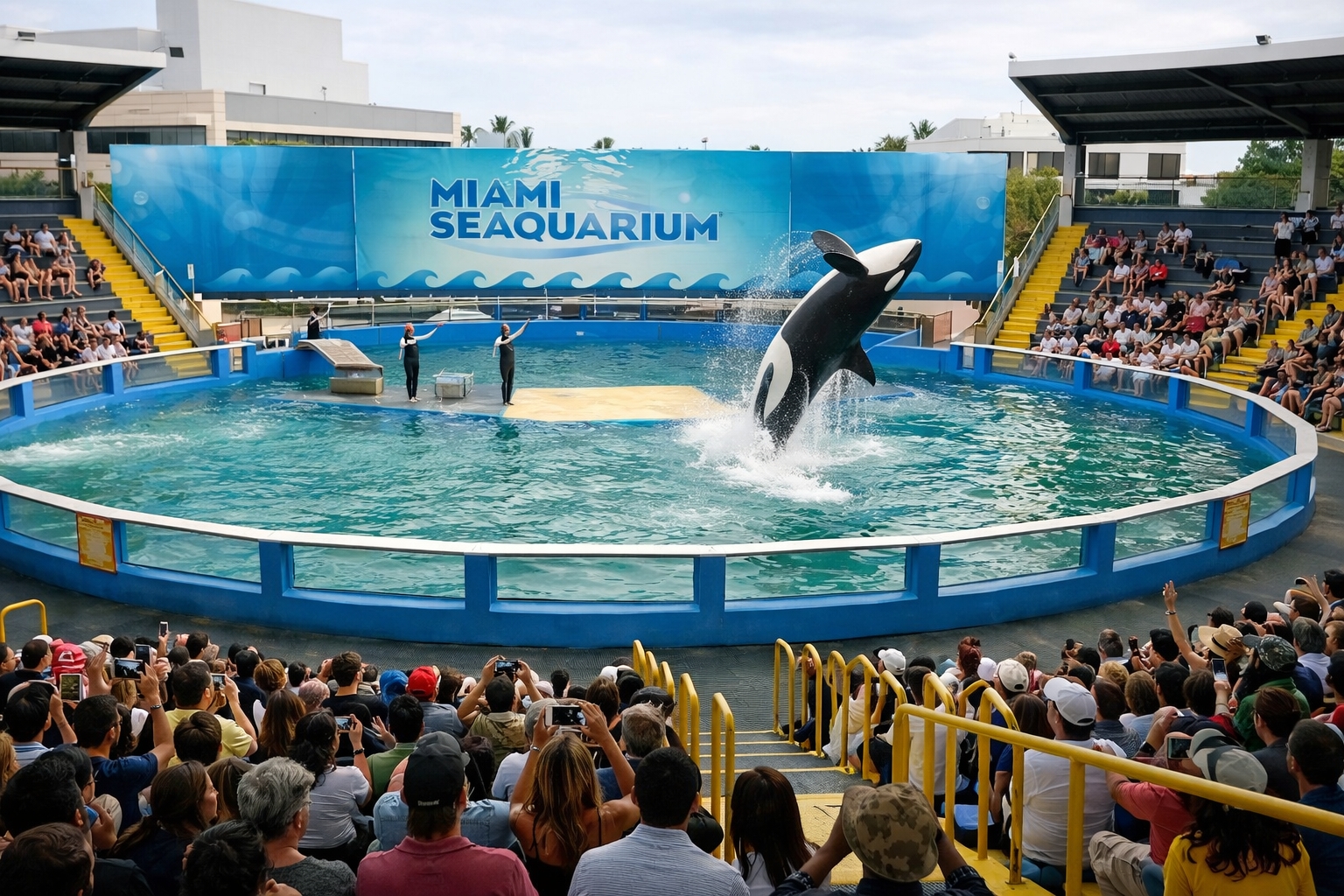


Plan to Return 56-Year-Old Orca Lolita to the Ocean, After More Than 50 Years in Captivity at the Miami Seaquarium, Ended in Failure, Changed Everything and Drew the Attention of Activists and Authorities Around the World.
The story of orca Lolita, also known as Tokitae or Toki, seemed to be moving toward a rare conclusion: a return to the ocean after more than 50 years in captivity. She was the main attraction at the Miami Seaquarium in the United States and became one of the most emblematic cases in the debate over water parks.
The announcement of her return to her natural habitat in the northwest Pacific Ocean had been made with a promise of a process lasting up to 2 years, in partnership with the NGO Friends of Lolita, with support from activists who had been calling for the animal’s release for years.
However, the course changed dramatically. Lolita died on August 18, 2023, at the Miami Seaquarium, before any transfer to the ocean could be completed.
-
Home environment can influence the brain, mood, and well-being: studies indicate an increase of up to 15% in productivity, a reduction of 12% in stress with plants, and a direct impact of the circadian rhythm on the 24 hours of the day.

-
A Brazilian millionaire couple restores a farm over 150 years old in the interior of São Paulo and transforms the historic property with Portuguese tiles, antique furniture, and new spaces into a refuge that blends tradition, comfort, and sophistication.
-
Submerged city in a lake in Minas reveals intact streets, preserved vehicles, and houses after more than 60 years, impressing divers.
-
Yellowstone has started to rise again in an area of the caldera, and the movement rekindles fears surrounding the U.S. supervolcano, as scientists monitor the deformation and try to understand what is happening underground.

Even after decades of public exposure, the case continued to attract attention due to a stark contrast: in the wild, the life expectancy of an orca ranges from 50 to 80 years, with some females living up to 90, while the Whale and Dolphin Conservation states that the life expectancy of captive-born orcas is, on average, 4 years.
The Announcement of Return to the Pacific Involved Partnership, a 2-Year Timeline and an Unlikely Sponsor
The Miami Seaquarium announced it would begin the process of returning Lolita to her natural habitat in the northwest Pacific, with a timeline of up to 2 years. The strategy included rehabilitation and gradual adaptation outside of the performance model.
The operation would have direct involvement from the NGO Friends of Lolita, aiming to prepare the animal for a new phase closer to her natural environment.
The cost of the process was covered by Jim Irsay, owner of the NFL team Indianapolis Colts. He expressed excitement about being part of Lolita’s journey and described the orca as strong and incredible.
The plan drew attention because, for many people, it seemed like the kind of change that would never happen after so many decades in captivity.
The Capture in August 1970 Trapped About 90 Orcas in Nets and Left Dead Calves
The origin of the case dates back to August 1970, when Lolita was captured as a calf, according to environmental historian Jason Colby, a professor at the University of Victoria.
At the time, captors partnered with local fishermen to trap calves in nets, separating them from their pods and later selling them to marine parks, such as Seaworld and Miami Seaquarium.
Colby reports that operations during that period captured nearly the entire population in the area and at one point there were about 90 orcas trapped in the nets.
Activists attempted to free the animals by cutting the nets, but some became trapped and four calves drowned. Since orcas are mammals, they need to surface to breathe, making this type of capture even riskier.
By the end of that month, eight orcas were captured, including Lolita, in an event that marked the history of the group for decades.
The Group from Puget Sound Was Classified as Endangered in 2005 and the Capture of the 1970s Influenced the Decision
Lolita was part of a group of orcas that lives exclusively in the northern Pacific Ocean and spends several months of the year in Puget Sound, Washington State, according to NOAA.
This special population was classified as endangered in 2005, and the capture of animals during the 1970s is cited as one of the factors related to this scenario.
The contrast is hard to ignore. A capture that separated calves from their pods in the 1970s became, decades later, the basis for a movement attempting to bring at least one of those orcas back to her original environment.
The Tank Measuring 26 by 11 Meters, 52 Years of Shows, and More Than 40 Years Without Another Orca

After the capture, Lolita was sold to the Miami Seaquarium to perform alongside another orca named Hugo. He died in 1980, and she was left without another orca to socialize with for more than 40 years.
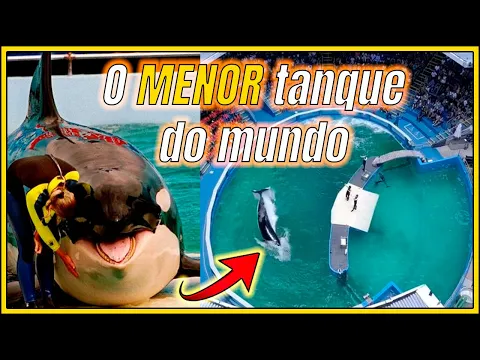
Over the course of more than 50 years, Lolita lived in a tank measuring 26 meters by 11 meters, in a space that activists considered dangerously small for an animal approximately 6 meters long.
A notable criticism came from the daughter of Eduardo Albor, CEO of The Dolphin Company, described as the largest amusement park owner in Latin America. Albor visited the park with his daughter shortly before acquiring it in 2021.
He recalled that his daughter made a promise: if they took over the management of the place, he should see how to improve the situation. The following year, the Seaquarium announced Lolita’s retirement after 52 years of performances.
Albor also praised activists and the Seaquarium team for putting aside differences and working together, saying that amazing things are possible when people listen to each other and cooperate.
The Death on August 18, 2023 Interrupted the Plan and the Necropsy Revealed Chronic Diseases
Before the transfer could be completed, Lolita died on August 18, 2023, at the Miami Seaquarium. The information was released by the park itself and the organization involved in the plan, at a time when discussions about stages and authorizations for the move were still ongoing.
Reports indicated that, in the days prior, she showed signs of discomfort and there was suspicion of a kidney problem.
Later, a summary of the necropsy released by the Miami Seaquarium indicated that the orca died from old age and multiple chronic conditions, with references to kidney disease and pneumonia, along with other findings associated with long-term health issues.
The consequence was immediate: what seemed like a historic return turned into a warning about the difficulty of rehabilitating an elderly animal that had spent most of her life in a controlled environment and relied on human care.
The case of orca Lolita became a symbol for uniting impressive numbers, more than 50 years in captivity, 56 years of age, a tank measuring 26 by 11 meters, and more than 40 years without another orca, along with a rehabilitation plan that had a timeline of up to 2 years.
The death on August 18, 2023, interrupted what would have been the biggest change in her life but left an even stronger discussion about captivity, animal welfare, and the future of the orcas of Puget Sound.









Pedazos de mierda
Todos
LOLITA POR SIEMPRE ESTARAS EN NUESTRAS MENTES
I hate this. No **** should have to live like this. HATE THIS TO THE FULLEST 😡😡😡
The way I see it the fisherman that caught those orcas should have been prosecuted they’re dead and gone by now but they’re the ones that are violating they had no right to take that **** out of the ocean and sell it for entertainment. As a matter of fact anyone who has access to those mammals should be prosecuted because those things belong in the ocean not for entertainment not for people to come walk through tunnels to see a shark swim by you that is not right they deserve to be free just like anybody else just saying