





 Portuguese
  English
  Spanish
  3 min of reading
  0 comments


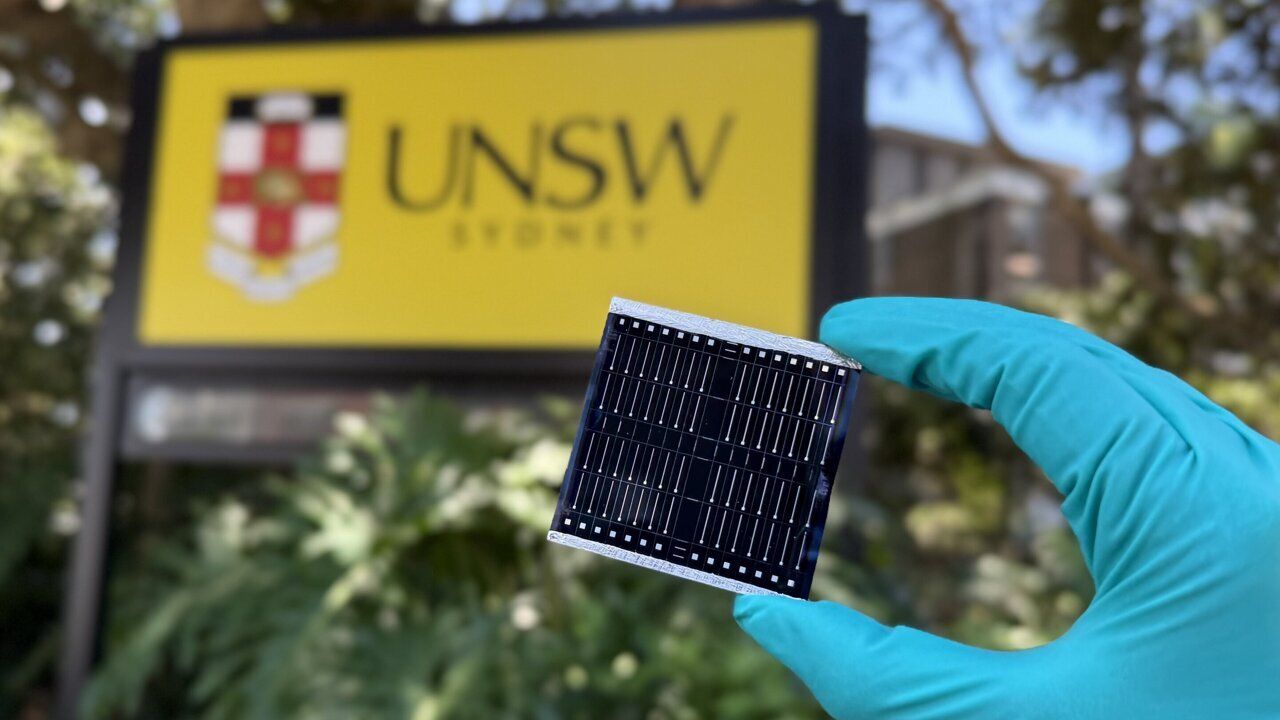
With a New Hydrogen Treatment, Kesterite Solar Panels Set a Record of 13.2% Efficiency, Leaving Perovskite Behind and Paving the Way for a More Sustainable, Cheaper Future Free of Toxic Materials. Are We Facing a New Era of Solar Energy?
Solar energy is changing—and fast. For a long time, perovskite was the big promise in the sector, with high efficiency. But there’s a problem (actually, several): it is unstable, can degrade quickly, and contains lead, a toxic material. And now, who appears on the radar as a promising substitute? Kesterite solar panels.
Researchers from the University of New South Wales (UNSW) in Australia have just set a new efficiency record for this material, reaching 13.2%. All thanks to a clever trick: a special hydrogen treatment. Could kesterite be the future of solar energy? Let’s find out.
What Are Kesterite Solar Panels and Why Is Everyone Talking About Them?

To start, kesterite is a material made of copper, zinc, tin, and sulfur. The differentiator? These elements are abundant, non-toxic, and easy to find, unlike perovskite, which has quite an environmentally unfriendly profile.
-
Billion-dollar partnership in clean energy: The advancement of decarbonization in Japan opens doors for Brazil to become the world’s largest supplier of green hydrogen and ammonia.

-
Understand how thermal security has become a key element in the energy transition by ensuring a balance between intermittent renewable energies and thermal sources capable of sustaining the electrical system during critical moments.
-
Billion-dollar investment for the forest: World Bank releases funds to expand renewable energy and create thousands of new green jobs in the Amazon region.

-
Switzerland invested over $2.3 billion and bet on water, altitude, and solid rock to create a battery in the Alps capable of powering more than 1 million homes.

Kesterite solar panels are cheap to manufacture and have great efficiency potential. The only issue that had been holding back their advancement was a technical problem: the presence of microscopic defects in the material, which reduced its ability to convert sunlight into electricity. But now Australian scientists have found a way to fix that.
The Secret of Hydrogen: How a Simple Treatment Made Kesterite Efficiency Soar
The big breakthrough by the researchers was using hydrogen in a special thermal treatment, a process known as passivation. In practice, this means that hydrogen fills the defects in kesterite, reducing flaws and allowing it to better harness sunlight.
The result? A leap in efficiency, going from 11% (where it had been stalled for years) to 13.2%. And it doesn’t stop there: scientists believe they can reach 15% by next year and even 20% in the future, which would make kesterite one of the best solar energy options on the market.
Perovskite vs. Kesterite: Who Will Dominate the Solar Market?
If we only look at efficiency, perovskite still holds the advantage. They have hit 40% in the lab, which is amazing. But… what’s the downside? Well, the material is unstable, can degrade quickly, and, worse, contains lead, a super toxic element that can be an environmental disaster when it comes into contact with water.
In contrast, kesterite solar panels offer a much more sustainable proposal. Besides being safe and eco-friendly, they are made from abundant materials, meaning they won’t depend on rare and expensive raw materials. If they can reach 20% efficiency, they could become the best alternative for the future of solar energy.
When Will We See These Panels on the Market?
The expectation of researchers at UNSW is that kesterite solar panels will become commercially viable by 2030. But for that, there are still some barriers to overcome. The main one is to continue reducing manufacturing defects and further improve the efficiency of the material.
If all goes well, kesterite could become one of the main candidates to replace silicon (which currently dominates the solar market), offering a cheaper, sustainable, and efficient option.
Tandem Technology: The Game-Changer to Further Increase Efficiency
Scientists are also excited about another possibility: using kesterite in tandem cells. What does this mean? Simple: combining two or more photovoltaic materials to create hybrid solar panels that capture more light and generate even more energy.
Currently, the most promising tandem panels combine silicon with perovskite. But if kesterite can reach 20% efficiency, it could replace perovskite in these systems and create a safer and more durable alternative for solar energy generation.








-

-

-

-

7 pessoas reagiram a isso.