





 Portuguese
  English
  Spanish
  4 min of reading
  0 comments


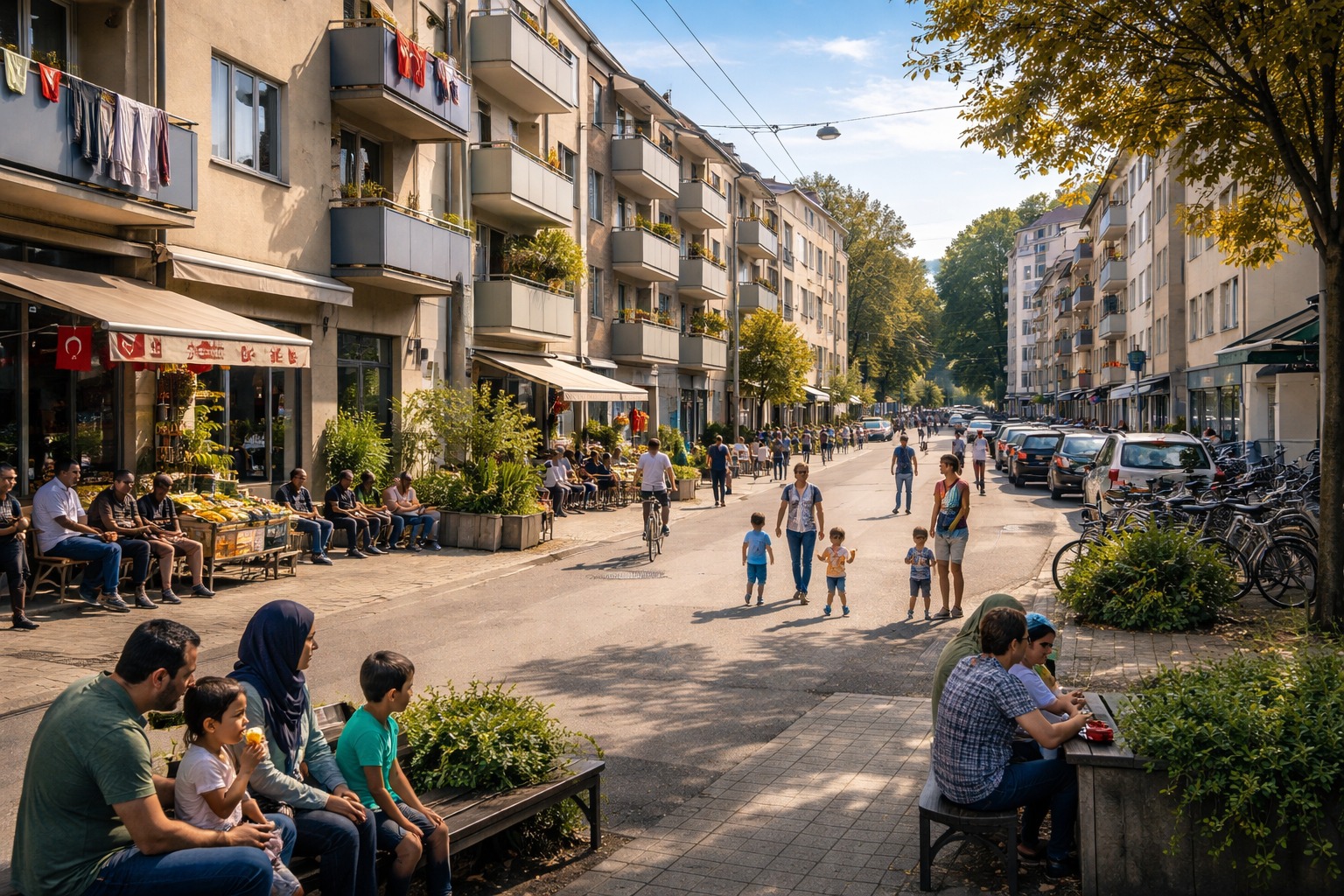
“Favela” in Switzerland: Videos About Poor Neighborhoods in Basel Expose HDI 0.967, Smaller Apartments, Diverse Immigration, and Intact Urban Standards in One of the Richest Cities in Europe
Viral videos on social media showed neighborhoods considered poor in Basel, Switzerland, generating comparisons with Brazilian favelas, although the reality reveals full infrastructure, universal services, and preserved urban standards that redefine the concept of poverty in the country.
The backlash occurs because the popular image of Switzerland associates extreme wealth with the absence of inequality, while the recordings show less affluent areas that are still organized, safe, and fully serviced.
Redefining Poverty in a Highly Developed Country
Living in a neighborhood classified as poor in Basel does not mean the absence of essential services, but rather adaptation to smaller housing and higher everyday urban population density.
-
The institute that trained the greatest aerospace engineers in Brazil has just opened its first campus outside São Paulo after 75 years: ITA Ceará will have R$ 445 million, new courses in energy and systems, and classes are expected to start in 2027.
-
Luciano Hang, owner of Havan, goes to Juiz de Fora after the tragedy in February, brings R$ 1 million, hands out R$ 2,000 cards, and donates up to R$ 15,000 to victims in the region.

-
The Brazilian passport allows legal residence in dozens of countries without the need for a prior visa, and most Brazilians are unaware that they can apply for residency directly upon arriving in nations in South America, Africa, and even Europe.
-
Petrobras sends a message to Brazilian truck drivers after fuel collapse and reveals plan to have 100% domestic diesel.


According to the United Nations Development Programme, Switzerland has a Human Development Index of 0.967, ensuring health, education, and security regardless of residential address.
This level guarantees that even lower-income families have regular access to public transportation, complete sanitation, paved streets, and functional and maintained urban facilities.


Where These Neighborhoods Are and What They Are Like
The most mentioned areas in the videos include Klybeck and regions near the borders, zones with simple buildings and compact apartments, yet fully integrated into a well-structured urban grid.
While wealthy neighborhoods remain quiet and little trafficked, these popular regions concentrate constant movement, children on the streets, and more intense community interaction.
This cultural difference generates local strangeness, as it contrasts with the traditionally reserved Swiss behavior, but it does not represent urban degradation or state abandonment in Basel.
Social Profile and Cultural Diversity
The population of these neighborhoods is primarily composed of Turkish, African, Asian, and Latino immigrants seeking economic opportunities in the country.
Diversity is reflected in the local commerce, with ethnic grocery stores, busy barber shops, and social interactions that are noisier than the city’s average standard.
This dynamic creates a visible multicultural environment, reinforcing Basel’s cosmopolitan character outside the known tourist attractions.
Border Factor and Cost of Living
The population concentration is also explained by the proximity to France and Germany, allowing for border crossings for purchases in euros.
This movement significantly reduces the cost of living, especially for food and consumer goods, when compared to the exclusive consumption of Swiss products.
For lower-income residents, this daily logistics represents an essential strategy for financial balance and control of recurring monthly expenses.
Elements That Characterize Housing Areas
The architecture is functional, with simple block buildings, described as residential bunkers, without historical ornaments or luxury characteristics typical of traditional villages.
Vehicle ownership is common, with cars parked on the streets, showing that lower income does not prevent regular individual mobility in these regions.
Even with lower wages, the approximate minimum wage of 4,000 francs ensures purchasing power for electronics, leisure, and adequate basic consumption.
Climate and Daily Adaptation
Daily life in Basel is influenced by well-defined seasons, requiring preparation for harsh winters and intense enjoyment of extended summers.
These conditions affect commuting, clothing, and outdoor activities, integrating into the routine of residents across all income levels.
Social Housing Without Precariousness in the Neighborhoods
The housing complexes designated for refugees and low-income workers are maintained with strict cleanliness and constant upkeep.
There are no illegal constructions, open sewage, or gang dominance, dismantling the literal use of the term favela in this urban context.
The state acts in a present manner, subsidizing housing and ensuring minimum standards that prevent extreme poverty even with economic inequality.
The Role of the Viral Video
The video that sparked the debate belongs to the channel Lima Experience, with over 15,000 subscribers, and visits poor neighborhoods in Basel.
The production compares architecture, immigration, cost of living, and urban quality, using the provocation of the word favela to generate visual and social contrast.
The shock presented is limited to graffiti and occasional litter, considered unacceptable locally, but irrelevant compared to serious global urban issues.
Inequality Without Extreme Poverty
Choosing to live in these areas is often a rational financial decision for those starting life in the world’s most expensive country.
The experience highlights that efficient public policies preserve human dignity, showing that inequality does not imply social or urban collapse.
As a complementary context, these neighborhoods reveal Switzerland’s less touristy side, where sanitation, efficient transportation, and security remain universal, despite the country’s high cost.
With information from Correio Braziliense.







-

2 pessoas reagiram a isso.