





 Portuguese
  English
  Spanish
  4 min of reading
  0 comments


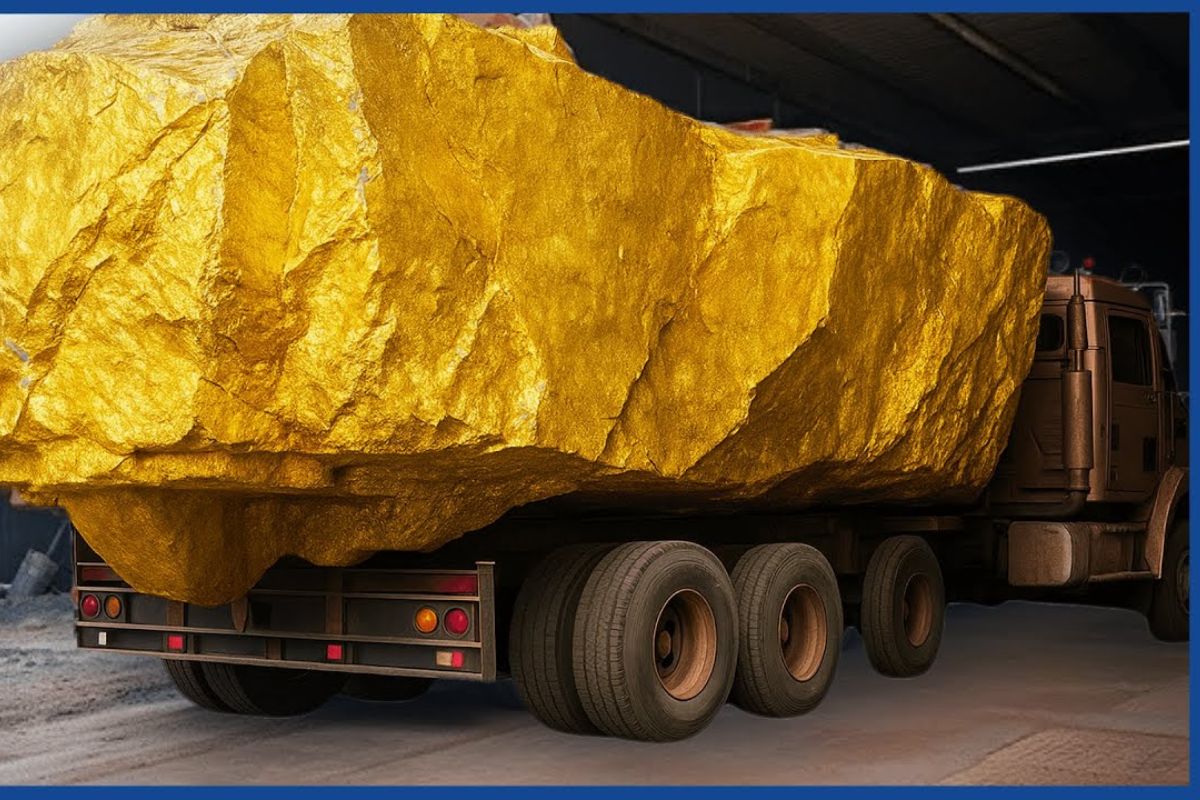
From the Explosion of Stars to Refining in Refineries, Gold Reveals a Story that Unites the Cosmos, Geology, and Human Engineering in a Millennial Cycle of Energy and Transformation.
The gold, one of the most sought-after metals in history, has an origin that goes beyond the limits of planet Earth. It was forged billions of years ago in cosmic events of unimaginable energy, when massive stars exploded in supernovas and scattered the heavy elements that today form part of the Earth’s crust throughout space. Since then, this metal has traversed geological eras, infiltrated rocks, rivers, and mountains, until being shaped by human technology into bars of nearly absolute purity.
The journey of gold begins in the depths of the universe and ends in the high furnaces of modern refineries. Understanding this journey is to comprehend not only the economic value of the metal, but also the scientific and technical dimension that transforms it into one of the most perfect and durable materials ever found.
The Stellar Birth of Gold
Gold does not originate on Earth. It is the product of cosmic explosions that occurred long before the formation of the planet.
-
The Brazilian city has 319 crooked buildings built on sandy soil without proper deep foundations, houses the largest beach garden in the world, with over 5 km, and is still considered the birthplace of surfing — meet Santos, in São Paulo.

-
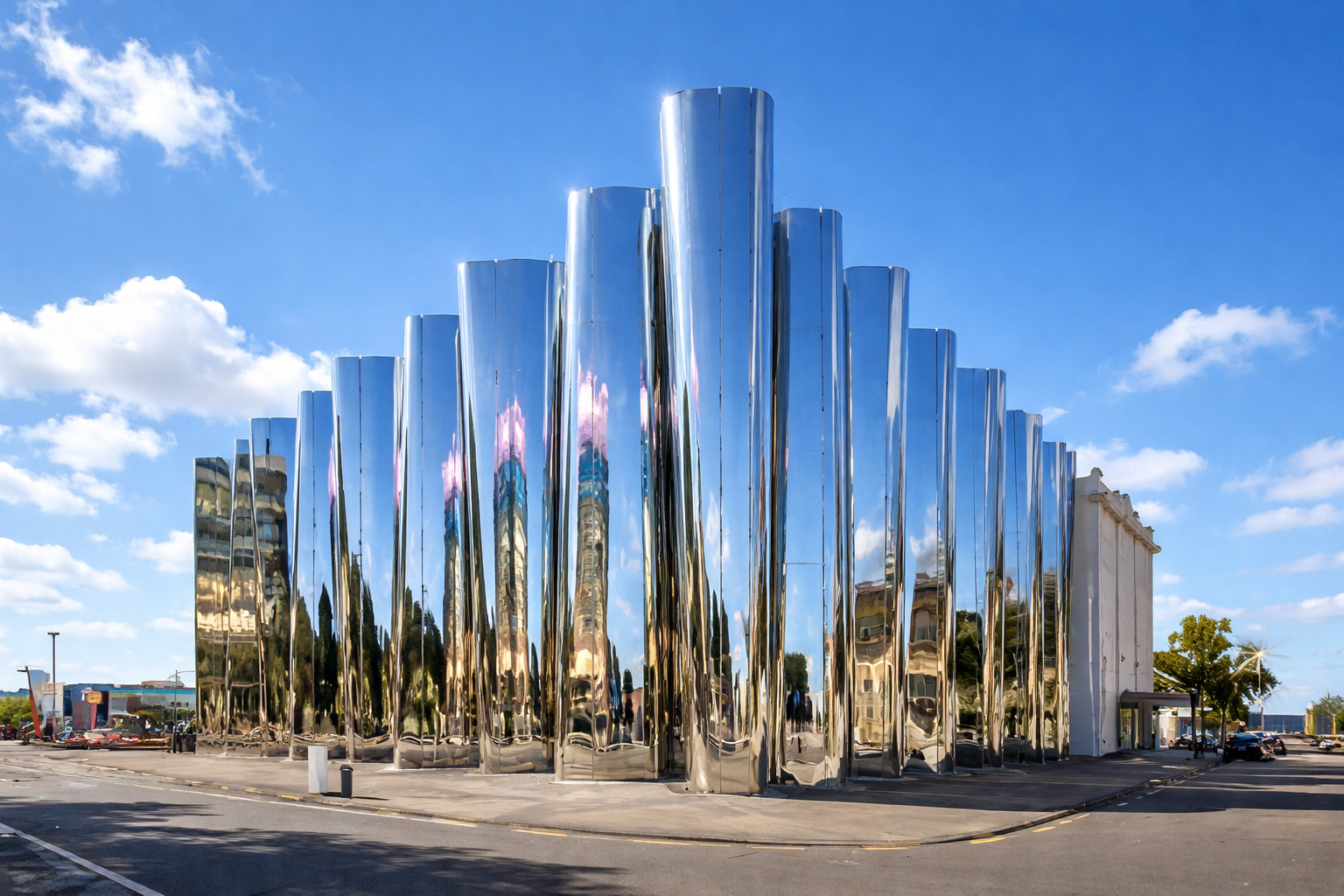
New Zealand builds a shimmering building that vibrates, featuring a 62-seat cinema, moving sculptures, and an environment where sound, light, and energy are felt in the body.
-
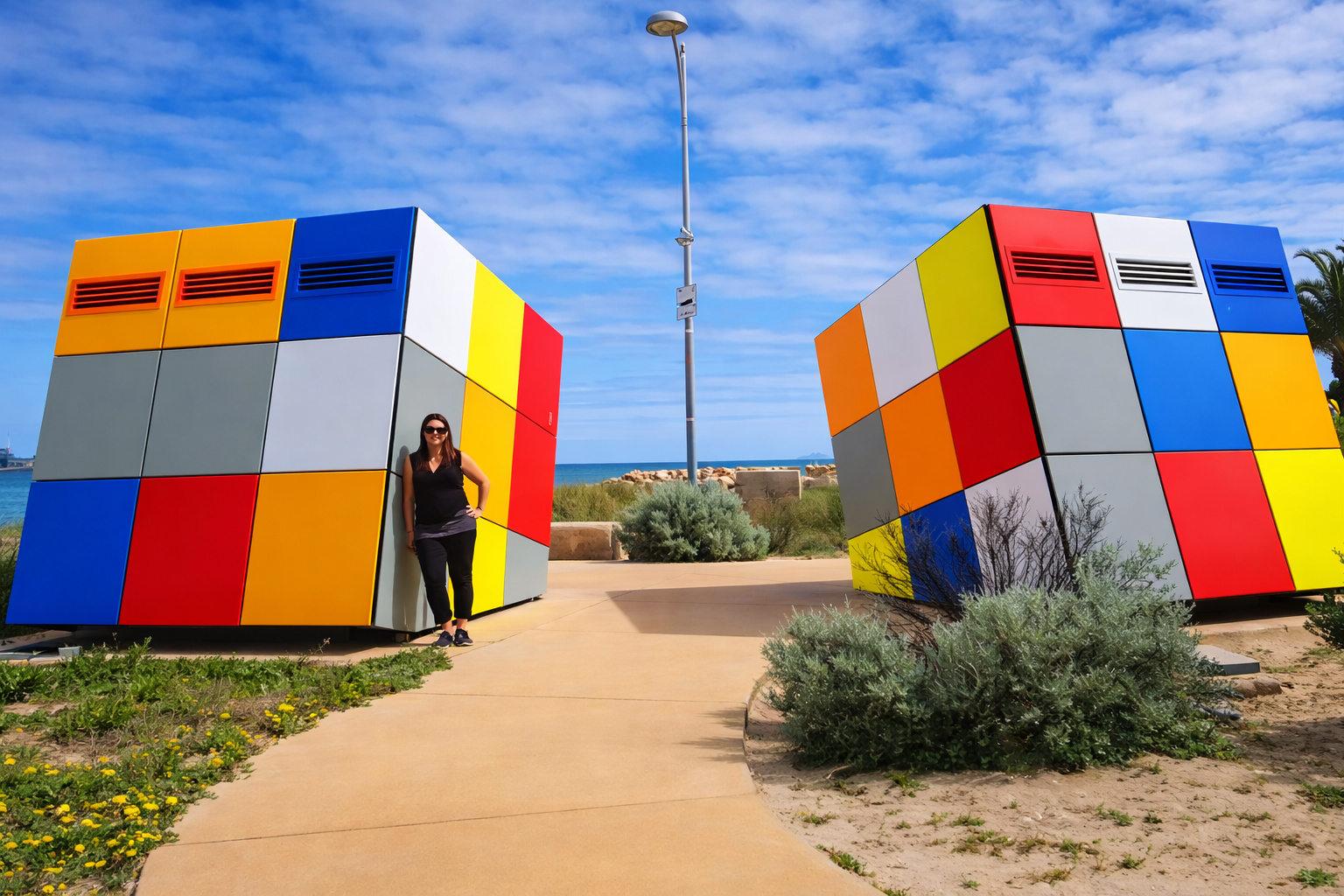
Two colored cubes of 2.5 m transform a public bathroom into a selfie spot in Western Australia, costing up to 75% less than traditional construction and helping to reduce vandalism in public spaces.
-
Santa Catarina produces up to 7 times more than it consumes in some sectors, and its century-old industries founded by grandparents and great-grandparents now compete on equal footing with Germany and the United States in the international market.


During the collapse of massive stars, known as supernovas, the energy released is so intense that it allows the fusion of light atoms into heavier elements, such as gold, silver, and platinum.
These metallic particles were propelled through space and ended up mixing with the cosmic dust that gave rise to the Solar System.
When the Earth was still a molten mass, gold, being dense, sank toward the core, but some of it was returned to the surface by metallic asteroids that bombarded the planet about four billion years ago.
From the Crust to the Mines: The Geological Cycle of Gold
As the Earth’s crust cooled, gold began to concentrate in veins of quartz, formed by the action of hot waters circulating through deep fissures.
These mineral currents carried the metal in solution until it crystallized in small amounts within the rocks.
Over the millennia, natural erosion released particles that ended up in rivers and sedimentary beds, forming secondary deposits.
It is in these locations that humans began the search for the metal, turning gold exploration into one of humanity’s oldest and most technically complex activities.
The Challenge of Modern Mining
Gold mining requires scientific precision and large investments.
The most significant reserves are located in Australia, China, South Africa, Peru, and the United States.
The process begins with detailed geological analyses, the use of satellites, and sensors that identify chemical anomalies in the soil, indications that there may be gold beneath the surface.
Once the presence of the ore is confirmed, extraction begins, which can occur on the surface or in underground mines.
In the former case, excavators and giant trucks remove tons of rock every day, creating craters visible even from space.
In underground mining, tunnels are opened to follow the path of the gold-bearing layers, with ventilation systems and structural reinforcement ensuring the safety of the teams.
From Ore to Bar: The Refining Engineering
After extraction, raw gold undergoes crushing, grinding, and complex chemical processes that separate the metal from other impurities.
The techniques vary according to the type of ore, potentially involving froth flotation, gravity separation, or cyanidation, with the latter being the most widely used worldwide.
In cyanidation, gold is dissolved by a solution of sodium cyanide and then recovered through precipitation with zinc or adsorption onto activated carbon.
In both methods, the result is a gold concentrate that goes to melting in furnaces at over one thousand degrees Celsius.
The liquefied metal is then poured into graphite molds, forming bars known as bullions.
The Final Touch: Purity and Absolute Value


Even after melting, gold still contains traces of silver and copper. To achieve a purity of 99.99%, it undergoes an electrolytic refining process, in which impure gold is dissolved and reprecipitated into an almost perfect form.
The result is certified ingots, with weights ranging from a few grams to over 12 kilograms, the international standard for banks and refineries.
Thus, the metal that once emerged from a stellar explosion transforms, through human hands, into a symbol of wealth and economic stability.
A rare element whose history is written not only in numbers and carats but also in cosmic energy and industrial engineering.
Gold is more than a financial asset, it is a legacy of the universe.
Each gram contains the memory of extinct stars and the human effort to extract, shape, and purify what is densest and most resilient in nature.
Its value transcends the market, being the materialization of the connection between the cosmos and the Earth.
Did you ever imagine that the gold we use today was forged in stellar explosions billions of years ago?







-

-

-

-

9 pessoas reagiram a isso.