





 Portuguese
  English
  Spanish
  5 min of reading
  3 comments


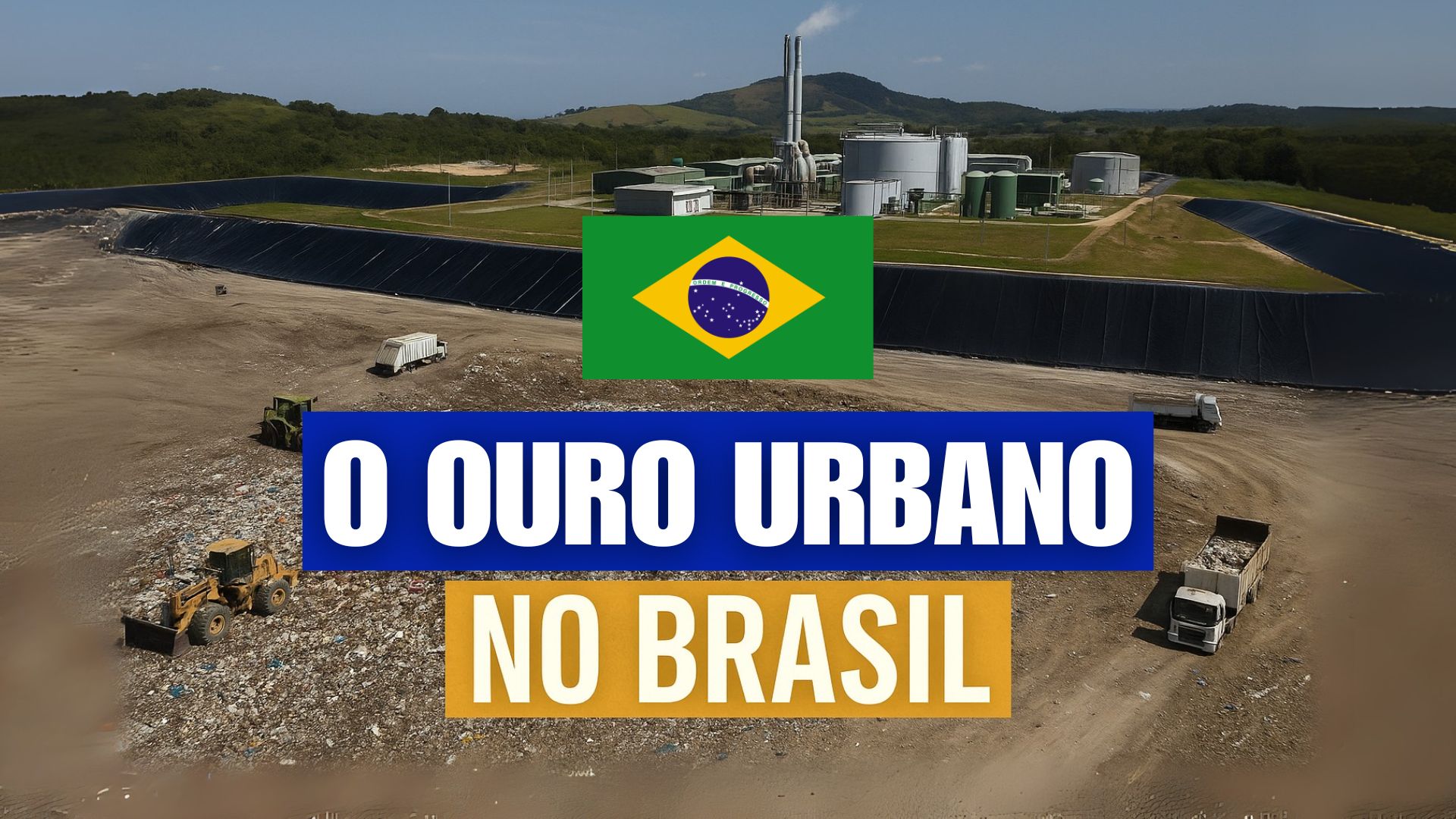


Sanitation Company Bets on Waste as a Source of Clean Energy and Sees in the Solid Waste Sector a New Path for Billion-Dollar Growth, Focusing on Biogas, Biomethane, and Market Consolidation in Brazil.
Aegea, the largest private sanitation operator in the country, took a decisive step to enter the solid waste market by announcing on August 20 the acquisition of Ciclus Ambiental for R$ 1.1 billion.
According to a report published by Bloomberg this Monday (22), considering debts, the total transaction value reaches R$ 1.9 billion.
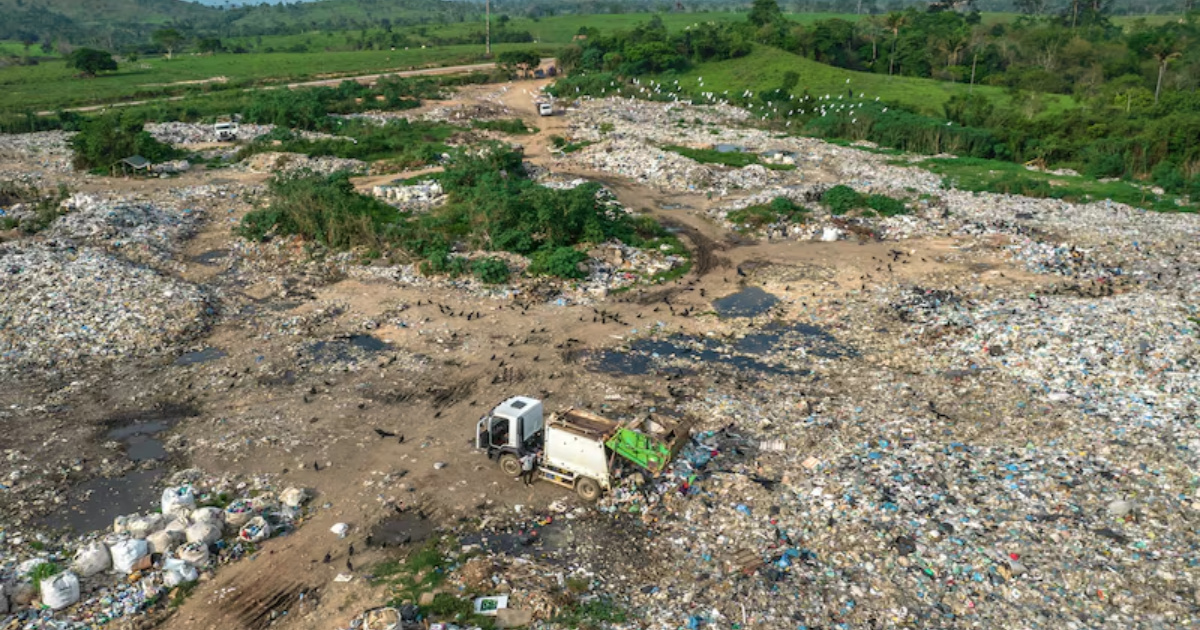
Ciclus controls the Seropédica unit in Rio de Janeiro, one of the largest treatment complexes in Latin America, processing 10,000 tons daily and capturing 24,000 cubic meters of biogas per hour for clean energy generation.
-
“No one will make us change the Pix,” says Lula after the US report.

-
Lula responds directly to Trump and says that Pix is from Brazil and will not change under pressure from anyone, after a report from the United States pointed out the Brazilian payment system as an American trade barrier.

-
Amazon has just announced a new fee on all deliveries, and your online purchases will become more expensive starting April 17, including for those buying from the United States here in Brazil.

-
He sold his share for R$ 4 thousand, saw the company become a giant worth R$ 19 trillion, and missed the opportunity of a lifetime.


Acquisition and Strategic Asset in Rio de Janeiro
Ciclus Rio was founded in 2010 as a joint venture between the Simpar group and Haztec and, since 2011, has operated the bioenergy landfill in Seropédica.
Under a Public-Private Partnership with the municipality, the company is responsible for five Waste Transfer Stations and for the entire integrated operation of transshipment, transportation, and final disposal of waste in the capital of Rio de Janeiro.
According to Bloomberg, 70% of Rio’s waste passes through the unit.
In addition to the landfill, Ciclus focuses on a portfolio aimed at the circular economy.
The biogas generated from waste treatment is purified into biomethane and sold to industrial and commercial customers through long-term contracts under a “take or pay” model, which guarantees minimum payment regardless of actual consumption.
Today, 17% of the company’s revenue comes from this activity.
Aegea’s Strategy and View on Solid Waste
In Aegea’s assessment, solid waste mirrors the sanitation story from 15 years ago: a fragmented market, with room for consolidation and scale gains.
“The rationale behind the acquisition has a lot to do with Aegea’s strategic vision.
The solid waste business shares very similar characteristics with sanitation 15 years ago,” said CFO André Pires in an interview with Bloomberg.
For him, this represents a “new avenue for growth“, with operational and commercial synergies with the existing customer base served by the company.
This fit is immediate in Rio de Janeiro.
Aegea operates the Águas do Rio concession, responsible for water supply and sewage in 27 municipalities in the state, including 124 neighborhoods in the capital.
“The institutional environment is the same, and this creates immediate synergy,” said Pires, explaining that the already established administrative structure facilitates integration and reduces costs.
Market and Regulation of Solid Waste
The executive highlighted that about 33% of the waste collected in the country still has no destination.
As a result, the demand for investments in landfills and sorting should increase, alongside technologies for recycling and gas capture.
The new sanitation framework paved the way for including waste treatment in service provision contracts, allowing for tariff charging.
This design, however, does not apply to Ciclus, whose current activity does not include collection, executed by Comlurb.
Although there are larger groups, the sector remains dominated by family and regional companies.
Aegea sees fertile ground for acquisitions and partnerships.
“We believe there is a significant opportunity to participate in this market,” said Pires.
The newspaper Bloomberg also pointed out that, in more developed economies, direct recycling processes are already predominant, while Brazil still needs to advance in eliminating landfills and correctly disposing of waste.
Biogas, Biomethane, and Circular Economy
The bet in Seropédica is not just volumetric.
The captured biogas is central to increasing low-carbon revenues.
“It is also possible to seize this opportunity from the circular economy perspective, with biogas generation,” said Pires.
In practice, the strategy aims to enhance efficiency in gas utilization, maximize biomethane production, and expand supply contracts, rather than prioritizing the physical expansion of the landfill in the short term.
The long-term contractual framework, with “take or pay” clauses, reduces cash volatility and provides investment predictability.
For Aegea, which serves over 38 million people in sanitation, this predictability helps build a more resilient portfolio to economic cycles.
Finances and Impact on Leverage
In Aegea’s consolidated results, waste still has a lower weight than sanitation. In the 12 months ending in June, the segment’s Ebitda was approximately R$ 200 million.
Even so, profitability is considered attractive.
According to the CFO, the returns from waste projects have been similar to those of sanitation projects, with one relevant difference: capex is substantially lower as it avoids the construction of new networks, focusing instead on maintenance and efficiency.
From a balance sheet perspective, the company states that the operation does not significantly alter leverage.
The target remains at a ceiling of four times net debt to Ebitda.
“We are interested [in acquisitions] if we have good growth opportunities, as long as they do not impact our leverage,” said Pires, emphasizing the combination of organic and inorganic growth as a cornerstone of the strategic plan.
Previous Experience and Operational Synergies
Aegea bets on geographical and institutional proximity to capture quick gains.
Dealing with environmental licenses, monitoring, and risk management is already part of the company’s daily routine, which, in management’s view, reduces the learning curve.
“We have already dealt with this issue, and there is alignment with what we already do,” said the CFO.
This is not the first foray into waste. Since 2023, the company has operated Regenera Cariri, which manages solid waste in nine municipalities in Ceará, in partnership with Engep Ambiental.
This experience paved the way for negotiations that took almost two years to finalize the agreement with Simpar, with alignment from Aegea’s three shareholders — Equipav, GIC, and Itaúsa.
Outlook for the Waste Sector in Brazil
There is still a journey to be made towards more robust recycling standards.
“Brazil needs to pave the way to eliminate landfills. Landfills as the correct destination is the path we will take,” said Pires.
Beyond appropriate disposal, the capture and energy use of biogas are expected to gain importance in discussions about circular economy and decarbonization targets, opening up space for business models that monetize the gas generated from urban waste.
Meanwhile, the high-interest rate scenario and macroeconomic uncertainties demand discipline in capital allocation.
Aegea states that it will continue to analyze bids, auctions, and M&As, but with a commitment to keep the capital structure under control.








Segregaçã0 na fonte, portanto investimento em mobilização do gerador com sensibilização educativa para mudança de comportamento, voalá aterro só para rejeito, como também está na lei nacional. Sem incineração de lixo, com reciclagem de todos os resíduos e aí organicos para composto e biogás. Sem catadores, gestão não é de redíduos, é de lixo! Palavra q não existe na lei.
Aterro sanitário não é tratamento de resíduos. A Aegea tem uma visão errada da política nacional dos resíduos sólidos.
Excepcional. Biometano é o futuro. No caminho vitorioso.