





 Portuguese
  English
  Spanish
  9 min of reading
  0 comments


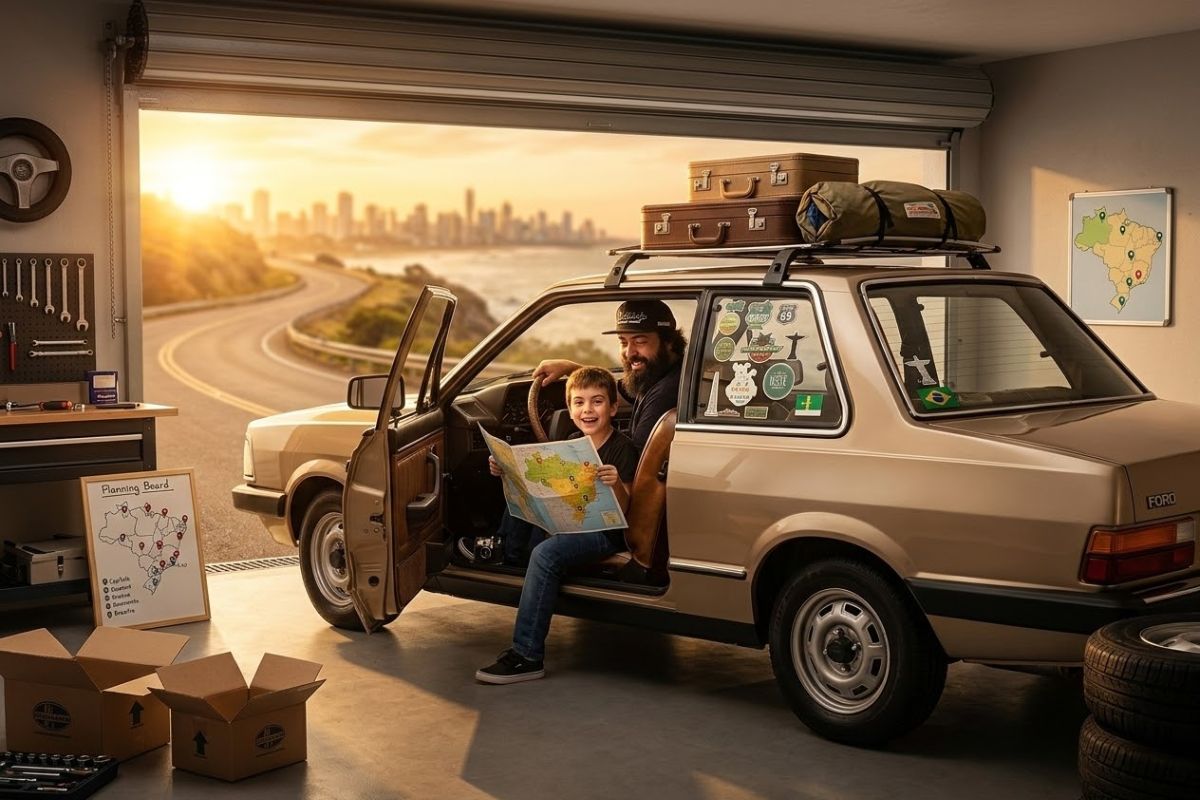
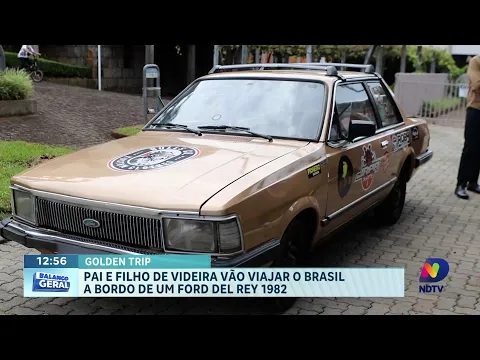
Recovered after nine years away from the family, the 1982 Ford Del Rey ceased to be just an old car to become a link between generations, a workshop for coexistence, and a starting point for a journey in which a father and son from Videira want to cross the country, visit capitals, and expand memories.
The 1982 Ford Del Rey returned to Rafael Maurício Gonçalves’ life at a decisive moment. A single father, musician, and resident of Videira in Santa Catarina’s Midwest, he found in the family’s first car not only a memory of the past but also a concrete way to build new experiences alongside his son, Raul Maurício Gonçalves.
From this reconquest, what was once merely a mechanical restoration gained another dimension. The car began to represent quality time, partnership in the garage, and a life plan on wheels, with the goal of visiting all the capitals of Brazil in stages organized according to the school calendar and their reality.
The Car That Came Back as a Memory and Became a Life Project
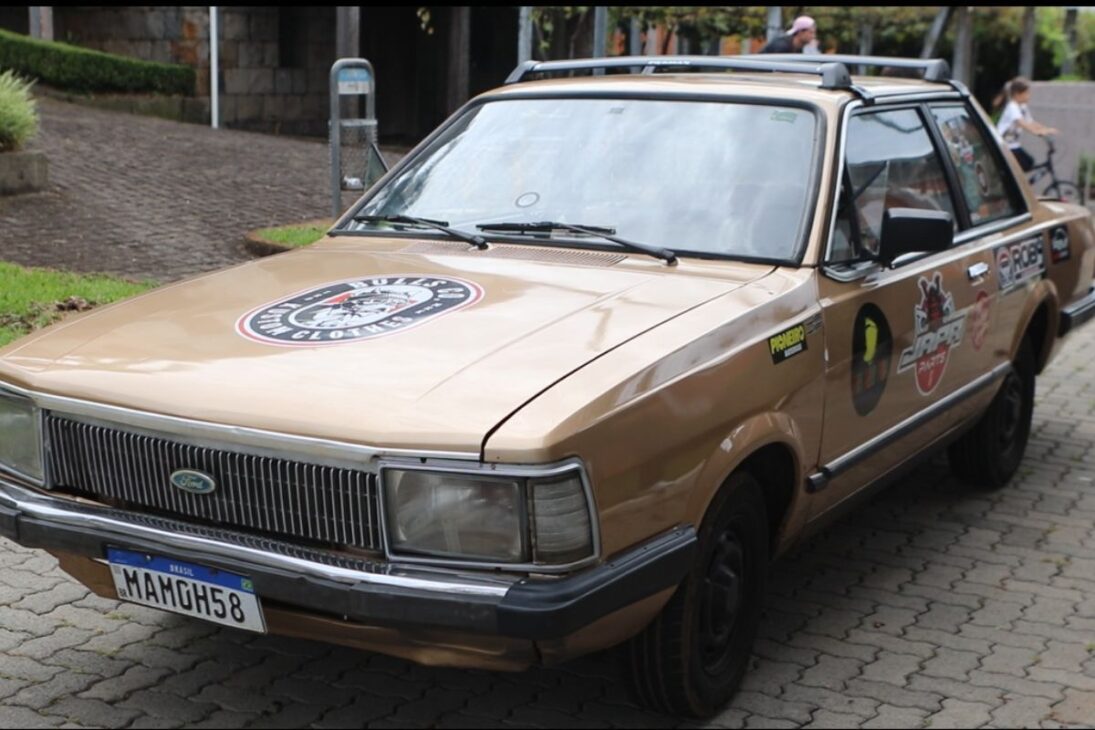
The 1982 Ford Del Rey occupies a special place in this story because it was the family’s first car. This information completely changes the weight of the vehicle within their narrative. This is not an old model chosen for aesthetics, fleeting nostalgia, or a buying opportunity. This is a car that was already part of the family’s history and that, after nine years away, has managed to return to the hands of someone who attributes true emotional value to it.
-
The Brazilian city has 319 crooked buildings built on sandy soil without proper deep foundations, houses the largest beach garden in the world, with over 5 km, and is still considered the birthplace of surfing — meet Santos, in São Paulo.
-
New Zealand builds a shimmering building that vibrates, featuring a 62-seat cinema, moving sculptures, and an environment where sound, light, and energy are felt in the body.
-
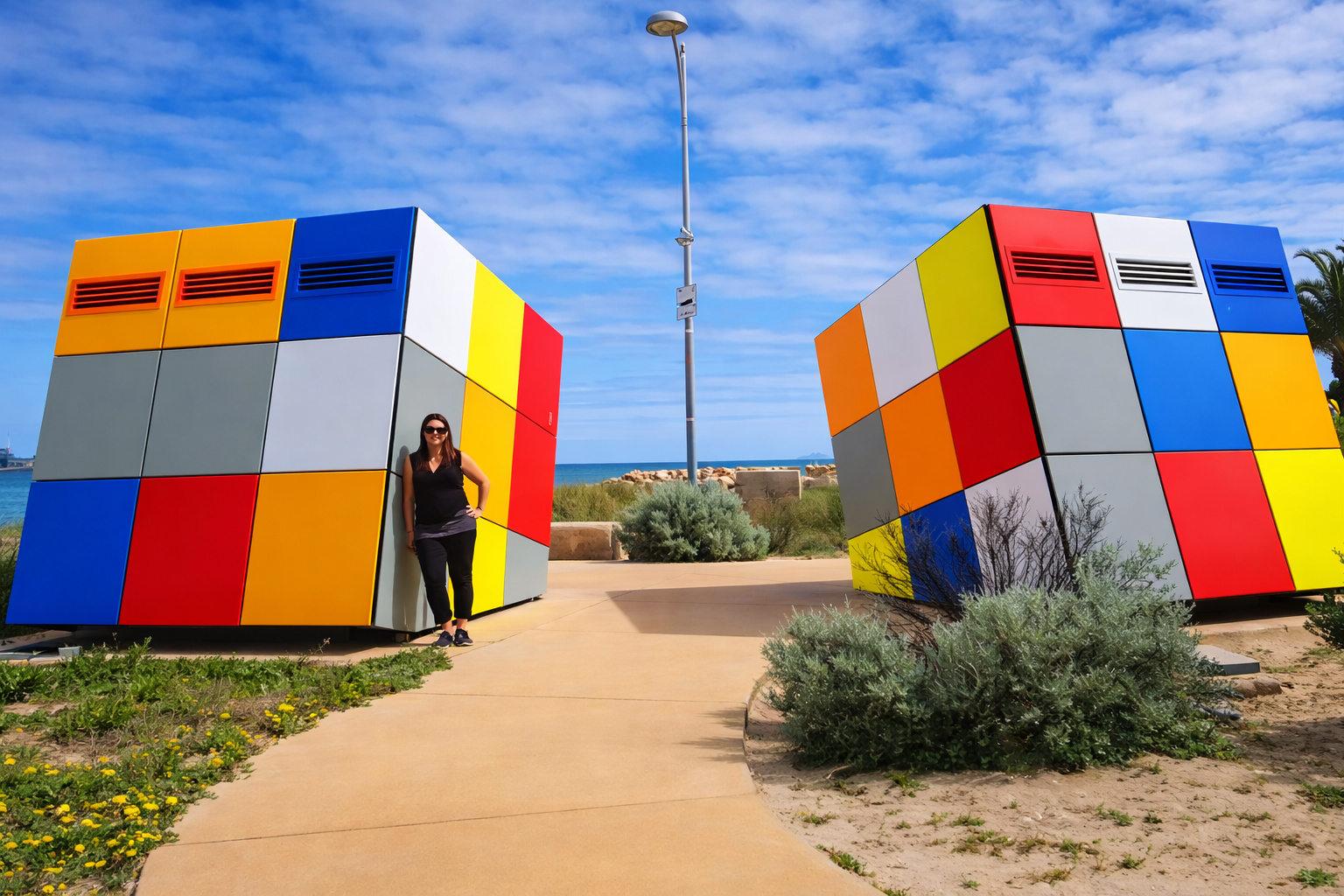
Two colored cubes of 2.5 m transform a public bathroom into a selfie spot in Western Australia, costing up to 75% less than traditional construction and helping to reduce vandalism in public spaces.
-
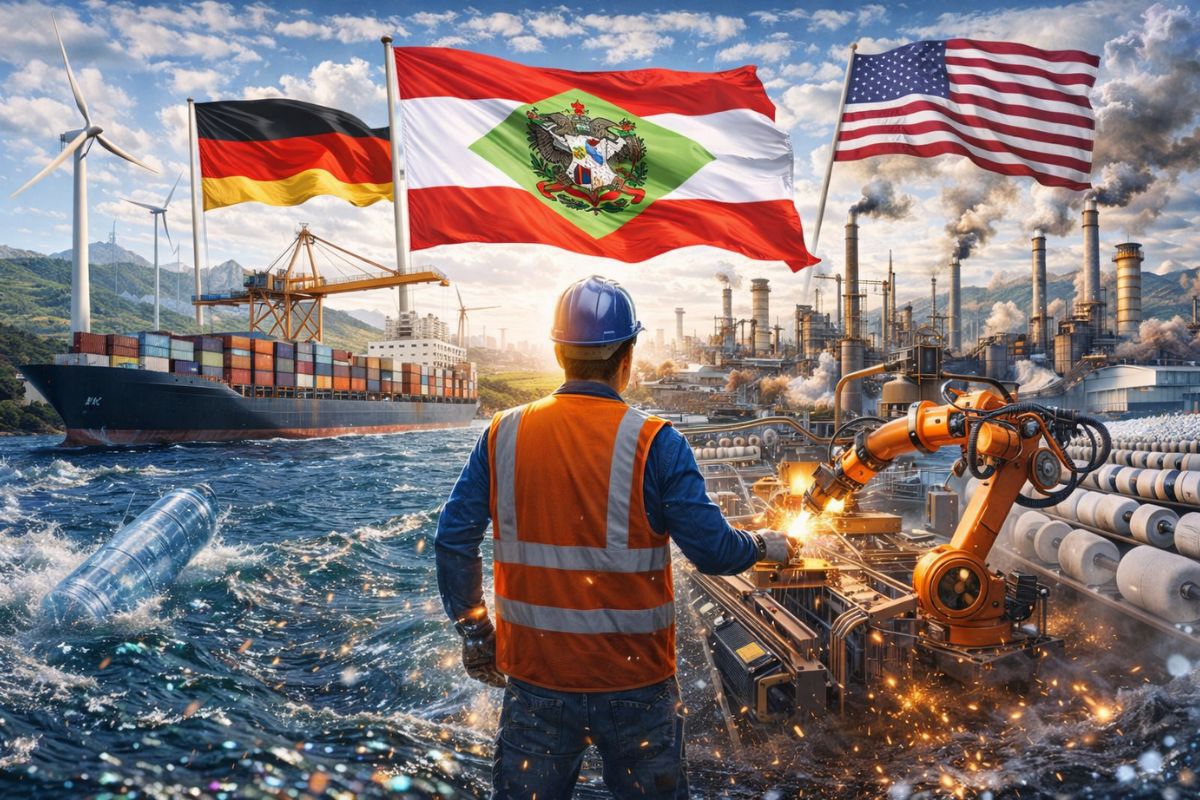
Santa Catarina produces up to 7 times more than it consumes in some sectors, and its century-old industries founded by grandparents and great-grandparents now compete on equal footing with Germany and the United States in the international market.

When Rafael states that life passes too quickly, he summarizes the central reason for the project. The trip arises from a very concrete perception of time, about his son’s childhood, and the need to live experiences that leave lasting marks. In this context, the 1982 Ford Del Rey ceases to be an object and starts to serve as a bridge between past, present, and future.
There is also an important element in the setting where everything happens. Rafael grew up between Blumenau and Videira, maintaining a connection with music throughout his life. After the pandemic, he returned to Videira to raise his son and reorganize the family routine. It was precisely during this period of rebirth that the car reappeared and gained new meaning, as if the resumption of his own life came accompanied by the recovery of a part of the family’s memory.
This kind of project often attracts attention because it combines two powerful forces: the preservation of something old and the creation of something new. In their case, the recovery of the 1982 Ford Del Rey does not only point backward. It drives a new phase, with travel, coexistence, planning, and recording moments that the two want to carry forever.
The Renovation of the 1982 Ford Del Rey Brought Father and Son Closer in the Garage
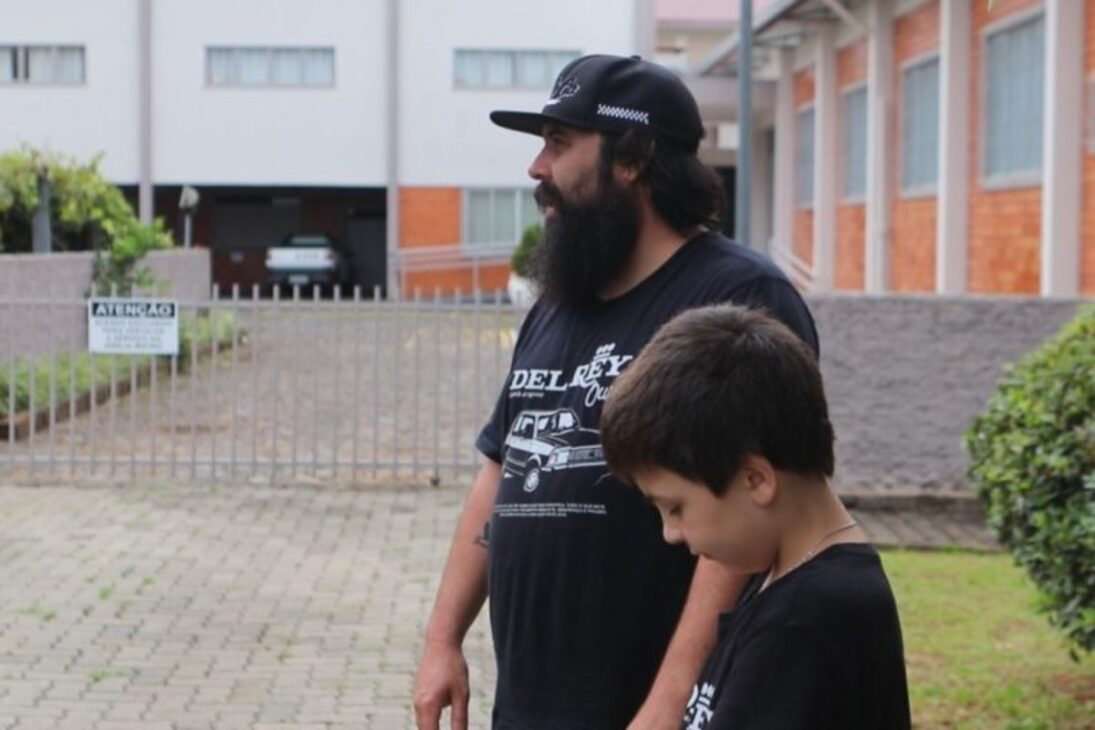
For about a year, Rafael and Raul have been working on the renovation and preparation of the 1982 Ford Del Rey. According to him, the process was practically from scratch, demonstrating the degree of dedication required so far. It was not a simple review to put the car on the road, but a careful reconstruction, done in stages and with attention to details that would allow transforming the vehicle into a reliable road partner.
This type of restoration requires more than just willingness. It involves patience, organization, observation of the vehicle’s operation, and the ability to deal with unforeseen events. In old cars, each adjustment can reveal a new need, and that is precisely what makes the process longer and more labor-intensive.
Even without disclosing values, it is clear that the main investment thus far has been concentrated in this preparation phase because the trip directly depends on the car’s safety and reliability.
At the same time, the work in the garage has built a shared routine between father and son. Raul is not just an accompanying participant in the plan. He actively participates and shows understanding that the adventure begins long before departure. The road, in this case, began at home, amidst tools, interior finishing, video recordings, and conversations about the next steps of the project.
When he comments that the interior of the car is still lacking, it shows that he is following the process with real attention. This gives the project an even stronger character. The 1982 Ford Del Rey is not being prepared for a showcase trip, made only to generate beautiful images. It is being assembled as part of their life, with concrete participation, shared expectations, and a growing sense of achievement.
There is another relevant point: restoring a car with a child transforms the vehicle into both a pedagogical and emotional experience. There is practical learning, a sense of care, responsibility towards stages, and an understanding that big plans take time. Each detail adjusted in the car also strengthens the relationship between the two, as the journey is built jointly.
Goldentrip Organizes the Adventure in Stages to Fit into Real Life
The project was named Goldentrip, but the proposal goes beyond a catchy name. The planning was structured to respect Raul’s school routine, which shows that the adventure was not thought of impulsively.
The first stage is expected to take place in the south of the country, taking advantage of weekends, extended holidays, and July vacations. This reveals an important strategy: to transform a big dream into viable stages, without breaking away from daily obligations.
The longest stage is planned for the end of 2026, precisely during school vacations. July is set for the trip to the North region, while December and January are reserved for the Northeast. This division indicates that the goal of visiting Brazilian capitals will not be treated as a race. On the contrary: the proposal seems to be to experience each segment calmly, fitting the trip within the possible life.
Even before the grand journey, March already marks a symbolic debut for the 1982 Ford Del Rey. Father and son plan to head to Bom Jardim da Serra, where they will participate in two events, one for music and the other for vintage cars. This first outing serves as a test, celebration, and a sign that the project is finally starting to come to fruition. It is not just a short move; it is the confirmation that the restored car is already entering a new phase.
Raul’s expectancy also helps gauge the impact of this plan. Among the places he most wants to visit, Florianópolis stands out as a special destination, associated with the beach and fish. The child’s comments give the project a very human contour. They are not capitals seen as abstract points on a map but places capable of entering a child’s affective memory. The trip, therefore, is not just geographical; it is emotional and formative.
This focus makes the proposal even more interesting. Instead of betting solely on the epic aspect of crossing Brazil, the project relies on something simple and powerful: a father organizing his life to gradually show the country to his son in a meaningful and accessible manner.
Music, Videos, and Partnerships Serve as the Foundation to Sustain the Journey

For the adventure to leave the garage and gain continuity on the road, Rafael and Raul also thought about the project’s viability. Music is expected to be one of the main sources of income during the journey, accompanied by the search for sponsors in different regions. This detail is crucial as it shows that the dream is being treated with a sense of reality, not just enthusiasm.
The presence of music in this context does not seem accidental. Since Rafael works professionally in the field, it emerges as a natural resource to help finance part of the journey. This creates an interesting connection between profession, travel, and family experience. Work does not appear as an obstacle to the trip but as a tool to keep it alive. Instead of completely separating livelihood and dream, the project attempts to bring the two closer together.
Raul, for his part, has also found his own role within this construction. He helps with videos and in the search for sponsors, indicating that the project has practical and communicational dimensions.
It is not just a trip to be experienced; it is also a journey to be recorded, shared, and sustained collectively. This participation reinforces the child’s sense of belonging and enhances the value of the experience.
The fact that there are still no public details about numbers, costs, or financial reach does not weaken the proposal. In fact, it reinforces the idea that the center of the story is not in figures but in the way a father and son are trying to make a crossing filled with meaning using the resources they have. What is essential here is not how much the car is worth in the market or how much each segment will cost, but how the 1982 Ford Del Rey has become the concrete platform for an ambitious and deeply personal family project.
It is also striking how different elements fit together: the restored car, the music, the videos, the events, and the sponsors. None of this appears in isolation. Everything composes a sort of ecosystem designed to sustain the journey without losing focus on the main goal, which is to experience Brazil together.
More than Visiting Capitals, the 1982 Ford Del Rey Became a Symbol of an Entire Phase of Life
In many travel projects, the final destination is the main protagonist. In this case, what stands out most is perhaps the path and its significance. The 1982 Ford Del Rey began to represent a phase in Rafael’s life as a single father, where raising his son and building memories with him have ceased to be generic ideas and transformed into concrete actions.
The car became a symbol of presence, of choice, and of coexistence in a moment that the two will likely remember for many years.
This helps to understand why the story generates such immediate interest. It brings together elements recognizable to many: the family’s first car, the effort to recover something important, the desire to make better use of time, and the attempt to transform routine into lasting memories. At the same time, there is a singular component because all this takes shape in a road project that intends to traverse Brazil progressively, respecting school, work, and real possibilities.
Another strong point is the way the past is not treated as a prison. The 1982 Ford Del Rey carries memory, but does not remain stuck in it. The restoration did not serve to freeze a memory; it served to put it in motion. This detail changes everything because it transforms longing into experience and memory into a planned future.
When the project states that it wants to collect memories, the phrase does not sound empty. It connects with every step already described: the reconquest of the car, the renovation done almost from scratch, the division of the route, the first trip to Bom Jardim da Serra, Raul’s anxiety, the role of music, and the attempt to keep it all afloat with organization. What is at stake is not only visiting capitals but building a story that makes sense at every stop.
In the end, the 1982 Ford Del Rey brings together the most important answers to this journey. Who leads this plan is a single father and his son. Where everything begins is in the garage and the routine of Videira. Why this gained strength lies in the emotional value of the car and the desire to live time more fully. And how this adventure progresses appears in the sum of restoration, planning, work, and partnership. It is precisely this combination that transforms a simple trip into something much bigger.
Rafael and Raul’s story shows that sometimes what seemed like just an old car can become the center of a new phase of life. And you, would you embark on such a big journey with a vehicle full of memory or would you prefer to create this type of memory in another way?







-

-

3 pessoas reagiram a isso.