





 Portuguese
  English
  Spanish
  3 min of reading
  2 comments


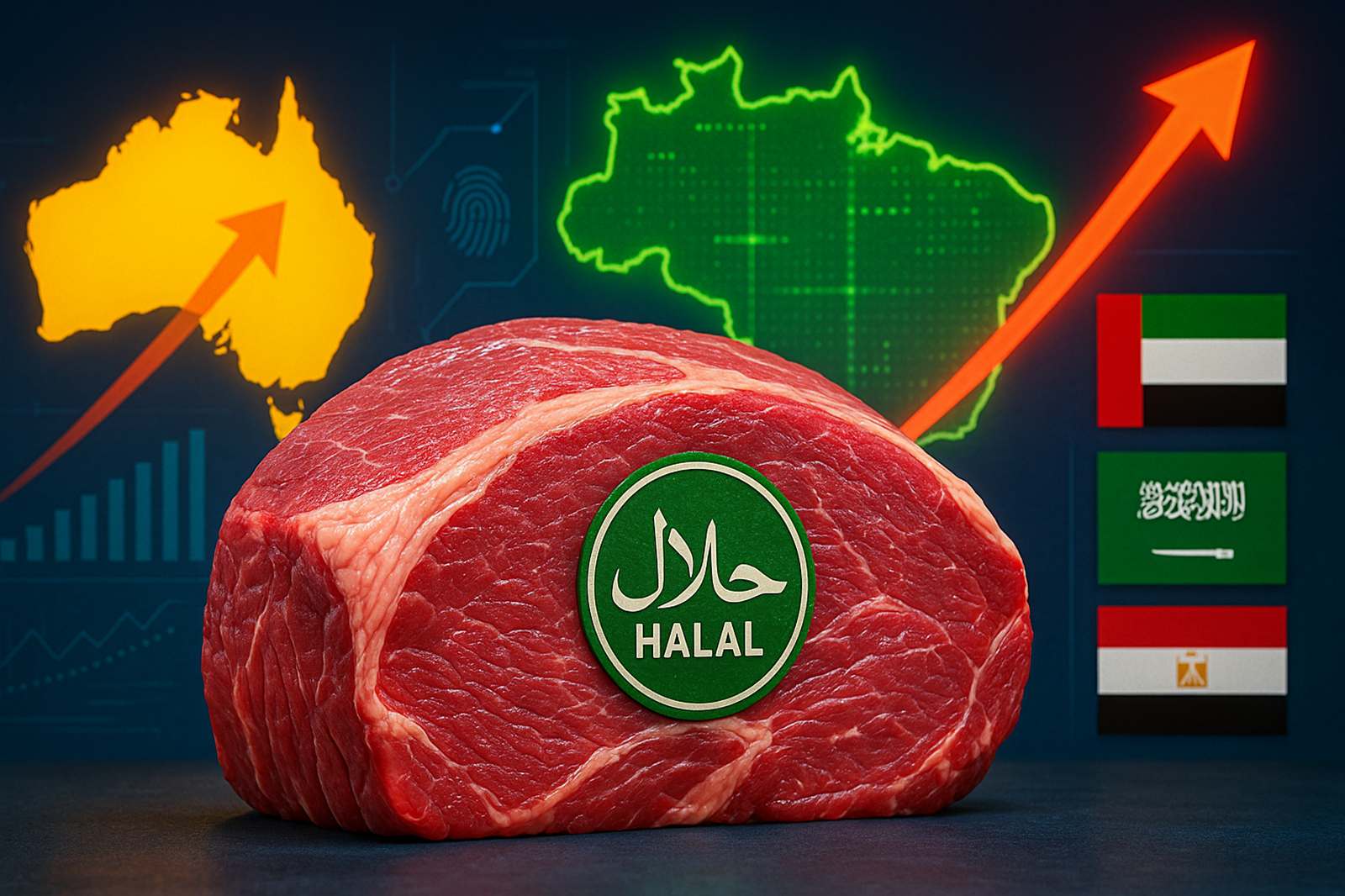


Brazilian Exporters Gain Trust in the Gulf, but Executives Warn That Digital Traceability and Vacuum Packaging Are Essential to Expand Regional Participation
The Brazilian beef already occupies a prominent position in the markets of China and Arab countries with the halal seal, but there is still room for growth. This was the assessment presented by importers during the National Congress of Meat (Conacarne), held in Belo Horizonte last Thursday (09/18).
The meeting brought together executives who reinforced the expansion potential of Brazilian protein in some of the main global destinations.
Chinese Market on the Rise
Currently, China accounts for more than 40% of Brazilian beef purchases.
-
The water that almost everyone throws away after cooking potatoes carries nutrients released during the preparation and can be reused to help in the development of plants when used correctly at the base of gardens and pots, at no additional cost and without changing the routine.

-
The sea water temperature rose from 28 to 34 degrees in Santa Catarina and killed up to 90% of the oysters: producers who planted over 1 million seeds lost practically everything and say that if it happens again, production is doomed to end.

-
An Indian tree that grows in the Brazilian Northeast produces an oil capable of acting against more than 200 species of pests and interrupting the insect cycle, gaining ground as a natural alternative in soybean, cotton, and vegetable crops.

-
The rise in oil prices in the Middle East is already affecting Brazilian sugar: mills in the Central-South are seeing their margins shrink just as ethanol gains strength.


The International Business Director of the Chinese import platform Optimize Integration Group (OIG), Kelly Wang, stated that the trend is for this participation to increase, both for Brazil and for neighboring countries like Argentina.
According to Wang, the good reputation earned by Brazilian beef is due to the standardization and quality of the products. “Brazilian producers have been doing an excellent job in China, they provide standardized products and the Chinese population is huge,” highlighted the executive in a report from Globo Rural.
She emphasized that maintaining this standard is essential for the Chinese consumer, who values consistency and trust.
In 2024, China imported about 2.9 million tons of beef, a volume 5% higher than that recorded in the previous year.
Despite the growth, cost appears as a challenge. Prices are at the lowest level in the last decade, which puts pressure on suppliers and opens space for more competitive products.
“We have massive demand for beef, but the average per capita consumption is still low, about 8 kilos per year, lower than the global average. The reasons are economic,” explained Wang.
She added that the diversity of regional habits represents an opportunity for Brazilian exporters to develop new products aimed at different consumer profiles.
The destination of beef in China also reveals the strength of this market. The executive explained that most of the imported protein is directed to processing. The largest end consumers are supermarkets, followed by hotels, and in third place, the processed goods sector.
Arab Countries Expand Space for Brazilian Beef
In Arab countries, Brazilian beef is replacing products from traditional competitors, such as New Zealand and Australia.
For Riyadh Jabbar, director of Al Tayeb Meat of the LuLu Group trading based in the United Arab Emirates, Brazil can advance even further in the region if it invests in digital traceability.
“Digital traceability is very important. There needs to be an effort between countries in my region and Brazil so that traceability is digitalized and certification is proven,” said the executive.
He stressed that trust is one of the factors that strengthens the Brazilian presence.
About 40% of all exports to the region already have halal certification, a requirement from buyers that goes beyond the religious aspect. “It’s a matter of trust in the quality of the product,” he added.
Jabbar believes that convenience is also decisive. He suggested that Brazilian exporters adopt vacuum packaging standards, common in Arab markets. “They are very important for us,” he stated.
The director explained that consumers want ready-to-cook products, which includes practical cuts and functional packaging.
Besides the local population, restaurants and establishments aimed at tourism are significant demand points.
The executive estimates that the trend is for growth in transactions between the markets, provided that the adjustments in traceability and packaging are adopted. “I imagine we can increase the number of deals we make between our markets,” he projected.
Prospects
Brazilian beef has growth potential in the two most strategic poles for the sector: China and Arab countries.
In the Chinese market, price competitiveness and the ability to adapt to regional consumption habits are differentiators.
In Arab countries, trust, halal certifications, and advances in traceability and packaging can further consolidate the product’s presence.
The event showed that, despite challenges such as cost and standardization requirements, Brazilian beef still has room to grow and win over new consumers in markets already dominated by its quality and reputation.










Isso fica a cargo dos pecuaristas, o governo com certeza dará total apoio….
What i dont understood is in reality how youre now not really a lot more smartlyfavored than you might be now Youre very intelligent You understand therefore significantly in terms of this topic produced me personally believe it from a lot of numerous angles Its like women and men are not interested except it is one thing to accomplish with Woman gaga Your own stuffs outstanding Always care for it up