





 Portuguese
  English
  Spanish
  6 min of reading
  0 comments


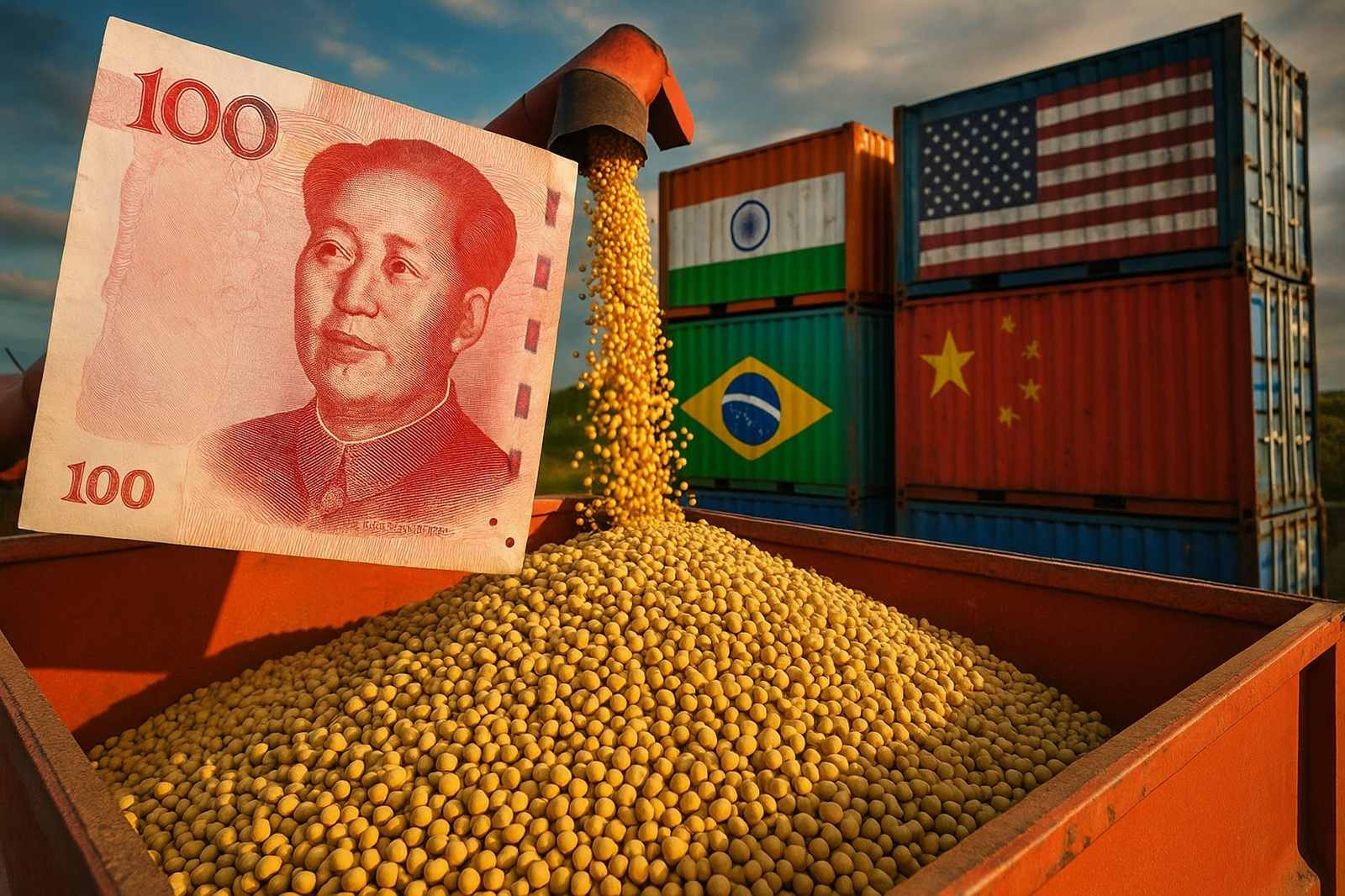
China Has Stopped Buying Soybeans From The United States And Has Begun To Trade With BRICS Countries That Now Accept Chinese Yuan In Transactions And Strengthen The Influence Of The Asian Currency In Global Agricultural Trade
The trade relationship between China and the United States is experiencing one of the most delicate moments in the last decade. In this scenario, American soybeans have become a Chinese geopolitical weapon, which is taking the opportunity to increase business with BRICS countries, strengthening the use of the yuan at the expense of the American dollar.
During the current export season, Beijing has completely stopped purchasing American soybeans, redirecting its imports to BRICS countries and turning Brazil into its main supplier.
The decision, a direct consequence of tariffs and trade tensions between the two largest economies in the world, is causing a collapse in the U.S. agricultural sector and expanding the use of the yuan in international transactions.
-
Brazil Ignores Trump’s threats to BRICS, Buys 42 tons of gold and reduces the Dollar’s share by 6.45% in international reserves.

-
Havan buys historic football land in Blumenau for a million-dollar amount protected by a confidentiality clause and is already planning to change even the layout of streets to build a megastore in half-timbered style costing 80 million reais.

-
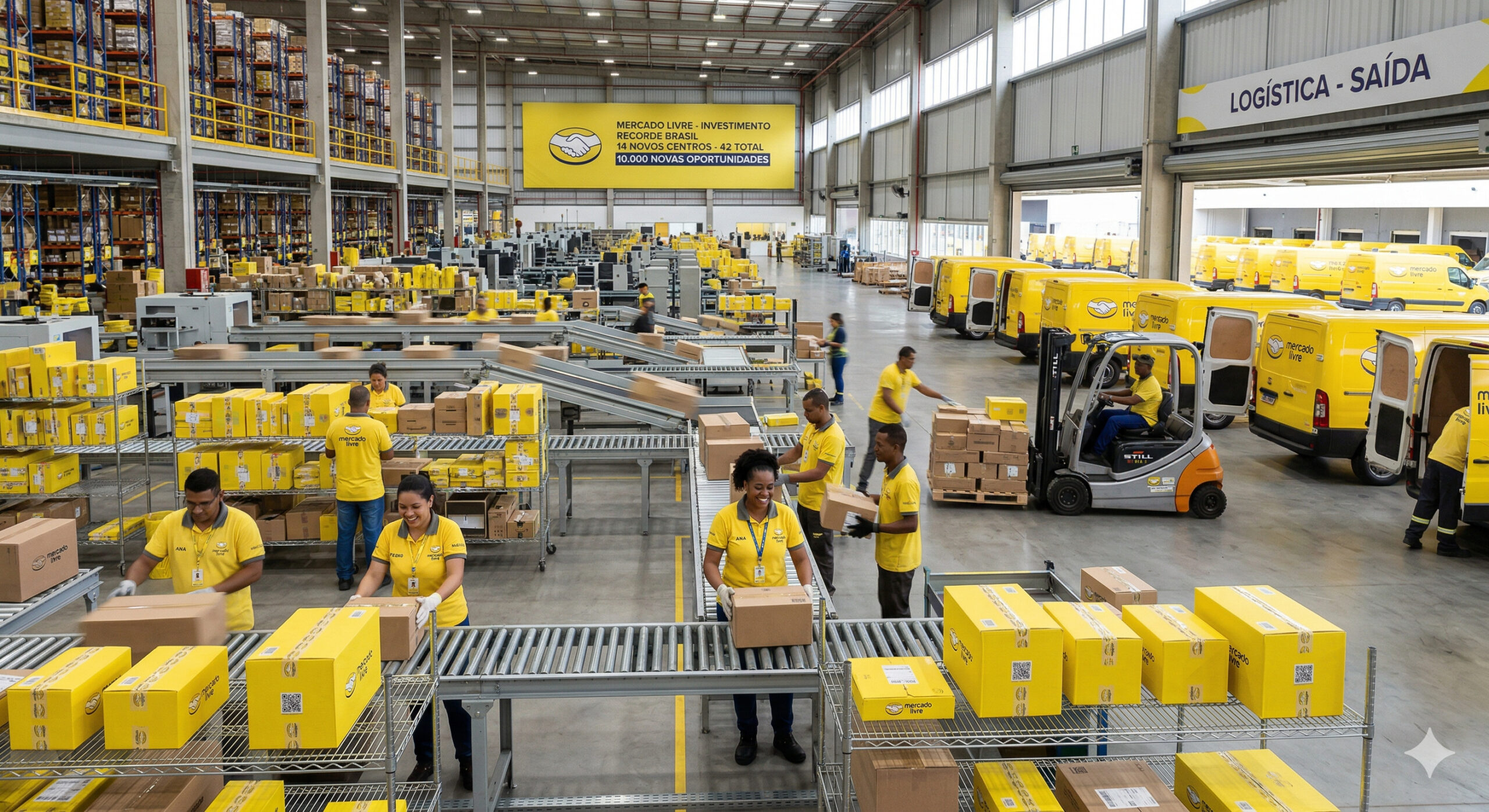
Mercado Livre “opens the vault” and announces a record investment of R$ 57 billion in Brazil in 2026, a value 50% higher than the previous year, with an expansion plan that includes 14 new logistics centers, totaling 42 units in the country and hiring an additional 10,000 employees.
-
How investment in technology can revolutionize the national economy and enhance industrial gains, according to a study that highlights the direct impact on productivity, innovation, and wealth retention within Brazil.


This change is not limited to soybeans. China has not purchased corn, wheat, or sorghum from the U.S. this year, and pork and cotton exports remain at reduced levels.
BRICS Takes On A Leading Role In Supplying Soybeans To China
China, the world’s largest buyer of soybeans, has ceased to receive any shipments from the United States, a move that directly impacts American farmers, who have historically depended on the Chinese market.
In addition to Brazil, other countries have also reinforced their exports.
Argentina — although outside of BRICS — has also gained ground in the Chinese market, increasing its sales.
Brazil, notably, has not only sent record volumes of the grain but has also begun to accept payment in yuan, strengthening the new financial and trade dynamic established by Beijing.
This change in direction creates a worrying scenario for U.S. producers.
Without space to sell their production, they are accumulating stocks and facing stable prices, with increasingly smaller profit margins.
Trump’s Reaction And New Tariff Threats
President Donald Trump reacted to the Chinese decision by promising strong measures.
He stated that he would meet with leader Xi Jinping in the coming weeks and assured that “everything will turn out very well.”
Trump also announced plans for actions to assist affected farmers and promised to “Make Soybeans And Other Crops Great Again“.
Meanwhile, China continues to expand the use of the yuan in agricultural transactions with allied countries.
Although Argentina has not yet officially accepted the Chinese currency, negotiations are underway, which could consolidate the trend of abandoning the dollar in this strategic market.
The tariff policies imposed by the United States seem to have the opposite effect of what was intended: instead of strengthening the domestic sector, they harm their own producers and boost the strengthening of Chinese trade alliances within BRICS.
Devastating Impact On American Exports
A study by the American Farm Bureau Federation, an organization that represents 6 million farmers in the United States, shows the dimension of the impact.
Between January and August 2025, China imported only 5.8 million tons of American soybeans — down from 26.5 million in the same period the previous year, a nearly 80% drop.
From June to August, the U.S. practically did not ship soybeans to the Chinese market, and Beijing did not acquire any new harvest for the next season.
In contrast, Brazil exported more than 77 million tons in the same timeframe.
Argentina also increased its sales by temporarily suspending the export tax, a measure reversed only when exports exceeded US$ 7 billion.
According to the federation, this retraction is not isolated. It is a result of a supplier diversification policy implemented by Beijing since 2018 when the trade war between the two countries began.
Since then, even with domestic demand at record levels, China has ceased to prioritize American producers.
Widespread Decline In Other Agricultural Exports
The impact of the trade reconfiguration goes beyond soybeans. U.S. exports of corn, wheat, and sorghum to China have reached zero in 2025.
Meanwhile, sales of pork and cotton continue at a reduced pace, reflecting the loss of American competitiveness in the Chinese market.
The U.S. Department of Agriculture projects that the total value of agricultural exports to the Asian country will drop to US$ 17 billion this year — 30% below the 2024 figure and more than 50% lower than the total for 2022.
For 2026, the estimate is even more dramatic: only US$ 9 billion, the lowest level since 2018.
Financial Aid And Internal Challenges
In the face of collapse, the Trump administration is preparing a new financial aid package for farmers, similar to what was granted in 2019 when more than US$ 22 billion was allocated to the sector during the first trade war with China. “We Will Use The Tariff Revenues To Support Our Farmers,” Trump said on his Truth Social platform.
In addition to the impact of tariffs, producers are facing a decline in commodity prices and an increase in logistics costs, exacerbated by the low water level of the Mississippi River, an important agricultural transport route.
The Department of Agriculture projects a 2.5% drop in agricultural income for the U.S. in 2025, the lowest value since 2007.
Brazil And Argentina Take On Global Leadership
For U.S. producers, Brazil has become the main threat in the competition for the Chinese market.
Since May, China has fully suspended soybean purchases from the United States, and in April imposed a 20% tariff on the product in retaliation for Trump’s trade policies.
The new American harvest began in September, and so far, there have been no sales to China — a scenario that has sparked protests in various agricultural regions of the country.
The American Farm Bureau Federation itself confirmed that, between June and August, the U.S. practically did not sell grains to the Chinese market, while Brazil recorded record export volumes.
“It’s a sign of how South America has come to dominate the market and replace American producers“, the organization declared. “China’s soybean imports are not decreasing; in fact, they have reached record levels. But most of this demand is now being met by competitors“, it added.
Sector Pressures For A Trade Agreement
In September, the American Soybean Association pressured the White House for an urgent agreement with China. The entity highlighted that Brazil and Argentina have established themselves as the main suppliers of the product to Asians.
“China is the largest buyer of soybeans in the world and our largest export market. The United States has made no sales of the new soybean harvest to China,” said the association. “This has allowed other exporters — Brazil and now Argentina — to capture this market, directly harming U.S. farmers.“
A month earlier, the association had already sent a letter warning the government that the agricultural sector was “on the brink of a commercial and financial precipice” and would not be able to survive long-term without the resumption of sales to its main client.
A New Order In The Global Soybean Market
The current trade war between the United States and China has reconfigured the global soybean market and placed BRICS countries — especially Brazil — in the spotlight.
With record exports, transactions in local currencies, and strengthened trade alliances, Brazil is consolidating itself as the main supplier of the grain to the Asian giant.
Meanwhile, American producers are facing rising stocks, declining revenues, and a dangerous dependence on emergency government measures.
The competition for soybeans reveals a deeper transformation: the decline of American hegemony in agricultural exports and the rise of the South-South axis as a protagonist in global trade.








-

-

-

-

-

-

76 pessoas reagiram a isso.