Portuguese
  Spanish




New Generation of PFAS-Free Mineral Cookware Promises More Safety, Durability, and Sustainability, Replacing Teflon in Modern Kitchens.
For decades, Teflon has been synonymous with convenience in the kitchen. Present in millions of households, its nonstick shine revolutionized food preparation and made cleaning easier. But what was once a symbol of modernity is now beginning to give way to a new generation of cookware that promises something even more impressive: durability, safety, and sustainability. These are cookware made with PFAS-Free Mineral Coatings, chemical compounds associated with health and environmental risks. This cookware is said to last up to three times longer than conventional versions, withstand higher temperatures, and eliminate the use of potentially toxic substances.
The End of the Teflon Era?
The movement began quietly in Europe and Asia, but gained momentum after 2018, when countries like the United States and members of the European Union began to restrict the use of PFAS — the so-called “forever chemicals.”


These substances were the basis of Teflon and other popular nonstick coatings. The problem is that they do not degrade easily, accumulating in the environment and, according to the Environmental Protection Agency (EPA), potentially causing hormonal and immune disturbances.
-
Antarctica’s Blood Falls: Scientists Uncover a 1.5-Million-Year-Old Isolated Ecosystem, Shedding Light on Potential Ice Changes

-
Mati Carbon Wins $50 Million Prize for Boosting Harvests and Capturing Carbon by Distributing Free Basalt Dust to Small Farmers in India and Africa

-
Human Waste in Kenya is Solar-Treated and Turned into Fuel Briquettes, Tackling Open Sewage, Charcoal Use, and Deforestation

-
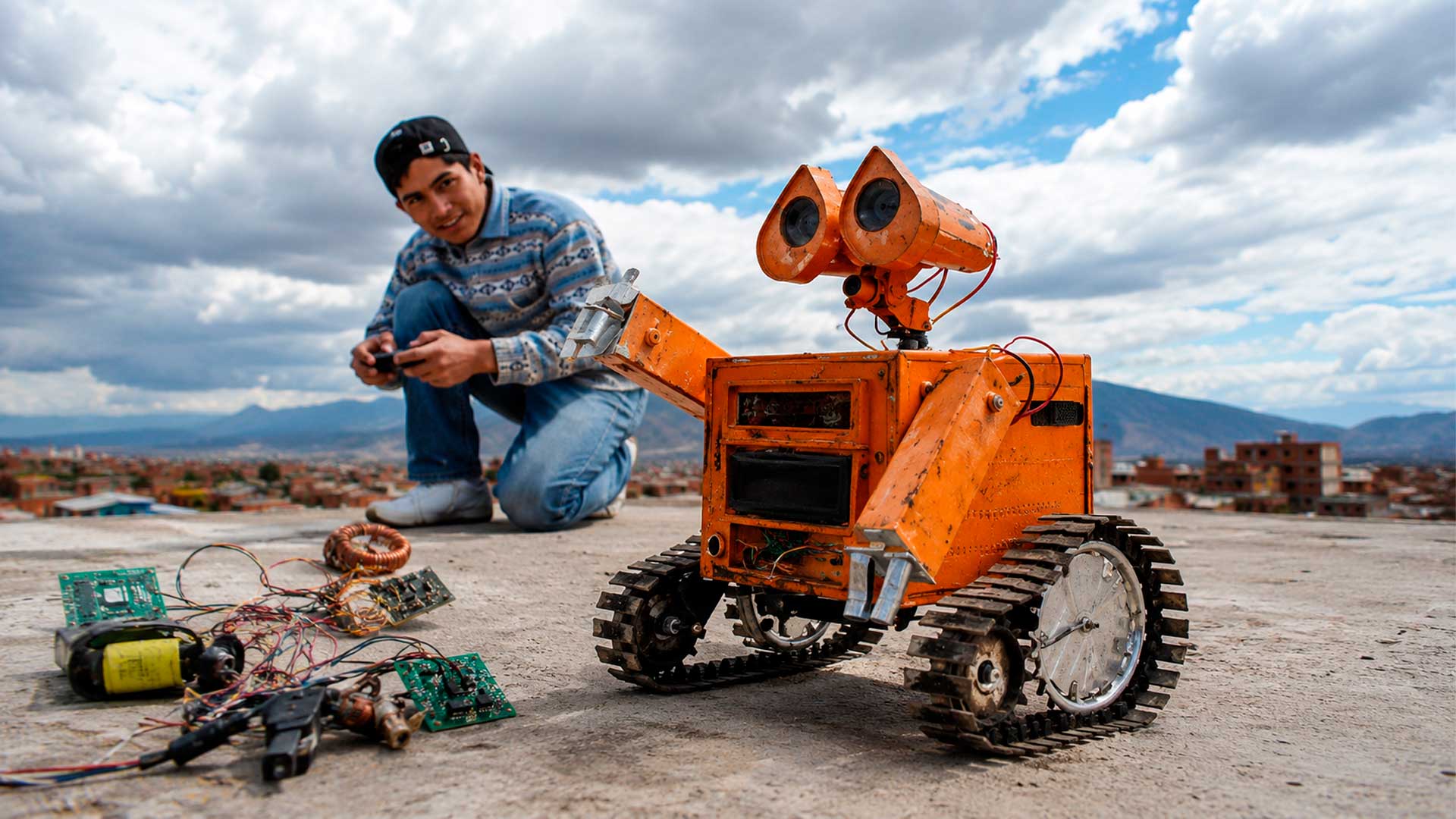
Bolivian Teen Builds Functional Robots from Scrap Materials in High-Altitude Rural Town



From there, a new technological race began. Researchers and manufacturers joined forces to create coatings that maintained Teflon’s efficiency but without the risks.
And it was then that mineral cookware emerged, made with ceramic compounds and natural oxides of silicon, zirconium, and titanium — highly resistant, stable materials free of fluorinated compounds.
The Science Behind the New Mineral Coating
The great distinction of this cookware lies in the material’s structure.
While Teflon is applied as a synthetic polymer over aluminum, the new coating is formed by a dense vitreous layer of minerals, obtained through sintering techniques and nanoengineering.
This surface is so smooth and resistant that it eliminates the excessive use of oil, prevents the accumulation of residues, and does not react with acidic foods, such as tomato sauces and citrus juices.

Laboratory tests conducted by the Fraunhofer Institute in Germany indicate that these coatings withstand temperatures exceeding 450 °C, while Teflon begins to degrade at around 260 °C.
This means less risk of releasing toxic gases and considerably greater durability, even with intense use.
Furthermore, mechanical resistance is impressive. In abrasion tests, the mineral coatings were able to withstand more than 15,000 friction cycles, maintaining the integrity of the nonstick layer. In practice, this represents a lifespan of over five years — about three times longer than regular cookware.
More Safety and Less Environmental Impact
The environmental impact of abandoning Teflon is significant. According to market estimates, more than 1.2 billion pots are discarded annually worldwide, many still containing residues of aluminum and fluorinated polymers.
The new mineral cookware, in addition to being more durable, can be almost entirely recycled and do not release harmful compounds during disposal.
For consumers, the benefit is twofold: cooking in a healthier way and contributing to sustainability.
The trend is already established in the United States and Europe, where chains like Walmart and Carrefour have begun to highlight “PFAS free” products — that is, completely free of these compounds.
The New Generation of Smart Cookware
Innovation has also arrived in design. Some high-end models incorporate heat sensors and temperature indicators, allowing the cook to know the exact ideal heating point. Others use multilayer bases with titanium and copper to better distribute heat, avoiding hot spots and saving energy.
Traditional manufacturers like Zwilling, Tramontina, and Le Creuset have already launched lines with hybrid mineral coatings, combining durability, lightweight design, and modern aesthetics.
There are also Asian startups developing self-cleaning and antibacterial coatings with nanotechnology, which could completely eliminate the use of harsh detergents in the kitchen.
What Experts Are Saying
Researchers from universities like Tokyo University and USP have been monitoring advances in this technology. According to materials engineer Kenji Matsuda, “the mineral coating represents an advancement comparable to Teflon in the 1960s, but with the added benefit of being safe and sustainable.”
He explains that modern ceramic surfaces are highly stable, do not release volatile compounds, and offer natural nonstick properties without relying on synthetic polymers.
Experts also point to the economic aspect: mineral cookware has a higher initial cost, but compensates through durability. While a Teflon pan needs to be replaced on average every two years, mineral versions can last from five to seven, reducing waste and long-term costs.
The Future of a Teflon-Free Kitchen
Despite still dominating 70% of the global market, Teflon is living its last years as a hegemonic material. Reports from Research and Markets (2024) indicate that PFAS-free alternatives are growing at a rate of 15% per year, driven by environmental awareness and pressure from regulatory bodies.
Some European countries are already preparing laws to completely ban the use of PFAS by 2030, which should solidify the dominance of mineral and next-generation ceramic cookware.
In Brazil, the transition is also underway. Tramontina, for example, recently launched lines certified by Inmetro, featuring mineral coatings that promise safety and durability, keeping pace with the international movement.
More than a culinary innovation, the advancement of mineral cookware symbolizes a global change in mindset. They combine the practicality that conquered the 20th century with the environmental and technological consciousness of the 21st century.
We are entering a new era where cooking will be synonymous with sustainability, science, and food safety.
If Teflon marked the past with its shine, the future seems reserved for an even more impressive surface — solid, natural, and free of risks.