





 Portuguese
  English
  Spanish
  4 min of reading
  1 comment


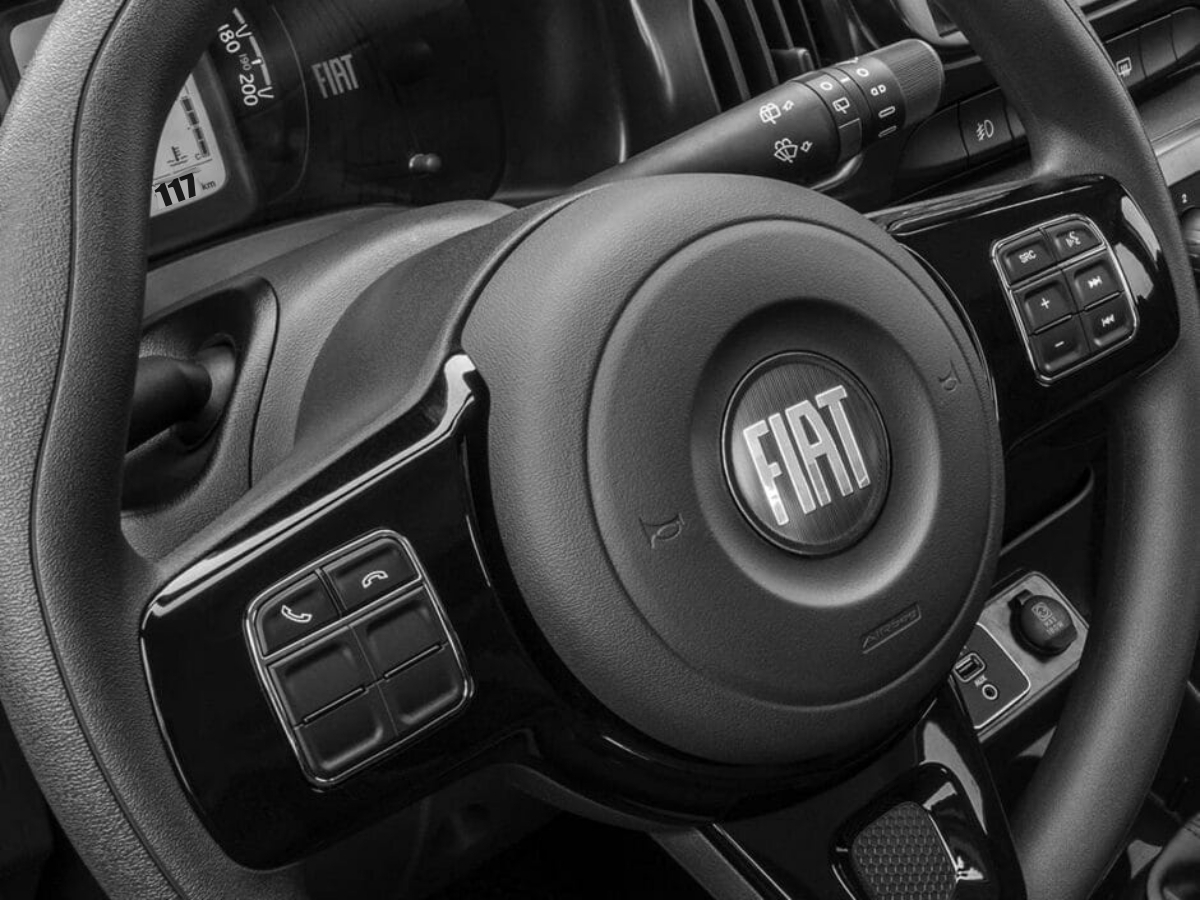

Fiat’s Bold Strategy to Rescue the Popular Car Sparks Controversy: Limiting Urban Vehicle Speed to 117 km/h. Understand How This Change Could Ensure a Truly Affordable Car.
You know that saying “less is more”? Well, Fiat seems to be taking that very seriously to try to save consumers’ wallets. Imagine buying a brand-new car that comes factory-“limited” to not exceed a certain speed. Seems crazy or a step back? For the Italian automaker, this could be the only genius solution to keep the dream of a cheap car alive in the era of electric vehicles.
The idea is simple, yet controversial: limit the top speed to cut enormous costs on technologies that, let’s be honest, you probably don’t use in the city’s heavy traffic.
The Bold Plan: Slow and Steady Wins the… Low Price?
The bombshell was dropped by none other than Olivier François, the global CEO of the brand. In an honest chat with the British press, he laid all the cards on the table: urban vehicles are getting too expensive, and the blame lies largely with the “out-of-this-world” safety requirements imposed by Europe.
-
Less than a Tera TSI, up to 710 km of range and charging in 9 minutes: the new BYD Song Ultra expands the Chinese brand’s bet on increasingly faster, more technological, and competitively priced electric SUVs.

-
With a 1.0 engine producing 75 hp and costing less than R$ 70,000, Fiat’s car returns to the podium as the cheapest in the country; a temporary promotion for the 2026 Like version reduces the price of the Fiat Mobi.
-
With a mild hybrid system of 48 V, 176 hp and a price of R$ 175,990 in the Sahara version, the new Jeep Renegade changes mostly on the inside, improves slightly in fuel consumption, and remains almost the same car.
-
With a 293.5 cm³ engine and a range of up to 400 km with a 14.1-liter tank, the Honda CB 300F Twister 2026 has up to 24.7 hp, an initial price of R$ 25,150, and already exceeds R$ 29,000 in the Fipe Table.

The executive suggested that limiting the maximum speed of urban electric models, such as the iconic Fiat 500 and the Panda, to around 117 km/h could be the key to eliminating a series of costly equipment.
The reasoning is as follows: if the car doesn’t run like a Formula 1 racer, it wouldn’t need, in theory, space-age ceramic brakes or sensors capable of reading a license plate miles away.
François went straight to the heart of the matter by questioning the need to “install all this super expensive hardware: sensors, cameras, traffic sign recognition” in cars made for going to the bakery or work. According to him, all this gear “is a bit inappropriate, a bit absurd” for real urban use.
Why Your “Fiat Popular Car” Became a Luxury Item?
Have you noticed that the concept of Fiat’s popular car (and others) has changed drastically? What was once a no-frills Uno Mille is now a computer on wheels. And someone has to foot the bill for this upgrade.
In Europe, the new legislation (known as GSR2) requires that every new car have a hodgepodge of safety systems, the so-called ADAS (advanced driver-assistance systems).
The problem is that, for a car that drives at 150 km/h on the German Autobahn, this makes sense. But for a compact electric car that barely exceeds 50 km/h in the center of Rome or Paris?
Olivier François argues that these requirements have raised the average price of an urban car by as much as 60% in recent years.
It’s a cost that undermines the feasibility of a cheap car. By capping the maximum speed at a lower but still sufficient level for any legal road, Fiat could advocate with lawmakers to create a more lenient and cheaper homologation category.
Less Technology, More Accessibility
The proposal is not to turn cars into carriages, but rather to tailor the tool to its use. Today, electric versions of urban cars already suffer from range issues if you floor it. Limiting the speed would help save battery and, consequently, your money.
If this trend catches on, we could see the emergence of a new class of urban vehicles: safe enough for the city, but without the financial burden of technologies designed for supercars. It’s an attempt to bring rationality back to the automotive market, which sometimes seems to forget that most people just want to get from point A to point B without going broke in the process.
And in Brazil, Does This Work?
For now, take a deep breath: the discussion is focused on the European market, where the rules are different and the environmental pressure is extremely tight. But, as we know, Brazil often follows global trends with some delay. With car prices sky-high here, wouldn’t a “light” and limited version of a Fiat popular car be successful if it cost significantly less?
François’s comments could have been a “spoiler” for a future strategy or just a sincere outburst from someone who needs to sell cars and sees prices rising endlessly. In any case, it raised the question: are we willing to sacrifice final performance in exchange for a smaller bill at the end of the month?
And you, what do you think of this idea? Would you buy a car with a limited speed if it cost 20% or 30% less? Leave your opinion in the comments below and share this article with that friend who keeps complaining about car prices!








Bem, como a indústria brasileira e o governo sempre metem a mão no nosso bolso quando o assunto é automóveis, acho que nem chegaria a a 20% o desconto. François cita 60% de acréscimo no custo, onde você chegou só a 20/30% no desconto? Ah, certo! Aqui é Brasil.