





 Portuguese
  English
  Spanish
  4 min of reading
  4 comments


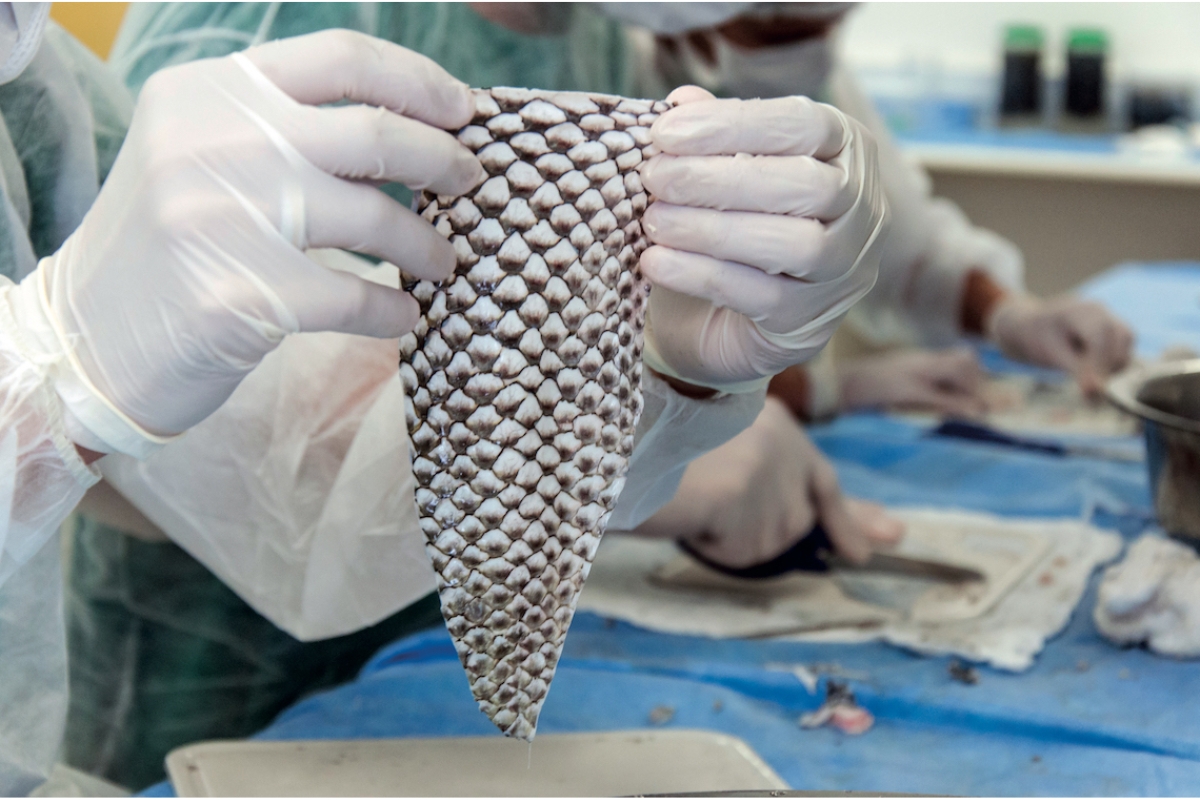


Innovative Treatment Uses Tilapia Skin as Biological Dressing for Burns, Improves Injury Protection, Reduces Frequent Changes, and May Decrease Pain in Hospitals
The skin of a common fish in Brazil has become one of the most talked-about solutions in burn medicine. The method uses tilapia skin as a biological dressing, applied directly to the injury after technical preparation.
The practical result draws attention for reducing pain, decreasing the need for frequent changes, and creating a covering that functions as temporary skin.
The report was published by Federal University of Ceará, a Brazilian federal university.
-
Surrounded by the sea, the airport will have a system to prevent airplanes from falling into the water; technology will be installed in Ilhéus (BA), with an investment of R$ 70 million.

-
With a cost per shot close to zero, the DragonFire laser could change naval warfare in 2027 and provide British ships with nearly unlimited defense against drones.

-
A British startup creates tires that generate electricity in electric vehicles when passing over potholes, speed bumps, and cracks.

-
Scientists have created robots made with living cells that have their own nervous system, swim on their own, explore the environment, and self-organize without any genetic engineering, and now they want to do the same with human cells.
What Makes Tilapia Skin Useful as Temporary Skin in Burns
Tilapia skin acts as a biological covering over the wound. It functions as a protective barrier and helps keep the area stable during recovery.
The material stands out for its adhesion to the injury and its durability. This reduces the handling of the site and may improve patient comfort.
Another key point is collagen, an important component for skin regeneration. The presence of this element reinforces the use of the biomaterial in burns.

How the Preparation Includes Cleaning, Sterilization, and Direct Application to the Injury
Before reaching the patient, the skin undergoes cleaning, sterilization, and preparation for clinical use. This care aims to ensure suitable material for contact with the wound.
After preparation, the skin is applied directly to the burn. The covering acts as temporary skin, helping to protect the area until the situation evolves.
This type of solution also reduces the need to replace dressings so frequently, which can alleviate the hospital routine.
Why the Technique Can Reduce Pain and Decrease Frequent Changes
Fewer dressing changes mean less repeated contact with the wound. This can contribute to reducing pain and discomfort for the patient throughout treatment.
The good adhesion of tilapia skin helps keep the covering in place. As a result, daily care can become simpler in many clinical scenarios.
The impact is felt both in the patient experience and in the team dynamics. Fewer interventions can mean better organization and less wear and tear.
What the Federal University of Ceará Details About the Development in Ceará
The Federal University of Ceará, a Brazilian federal university, describes the technique as an innovation created by Ceará’s doctors and researchers. The development occurred in Ceará and gained attention abroad.
The initiative advanced with application in hundreds of patients, focusing on an accessible solution aligned with the local reality. The combination of research and clinical practice strengthened the project.
The use of an abundant resource like tilapia also reinforces the idea of applied innovation. The material gains value by moving from the food context to the hospital setting.
How the NPDM of UFC Treats Tilapia Skin as Research Technology
NPDM, the research center at UFC, presents tilapia skin as part of a development line focused on biomaterials. The focus involves standardizing preparation and advancing technical aspects.
The work connects research, validation, and the possibility of expanding use. The proposal is to maintain a viable path for hospitals that need solutions with good efficacy and cost ratios.
The topic also opens space for technological evolution, with methods of preservation and preparation that can facilitate logistics and usage in different contexts.
The report was published by NPDM, the research center at UFC.
Why the Innovation Can Reduce Costs and Increase Access to Treatment
Burn treatment can require intensive resources, especially when there is a need for constant dressing changes. A more stable covering can reduce part of this consumption.
Tilapia skin stands out as a material linked to an abundant fish. This reinforces the potential for accessibility, potentially impacting the cost of hospitalization.
The main point is the sum of factors: less pain, fewer changes, efficient covering, and the prospect of more practical care for healthcare services.
The Brazilian technique demonstrates how science and local reality can go hand in hand. The tilapia skin, prepared and applied in a controlled manner, becomes an alternative with a direct impact on burn treatment.
International recognition arises because the solution combines simplicity, research, and intelligent use of a common resource, with clear benefits for patients and hospitals.









Não é possível estudar para tratamento em feridas de diabéticos ?????
Acredito que esta técnica já é usada há tempos. Lembro que um conhecido meu comentou sobre a sua esposa ter sofrido um acidente que resultou em queimaduras, não me lembro a gravidade, mas ela estava fazendo tratamento com a pele de tilápia
Não sei qual era o peixe, mas em Greys Anotomy eles já usavam há tempos.
Foi exatamente a tilápia. Também apareceu no The God Doctor, ambos com consentimento da UFC se não me engano