





 Portuguese
  English
  Spanish
  5 min of reading
  1 comment


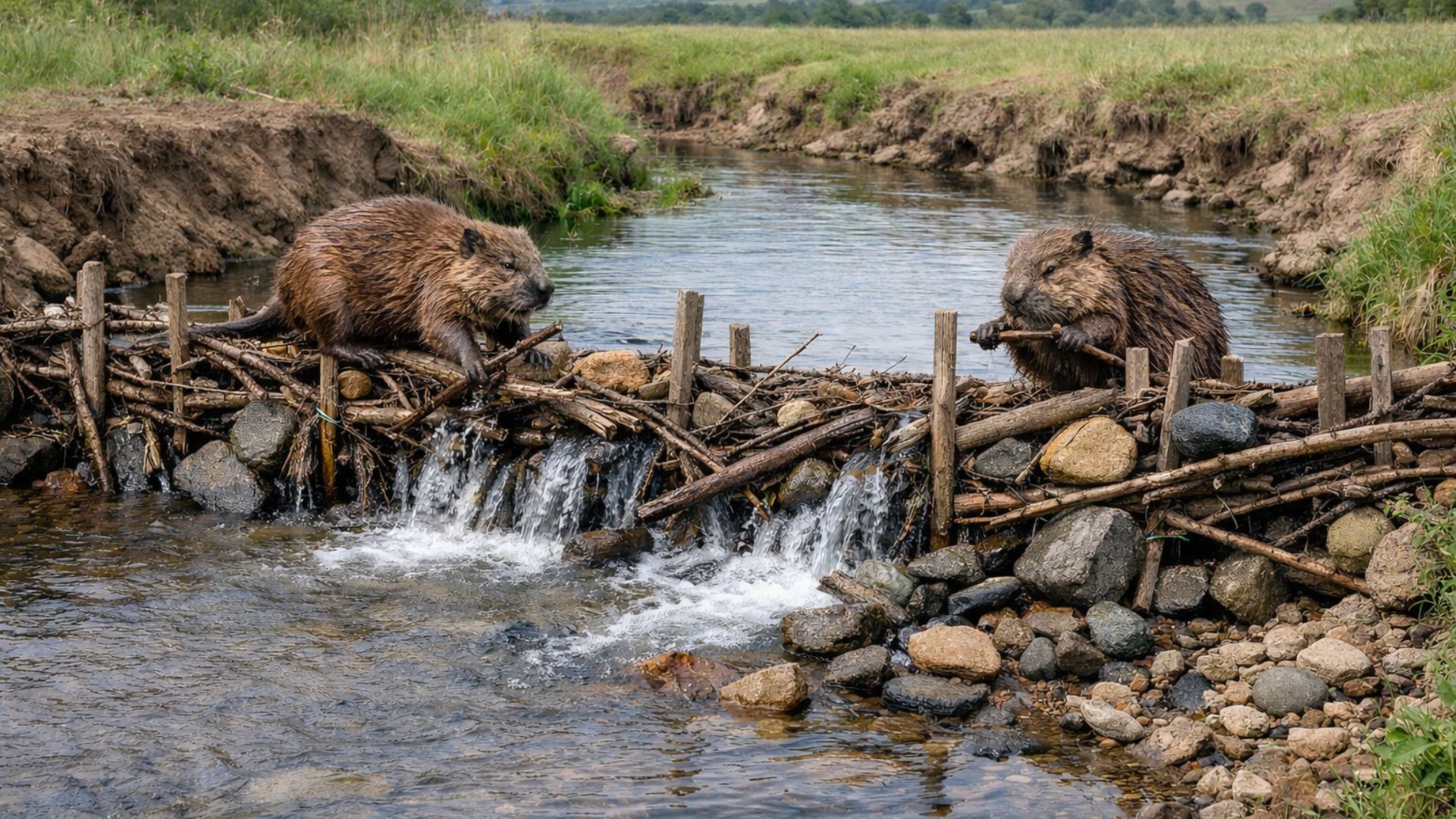


Cost-Effective Solution Advances in the Field by Mimicking Natural Dams and Slowing Erosion in Streams with Materials Available on the Farm.
Cattle ranchers and rural managers have turned to rustic structures made of wood, branches, and stones to slow erosion in streams and prevent water from “running away” too quickly from the landscape.
Known as beaver-inspired dams, these low barriers aim to slow down the flow, retain sediments, and keep the soil moist around the watercourse, directly affecting degraded banks and pastures more vulnerable to drought.
The proposal is gaining traction precisely because it often eliminates the need for expensive heavy engineering works, replacing machinery and external supplies with materials available on the property itself, as described by restoration initiatives associated with the concept of beaver dam analogs or BDAs.
-
Rain gains strength in April, potentially exceeding 150 mm, placing the North, Northeast, and the coasts of the South and Southeast at the center of the heaviest forecast of the week.

-
A fish that survives out of water, crawls on land until it finds another river, and whose female lays 80,000 eggs at once is infesting rivers and lakes in Brazil, and no one can stop this invasion.
-
WEG took its technology to Spain to create a solar irrigation system that operates independently without needing an electrical grid, and now farmers control everything remotely via their mobile phones.

-
The US faces a meat crisis with fires, pests, and strikes, consumption rises and supply falls to the lowest level since 1952, creating a billion-dollar opportunity for Brazilian exports to grow in 2026.

How the “Beaver” Dam Works in the Stream
Unlike a conventional dam, the intention is not to accumulate large volumes or stop the stream.
The method works on the idea of creating obstacles that reduce the energy of the water during rains and peak flows, decreasing the force capable of deepening the riverbed and “eating” away at the banks.


With less speed, the current loses its pulling power and tends to deposit some of the material it carries, forming small shallower areas upstream.
In this process, the channel can gain stability and gradually recover conditions that favor infiltration and the retention of moisture in the surroundings, as indicated by technical materials on restoration of procedural base and connectivity with the floodplain.
What Are BDAs and Why Do They Mimic Beavers
The BDAs are described by agencies and restoration projects as simple and “low-tech” structures built with stakes, branches, and rocks to mimic part of the effect of dams constructed by beavers.
The logic is to increase the “roughness” of the channel, that is, to create points of resistance that make the water less fast and less concentrated in a single deep channel.
Instead of channeling and accelerating the flow, the intervention seeks the opposite path: to allow water to spread more easily in shallow sections, raise the local level, and find lateral routes when the topography allows.
In places where the stream has turned into a kind of ditch over decades, with a channel deeper and narrower than the natural standard, the water begins to flow confined and faster.
This “confinement” intensifies erosion, hinders the arrival of water to the lateral areas, and contributes to draining moisture from the valley.

By installing several small barriers along a stretch, the strategy aims to distribute the slowing effect, creating successive zones of sediment deposition and shallow pools that help alleviate erosive dynamics.
Why Cattle Ranchers Exchange Heavy Works for Local Materials
The interest of cattle ranchers often arises when cost, logistics, and maintenance come into play.
Traditional margin containment works, channel correction, and slope stabilization may require excavators, stone transport, permits, and repeated interventions after floods.
In extensive properties or remote areas, these factors increase the cost and extend the timeline.
On the other hand, the beaver-inspired alternative tends to be implemented with smaller teams and materials obtained right there, reducing dependence on external supplies.
In an article published by the World Wildlife Fund in 2024, for example, the organization described actions in Montana, USA, where rural producers began to build artificial dams with willow branches and posts to restore degraded sections, improve pasture conditions, and create habitats for wildlife.
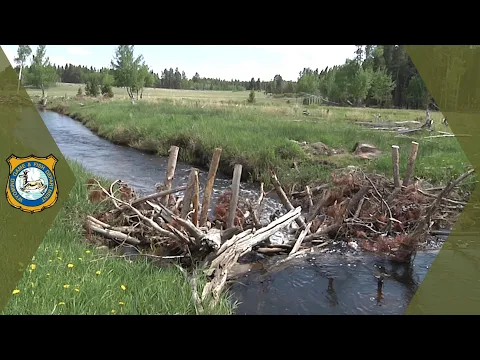
In parallel, conservation and rural extension agencies treat the approach as a restoration tool in places where the goal is to recover processes of the fluvial system, rather than “hardening” the stream with large structures.
Where the Technique Tends to Have the Best Results
The choice of installation point appears as a decisive factor in the guides and field reports.
In general, BDAs are associated with sections showing signs of bank erosion linked to higher flow velocity and with potential for sediment retention.
Instead of betting on a single robust barrier, projects often distribute several smaller structures along a relatively homogeneous segment of the stream, adding effects and reducing the risk of concentrating damage should one of them be partially removed by a flood.
Another recurring aspect is integration with surrounding management.
Protecting the riparian zone against intense trampling, restoring native vegetation, and measures to prevent direct damage to the structures are often treated as part of the same package.
This is not a “miracle of branches and stones”: the technique appears, in the restoration literature, as an intervention that works best when the system has a chance to respond with soil stabilization and plant recolonization.
What Changes in Erosion, Riverbed, and Soil Moisture
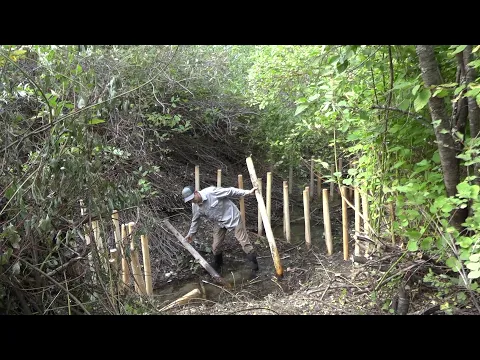
The sought effects are practical and visible.
With the water flowing more slowly, there is a tendency for less erosion of the banks, which reduces soil loss and may decrease sedimentation in downstream sections.
The deposition of sediments favors the formation of more stable surfaces, which can facilitate the return of riparian vegetation.
This vegetation plays an important role because it reinforces the banks with roots, creates shade in some areas, and contributes to a less arid microclimate along the stream corridor.
In the field, the change that most interests the producer is usually the combination of two responses: more moisture retained for longer and less progression of erosive “scars” that hinder management and animal movement.
By retaining water for longer in the immediate environment, the area close to the watercourse can better support the vigor of the grass in periods of lower rainfall, although technical materials emphasize that the result depends on design, location, and system conditions.
When Restoration Opens Space for the Action of the Beaver
Another line of use for BDAs is to create more favorable conditions for the presence of the beaver itself where the species exists and can occupy the habitat.
The National Park Service of the USA, for example, describes these structures as attempts to imitate natural dams and emphasizes that beavers, when present, are capable of maintaining and enhancing the dams continuously, something a human structure cannot do alone.
By favoring shallow water surfaces and swampy areas, the intervention can increase shelter and food for different species, a point frequently highlighted in conservation materials.
Still, the same documents often reinforce that the technique does not replace all types of engineering nor dispenses with planning: the proposal is to be a lower-cost tool for specific stretches, with goals focused on reducing flow energy and recovering ecological processes of the system.









It essential for both our society and the planet that we incorporate more elements from Nature if we are to survive. The mindset is that we are a part of Nature, not an advisory.