





 Portuguese
  English
  Spanish
 5 min of reading
  3 comments





Situation on Goian Highway Sparks Debate Over Toll Charges on Unpaved Section After Truck Driver’s Video Goes Viral, Exposing Drivers Paying to Travel on Dirt Road at the Border Between Goiás and Mato Grosso.
A video circulating on social media has reignited the debate over toll charges on unpaved sections of the road.
On GO-454, which connects Mozarlândia (GO) to Cocalinho (MT), drivers report paying tolls to travel on dirt roads.
The toll plaza is installed on the bridge over the Araguaia River and charges R$ 10 for cars, R$ 5 for motorcycles, and R$ 10 per axle for trucks.
-
The Federal Revenue Service now automatically cross-references everything you declare with data from banks, credit cards, brokerage firms, and insurance companies, and any discrepancy between your income and your expenses triggers an alert in seconds.

-
Amid global tensions, Brazil blocks the United States’ proposal at the WTO and paves the way for a trade crisis and possible retaliations.

-
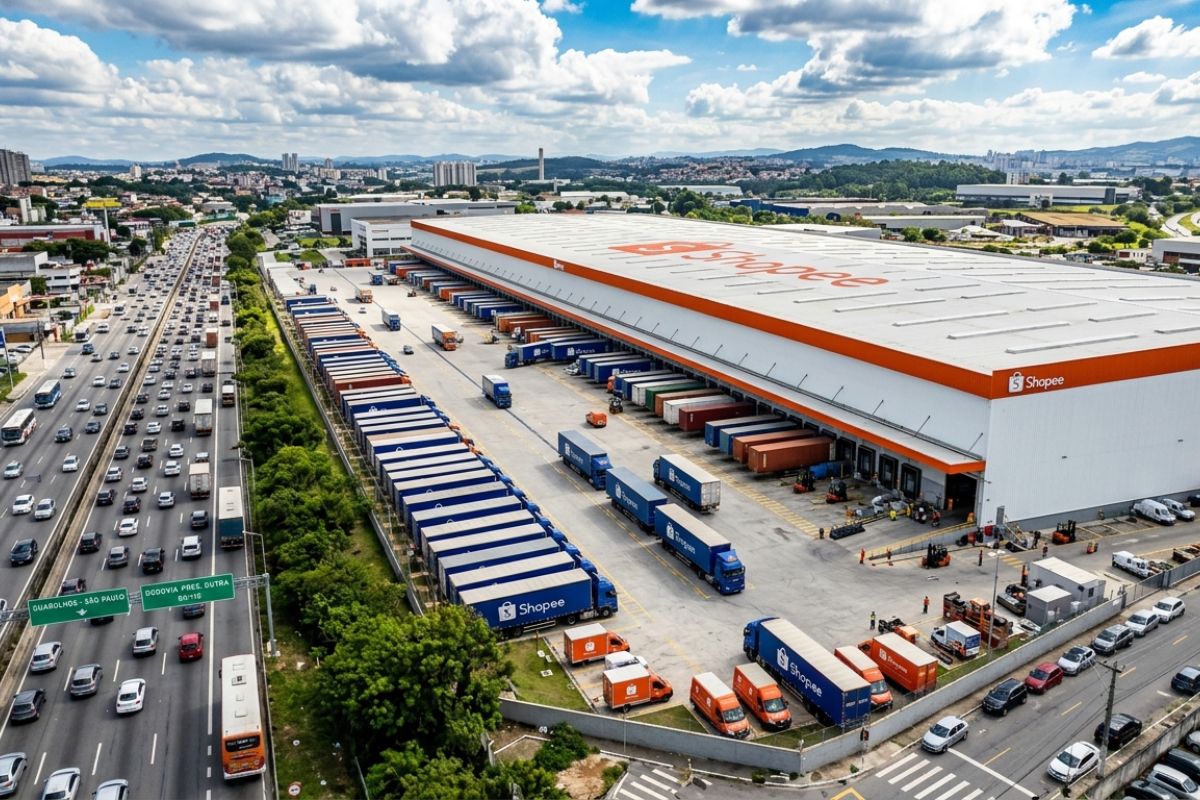
Shopee opens the largest logistics warehouse in Brazil in Guarulhos: 220,000 m² on Dutra, contract signed before construction, pays R$ 45/m² and accelerates deliveries at scale, putting pressure on Mercado Livre and Amazon.
-
After mistakenly transferring R$ 50,000 via Pix, a man will receive the amount back along with R$ 10,000 for moral damages from the recipient.


The situation has come to be referred to by users as the “most unfair toll in Brazil”, a phrase that gained traction on social media.
Location and Toll Values
The toll point is located at the border between Goiás and Mato Grosso, at the structure that replaced the old ferry crossing.
Car drivers pay R$ 10; motorcyclists pay R$ 5.
For freight transport, the fee is calculated per axle, which raises the cost for larger vehicles.
In a viral video, a truck driver states: “I’m going to pay R$ 70”, while showing a section of packed dirt with holes and mud.
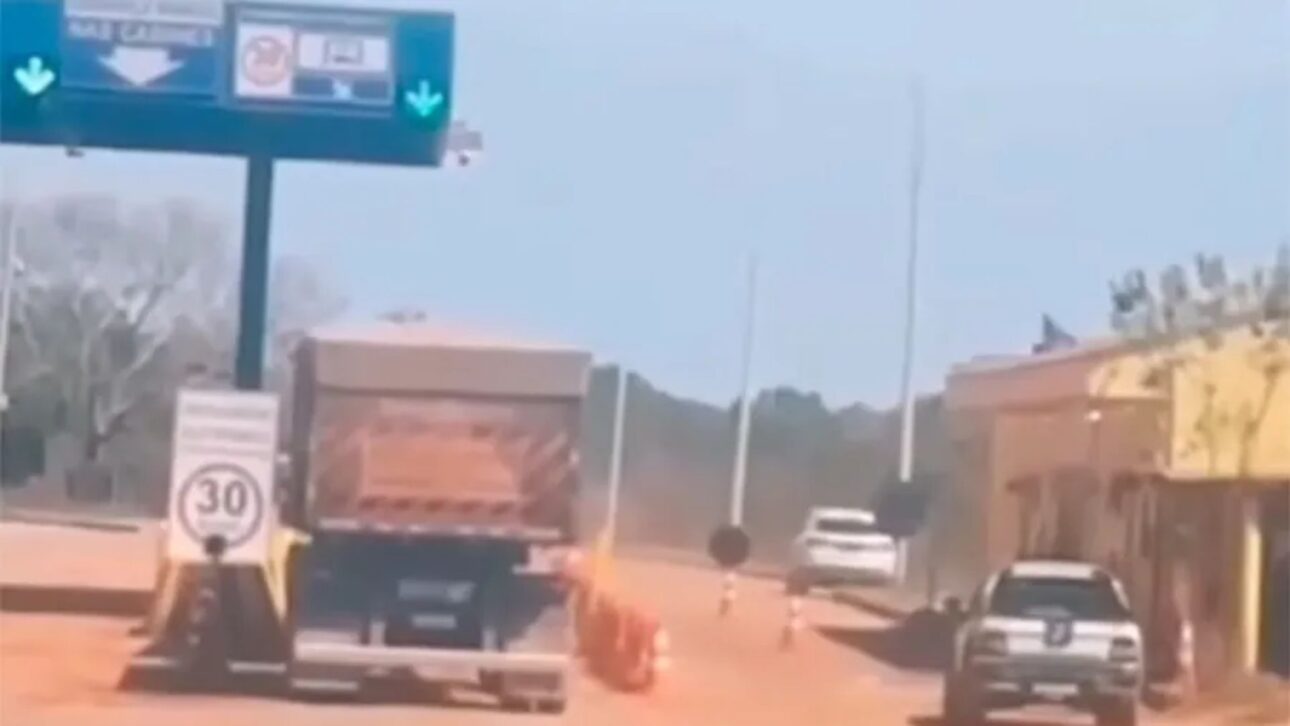
According to state legislation, Goiás’s road network is generally public and free of charge, but the toll on the bridge was authorized in the concession agreement that allowed for the construction of the structure.
Users claim that, outside the bridge, part of the route remains unpaved, which they say contradicts the expectation of maintenance and conservation of the road.
What the Goiás Government Says
Goinfra (Goiás Infrastructure and Transport Agency) reported that the toll plaza is linked to the bridge that connects Goiás to Mato Grosso and was authorized in 2004 during the administration of Marconi Perillo (PSDB).
According to the agency, Goiás state highways are free to use, except in cases of works carried out through concession or special permission, as in the case of the bridge.
The toll began in 2017, after the completion of the construction by the concessionaire.
Since then, drivers using the route have reported that access to the bridge remains unpaved in part of the stretch, which causes difficulties, especially during rainy periods.
How the Toll Collection Started
The bridge over the Araguaia River was built with private sector resources, in partnership with the state government.
In a statement sent to the Semana7 portal, the advisory of former governor Marconi Perillo forwarded a statement signed by the former president of Agetop, Jayme Rincon, stating that the work “was built by the private initiative, under an agreement with the state government, with authorization to charge a usage fee for light and heavy vehicles.”
Goinfra, on the other hand, states that during the construction of the bridge there was non-compliance with environmental conditions, resulting in infraction notices and fines imposed by Ibama.
This incident raised questions about the execution of the work and environmental oversight at the time.
Announced Paving and Section Still Unpaved
The state government presented, starting in 2019, a project for paving 53 kilometers of GO-454.
The project was designed to improve access to the bridge and facilitate the transport of agricultural products.
According to Goinfra, there are still 12 kilometers unpaved — precisely the dirt section most affected during rainy periods.
Residents and truck drivers state that during floods of the Araguaia, traffic becomes difficult, with mud holes and long periods of interruption.
In videos published on social media, it is possible to see trucks stuck and passenger vehicles struggling to move.
Technical Obstacles and Environmental Barriers
In a statement, Goinfra reported that the section has not been paved due to technical obstacles to paving.
During part of the year, the flooding of the Araguaia River raises the water level and can close the highway, necessitating specific engineering solutions.
According to the agency, the project needs to consider drainage and erosion protection measures to avoid future structural damage.
The agency also emphasized that the work depends on the regularization of environmental issues inherited from previous administrations.
These adjustments include new technical studies and authorizations from federal agencies, which, according to the institution, prolong the timeline.
Forecast for New Engineering Projects
According to Goinfra, a new engineering project is being developed to adapt the highway to the flood conditions of the Araguaia and ensure the durability of the paving.
The expectation is to finalize the technical documentation for contracting the work in the first half of 2026.
There is still no set date for the start of execution or delivery of the remaining section.
While the project does not move forward, the toll collection remains in effect on the bridge, which continues to be the only official crossing point between the two states in that region.
Debate About Charging and User Perception
Infrastructure and mobility specialists point out that the situation exposes a discrepancy between the service offered and the fee charged.
Although charging on specific bridges or crossings is legally permitted when stipulated in a contract, the lack of paving on access roads generates, according to analysts, a negative perception among users.
For drivers who rely on GO-454, the toll amount represents an additional cost on a still precarious road.
Goinfra argues that the fee is relative to the use of the bridge, built through concession, and not to the highway as a whole.
According to the agency, the crossing replaced the ferry and reduced travel time between the states, bringing logistical benefits to the region.
Drivers, however, report that the lack of paving on access roads limits earnings and continues to affect the transport of goods and passengers.
Current Situation of Drivers and Impact on the Region
Currently, those needing to cross the bridge remain subject to the toll and the varying conditions of the road.
In dry periods, the problem is excess dust; during the rains, mud hinders passage.
Truck drivers affirm that vehicle maintenance costs increase, and local merchants report impacts on supply.
According to specialists consulted by local media, the completion of paving is essential for the stretch to fulfill its logistical role and to reduce the perception of imbalance between paying the toll and the quality of the road.
With the technical documentation expected for 2026, there is still no definition on when the dirt section of GO-454 will be paved. Until then, the toll on the bridge is expected to continue.






Declaração das autoridades é só para reportagem,e ganho na mídia, nada vão fazer,a não ser enfiar essa dinheirão no buraco deles, essas obras nunca jamais serão concluídas,. porquê? Em nosso país é regido por TIRANOS.
PSDB LIXO DE PARTIDO. VERGONHA.
EM SAO PAULO Guarda usam binóculo para ver se o motorista de seta.
Agora o **** etílico no motorista da porch.nao foi feito e ainda liberaram o coitado para o hospital. Parabéns PM de ****.
BRASIL UM PAÍS DE POUCOS. EU APOSTO QUE SE FOSSSE UM POLÍTICO NÃO PAGARIA ALEANDO CARRO OFICIAL.
Vou dar minha opinião: Este país de poucos tem que alugado,talvez não viria esta vergonha. Espero que está foto seja vista pelo mundo. E digo a verdade PSDB é melhor alugar este país.