






 Portuguese
  Spanish
  3 min of reading
  0 comments


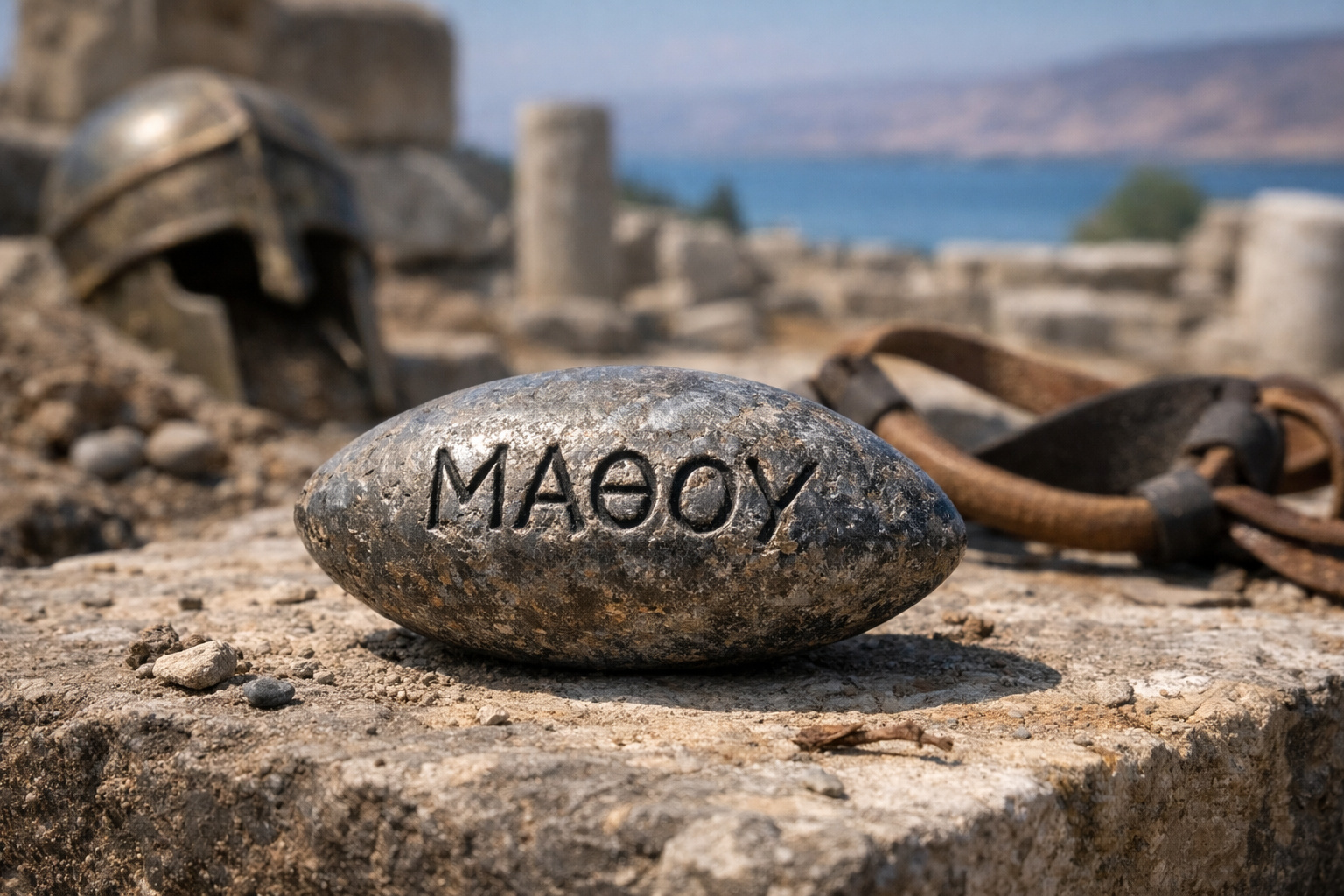
Discovery of an ancient bullet with a message shows unexpected humor and provocation in past wars surprising researchers
An over 2,100-year-old bullet with a sarcastic message caught the attention of archaeologists in Israel. The object was found during excavations near the ancient city of Hippos and bears a simple yet provocative word.
The piece, made of lead, was used in combat and carries the inscription “learn” in Greek. The discovery reveals that, in addition to war, there was room for provocation and humor among soldiers during that period.
The report was published by Live Science, an international portal specializing in science and technology. The study was also featured in the scientific journal Palestine Exploration Quarterly.
-
Tired of seeing people living on the streets for years, after 12 years of trying, Des Moines approved micro-houses ranging from 18 to 36 m² with affordable rent: Joppa Village promises to become a model of social housing for the homeless population.

-
At 29 years old and tired of the corporate routine, a young man leaves his 11-year career, sells almost all his possessions, buys a sailboat, and sets off from Oregon to Hawaii accompanied only by his cat.

-
Saudi takes his Toyota Hilux 4×4, leaves Riyadh, crosses 23 countries, and drives about 6,000 kilometers for almost three weeks to northern Norway to fulfill the dream of seeing the northern lights.

-
An 84-year-old mother wakes up before midnight in Japan, keeps a family bakery open for 55 years, and sells cheap handmade bread; the shop in Fukuoka produces up to 400 units a day with the help of her son.





The word “learn” was used as provocation against enemies
The small bullet was likely launched against an army attempting to invade the city. The engraved word, “learn,” may have been intended as a way to tell the enemy not to return.
In practice, it was like a direct message: “learn your lesson” or “let’s see if you learn.” The intention seemed clear, to cause both physical and psychological impact.
This type of provocation shows that ancient warfare also involved symbolic communication, not just force.

Simple, cheap, and very effective weapon at the time
The bullet was useful in a sling, a common weapon during the Hellenistic period. This type of armament was popular because it was low-cost and worked well in combat.
The found piece is about 3.3 centimeters and weighs almost half a kilogram. Even though it is small, it could cause significant damage upon hitting a target.
Live Science, an international portal specializing in science and technology, highlighted that this type of projectile was well known, but one with an inscription is something rare.
Discovery is considered unique among dozens of findings
Over years of excavation in Hippos, archaeologists have found dozens of similar bullets. Many bore symbols like scorpions or lightning bolts.
This one, however, stands out for having a written word. According to researchers, it is the first time that a bullet of this type appears with a direct message to the enemy.
The detail transforms the object into something even more curious, showing an unexpected side of ancient conflicts.
Humor in the midst of war captivates researchers
The inscription was not just functional. It also carried a tone of irony, almost like a joke amid the fighting.
Scholars point out that this recalls expressions used on other ancient bullets, such as “take this” or “try it.” All aimed at provoking those on the other side.
This type of message can be seen as an ancient form of direct communication, something akin to a “note” during battle.
Impact of the bullet is still a mystery
Archaeologists state that the bullet was fired and hit something. However, it is not possible to say exactly what was hit.
It could have been a person or just an object in the way. The fact is that there was an impact, which reinforces that the projectile was indeed used in combat.
Even without this answer, the discovery already offers a new perspective on how ancient wars were fought.
The bullet with the word “learn” shows that past conflicts also had elements of provocation and creativity. More than a weapon, it served as a direct message to the enemy.
Moreover, the find helps to better understand the behavior of soldiers of the time and how they communicated amid war.
And you, what do you think of this curious discovery? Leave your comment and share with those who love history and archaeology.








Be the first to react!