





 Portuguese
  English
  Spanish
  4 min of reading
  0 comments


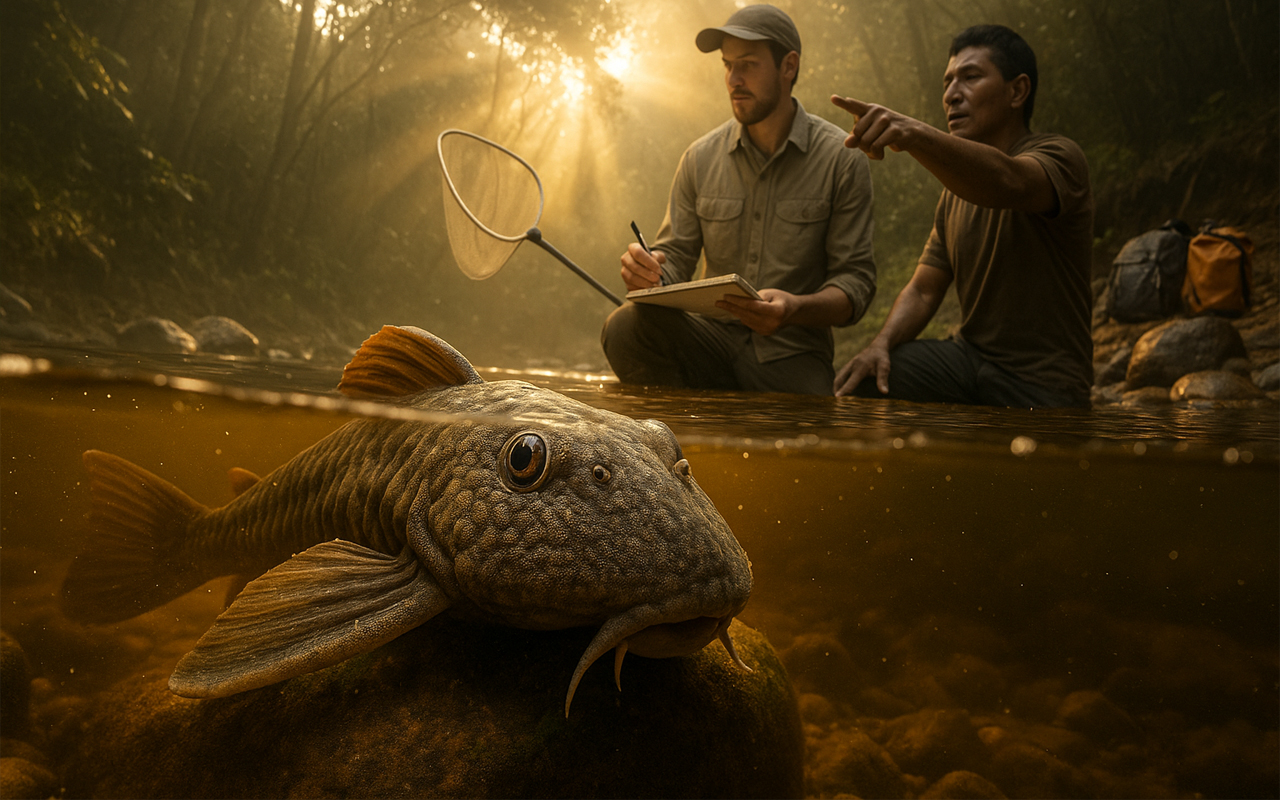
A 38-Day Expedition in Alto Mayo, Peru, Recorded 2,046 Species, Including 27 New to Science and 49 Threatened, Including a Disproportionate-Headed Fish from the Genus Chaetostoma.
The Peruvian Amazon has surprised once again. In an intensive scientific campaign conducted in the Alto Mayo, researchers documented 2,046 species, confirmed 27 new to science, and mapped 49 threatened, shining light on a region that balances high biodiversity and human pressure. The numbers, robust and auditable, were released by scientific institutions with a history of rigor.
The expedition took place between June and July 2022, but its results gained widespread dissemination recently, after additional validations. The logistical effort involved field biologists and local residents, which broadened the reach of collections in under-sampled environments.
Among the findings, a fish with a “swollen” head drew attention and became a symbol of the unexplored rivers of the Amazon. Around it is a list that includes four mammals, eight fishes, three amphibians, and ten new butterflies. Results like these, in landscapes with people and agriculture, are rare and valuable.
-
Meta’s new smart glasses are not just for seeing; they use artificial intelligence, analyze your food, summarize messages, and can even change the way you work in professions like engineering.

-
According to an analysis by NASA, only one human-made structure is visible from space, and it is not the Great Wall of China or the Pyramids of Egypt.

-
After 377 years of history, the Brazilian Army will have its first female general: Colonel Claudia Cacho has been promoted to brigadier general by Lula and will receive the sword and command baton this Wednesday in Brasília.

-
A Mercado Livre customer opened their package and found 32 resumes of people looking for jobs crumpled as protective paper inside the box, exposing names, addresses, documents, and phone numbers of dozens of candidates.


Discovery in Alto Mayo: New Species and Numbers That Matter
The Alto Mayo is located in the San Martín department, northern Peru. Despite having protected areas, the region faces deforestation and agricultural expansion and remains undersampled in various stretches of rivers and slopes. Therefore, generating a solid baseline of biodiversity is a strategic step for public policies.
The team recorded 2,046 species, of which 27 are new to science and 49 are listed as threatened on the IUCN Red List, a situation that requires a swift response from public authorities and private partners. At least 34 species seem restricted to Alto Mayo and its surroundings, indicating strong signs of regional endemism.
In the grouping by categories, four recently identified mammals, eight fishes, three amphibians, and ten butterflies stand out, an unusual result in just one campaign. For conservation science, this means prioritizing the protection of connected aquatic and forest habitats.
Swollen-Headed Fish in the Amazon: What is Known About the Chaetostoma
The fish that became the “face” of the expedition belongs to the genus Chaetostoma and has been nicknamed “blob-headed” due to its disproportionate and rounded head. Researchers indicate that its formal description will still come in a peer-reviewed article, with complete scientific name and morphological diagnosis. Discovering is not the same as officially describing.
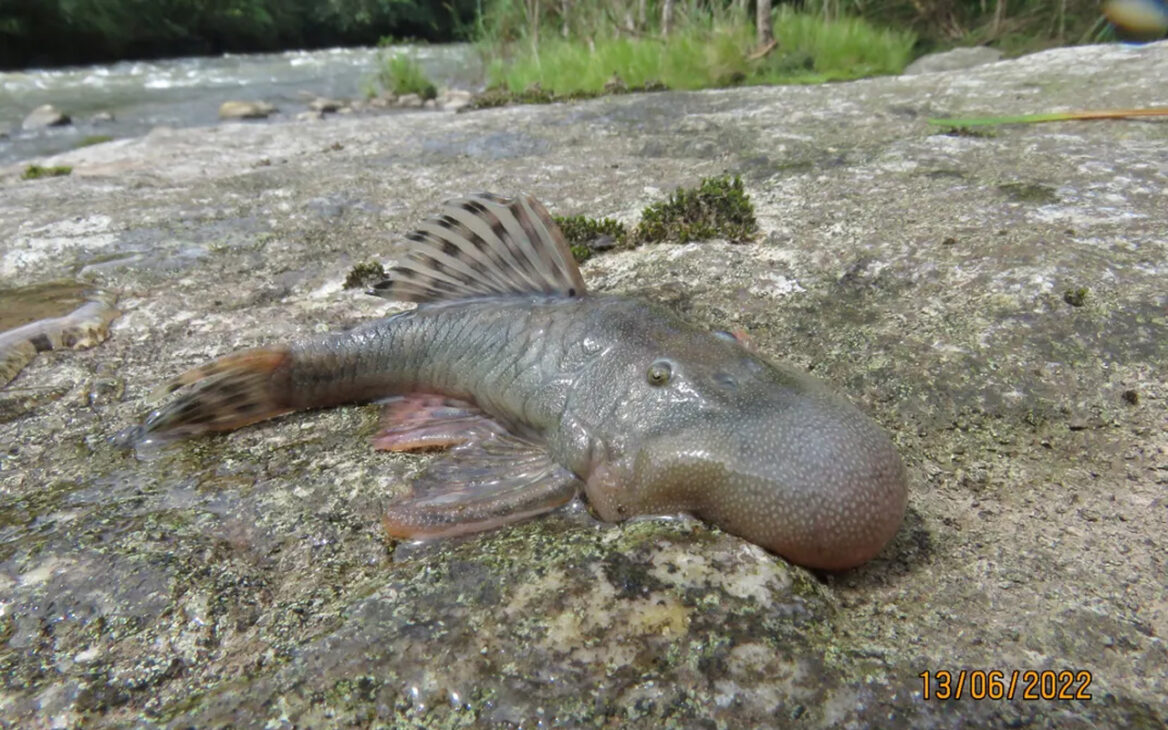
The function of this enlarged head remains a mystery. Hypotheses include advantages in suction in rapids, competition for shelters, and intraspecific signaling, but without experimental confirmation. Until then, it is wise to treat it as a unique characteristic whose ecology needs study.
In addition to this icon, the expedition mapped seven possibly new fishes, expanding knowledge about the Amazonian freshwater ichthyofauna and reinforcing the urgency of monitoring igarapés and secondary rivers, where species are more sensitive to changes in flow and water quality.
Traditional Awajún Knowledge in Science and Conservation
None of this would happen with the same efficiency without the participation of the Awajún. Local knowledge guided access, adjusted field strategies, and even contextualized findings, such as the perception that certain fishes were already known to the community, although new to science. This bridge reduces biases and accelerates discoveries.
The collaboration also strengthens land management and the protection of sensitive areas. In a scenario where illegal mining and agricultural fronts pressure the forest, integrating citizen science, community monitoring, and official bodies increases the effectiveness of conservation.
By recognizing traditional knowledge as complementary evidence, the scientific process itself becomes more inclusive and accurate. This means trusting in results produced through multiple lenses, from academia to the territory.
Conservation Corridor: Connecting Alto Mayo to Cordillera Escalera
The data from the expedition now serve as a basis to design a conservation corridor linking the Alto Mayo Protection Forest to the Cordillera Escalera Regional Conservation Area. Connecting forest blocks improves gene flow, reduces local extinction, and increases resilience against climate change.
The landscape of soils, altitudes, and diverse microclimates explains the high biodiversity and reinforces the thesis that a network solution works better than isolated reserves. Corridors also benefit aquatic species, as they preserve springs and maintain shaded and cooler rivers, crucial conditions for rapids fishes.
With the 49 threatened species recorded, prioritizing connections between protected areas gains status as an urgent public policy, aligned with international biodiversity and climate commitments. This is science applied directly to decision-making.
Why This Discovery Matters for Brazil and the Andean-Amazon Region
Solid results like these influence scientific funding, management plans, and payments for environmental services. They also inspire responsible nature tourism and projects that value socio-biodiversity. In local economies, knowledge turns into opportunity.
For journalists, educators, and policymakers, the message is clear: reliable data and partnerships with communities offer more protection per dollar invested. When numbers like 2,046 species and 27 new enter the public debate, conservation stops being abstract.
The next step is the formal description of the species and the continuous monitoring of critical habitats. In the meantime, the evidence already justifies expanding ecological corridors and reinforcing actions against deforestation and water degradation in Alto Mayo. Science has shown the map; it is up to society to pave the way.








-

-

-

-

-

8 pessoas reagiram a isso.