





 Portuguese
  English
  Spanish
  5 min of reading
  0 comments


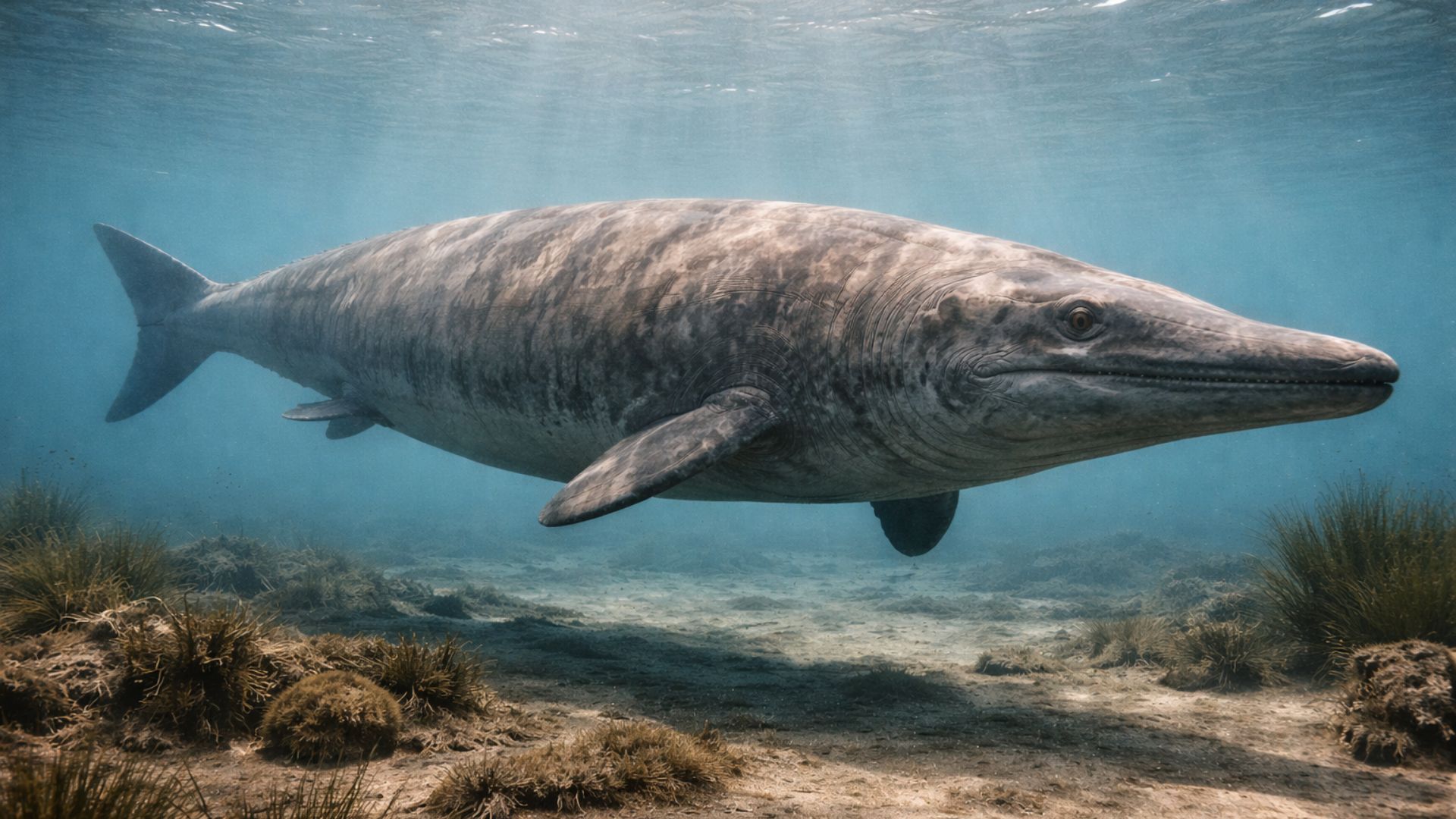
Exceptionally Dense Bones Found in Peru Put an Eocene Whale at the Center of a Scientific Debate About Body Weight, Estimation Methods, and Evolutionary Limits of the Largest Marine Mammals Ever Recorded by Paleontology.
Peru Fossil Whale Revives Debate on Maximum Animal Weight
A prehistoric whale described from fossils found in Peru has become the center of a scientific and media dispute about what might have been the heaviest animal ever known.
This is the Perucetus colossus, an Eocene cetacean, dated to around 39 million years, whose most striking feature is the extreme density of the preserved bones.
The debate about its weight gained momentum because published estimates vary from dozens to hundreds of tons, depending on the methods applied and the assumptions used to reconstruct the animal’s body.
-
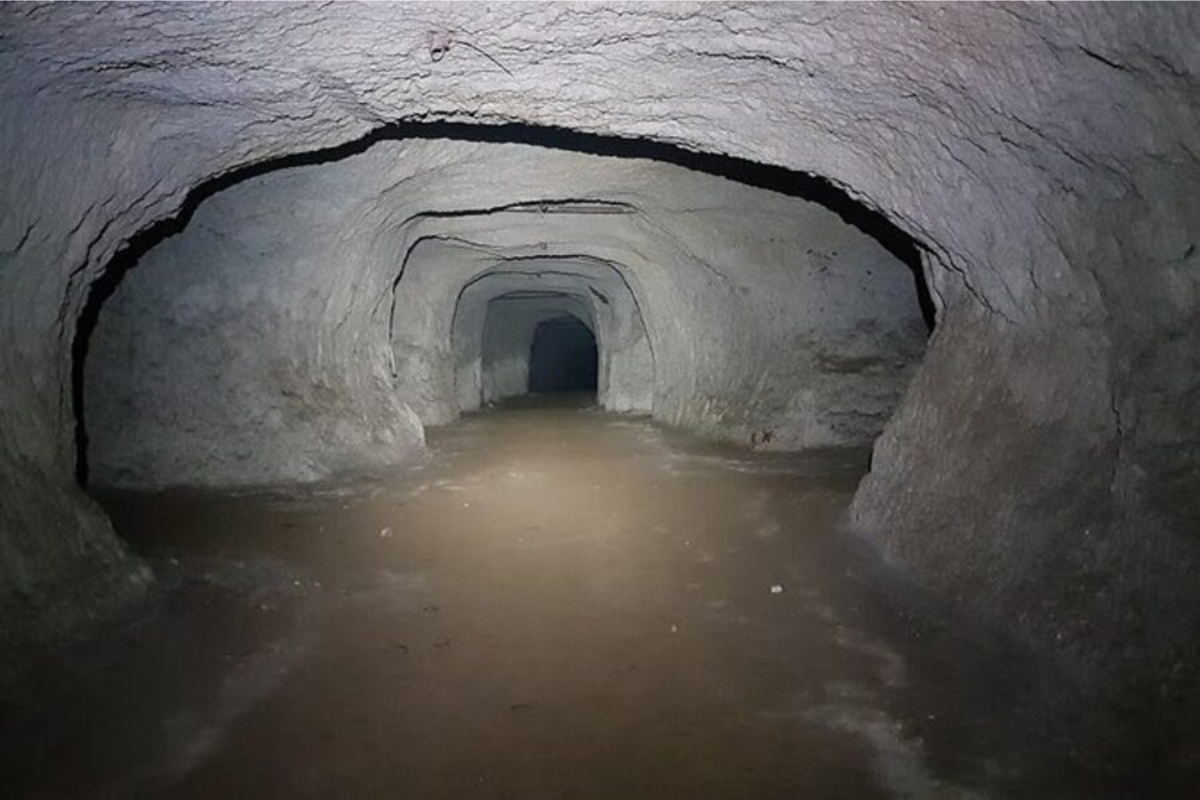
Discovery of a 15-kilometer labyrinth beneath the buildings of Rome raises alarm for collapses and reveals the largest underground network ever found in the Italian capital.
-
A rare storm phenomenon in the United States alerts meteorologists worldwide due to four different forms of water falling from the sky, which freeze immediately upon touching the ground, poles, cars, or trees.

-
He has been using a wheelchair for almost 10 years, lives alone, is independent, and decided to become a delivery driver for an app: Samuel makes up to 6 deliveries a day, covering routes of 1 km in his wheelchair and has even managed to do 2.5 km in a single run.

-
An island of 7,500 people received 38,000 bananas by mistake, was left unsure where to store everything, and turned the error into a viral case with donations, hustle, and fruit overflowing everywhere.


Initial Mass Estimates and Scientific Impact
In the initial announcement made in 2023, researchers involved in the formal description presented a broad range of body mass, from 85 to 340 tons, and highlighted that within this range, Perucetus could rival the modern blue whale as a candidate for the heaviest animal record.
In 2024, a methodological reassessment published by other authors reviewed the calculations and concluded that Perucetus would not have exceeded the mass of the largest known blue whales.

This review pointed to lower estimates, in the range of 60 to 70 tons for a body of 17 meters, with a possibility of 98 to 114 tons in a 20-meter scenario.
The discrepancies do not alter the central point highlighted by the studies, which is the species’ relevance in understanding the structural limits of marine mammals throughout evolution.
Scientific Description and Analyzed Fossil Material
The Perucetus colossus was formally described in an article published in the journal Nature, based on a set of bones attributed to a single individual.
Among the analyzed materials are vertebrae, ribs, and parts of the pelvic girdle, preserved in rocks from the Paracas Formation, on the southern coast of Peru.
The researchers responsible for the description highlighted that the bones were exceptionally heavy and thick, with an unusual increase in bone mass compared to other fossil or modern whales.
This pattern is described in the scientific literature as pachyosteosclerosis, a term referring to bones that are both thicker and denser than usual.
Dense Bones and Impact on Weight Estimates
According to the original study, the extreme density of the skeleton helps explain why an animal with an estimated length of around 20 meters could exhibit a very high body mass.
The authors themselves, however, acknowledged that the skeleton is incomplete and that different reconstructions lead to distinct results.
For this reason, the work presented a broad range of estimates, without claiming a single value for the weight of the animal.

It was within this range that the hypothesis emerged that Perucetus could have been as heavy as, or even heavier than, the blue whale.
Comparison with the Blue Whale and Methodological Limits
The comparison with the blue whale is recurrent because it represents the highest weights ever recorded in living animals.
These values vary according to sex, age, and body condition of the observed individuals.
When Perucetus was announced, part of the public reaction relied on the possibility of a new weight record.
However, the authors of the original study emphasized that the estimates heavily depended on assumptions about body proportions and the volume of soft tissues not preserved in the fossil.
Review Published in 2024 and New Calculations
In 2024, the debate took a new turn with an article published in the journal PeerJ by researchers affiliated with the University of California, Davis, and the Smithsonian Institution.
In this work, the authors reevaluated the factors and methods used to estimate the weight of Perucetus colossus.
According to the reanalysis, some assumptions made in the higher estimates were unlikely from an anatomical perspective.
The study suggested recalculating mass based on body scenarios closer to those of other known cetaceans, considering the relationship between skeleton and total body volume.
Results of the Scientific Reassessment
With this approach, the researchers arrived at estimates of 60 to 70 tons for an individual measuring 17 meters in length.
In an alternative scenario, with 20 meters, the calculations indicated a range between 98 and 114 tons.
These values maintain Perucetus as a marine mammal of great body mass, although below the largest documented blue whales.
The reassessment does not invalidate the original finding but redefines the scope of the comparison with current animals.
Bone Density and Possible Ecological Implications

One point of convergence among the studies is the recognition that the skeleton of Perucetus exhibits unusual mass.
This characteristic may indicate a lifestyle associated with greater buoyancy control.
In scientific outreach materials related to the original announcement, the authors associate bone density with slower movements and possible residence in shallow waters.
Since the fossil does not include a complete skull associated with the same individual, the studies avoid attributing specific diet or behavior beyond what can be supported by general comparisons.
Evolutionary Classification and Age of the Fossil
The Perucetus colossus is classified as a basilosaurid, a group of ancient whales that were fully aquatic.
These Eocene cetaceans still exhibited important structural differences compared to modern whales.
The estimated age of the fossil, around 39 million years, suggests that the evolution of whales with large body mass occurred relatively early in the history of the group.
This data broadens the understanding of the diversity of body forms among the early fully aquatic cetaceans.
Challenges of Body Reconstruction from Fossils
Part of the impact of Perucetus stems from the contrast between extremely dense bones and the difficulty of reconstructing a complete body from fragmentary material.
The wide variation of numbers reported reflects this methodological challenge.
Different models need to consider how many vertebrae made up the spine, trunk shape, muscle and fat volume, and the relationship between bone density and total body mass.
The reanalysis published in PeerJ reinforces that revisions are expected when the available evidence is limited.





-

-

-

-

-

-

150 pessoas reagiram a isso.