





 Portuguese
  English
  Spanish
  6 min of reading
  0 comments


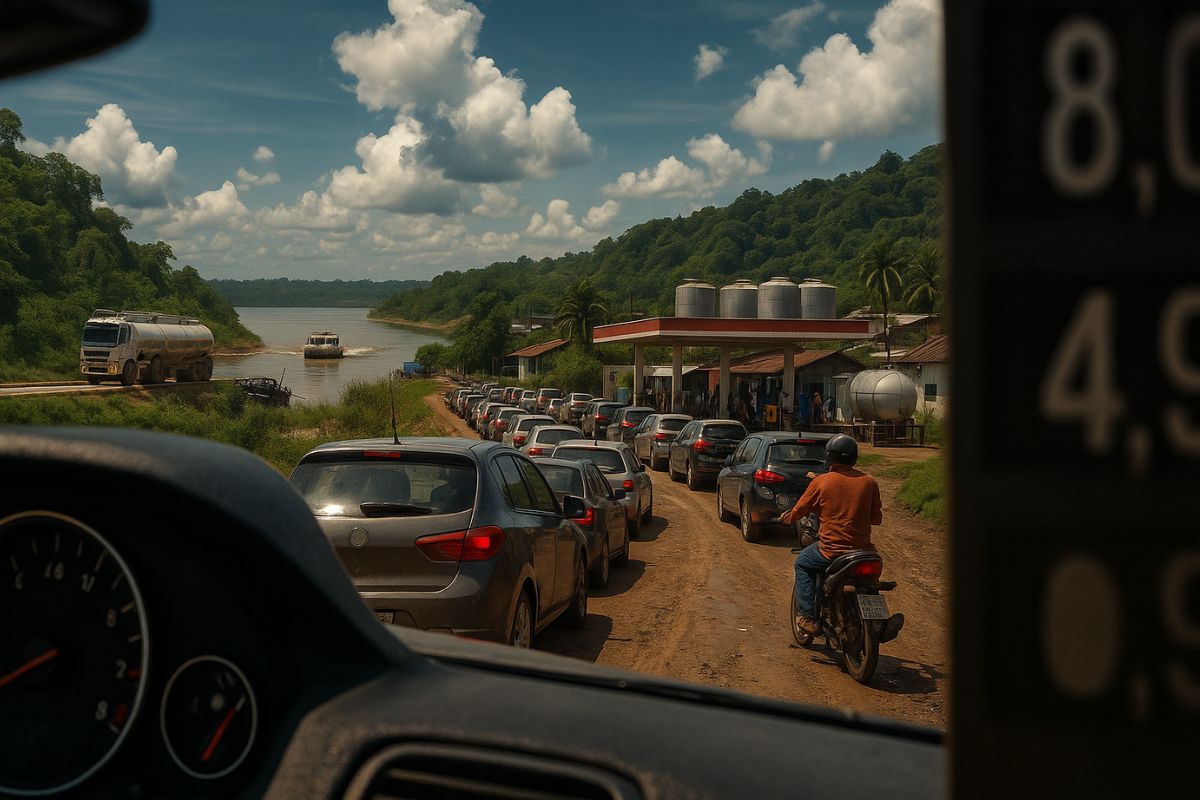
Research Reveals Cities Where Gasoline Exceeds R$ 8 Per Liter, Exposing How Distance, River Transport, and Few Stations Raise the Final Price Paid by Drivers Today
The gasoline sold above R$ 8 per liter in cities in Amazonas is no longer an isolated exception and has become a symbol of a structural problem: the combination of geographic isolation, dependence on river transport, and little competition among stations. Municipalities such as Urucurituba, Apuí, and Boca do Acre are among the most critical cases, where fuel arrives expensive to the truck, expensive to the station, and even more expensive to the final consumer.
While the national average for regular gasoline hovers around R$ 6.21 per liter, according to data monitored by ANP, these Amazonian municipalities operate under a different cost reality, putting pressure on the income of families, self-employed individuals, and small local businesses. The same pump that fuels the car also serves as an indicator of the difficulties in delivering products, services, and infrastructure to the most remote areas of the country.
Where Gasoline Exceeds R$ 8 and What This Reveals
The cited research points to Amazonas as the state with the highest gasoline prices in the country, with cities where the price per liter exceeds R$ 8.
-
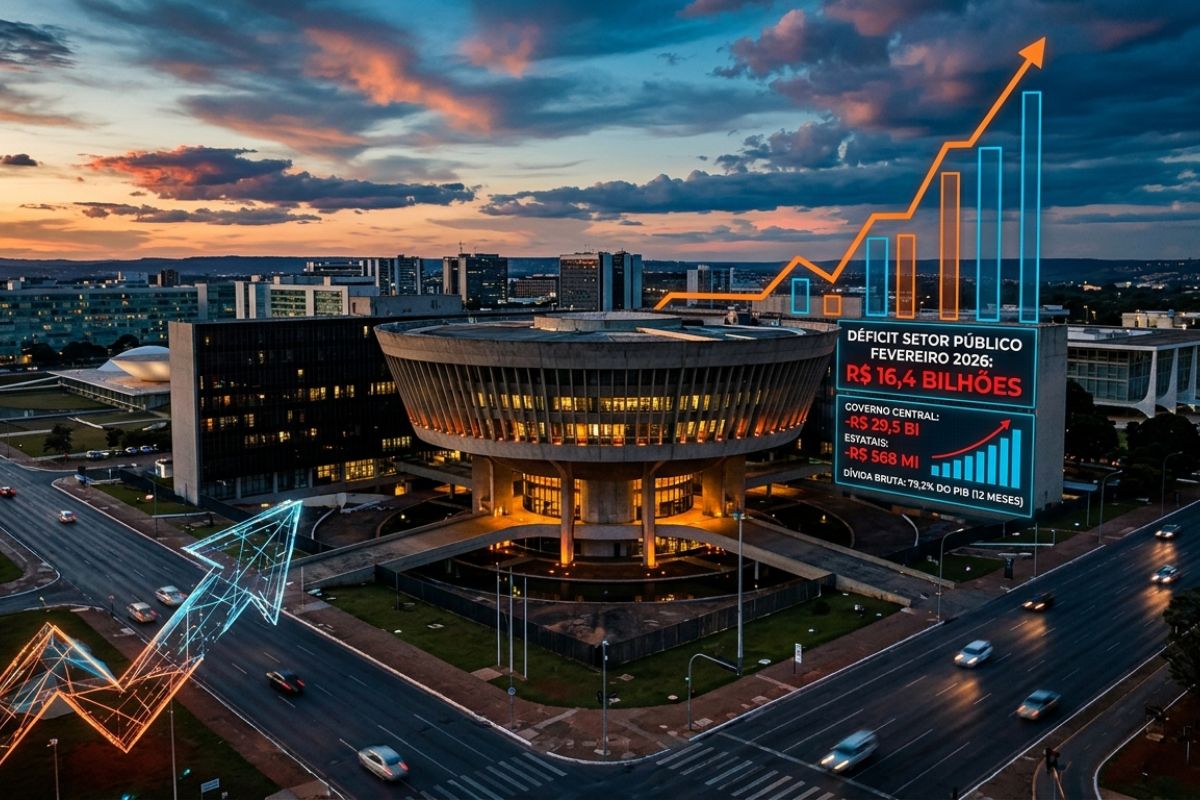
Central Bank reveals: public sector ends February 2026 with a deficit of R$ 16.4 billion; Central Government loses R$ 29.5 billion, state-owned companies R$ 568 million, gross debt rises to 79.2% of GDP in 12 months.
-
The largest executive jet in Brazil belongs to the Safra Family and is for sale: it is a 2002 Boeing BBJ, with a range of 11,500 km, 80 m² of interior space, a master suite, an office, and capacity for 18 passengers.

-
BRICS is building its own payment system that could be operational by 2030, and experts say it could increase trade between the countries by up to 10% per year and add 3% to the GDP of each member of the bloc.

-
Government suspends over 3 million traffic fines in Brazil and drivers breathe a sigh of relief.


In Urucurituba, Apuí, and Boca do Acre, the price is not just a market reflection but a direct result of access conditions to the region.
In many of these locations, gasoline only arrives after traveling long routes through rivers and poorly maintained roads, with longer delivery times, high freight costs, and greater logistical risks.
The combination of few stations, low consumption scale, and great distance from distribution centers reduces bargaining power and increases sensitivity to any cost variation.
In these scenarios, every cent incorporated into transportation results in a few more cents at the pump, until the price exceeds the R$ 8 mark and directly compromises the daily commuting of the population.
The Picture of Fuels in Brazil: National Average vs. Amazonian Reality
The National Agency of Petroleum, Natural Gas and Biofuels (ANP) regularly monitors fuel prices across the country.
In the most recent data, the national average indicates:
- Regular gasoline around R$ 6.21 per liter
- Diesel at around R$ 6.06 per liter
These values consider the mandatory blends of ethanol in gasoline and biodiesel in diesel, standardized nationally.
Even with this uniform regulatory base, practical application is not homogeneous: freight, state taxes, distribution, and resale margins form a mosaic of prices that vary from city to city.
When comparing this national average with the price level exceeding R$ 8 recorded in the interior of Amazonas, it becomes evident that geography is a price factor as important as tax policy or the value of a barrel of oil.
Difficult Logistics, Few Stations, and Direct Impact on the Wallet
The case of Amazonas clearly illustrates how logistics impacts gasoline prices:
Dependence on river transport raises the cost per liter since ships and ferries travel long distances with high fuel consumption and costly operational structures.
Limited land access increases travel time, wear on trucks, and maintenance needs, transferring costs throughout the entire supply chain.
Little station availability reduces competition and leaves consumers with few real choices.
The result is a direct impact on drivers’ budgets, especially in cities where cars or motorcycles are essential for accessing work, school, health services, and commerce.
When gasoline exceeds R$ 8, any simple trip becomes a financial decision.
In addition to the immediate cost, there are indirect effects: higher freight costs, increased prices for products on the shelves, and pressure on self-employed individuals who depend on vehicles to generate income, such as taxi drivers and ride-hailing drivers in better-connected regions.
How the Gasoline Market is Organized in the Country
Despite regional differences, the fuel market in Brazil is structured around large networks that distribute gasoline and diesel throughout the national territory, each with its own operational strategies and consumer relations:
Ipiranga stands out for the number of stations and strong coverage on highways and in major centers.
Shell focuses on fuel quality standards and complementary services.
Petrobras occupies a central position in the market, with broad coverage and state ownership.
Ale and Boxter, among other networks, expand service offerings, adding stores, convenience, and amenities beyond simple refueling.
Even with this structure, consistently and economically delivering fuel to Amazonian cities remains the main challenge.
In some cases, having a strong brand is not enough: the bottleneck lies on the road, at the port, or at the river level.
Expensive Gasoline and Still at Risk of Poor Quality? What Drivers Can Observe
In a scenario where gasoline already weighs on the budget, having to deal with adulterated fuel is a risk that consumers cannot afford.
Small precautions help reduce the chance of mechanical problems and extra costs:
Prefer trustworthy stations and always demand the fiscal receipt.
Observe the appearance and smell of gasoline before refueling, when possible.
Avoid refueling immediately after heavy rains, which can increase the risk of water in tanks of poorly maintained stations.
Stay alert for signs such as loss of performance, stalling, above-normal consumption, and difficulty starting, which may indicate low-quality fuel.
ANP conducts frequent inspections, but the first line of defense is the driver themselves.
Ensuring the origin of gasoline is as important as comparing prices, especially in places where a breakdown or failure means isolation on long stretches of road or river.
Why Amazonas Pays More: Geography, Scale, and Infrastructure Limits
When asking why gasoline is so expensive in Amazonas, the answer revolves around a few main axes:
Complex logistics, based on river transport and long distances.
Restricted infrastructure, with few efficient routes and access alternatives.
Reduced consumption scale in many municipalities, which lessens the dilution of transportation and storage costs.
Dependence on few stations, which limits local competition and consumer negotiation capacity.
This combination makes the region’s pumps function as a thermometer of an infrastructure that is still insufficient to fully integrate the North with the rest of the country in terms of energy costs and mobility.
Mandatory Blends and Their Effect on the Final Price of Gasoline
The mandatory anhydrous ethanol blends in gasoline and biodiesel in diesel are compulsory throughout the national territory and directly affect the composition of the final price.
These components rely on their own supply chains, with raw material, processing, and transportation costs.
When the price of ethanol or biodiesel rises, gasoline feels the impact, even if oil prices remain stable.
In remote regions, the freight costs of these inputs can be even higher, further reinforcing the pressure on the final price per liter.
In Amazonas, this effect compounds the challenge of getting the finished product to the pump.
Gasoline Above R$ 8 as a Public Policy Alert
More than just an individual problem for those who need to fuel their cars, gasoline above R$ 8 in Amazonian cities serves as a public policy alert. It points to:
Limits of transportation infrastructure to integrate isolated regions.
High dependence on trucks, ferries, and ships in territories with few alternatives.
Extreme sensitivity of living costs to freight and logistics variations.
Need for medium- and long-term planning to reduce regional inequality in access to energy and mobility.
As long as there is no structural improvement in these areas, Amazonians will continue to pay more to move around, even when the national average signals temporary relief at the pumps in other regions.
And you, have you felt the price difference in gasoline between different cities or states, or do you still avoid traveling by car because of fuel prices where you live?




Seja o primeiro a reagir!