





 Portuguese
  English
  Spanish
  3 min of reading


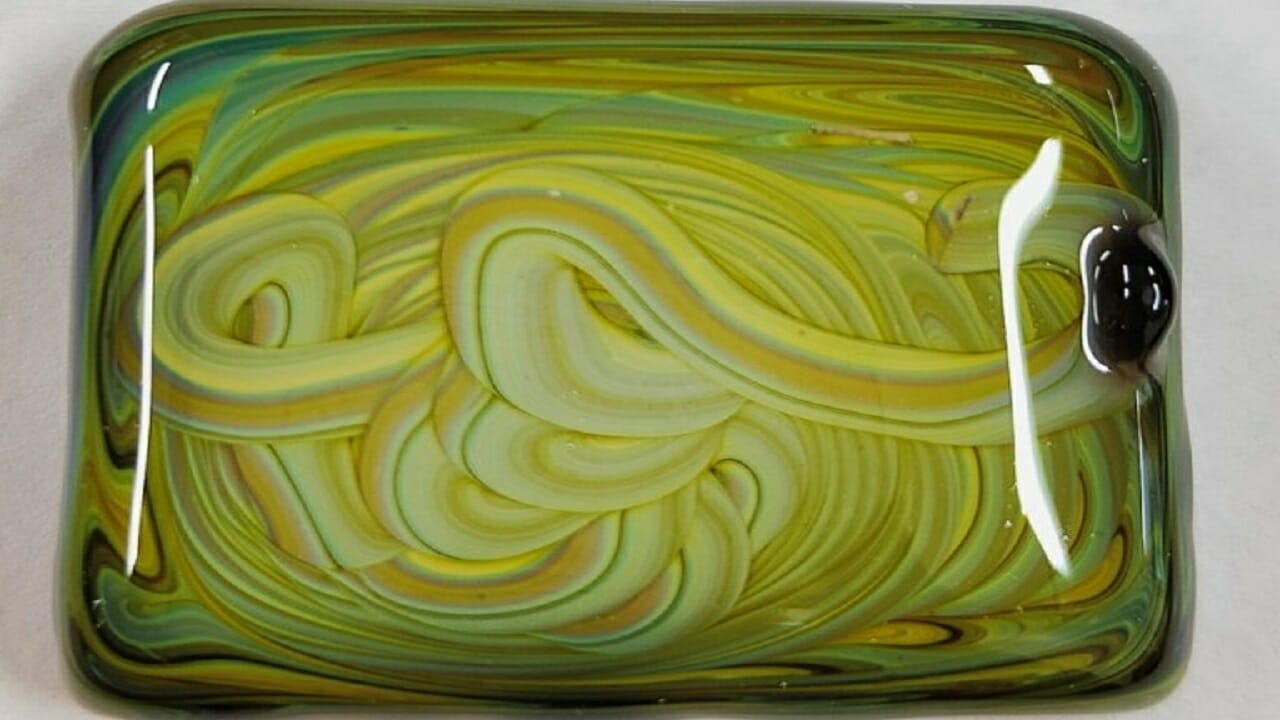
Brazilian Researchers Developed a New Method for Glass Production. Now, Niobium is Added, Potentially Changing the Course of the Technological Sector.
High-quality glasses are practically everywhere in our daily lives, from smartphone screens to components of microscopes and telescopes aimed at scientific research, as well as optical fibers used for data transmission and even increasingly used vitreous-ceramic orthoses in medicine. With a focus on further innovation, Brazilian researchers have developed a technique that improves the mechanical and thermal stability of so-called special glasses using niobium.
New Glass Uses Niobium in Its Composition
Henrik Bradtmuller and other researchers from the Center for Research, Education, and Innovation in Glass (CERTEV) based at the Federal University of São Carlos, demonstrated for the first time that the use of niobium oxide in the production of silicon-based glasses makes a huge difference, resulting in the polymerization of the silicon network, increasing the density of the bonds and the connectivity of the material.
Moreover, higher levels of niobium lead to the clustering of the oxide, enhancing the electronic polarizability of the glass, which has a crucial impact on its optical properties, according to the researchers.
-
Workers were digging normally and came across a 300-year-old cannon, nearly 3 meters long and weighing over a ton, buried in an old dock area in the United Kingdom.

-
The water cooling system of the nuclear fuel pool in Fukushima has resumed operation.

-
With images from NASA’s Juno spacecraft, researchers detected lightning on Jupiter that is up to 100 times stronger than that on Earth.

-
Ancient Romans were obsessed with a plant that they said was a contraceptive and an aphrodisiac – then it became extinct.

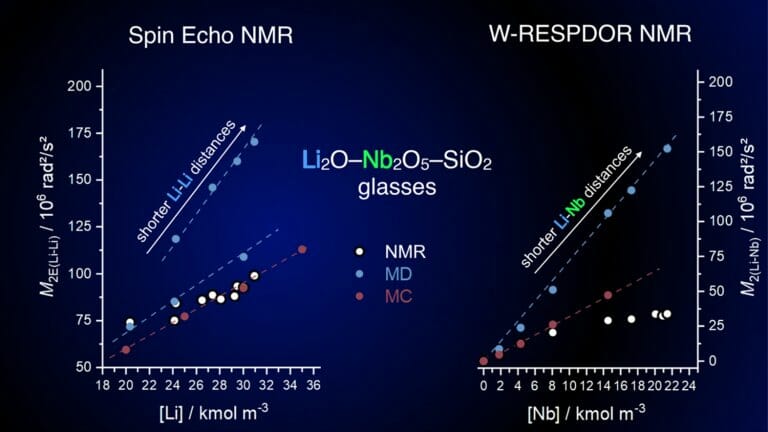
The superior quality of the new niobium glass has been validated by a combination of computational models with experimental analyses, utilizing nuclear magnetic resonance spectroscopy and Raman spectroscopy.
[Image: Henrik Bradtmulle]
According to Bradtmuller, the researchers’ strategy, combining these two observational techniques in the new glass with computational modeling, could be used to study functional elements of various other types of glass, including optical materials, fast ion conducting glass, and bioactive glasses.
This initiative will facilitate the design of innovative glass formulations tailored to various applications. To meet advanced applications in high technology, materials researchers are focusing on designing glasses with properties adjusted for each application, primarily utilizing computational resources such as machine learning.
Addition of Niobium in Glass Generates a Type of Polymerization of the Silicon-Oxygen Network
To meet advanced applications, two critical factors are required: generating comprehensive and reliable databases and defining structural parameters that consider the complex physicochemical nature of glass and its functional properties. This is where the main contribution of the Brazilian team comes in.
For Bradtmuller, there is a class of oxides, called intermediates, that plays a strategic role in this new technological moment. They do not form glasses under standard laboratory cooling conditions. Instead, in the presence of other oxides, they can significantly contribute, generating hydrogen bridges and endowing the formed glass with properties of interest. This is the case with niobium oxide.
Glasses containing niobium are valued for their nonlinear optical properties, with potential applications in optoelectronic devices, as well as for their mechanical properties, being used in the manufacturing of bioactive materials.
However, it was the Brazilian research team that discovered that the addition of niobium generates a type of polymerization of the silicon-oxygen network, increasing the connectivity of the glass’s component elements, which makes niobium a network former. While in silicate glasses, at a scale of 5 to 10 nanometers, lithium ions distribute randomly, niobium tends to form clusters, a type of structural arrangement that had never been observed before.
Why Was the Study with Niobium Not Considered Before?
Bradtmuller concludes that, despite several studies with niobium having been conducted, the structural role of niobium remained unclear, mainly due to the lack of systematic data from spectroscopic characterization. It was this knowledge gap that the researchers’ study filled.
In addition to the Brazilian researchers, scientists from Pennsylvania developed a new glass that is 10 times more resistant to breaks and cracks. The product is much less polluting, consumes less energy, and can make glass production sustainable in the long run.








Seja o primeiro a reagir!