





 Portuguese
  English
  Spanish
  4 min of reading
  0 comments


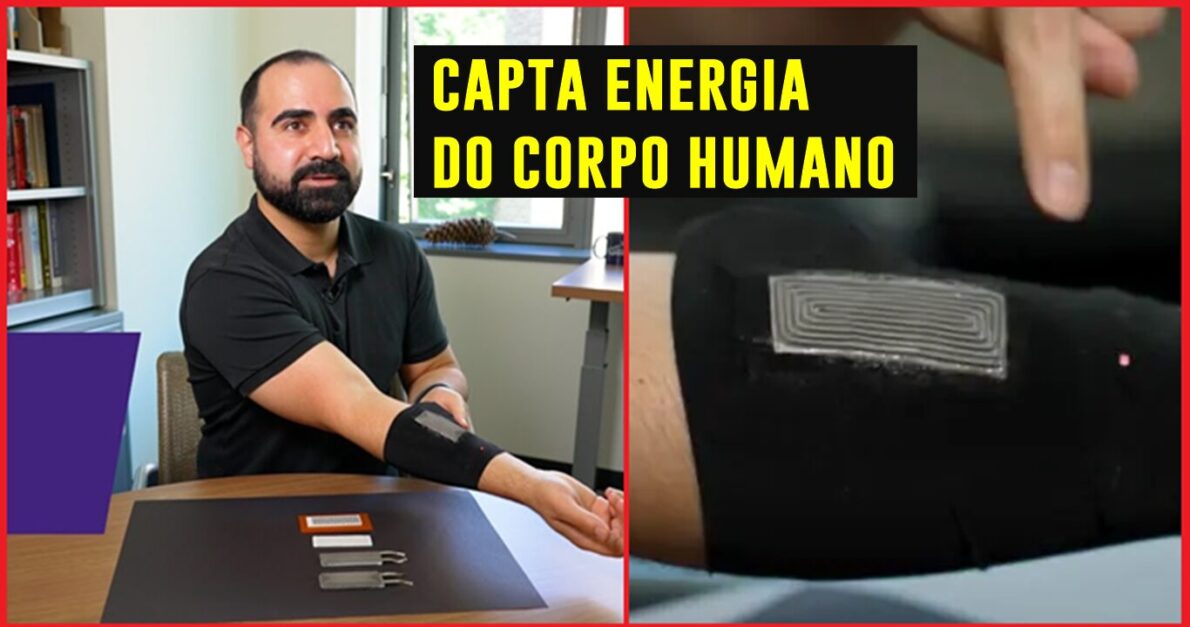
Researchers At The University Of Washington Developed A Wearable Device Capable Of Generating Energy From Human Body Heat. Learn How This Technology Could Transform The Future Of Gadgets
One of the biggest limitations of wearable devices, such as fitness trackers and smartwatches, is the constant need to recharge their batteries. However, a recent breakthrough in technology promises to change that reality by generating energy from the human body.
Researchers at The University Of Washington (UW) developed a prototype of a wearable device that collects energy from body heat and converts it into electricity. This new device not only eliminates the need for frequent charging but is also highly flexible and durable, maintaining its functionality even after being punctured or stretched many times.
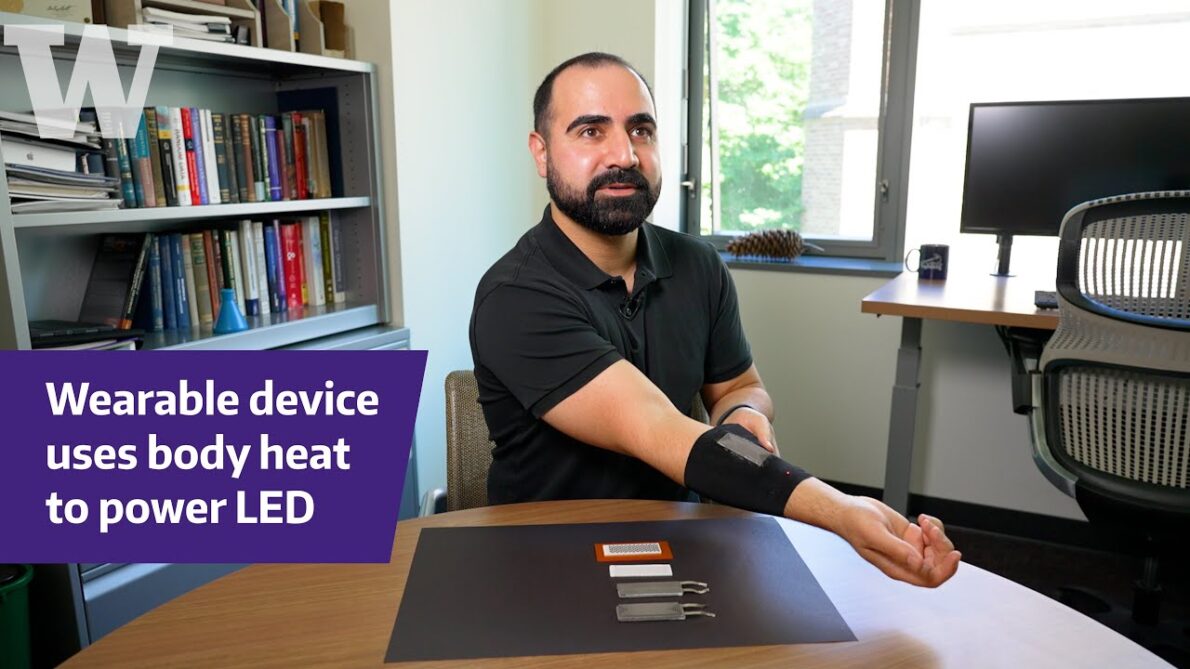
The study, published on August 30 in the journal Advanced Materials, was led by Mohammad Malakooti, an assistant professor of mechanical engineering at UW. “I had this vision a long time ago,” Malakooti said. “When you place this device on your skin, it uses your body heat to directly power an LED. As soon as you put the device on, the LED lights up. This wasn’t possible before.”
-
A mysterious structure has been found beneath an ancient city in Egypt — and the most impressive thing is what technology has revealed hidden for 2,600 years.

-
Astronauts reveal that cities shine so brightly at night that they are visible from space as “artificial constellations,” while highways in the desert appear more than the Great Wall of China, which practically disappears when viewed from orbit.

-
A magnitude 9.2 earthquake in Alaska reshaped the coastline in minutes, sank entire cities, raised sections of the seabed by several meters, and left one of the fastest geographical transformations ever recorded on Earth.

-
The entire Brazil is expected to face above-average rainfall in the next ten days, with accumulations reminiscent of the peak of summer, raising concerns especially for those living in the Southeast, Northeast, and Northern regions of the country.


The device, besides being efficient, is incredibly durable, capable of withstanding punctures and stretches without compromising its functionality.
The Revolution Of Flexible Energy Generating Devices
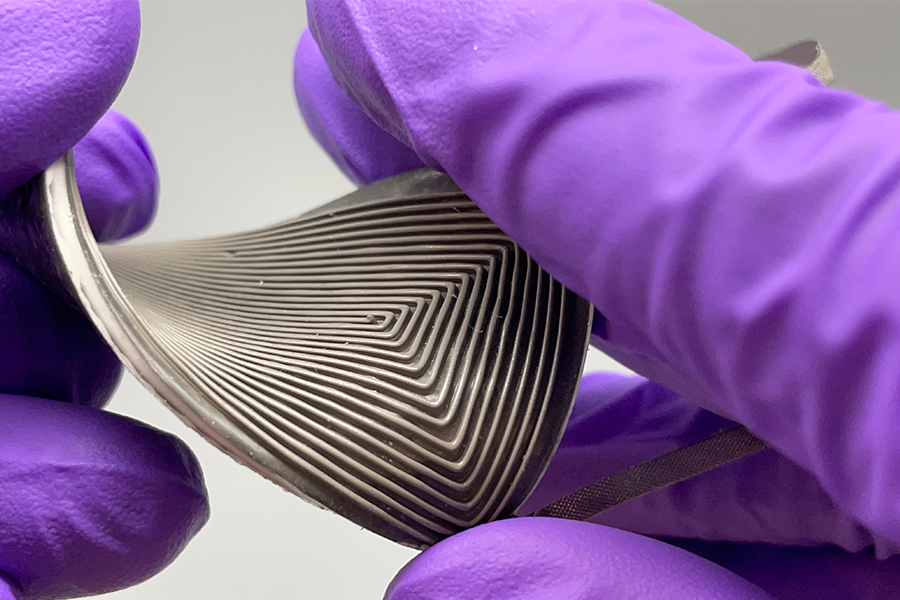
Historically, thermoelectric devices – those that convert heat into electricity – were rigid and fragile, making their application in wearable technologies difficult. Malakooti’s team, however, managed to overcome this limitation by creating a device that adapts flexibly to the human body, allowing its use in devices that can be bent, stretched, and shaped as needed.
The design of the prototype involves three main layers. In the core, there are thermoelectric semiconductors that perform the conversion of heat into electricity. These semiconductors are surrounded by low thermal conductivity compounds, 3D printed, which optimize energy conversion and reduce the weight of the device. Flexibility is ensured by the use of liquid metal traces, which connect the semiconductors, giving elasticity to the system.
Additionally, the use of droplets of liquid metal in the outer layers enhances heat transfer to the semiconductors, keeping the device flexible. Most impressively, all components, except the semiconductors, were designed and developed in Malakooti’s lab, highlighting the innovation and expertise of the research team.
Applications Beyond Wearables
Although the technology was initially designed for wearable devices, its potential applications go far beyond. One of the possibilities mentioned by Malakooti involves using the device in heat-generating electronics, such as data centers. These centers, which house servers and other computing equipment, consume large amounts of electricity and generate significant heat, requiring even more energy to keep the environment cooled.
“You can imagine sticking these devices to hot electronics and using that excess heat to power small sensors,” Malakooti explained. “This would be especially useful in data centers, where the heat generated by servers can be converted into electricity to power temperature and humidity sensors. This system is self-sustainable, monitors environmental conditions, and reduces energy consumption, without the need for maintenance or battery replacement.”
Moreover, the research team highlighted another interesting functionality: the device can also be used to heat or cool surfaces. By adding electricity, it is possible to control the temperature of objects, which opens doors to new applications, such as virtual reality accessories that simulate sensations of heat and cold on the skin.

Partnerships And The Future Of Research
Although the research is still in its early stages, Malakooti envisions a promising future for this technology. “We hope one day to add this technology to virtual reality systems and other wearable accessories to create thermal sensations on the skin, or enhance the overall comfort of the user,” he said. However, he emphasizes that the current focus is on creating efficient, durable wearable devices that provide temperature feedback.
The research involved collaboration with other scientists at UW, such as PhD student Youngshang Han and Halil Tetik, who is now an assistant professor at Izmir Technology Institute in Turkey. The study was funded by renowned entities, such as the National Science Foundation, Meta, and The Boeing Company, reinforcing the importance and potential impact of this development in the field of wearable technology.
This innovation represents a significant advancement in the development of autonomous devices that could, in the future, rely solely on body heat or residual heat from electronic equipment. The idea of a world where devices do not need batteries or constant maintenance to keep functioning seems closer than ever.







Seja o primeiro a reagir!