Portuguese
  Spanish


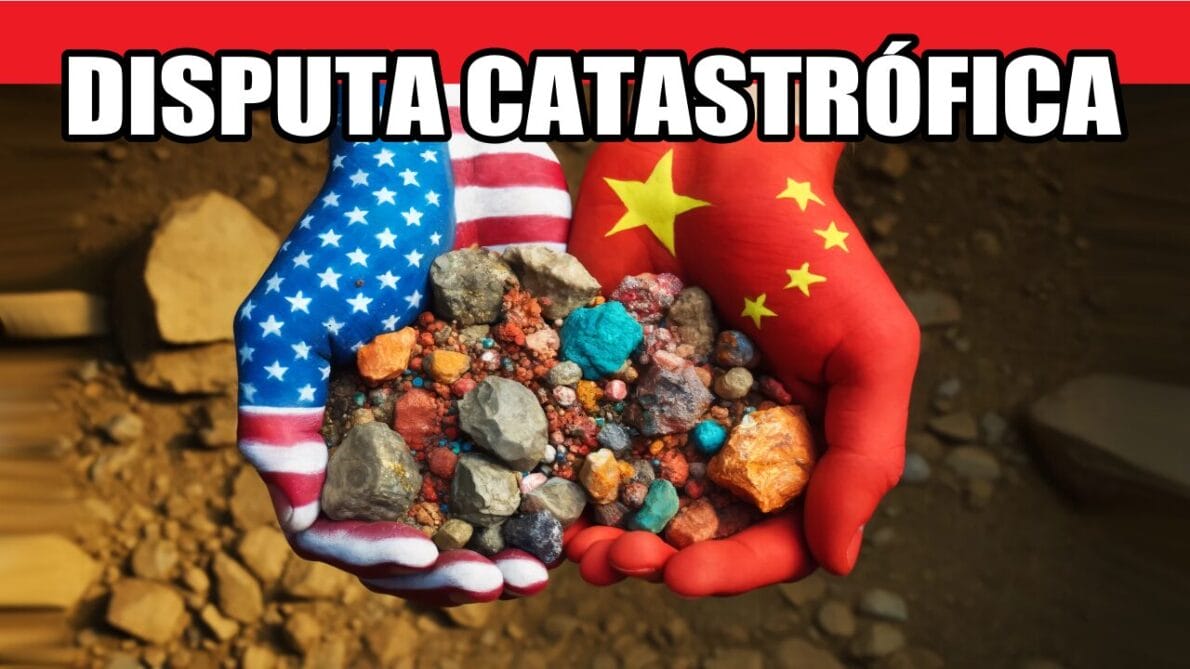

The Dispute Between China and the United States Over This Vital Resource Has Profound Geopolitical Implications, With Potential Catastrophic Damage to the Economy and Global Technological Advancement
So far, in the trade war, the United States has taken the lead in imposing tariffs on China, but the Asians may “turn the tables” and expand the scope of this dispute to a level that could greatly worsen the global scenario by creating a technological war. The crisis with Huawei has reinforced this risk, with Chinese newspapers warning: the country is ready to use rare earths as retaliation against the US. This could affect the entire production chain of electronic products in the world.
In recent weeks, the assessment that the value of these elements may rise due to the trade war has benefited stocks of producers in the sector. Although China has not yet announced any tariffs or restrictions on rare earth sales to the US, the Chinese media has already set the tone. The Chinese newspaper has warned Americans not to underestimate the “Chinese capability to counterattack” and emphasized the “uncomfortable” dependence of the US on rare earths from China.
“Undoubtedly, the American side wants to use products made with rare earths exported from China to contain and suppress Chinese development. The Chinese people will never accept this!” stated the publication.
-
European Union Announces €260 Million Investment to Extend EllaLink Submarine Cable to Northern Brazil, Reducing Digital Dependence on U.S. Routes

-
Giant 142 kg Emerald from Brazil’s Bahia Region Auctioned with Starting Bid of Nearly $16 Million

-
Volvo’s New Loaders Feature Obstacle Detection, Automatic Braking, and 360-Degree Operator View

-
Study Reveals 97% of Pregnant Munduruku Women in the Brazilian Amazon Have Mercury Levels Above Safe Limits, 90% of Newborns Contaminated by Gold Mining



The United States Were Pioneers in Developing Technologies for the Purification and Use of These Rare Earths, Being the Only Producers Until 1998.
It is worth remembering that the United States were pioneers in developing technologies for the purification and use of these rare earths, being the only producers until 1998. However, China quickly became the world leader, accounting for 95% of global production of these elements in 2005. Although China’s share has decreased since then, it still dominates not only extraction but also the purification of these rare earths.
Rare earths, despite the name, are not that rare in nature. Elements like cerium, for example, exist in greater quantity than copper and three times more than lead. However, the big challenge is in the process of purifying these elements, which is extremely expensive and highly toxic.
The Strategic Importance of Rare Earths
Rare earths are essential for the economy and modern society, being used in a wide range of advanced technologies. They play a crucial role in the manufacture of semiconductors, which are the epicenter of the technological war between the United States and China.
Lasers, for instance, heavily rely on rare earth elements. These lasers are used in various applications, such as medical treatments, dentistry, and semiconductor manufacturing. Additionally, permanent magnets made from rare earths are essential for processing plasma materials, which is fundamental for depositing thin films on semiconductor wafers.
Rare earths are also used in coatings and abrasives, high dielectric constant transistors, LED lighting, and in medical applications such as diagnostic imaging (PET).
Check out the elements that are part of rare earths and their uses:
| Element | Examples of Use |
| Scandium | High-intensity light, batteries |
| Yttrium | Colorizing glass, catalytic converter |
| Lanthanum | Petroleum refining, batteries |
| Cerium | Glass production, batteries |
| Praseodymium | Magnets, steel production |
| Neodymium | Pigments, magnets |
| Promethium | Nuclear battery, phosphor for LED lights |
| Samarium | Magnets, batteries |
| Europium | Optical fiber, flat screens |
| Gadolinium | X-ray, magnets |
| Terbium | Flat screens, cathode ray tube |
| Dyprosium | Magnets |
| Holmium | Colorizing glass |
| Erbium | Glass production |
| Thulium | Lasers, microwave devices |
| Ytterbium | Colorizing glass |
| Lutetium | Glass production |
The Chinese and American Dispute Over Rare Earths

China dominates not only production but also the global reserves of rare earths, which puts it in a position of strategic advantage. Other countries, such as the United States, have smaller reserves and depend on China to meet their needs.
When China threatens to retaliate against the technological sanctions imposed by the United States, this raises concerns in Washington, as the US can only maintain its technological and industrial production at the current pace if it has access to these rare earths. If China decides to completely cut off exports, it would be a severe blow to the Americans and their allies, such as Japan, the Netherlands, and South Korea, which produce vital technologies that are being blocked by China.
Future Challenges and Implications
Other countries may try to produce their own rare earth elements, but they face significant challenges. The purification process is extremely expensive and toxic, and China manages to do it at a much lower cost, around 500% cheaper than competitors.
This economic advantage of China means that any attempt to replace Chinese imports would have a devastating impact on the costs of various products and services, from medical equipment to electronics and advanced technologies. This could lead to a breakdown of the healthcare system in developed countries and significantly delay scientific and technological advancement on a global scale.
Therefore, the dispute over rare earths is a crucial geopolitical issue, with profound implications for the economy, technology, and national security of the countries involved. The ability to control and access these strategic elements will be a determining factor in geopolitical dominance in the future.
Control of Rare Earths Will Be a Determining Factor in the Global Power Game of the Future.
Rare earths are a fundamental resource for the economy and modern technology, playing a crucial role in a wide range of advanced applications. However, China dominates the production and reserves of these elements, placing it in a position of strategic advantage.
The dispute between China and the United States over this vital resource has profound geopolitical implications, with potential catastrophic damage to the economy and global technological advancement if China decides to cut off exports completely. This is an issue that deserves constant attention and monitoring, as the control of rare earths will be a determining factor in the global power game of the future.
‘It’s Not Good News for China!’ They Discover the Third Largest Rare Earth Deposit in the World in Brazil: With 21 Million Tons, It Promises to Make the Country a Global Leader in the Production of Essential Minerals and Generate Billions of Dollars
Brazil is a reference in the extraction of iron ore, niobium, gold, lithium, and niobium. Now, with a rare earth deposit estimated at 21 million tons, according to the Brazilian Mining Institute (IBRAM) and the Geological Survey of Brazil (CPRM), the country has the potential to become one of the top five producers of rare earth minerals globally in the coming years. This potential could generate revenues of billions of dollars. Check out the full article.
I would love to know if you have heard of Rare Earths. Let us know in the comments section. Don’t forget to leave 5 stars and activate CPG notifications to keep up with all the news in the mining world. See you next time!