





 Portuguese
  English
  Spanish
 5 min of reading
  0 comments


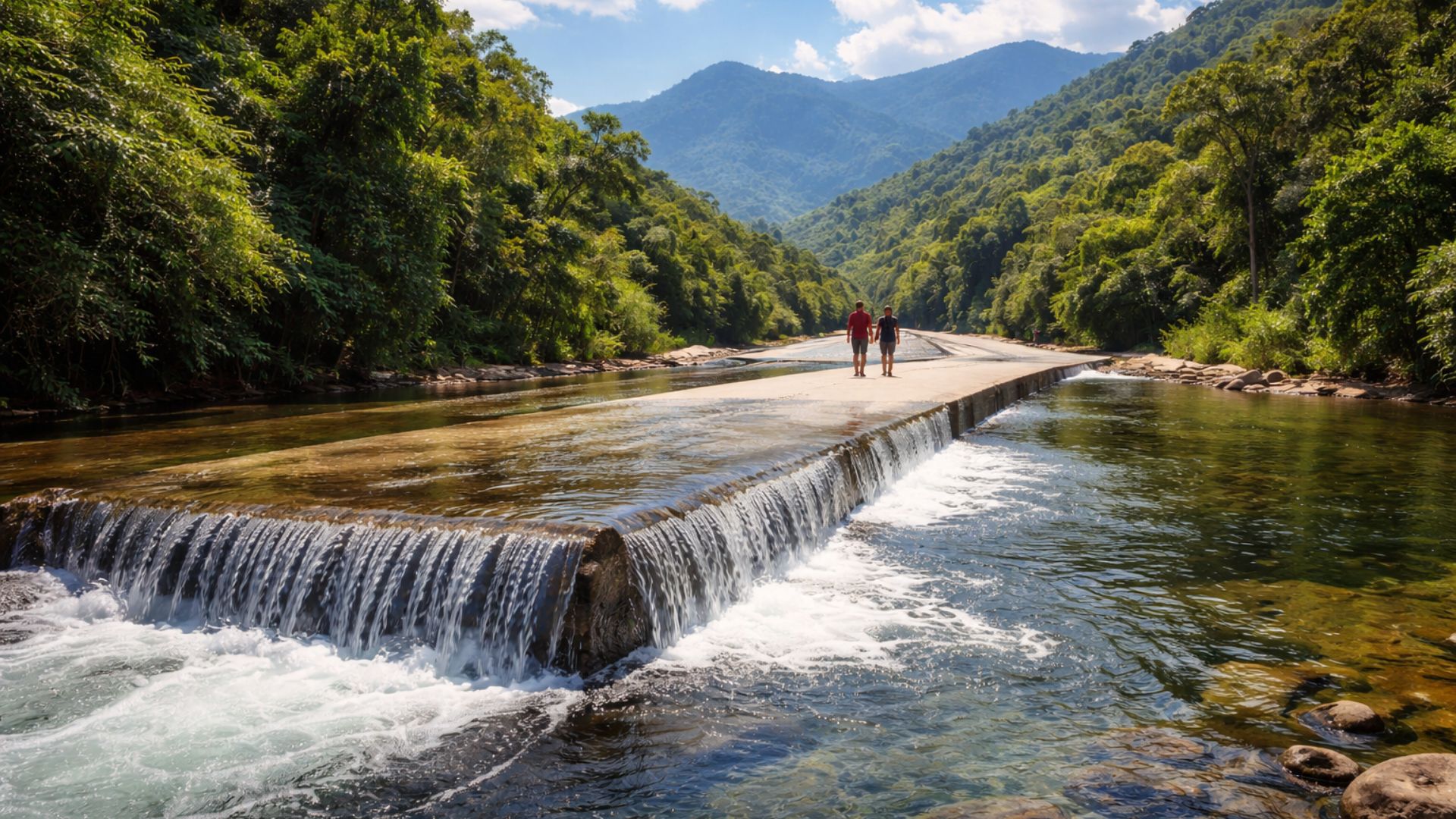
Curious structure on the coast of Paraná transforms functional work into a tourist attraction and catches attention for the unusual effect of a river flowing over the road, attracting visitors seeking nature, tranquility, and different experiences near the border between two states in southern Brazil.
The so-called inverted bridge of the São João River, in Guaratuba, on the coast of Paraná, has ceased to be merely an access solution for an area of pipelines and has become one of the most curious points in the region.
Built in 2009 to meet a demand from Petrobras, the structure was installed at such a low level that water flows over the concrete, creating the visual effect that transformed the crossing into an attraction for visitors.
Although many people associate the location with Garuva, in Santa Catarina, the bridge is officially in Paraná territory, in the region of Pedra Branca do Araraquara, almost on the line that separates the two states.
-
Archaeologists find in Egypt mummies with tongues made of gold buried over 2,000 years ago, a rare discovery surprises researchers and reveals an unusual funerary practice.
-
Man ‘forgets’ locked car for 38 years and now has a relic that few in the world possess.

-
Archaeological study reveals why humans swapped round houses for square buildings thousands of years ago.
-
Sprinkling dry baking soda directly on the carpet neutralizes odors from sweat and food without wetting the fibers, allowing you to forget about the vacuum cleaner for weeks using a product that costs less than five reais.


A report published in March 2026 states that the crossing is about 300 meters from the border, while the official tourism portal of Guaratuba includes the bridge among the attractions of the rural area of the municipality.
Origin of the inverted bridge linked to Petrobras

The origin of the construction is less about tourism and more about practicality.
According to local press reports, Petrobras needed to facilitate the movement of vehicles and workers to pipelines installed on the other side of the river, which required an agreement with landowners whose properties were cut by the São João, as the area crosses different rural properties.
Before the current bridge, the crossing was improvised by residents with concrete blocks, a vulnerable alternative to the strength of the current and insufficient to ensure stable passage throughout the year.
The same report notes that this precarious use has existed since 1985, and that the 2009 intervention was seen as a safer and more lasting response to the problem.
How the bridge works where the river flows over
The feature that made the structure well-known on social media is precisely the design of the work.
Instead of raising the roadway to overcome the watercourse, the passage was made level with the riverbed, so that a layer of the river covers the surface under normal conditions, creating the sensation that the road disappears beneath the flow itself.

This configuration has earned the crossing the nicknames of inverted bridge and wet bridge, names that have already been incorporated into the official tourism promotion of the municipality.
The city hall’s portal describes the site as one of the places that receives the most visitors during warm periods, situated in an area of rivers, waterfalls, lakes, and private spots aimed at leisure in the rural zone of Guaratuba.
From functional structure to tourist attraction in Paraná
Over the years, what primarily served the logistics of an industrial operation has begun to attract curious visitors seeking scenery, river bathing, and photographic records.
The combination of clear water, mountain vegetation, and an unconventional crossing helped to establish the location as an alternative route for those who prefer less crowded areas than the beaches of the southern coast.
Interest has grown to the point that the surroundings have adapted to the new flow of people, although the basis of visitation remains linked to private properties in the region.


On the official tourism page, the city hall mentions the existence of camping, lakes, rivers, and waterfalls in the corners of Pedra Branca do Araraquara, which helps to explain why the bridge has also become a gateway to a broader rural leisure circuit.
Why the inverted bridge became a sensation on social media
Part of the appeal lies in the rare appearance of the crossing, which contrasts with the traditional bridge model and provokes surprise at first glance.
The same article that recounts the origin of the work states that the structure is about 48 meters long and is positioned just a few centimeters above the river’s surface, a detail that reinforces the impression that the water has taken over the road.
Moreover, the location favors its recent fame.
The proximity to the border between Paraná and Santa Catarina puts the place on the radar of residents and tourists from both states, especially during warm periods when the search for rivers and more secluded areas tends to increase and pushes part of the public toward less obvious destinations.

Care when visiting the São João River bridge
The serene landscape, however, does not eliminate the natural risks of the stretch.
The report from Litorânea warns that the São João River is subject to flash floods, a situation where the level rises rapidly after heavy rains in higher areas, potentially covering the crossing entirely and interrupting passage.
Therefore, the best interpretation of the phenomenon is not that of a work made to impress, but rather a simple engineering solution, adapted to a local need and later redefined by tourism.
Today, the bridge synthesizes three layers of the same story: the routine of residents, the presence of infrastructure linked to Petrobras, and the transformation of a functional access into a sought-after landscape in the interior of Guaratuba.





Seja o primeiro a reagir!